
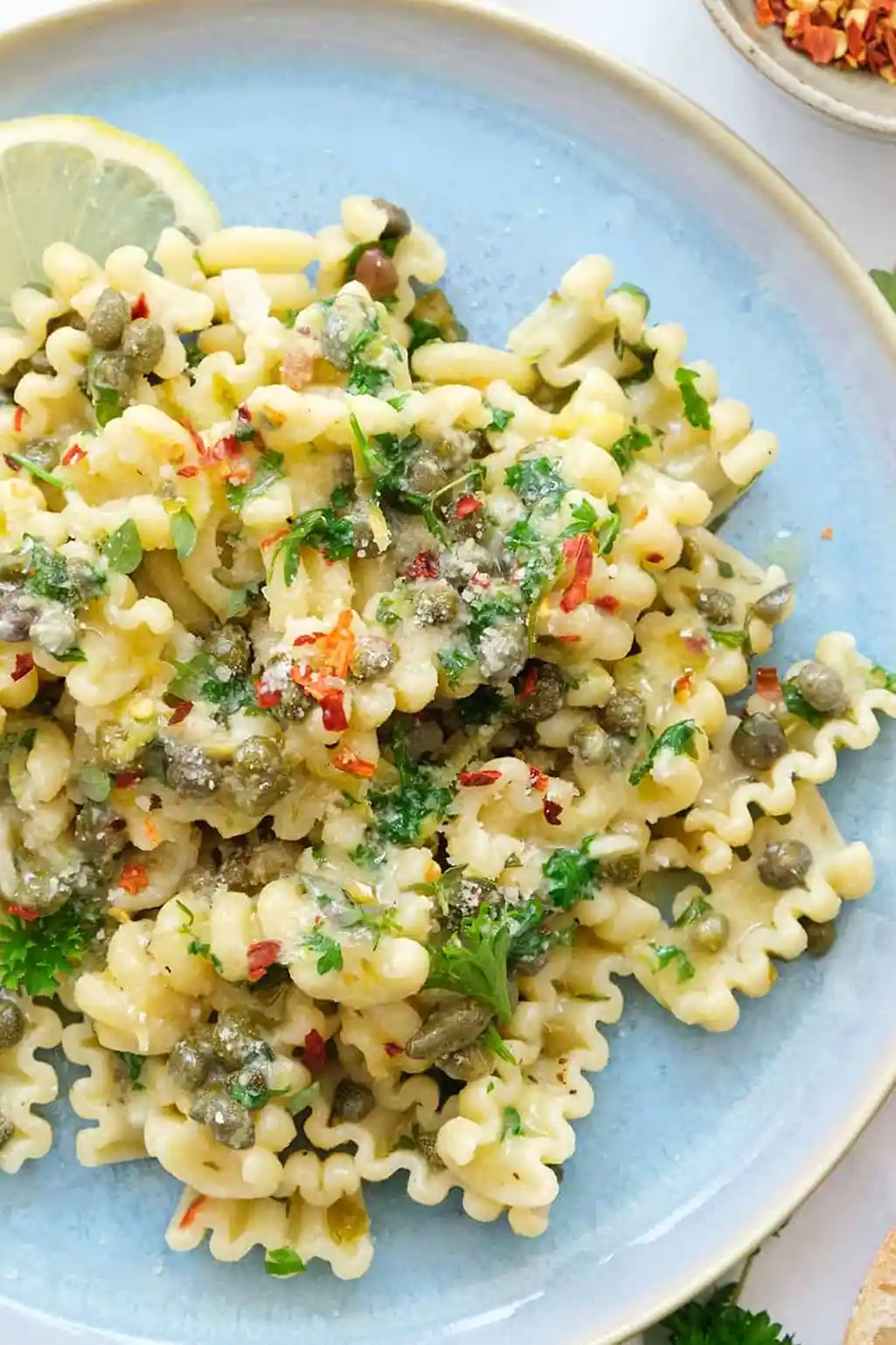
This vibrant lemon caper pasta brings a burst of Mediterranean brightness to your table in under twenty minutes. By combining the zesty punch of fresh lemons with the savory, briny depth of capers, you create a sophisticated sauce that clings perfectly to your favorite pasta shapes. It is an ideal solution for busy weeknights when you crave something elegant, satisfying, and refreshingly light.
List of ingredients
- 8oz (220 grams) pasta (long or short shape)
- 2 tablespoons extra virgin olive oil
- 2 garlic cloves, minced
- ¼ teaspoon red pepper flakes (optional)
- ¼ cup (30-40 grams) capers in brine
- 1 large lemon, juice and zest
- 2-3 tablespoons fresh herbs (parsley, thyme)
- ½ cup (120 ml) pasta water
- ¼ cup (30 grams) grated parmesan cheese
- 1 tablespoon butter
step-by-step instructions
- Pasta: Cook the pasta in a pot of salted water according to package instructions until al dente. Drain, reserving ½ cup of the cooking liquid.
- Lemon Caper Sauce: In a large skillet over medium heat, heat the olive oil. Add the garlic and red pepper flakes, and cook for a couple of minutes until fragrant.
- Combine: Add the lemon zest, lemon juice, herbs, capers, parmesan cheese, and reserved pasta water to the skillet and stir until smooth.
- Finish: Bring the sauce to a simmer, add the butter, and stir until melted and the sauce is creamy.
- Serve: Add the cooked pasta to the skillet, toss until well coated, and serve with extra herbs and parmesan.
Refining your flavor profile
Selecting the right pasta shape
The texture of your meal changes significantly based on the pasta shape you choose. Long strands like linguine or spaghetti allow the lemon-caper sauce to coat the surface evenly, providing a elegant mouthfeel. If you prefer capturing little pools of sauce, choose short, hollow, or curly shapes like fusilli, orecchiette, or penne, which hold the briny capers inside their crevices.
Balancing the acidity
Lemons can vary in their intensity, so it is wise to taste your sauce before tossing it with the pasta. If the dish feels too sharp, add an extra knob of butter or a light sprinkle of parmesan to mellow the citrus. Conversely, if you want a bolder, brighter flavor, incorporate a tiny bit more lemon zest right before serving.
Preparation and storage guidance
Managing leftover pasta
While this dish is best enjoyed immediately after preparation, you can keep leftovers in an airtight container in the refrigerator for up to three days. When storing, try to keep a small amount of the sauce liquid if possible, as the pasta will absorb moisture over time. This helps prevent the noodles from drying out while they are chilled.
Proper reheating techniques
To restore the silky texture of the sauce when reheating, place the pasta in a wide skillet over low heat with a splash of water or a tiny drizzle of olive oil. Stir consistently to ensure even warming without overcooking the noodles. Avoid high-heat microwave reheating, which can make the pasta mushy and cause the delicate sauce to break.
Enhancing the meal
Adding hearty vegetable sides
Since this pasta is light and bright, it pairs excellently with crisp, fresh vegetables. Consider serving it alongside a shaved carrot salad tossed with a vinaigrette or a simple plate of butter lettuce dressed with lemon juice. These sides provide a refreshing crunch that complements the chewy texture of the pasta perfectly.
Incorporating plant-based proteins
If you want to turn this side dish into a more filling main course, consider adding legumes. A quick salad of chickpeas, white cannellini beans, or earthy lentils can be stirred in at the end. These additions add substance and fiber without overwhelming the delicate, citrusy profile of the sauce.
Experimenting with fresh herbs
The choice of herbs can shift the entire direction of the flavor. Parsley provides a classic, clean taste, while thyme adds a subtle, earthy nuance. For a more floral and summery result, try using fresh basil or dill, which pair exceptionally well with the salty punch of the capers.
Addressing common kitchen questions
Are capers in brine or salt better?
Using capers packed in brine is highly recommended for this specific recipe because they are ready to use and provide a consistent level of acidity and salt. If you only have salt-packed capers, you must soak them in cold water for at least fifteen minutes and rinse them thoroughly to remove excess salinity before adding them to the sauce.
How do I ensure the sauce is creamy?
The key to a creamy emulsion is the combination of starchy pasta water, grated parmesan, and the final tablespoon of butter. The starch in the pasta water acts as a binding agent that stops the olive oil and lemon juice from separating. Make sure to toss the pasta over low heat to allow these components to meld together into a unified, clinging sauce.
What is the benefit of adding pasta water?
Pasta water contains essential starch released during the boiling process. This cloudy, salty water is what transforms a thin, oily liquid into a cohesive, restaurant-quality sauce. Always reserve your water before draining the pasta to ensure you have that liquid gold available to adjust your sauce consistency.
Can I prepare the components in advance?
You can pre-measure your ingredients and grate the cheese well ahead of your mealtime. However, the sauce should be prepared and combined with the pasta immediately before serving to maintain the best flavor and texture. Preparing the sauce too far in advance can cause the lemon flavor to become muted or the herbs to lose their vibrant color.
Is this dish suitable for meal prep?
This recipe is intended for quick, fresh consumption rather than long-term meal prepping. If you are preparing it for a busy week, you can boil the pasta ahead of time and store it tossed in a little oil, but the sauce should always be prepared fresh. The bright, volatile oils in the lemon zest and the fresh herbs provide the most impact when they are added just before the dish hits the table.
Print
Lemon Caper Pasta
- Total Time: 15 minutes
- Yield: 4 servings 1x
- Diet: Vegetarian
Description
This lemon caper pasta is so good, fresh, and full of Mediterranean flavor. The recipe combines chewy pasta, fresh herbs and garlic, briny capers, lemon juice, olive oil, and nutty parmesan.
Ingredients
- 8oz (220 grams) pasta (long or short shape)
- 2 tablespoons extra virgin olive oil
- 2 garlic cloves, minced
- ¼ teaspoon red pepper flakes (optional)
- ¼ cup (30–40 grams) capers in brine
- 1 large lemon, juice and zest
- 2–3 tablespoons fresh herbs (parsley, thyme)
- ½ cup (120 ml) pasta water
- ¼ cup (30 grams) grated parmesan cheese
- 1 tablespoon butter
Instructions
- Pasta: Cook the pasta in a pot of salted water according to package instructions until al dente. Drain, reserving ½ cup of the cooking liquid.
- Lemon Caper Sauce: In a large skillet over medium heat, heat the olive oil. Add the garlic and red pepper flakes, and cook for a couple of minutes until fragrant.
- Combine: Add the lemon zest, lemon juice, herbs, capers, parmesan cheese, and reserved pasta water to the skillet and stir until smooth.
- Finish: Bring the sauce to a simmer, add the butter, and stir until melted and the sauce is creamy.
- Serve: Add the cooked pasta to the skillet, toss until well coated, and serve with extra herbs and parmesan.
Notes
This pasta is best eaten right away, but leftovers can be kept in the fridge for up to 3 days and reheated in a skillet.
- Prep Time: 5 minutes
- Cook Time: 10 minutes
- Category: Pasta
- Method: Stovetop
- Cuisine: Italian
Nutrition
- Serving Size: 1 serving
- Calories: 335 kcal
- Sugar: 2 g
- Sodium: 436 mg
- Fat: 13 g
- Saturated Fat: 4 g
- Unsaturated Fat: 7 g
- Trans Fat: 0 g
- Carbohydrates: 46 g
- Fiber: 3 g
- Protein: 10 g
- Cholesterol: 14 mg