
This vibrant shrimp scampi pasta is a classic weeknight staple that balances succulent seafood with a bright, buttery lemon-garlic sauce. By using simple, high-quality ingredients and quick cooking techniques, you can achieve a restaurant-quality meal in your own kitchen in under thirty minutes. It is the perfect blend of comforting carbohydrates and protein, elevated by the fresh citrus notes of premium lemon juice.
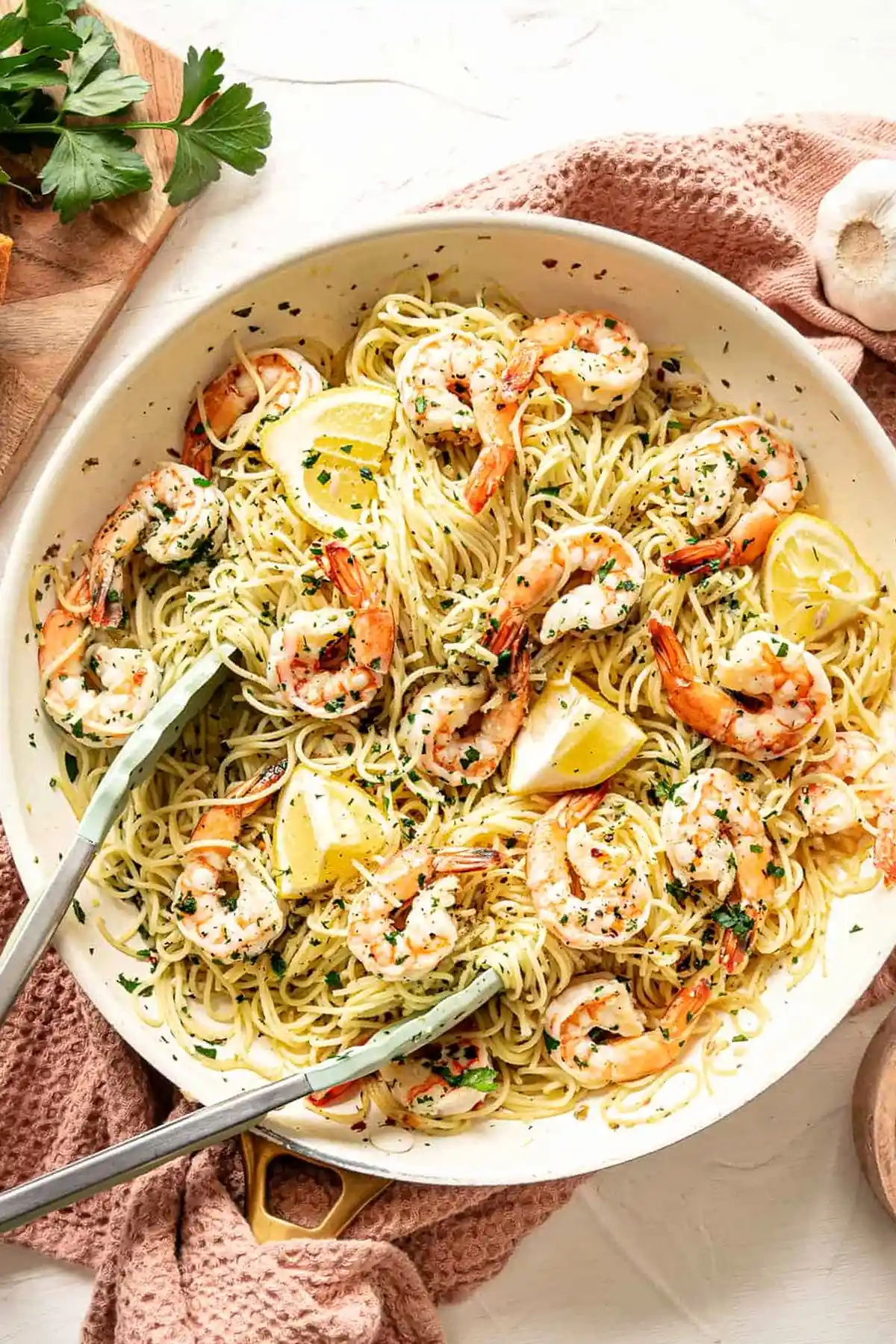
List of ingredients
- 12 ounces linguine (sub: spaghetti or angel hair pasta)
- salt
- 1 cup reserved pasta water
- 4 tablespoons salted butter
- 2 tablespoons olive oil
- 1 tablespoon minced garlic
- 1 pound raw shrimp (peeled, deveined, & tails off)
- 1/2 teaspoon crushed red pepper flakes
- 1/2 cup chicken broth
- 1/4 cup fresh lemon juice
- 1 teaspoon Italian seasoning
- 1/4 cup Parmesan cheese (grated)
- 1/4 cup fresh parsley (chopped)
- Optional for serving: lemon wedges
step-by-step instructions
- Boil Pasta: Cook the pasta in lightly salted water according to package directions. Before draining, remove about a cup of the salted pasta water for later. Drain and set aside.
- Prep Shrimp: While the pasta cooks, pat the shrimp dry with paper towels.
- Cook Shrimp: In a large skillet, heat 2 tablespoons butter and 2 tablespoons oil over medium-high heat until it’s bubbly. Add in garlic and shrimp. Season with 1/2 teaspoon salt and 1/2 teaspoon red pepper flakes. Stir continuously until the shrimp just turns pink, 2-3 minutes. Use a slotted spoon to remove the shrimp to a plate and set aside.
- Make Sauce: Place the skillet back over the heat. Pour in chicken broth, lemon juice, and Italian seasoning and simmer for 3 to 4 minutes, until the sauce reduces slightly. Remove from the heat and swirl in the remaining 2 tablespoons butter.
- Combine & Serve: Add the shrimp (and any juices from the plate) and cooked pasta to the skillet and toss to combine. Top with Parmesan cheese and chopped fresh parsley and toss again. Add a little pasta water and toss to help the sauce adhere to the pasta and to give it a glossy look. Taste and season with more salt, if needed. Serve with lemon wedges on the side.
Refining your technique
Why surface moisture matters for browning
Shrimp have a high water content, and when they hit the hot pan, that water instantly releases. By patting the shrimp dry before cooking, you allow the surface to make direct contact with the hot fat, promoting a light, flavorful sear instead of the grayish, rubbery result that comes from boiling the shrimp in their own moisture.
The role of starchy pasta water
The water left behind after boiling pasta is essentially a liquid starch solution. This starch acts as an emulsifier, binding the fat in the butter and oil to the acid in the lemon juice and broth. Using this water prevents your sauce from separating into oily and liquid components on the plate.
Managing heat to preserve garlic flavor
Garlic has a very low burn point compared to other ingredients. Because it is essential for the base of this sauce, add it to the fat at the same time as the shrimp to ensure it perfumes the oil without turning bitter or acrid. If you find your garlic browning too quickly, lower the heat slightly before adding your liquids.
Customizing your plate
Selecting the right pasta shape
While linguine is the traditional choice for scampi, spaghetti or angel hair pasta are excellent alternatives. Angel hair works well because its delicate texture mirrors the tenderness of the shrimp, while linguine offers a bit more chew that stands up well to the rich, buttery sauce. Avoid thick, chunky pasta shapes like rigatoni, which can overwhelm the light, sauce-based nature of this dish.
Adjusting the heat levels
The crushed red pepper flakes provide a warm, subtle heat that offsets the richness of the butter. If you prefer a more fiery dish, consider doubling the amount of red pepper or adding a pinch of cayenne pepper during the sauce reduction phase. If you are sensitive to heat, you can omit the flakes entirely without compromising the structural integrity of the sauce.
Incorporate fresh seasonal vegetables
You can easily turn this into a more substantial meal by adding quick-cooking vegetables. Thinly sliced asparagus, baby spinach, or cherry tomatoes can be added to the skillet during the final minute of the sauce-making process. These additions provide extra fiber and color while keeping the Mediterranean profile of the dish intact.
Management and storage
Preserving leftovers effectively
If you have leftovers, place them in an airtight container as soon as they reach room temperature. They will remain fresh in the refrigerator for up to three days. When storing, try to keep the pasta and shrimp together so they can soak in any remaining sauce, which keeps the proteins from drying out.
Reheating for optimal texture
Microwaving pasta can often lead to uneven heating or gummy results. To reheat, place the leftovers in a pan with a splash of broth or water over medium-low heat. Cover the pan to create steam, which will gently warm the shrimp without overcooking them and re-emulsify the butter sauce back into a smooth glaze.
Planning ahead for busy nights
You can save time by pre-mincing your garlic and measuring your seasonings into a small bowl earlier in the day. Keeping your mise en place ready is the secret to getting this meal on the table in under thirty minutes. Additionally, you can peel and devein your shrimp in the morning, storing them covered in the refrigerator until it is time to start cooking.
Addressing common kitchen questions
How can I tell when the shrimp are perfectly cooked?
Shrimp should be cooked just until they turn pink and opaque, and they should form a gentle ‘C’ shape. If the shrimp curl into a tight ‘O’ shape, they have likely been overcooked and will have a rubbery, tough texture. Removing them from the skillet as soon as they turn pink and letting them rest is the best way to maintain a tender bite.
Is there a way to make the sauce thicker?
The sauce for this dish is meant to be light, glossy, and coating rather than heavy or cream-based. If you find the sauce is too thin, simply reduce it on the heat for an extra minute or two before adding the final bit of butter. The starch in the reserved pasta water is usually sufficient to give the sauce enough body to cling to the linguine.
What is the benefit of adding the butter off the heat?
Swirling in the final portion of butter after removing the pan from the heat is a classic technique called mounting with butter. This prevents the butter from fully melting into an oil state and instead allows it to emulsify into a creamy, stable sauce. This results in a luxurious mouthfeel that is far superior to boiling the butter in the sauce.
Can I use dried parsley if I do not have fresh?
Fresh parsley provides a crisp, clean flavor that cuts through the rich butter. Dried parsley is significantly less potent and lacks the refreshing quality required for this dish. If you do not have fresh parsley, it is better to skip the herb entirely or substitute it with fresh basil or chives, which offer a more vibrant profile.
Why should I avoid using plain water instead of pasta water?
Adding plain water to your sauce will dilute the flavor and prevent the sauce from sticking to the pasta. Pasta water is rich in dissolved starch, which acts as the ‘glue’ that allows the lemon butter sauce to cling to every strand of linguine. If you accidentally discard your pasta water, you are better off using a tiny splash of broth or just finishing the dish with a bit more butter.
Print
Shrimp Scampi Pasta
- Total Time: 30 minutes
- Yield: 4 servings 1x
- Diet: Pescatarian
Description
Try our quick and addictive Shrimp Scampi Pasta recipe! In about 30 minutes, you can enjoy the perfect combination of succulent shrimp, comforting pasta, and an Italian-inspired lemon garlic butter sauce that will knock your socks off.
Ingredients
- 12 ounces linguine (sub: spaghetti or angel hair pasta)
- salt
- 1 cup reserved pasta water
- 4 tablespoons salted butter
- 2 tablespoons olive oil
- 1 tablespoon minced garlic
- 1 pound raw shrimp (peeled, deveined, & tails off)
- 1/2 teaspoon crushed red pepper flakes
- 1/2 cup chicken broth
- 1/4 cup fresh lemon juice
- 1 teaspoon Italian seasoning
- 1/4 cup Parmesan cheese (grated)
- 1/4 cup fresh parsley (chopped)
- Optional for serving: lemon wedges
Instructions
- Boil Pasta: Cook the pasta in lightly salted water according to package directions. Before draining, remove about a cup of the salted pasta water for later. Drain and set aside.
- Prep Shrimp: While the pasta cooks, pat the shrimp dry with paper towels.
- Cook Shrimp: In a large skillet, heat 2 tablespoons butter and 2 tablespoons oil over medium-high heat until it’s bubbly. Add in garlic and shrimp. Season with 1/2 teaspoon salt and 1/2 teaspoon red pepper flakes. Stir continuously until the shrimp just turns pink, 2-3 minutes. Use a slotted spoon to remove the shrimp to a plate and set aside.
- Make Sauce: Place the skillet back over the heat. Pour in chicken broth, lemon juice, and Italian seasoning and simmer for 3 to 4 minutes, until the sauce reduces slightly. Remove from the heat and swirl in the remaining 2 tablespoons butter.
- Combine & Serve: Add the shrimp (and any juices from the plate) and cooked pasta to the skillet and toss to combine. Top with Parmesan cheese and chopped fresh parsley and toss again. Add a little pasta water and toss to help the sauce adhere to the pasta and to give it a glossy look. Taste and season with more salt, if needed. Serve with lemon wedges on the side.
Notes
This recipe goes fast once you start, so be sure to have all your ingredients and equipment ready at hand. Use a very large pan if doubling the recipe. For the shrimp, 31-40 count is the ideal size for one bite. Gluten-free version: Use gluten-free linguine or angel hair pasta. Dairy-free version: Use a plant-based butter and omit the Parmesan cheese.
- Prep Time: 10 minutes
- Cook Time: 20 minutes
- Category: Seafood
- Method: Stovetop
- Cuisine: Mediterranean
Nutrition
- Serving Size: 1 serving
- Calories: 619 kcal
- Sugar: 3 g
- Sodium: 858 mg
- Fat: 23 g
- Saturated Fat: 11 g
- Unsaturated Fat: 10 g
- Trans Fat: 0 g
- Carbohydrates: 69 g
- Fiber: 3 g
- Protein: 29 g
- Cholesterol: 178 mg