
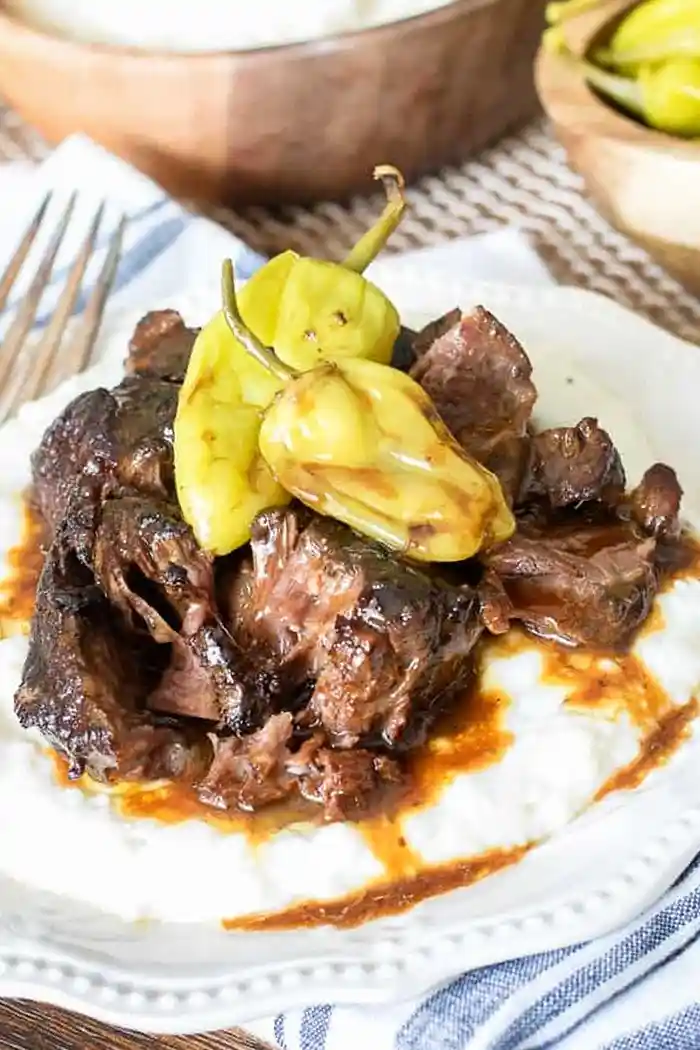
This Mississippi pot roast is the ultimate slow cooker comfort food, designed for those who appreciate deep, savory flavors with minimal effort. By combining a hearty chuck roast with a savory blend of seasonings, creamy butter, and tangy peppers, you create a succulent dish that practically melts off the fork. It is a perfect solution for busy households that do not want to sacrifice the quality of a slow-simmered Sunday dinner.
List of ingredients
- 2.5 pound chuck roast
- 1 tablespoon olive oil
- 1 packet au jus dried seasoning
- 1 packet dried ranch dressing seasoning
- 1/2 cup unsalted butter
- 6-10 peperoncini peppers
step-by-step instructions
- Step: Cut off any excess fat off of the chuck roast, and cut it into large manageable chunks.
- Step: Place a large skillet over medium-high heat, add the olive oil, and once hot sear the meat on all sides. Do this in batches if necessary, do not crowd the pan. Sear until golden brown.
- Step: Place the meat into the bottom of an 8-quart slow cooker.
- Step: Sprinkle the meat with the au jus and ranch. Add the butter right on top along with the peperoncini peppers. Cook on low for 8-10 hours or on high for 4-5 hours until fork tender.
Refining the Preparation Process
Achieving the Ideal Sear
The importance of the initial sear cannot be overstated, as this stage creates the Maillard reaction. This chemical process results in a complex flavor profile that is essential for a slow-cooked dish. Without this brown crust, the final juices would lack the depth and savory complexity that defines a superior pot roast.
Selecting the Proper Cut
Chuck roast is chosen specifically for this recipe because it is a cut with significant connective tissue. During the long, low-temperature cook, this tissue breaks down into gelatin, which provides that iconic mouthfeel. Choosing a leaner cut like sirloin would result in a tough, dry, and stringy final product that lacks the melt-in-your-mouth quality expected here.
Managing the Slow Cooker Heat
While the recipe offers two cooking speeds, opting for the low setting is highly encouraged whenever time permits. The slower, more gentle heat allows the fibers of the meat to relax and absorb the surrounding moisture without seizing up. This ensures the most consistent texture from the exterior to the very center of the roast chunks.
Customizing Your Pot Roast
Experimenting with Vegetable Additions
If you desire a more substantial meal, consider adding root vegetables like peeled carrots or baby potatoes. To prevent these from becoming mushy, add them during the final two hours of the cooking process. This timing ensures they are fork-tender and seasoned perfectly by the surrounding juices without losing their structural integrity.
Adjusting the Flavor Profile
For a tangier final dish, consider stirring in a small splash of the brine from the peperoncini jar just before serving. If you prefer a milder heat profile, decrease the count of peppers used. Conversely, if you prefer a sharper profile, adding a few finely sliced fresh shallots during the searing stage can provide an extra layer of savory depth.
Serving and Presentation Strategies
Creating a Balanced Plate
The richness of this dish pairs best with starches that can absorb the silky, butter-heavy gravy. Creamy mashed potatoes are the traditional choice, as their neutral starchiness balances the intense savory notes of the au jus. Fluffy white rice or buttered egg noodles are excellent alternatives that perform the same role of capturing the flavorful juices.
Enhancing the Meal with Greens
Because this roast is quite heavy and luxurious, including a side of brightness is wise. Steamed green beans tossed with a bit of lemon zest or a crisp garden salad with a sharp vinaigrette will cleanse the palate. These additions provide a necessary contrast to the deep, salty, and fatty elements of the primary beef dish.
Storage and Reheating Principles
Maintaining Meat Moisture
When storing leftovers, it is vital to keep the meat submerged in its own cooking liquid. This keeps the shredded beef moist and prevents it from drying out in the refrigerator. Store in an airtight container for up to four days; the flavors often improve as they meld further in the cold environment.
Best Practices for Gentle Reheating
When warming the roast again, use a low setting on the stovetop or microwave, adding a tiny splash of water or broth if the gravy has become too concentrated. Avoid high-heat settings that can cause the protein fibers to tighten and toughen. Gradual warming keeps the beef as tender as it was on the first day.
Frequently Asked Questions
Can this be prepared in a standard oven?
Yes, you can replicate this by using a Dutch oven at 300 degrees Fahrenheit for approximately 3 to 4 hours. Ensure the pot is tightly covered to trap steam and moisture, effectively creating a similar environment to a slow cooker.
Is the butter strictly necessary for the recipe?
The butter is a key component for the texture of the gravy. While you could technically use less, the signature velvety, glossy consistency of the sauce relies on the fat emulsifying with the seasoning packets and the natural juices released from the meat.
What is the benefit of adding the seasonings dry?
Adding the ranch and au jus seasonings directly to the meat allows them to form a concentrated crust that slowly integrates with the juices. This method is superior to pre-mixing with water, as it creates a more intense concentration of flavor that permeates the beef as it releases its own internal moisture during the cooking cycle.
Why should I avoid adding extra liquids like broth?
The chuck roast and the butter will provide more than enough liquid as they cook. Adding extra broth will likely dilute the concentrated, punchy flavors of the seasoning packets, potentially leading to a thinner, more watery gravy that lacks the desired richness.
How do I know if the beef is finished cooking?
The beef is ready when you can easily insert a fork and twist it with virtually no resistance. The meat should pull apart effortlessly, showing that the connective tissues have fully broken down into tender, shreddable strands throughout every portion of the roast.
Print
Mississippi Pot Roast
- Total Time: 8 hours 10 minutes
- Yield: 8 servings 1x
- Diet: Low Carb
Description
This Mississippi pot roast is the ultimate slow cooker comfort food. A chuck roast cooks low and slow with au jus, ranch seasoning, butter, and tangy peperoncini peppers until it is fall apart tender and swimming in the richest buttery gravy.
Ingredients
- 2.5 pound chuck roast
- 1 tablespoon olive oil
- 1 packet au jus dried seasoning
- 1 packet dried ranch dressing seasoning
- 1/2 cup unsalted butter
- 6–10 peperoncini peppers
Instructions
- Step: Cut off any excess fat off of the chuck roast, and cut it into large manageable chunks.
- Step: Place a large skillet over medium-high heat, add the olive oil, and once hot sear the meat on all sides. Do this in batches if necessary, do not crowd the pan. Sear until golden brown.
- Step: Place the meat into the bottom of an 8-quart slow cooker.
- Step: Sprinkle the meat with the au jus and ranch. Add the butter right on top along with the peperoncini peppers. Cook on low for 8-10 hours or on high for 4-5 hours until fork tender.
Notes
Searing the meat on medium-high heat before slow cooking adds depth to the flavor. Cook on low to ensure the meat becomes tender and flavorful. Use a fat separator to create a rich gravy from the cooking liquids. Allow the roast to rest before slicing or shredding for juicier meat.
- Prep Time: 10 minutes
- Cook Time: 8 hours
- Category: Main Course
- Method: Slow Cooker
- Cuisine: American
Nutrition
- Serving Size: 1 serving
- Calories: 384 kcal
- Sugar: 0.2 g
- Sodium: 380 mg
- Fat: 30 g
- Saturated Fat: 15 g
- Unsaturated Fat: 15 g
- Trans Fat: 1 g
- Carbohydrates: 2 g
- Fiber: 0.3 g
- Protein: 27 g
- Cholesterol: 128 mg