
This garlic butter chicken scampi brings the elegance of a classic Italian bistro directly to your kitchen table. By combining tender, flour-dusted chicken with a vibrant lemon and garlic sauce, you create a meal that feels indulgent yet remains surprisingly quick to assemble. It is the perfect solution for busy weeknights when you desire a sophisticated, flavor-packed dinner without spending hours prepping.
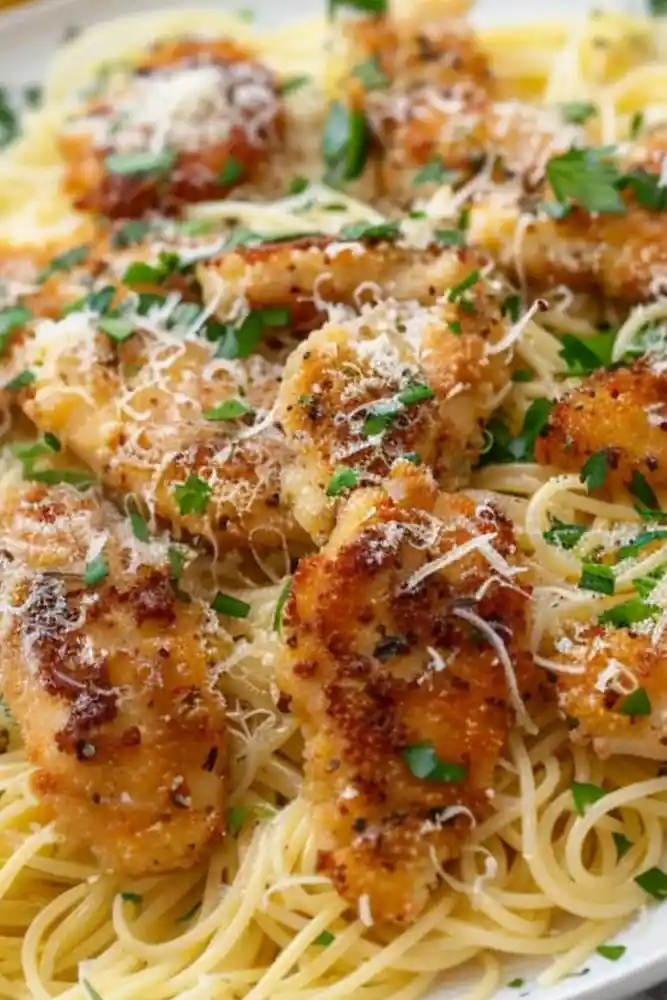
List of ingredients
- 12 oz angel hair pasta or spaghetti
- 1.5 lbs chicken tenders
- 1/2 cup all-purpose flour
- 1 tsp Italian seasoning
- Salt and pepper to taste
- 2 tbsp olive oil
- 6 tbsp unsalted butter, divided
- 4 cloves garlic, minced
- 1/4 cup finely chopped shallot or red onion
- 3/4 cup chicken broth
- 1/4 cup lemon juice
- 1 tsp lemon zest
- 1/3 cup chopped fresh parsley
- 1/4 cup grated Parmesan cheese
step-by-step instructions
- Step: Cook the pasta in salted water until al dente. Reserve 1/2 cup of pasta water before draining.
- Step: Mix the flour, Italian seasoning, salt, and pepper on a plate. Dredge the chicken tenders in the seasoned flour, shaking off the excess.
- Step: Heat the olive oil and 2 tbsp of butter in a large skillet over medium-high heat. Cook the chicken for 2-3 minutes per side until golden and cooked through. Transfer to a plate.
- Step: In the same skillet, melt the remaining 4 tbsp of butter. Add the garlic and shallot, cooking for 1 minute until fragrant.
- Step: Pour in the chicken broth and simmer for 3-4 minutes until reduced by half. Add the lemon juice and zest, stirring to combine.
- Step: Return the chicken to the skillet and coat with the sauce. Add the pasta, reserved pasta water, parsley, and Parmesan. Toss everything together until well combined and heated through.
- Step: Serve immediately, garnished with extra parsley and Parmesan if desired.
Refining Your Searing Technique
Achieving the Perfect Golden Crust
To ensure your chicken develops a beautiful golden-brown exterior, avoid overcrowding the skillet. If the pieces are touching or stacked, the chicken will steam rather than sear, resulting in a pale color and soggy coating. Cook in two batches if necessary, and ensure the fat in the pan is shimmering before adding the meat.
Preventing the Flour from Burning
Because the chicken dredge contains flour, it can easily burn if the heat is too high. Maintain a steady medium-high heat rather than high heat to allow the chicken to cook through fully without scorching the flour. If you notice the skillet getting too hot, reduce the heat slightly to maintain a gentle, consistent sizzle.
Perfecting the Pan Sauce
Managing the Emulsion
The secret to a restaurant-style sauce is the emulsification of the butter, lemon juice, and starchy pasta water. By slowly adding the reserved pasta water while tossing the noodles, you encourage the starch to bind the fats, creating a creamy coating rather than a thin, oily one. Always toss vigorously to pull the sauce together.
Balancing the Acidity
If you find the sauce too sharp from the lemon juice, add another tablespoon of butter at the very end of the cooking process. This technique, often called mounting the butter, smooths out the edges of the citrus acidity and provides a luxurious mouthfeel. Ensure you use fresh lemon zest, as it contains the essential oils that provide a depth of flavor that juice alone lacks.
Optimizing Pasta Texture
Timing the Al Dente Boil
Always boil your pasta for one minute less than the package instructions suggest, as it will continue to cook in the hot sauce for the final minute in the skillet. This prevents the delicate angel hair or spaghetti from becoming mushy or brittle. Drain the pasta while it still has a slight, firm bite to it.
Keeping Noodles Warm
If your pasta finishes before your sauce is ready, toss it in a small amount of olive oil to prevent sticking. Do not rinse the pasta after draining, as the surface starch is essential for helping the sauce adhere to the noodles. The starchiness of the water is what turns a collection of individual ingredients into a cohesive, restaurant-quality meal.
FAQs
Can I use a different type of protein?
Yes, this sauce is highly versatile and works exceptionally well with firm white fish like tilapia or cod, as well as sautéed shrimp. If using shrimp, reduce the cooking time significantly, as they only require about one to two minutes per side to turn pink and opaque.
How do I prevent the pasta from drying out?
The reserved pasta water is the most important tool for preventing dry noodles. If the leftovers seem absorbed or the sauce has thickened too much in the fridge, add an extra splash of broth or water when reheating. This rehydrates the starch and restores the sauce’s silky consistency without needing extra fat.
Is there a way to make this dish heartier?
You can easily incorporate roasted vegetables such as sliced bell peppers, cherry tomatoes, or sautéed asparagus into the dish during the final tossing stage. These additions add texture and nutritional value while complementing the lemon-garlic flavor profile. Ensure any added vegetables are cooked separately so they remain crisp-tender rather than soft and watery.
Storage and Reheating Advice
Storing for Maximum Freshness
Store your leftovers in an airtight glass container to preserve the moisture of the chicken and the integrity of the sauce. It is best to consume the meal within three days for the best quality, as the pasta may continue to soak up the sauce over time. Keep the container in the coldest part of the refrigerator, rather than the door, to maintain a consistent temperature.
Restoring the Sauce Texture
When reheating on the stovetop, use a wide skillet over medium-low heat. Add one tablespoon of water or broth for every serving to help revive the emulsion. Stir frequently to prevent the sauce from separating or the garlic from burning. Avoid high heat during the reheating process, as this can cause the butter to break and the chicken to lose its moisture, leading to a tough and rubbery texture.
Substitutions and Variations
Alternative Aromatics
If you are out of shallots, a small amount of white onion or even finely diced leeks can provide a similar flavor base. For a different depth of flavor, consider using roasted garlic instead of raw, which provides a mellow, sweet, and nutty undertone. You can also experiment with fresh herbs like chives or basil to replace or supplement the parsley for a different aromatic profile.
Creating a Creamier Profile
For those who prefer a heavier, cream-based sauce, you can stir in a quarter cup of heavy cream after reducing the non-alcoholic liquid. This will create a thicker, more velvety sauce that is incredibly rich and comforting. If you choose this route, be sure to whisk it in gently and do not let it reach a hard boil, which can cause the cream to separate.
Serving Ideas
Choosing the Right Accompaniments
This dish is quite flavorful and rich, so it pairs perfectly with simple, crisp side dishes. A salad of baby arugula or baby spinach with a light vinaigrette provides a nice contrast to the buttery pasta. Alternatively, serve with steamed green beans or roasted zucchini, which benefit from a simple dusting of sea salt and lemon zest to echo the flavors in the main dish.
Bread Options
A crusty baguette or ciabatta bread is ideal for mopping up any remaining sauce on the plate. You can lightly toast the bread with a rub of fresh garlic and a drizzle of olive oil to enhance the meal’s theme. Avoid overly soft or sweetened breads, as a neutral-flavored, chewy crust provides the best texture for dipping into the pan sauce.
Print
Savory Garlic Butter Chicken Scampi
- Total Time: PT32M
- Yield: 6 servings 1x
- Diet: Non-Vegetarian
Description
This chicken scampi is a restaurant-worthy dish no one can resist! Tender chicken is coated in a luscious garlic butter sauce and served over pasta.
Ingredients
- 12 oz angel hair pasta or spaghetti
- 1.5 lbs chicken tenders
- 1/2 cup all-purpose flour
- 1 tsp Italian seasoning
- Salt and pepper to taste
- 2 tbsp olive oil
- 6 tbsp unsalted butter, divided
- 4 cloves garlic, minced
- 1/4 cup finely chopped shallot or red onion
- 3/4 cup chicken broth
- 1/4 cup lemon juice
- 1 tsp lemon zest
- 1/3 cup chopped fresh parsley
- 1/4 cup grated Parmesan cheese
Instructions
- Step: Cook the pasta in salted water until al dente. Reserve 1/2 cup of pasta water before draining.
- Step: Mix the flour, Italian seasoning, salt, and pepper on a plate. Dredge the chicken tenders in the seasoned flour, shaking off the excess.
- Step: Heat the olive oil and 2 tbsp of butter in a large skillet over medium-high heat. Cook the chicken for 2-3 minutes per side until golden and cooked through. Transfer to a plate.
- Step: In the same skillet, melt the remaining 4 tbsp of butter. Add the garlic and shallot, cooking for 1 minute until fragrant.
- Step: Pour in the chicken broth and simmer for 3-4 minutes until reduced by half. Add the lemon juice and zest, stirring to combine.
- Step: Return the chicken to the skillet and coat with the sauce. Add the pasta, reserved pasta water, parsley, and Parmesan. Toss everything together until well combined and heated through.
- Step: Serve immediately, garnished with extra parsley and Parmesan if desired.
Notes
If desired, add capers, sun-dried tomatoes, spinach, or toasted pine nuts for variation. Store leftovers in an airtight container for up to 3 days.
- Prep Time: PT17M
- Cook Time: PT15M
- Category: Main Course
- Method: Stovetop
- Cuisine: Italian
Nutrition
- Serving Size: 1 serving
- Calories: 595 kcal
- Sugar: 2 g
- Sodium: 450 mg
- Fat: 22 g
- Saturated Fat: 9 g
- Unsaturated Fat: 11 g
- Trans Fat: 0 g
- Carbohydrates: 62 g
- Fiber: 3 g
- Protein: 35 g
- Cholesterol: 115 mg