
I have a major soft spot for takeout-style noodles, but sometimes I crave a homemade version that feels a bit more special. This easy chicken lo mein recipe transforms the standard takeout version into a hearty family dinner that’s ready in about 30 minutes. The secret is the black garlic and caramelized onion glaze, which adds a savory, sweet depth and a beautiful glossy sheen to the noodles and tender chicken. It’s a healthy eating option and a guaranteed family-friendly hit that replaces delivery in our weeknight rotation.
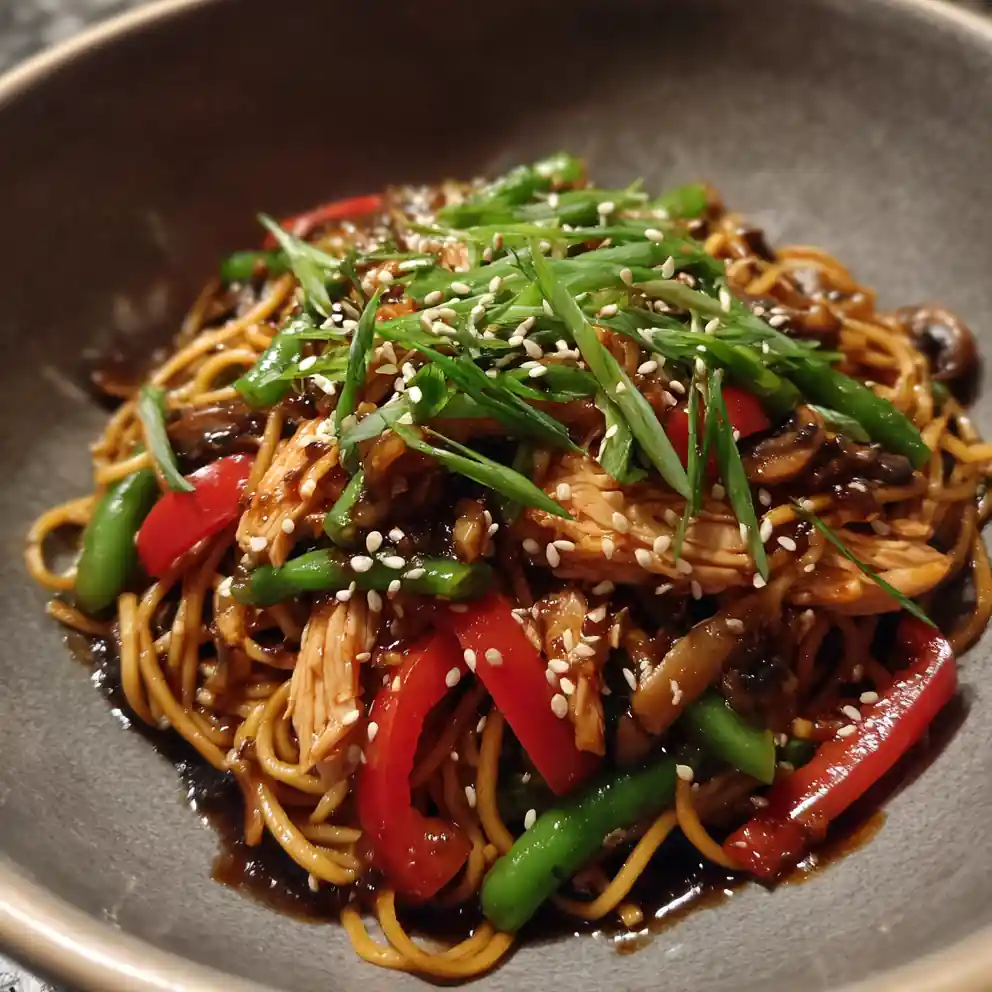
Ingredients
- 400 g (14 oz) Lo Mein Noodles: Look for fresh or dried lo mein noodles in the international aisle or refrigerated section of your grocery store. Fresh noodles cook faster; dried noodles are more common and keep well in the pantry. Follow package directions for al dente cooking, as they finish cooking in the wok.
- 450 g (1 lb) Boneless, Skinless Chicken Breast or Thigh: Either cut works well; use breast for a leaner option or thigh for a juicier, more tender result. Slice it thinly against the grain, which helps it cook quickly and absorb the marinade efficiently. The marinade (soy sauce and cornstarch) creates a protective layer to prevent drying out during stir-frying.
- 2 tablespoons (30 mL) Vegetable Oil, divided: Used for both caramelizing the onions and stir-frying the chicken and vegetables. A high-smoke-point oil like vegetable oil, canola oil, or avocado oil is essential for high-heat cooking. Dividing the oil ensures even cooking and prevents overcrowding the pan during different stages.
- 1 large (200 g) Red Onion, thinly sliced: The foundation of the glaze; caramelizing it slowly develops deep sweetness and complexity. Slicing thinly ensures even cooking and easy blending into the sauce. Do not rush this step; the rich color and flavor come from low and slow heat.
- 6 cloves (30 g) Black Garlic: Black garlic provides a sweet, tangy, and earthy flavor without the pungent sharpness of fresh garlic. Find it in specialty food stores or online; it’s a key ingredient for the unique umami flavor. This ingredient is essential for achieving the recipe’s signature gourmet taste.
- 2.5 cm (1 inch) piece Fresh Ginger, grated: Adds a bright, warm note that balances the rich sauce. Use fresh ginger for the best flavor; avoid pre-minced jarred ginger if possible. Grate or finely mince it to release its essential oils quickly during stir-frying.
- 4 cloves Garlic, minced: Provides aromatic depth to the stir-fry base. Mince finely to ensure it cooks evenly without burning. Add it after the chicken to prevent overcooking the delicate minced pieces.
- 1 large (150 g) Carrot, julienned: Adds color, texture, and a slight sweetness to the dish. Julienne into matchsticks for quick cooking and uniform presentation. Ensure the pieces are thin enough to become tender-crisp in just a few minutes of stir-frying.
- 1 large (150 g) Red Bell Pepper, thinly sliced: Contributes vibrant color and a fresh, sweet flavor that contrasts the savory sauce. Slice into thin strips, similar in size to the carrots, for even cooking. Feel free to substitute other colors of bell pepper if preferred.
- 100 g (3.5 oz) Snap Peas: Provide a crisp, sweet crunch to the finished dish. Trim off the tough strings before cooking for a better texture. Add them toward the end to maintain their vibrant green color and crisp texture.
- 100 g (3.5 oz) Shiitake Mushrooms, sliced: Add a savory, meaty texture and earthy flavor. Remove the tough stems before slicing the caps. They absorb the flavor of the stir-fry well and add a hearty element.
- 100 g (3.5 oz) Bok Choy, chopped (white stems and green leaves separated): Bok choy adds both structure and freshness. The white stems require slightly longer cooking than the delicate green leaves. Separate them beforehand to ensure everything cooks perfectly without wilting the greens too early.
- 2 tablespoons (30 mL) Cornstarch, divided: Used to thicken the sauce and to coat the chicken. Coating the chicken (velveting) keeps it tender during high-heat cooking. The slurry (cornstarch + water) creates a glossy, rich finish for the final sauce.
- 60 mL (1/4 cup) Alcohol-Free Soy Sauce, plus 1 tablespoon (15 mL) for marinade: Provides the primary savory element and depth of flavor. Look for a low-sodium option to better control the final flavor profile. Using an alcohol-free version ensures all family members can enjoy it.
- 60 mL (1/4 cup) Vegetable Broth: Used to thin the glaze base and add a layer of savory background flavor. Chicken broth or mushroom broth can be substituted for a deeper taste. It helps blend the flavors of the black garlic and onions into a smooth sauce.
- 2 tablespoons (30 mL) Rice Vinegar: Adds brightness and acidity to cut through the richness of the glaze. Distilled white vinegar can be used in a pinch, but rice vinegar is milder and preferred for Asian cuisine. It balances the sweetness of the caramelized onions and brown sugar.
- 1 tablespoon (15 mL) Light Brown Sugar: Provides sweetness to complement the savory glaze ingredients. Adds a subtle molasses note that enhances the caramelized flavor of the onions. Adjust the amount based on personal preference for sweetness.
- 1 teaspoon (5 mL) Toasted Sesame Oil: Used at the very end to finish the dish with a nutty aroma and flavor. Do not add it during cooking, as the high heat will diminish its flavor. Add it off-heat just before serving for maximum impact.
- 2 tablespoons (30 mL) Water (for cornstarch slurry): Used to dissolve the cornstarch before adding it to the hot sauce. Mixing cornstarch into cold water prevents lumps from forming when thickening a hot liquid. A smooth slurry ensures a consistent and glossy sauce texture.
- For Garnish: 2 spring onions, thinly sliced; 1 teaspoon toasted sesame seeds: Essential for presentation, freshness, and added texture. Spring onions add a final sharp, fresh onion flavor that contrasts the cooked elements. Toasted sesame seeds add a visual element and a nutty crunch.
Instructions
Here’s how to make this delicious chicken lo mein recipe quickly in one large pan or wok.
- Step 1: Prepare the chicken marinade and noodles. Combine the sliced chicken with 1 tablespoon of alcohol-free soy sauce and 1 tablespoon of cornstarch in a medium bowl. Toss gently to ensure every piece of chicken is coated in the cornstarch marinade, which creates a protective layer. Set the chicken aside to rest for at least 15 minutes while you prepare the sauce and vegetables.
- Step 2: Make the Black Garlic & Caramelized Onion Glaze. Heat 1 tablespoon of vegetable oil in a large skillet or wok over medium-low heat. Add the thinly sliced red onion and cook slowly, stirring occasionally, for 15-20 minutes until deeply caramelized and tender. This step is where the magic happens; don’t rush it to get the rich brown color needed for a deeply flavored sauce.
- Step 3: Blend the glaze base. Transfer the deeply caramelized onions to a small blender or food processor. Add the black garlic cloves, 60 mL (1/4 cup) alcohol-free soy sauce, 60 mL (1/4 cup) vegetable broth, rice vinegar, and brown sugar to the blender. Blend until completely smooth and thick, then set the finished glaze aside.
- Step 4: Cook the lo mein noodles. Cook the lo mein noodles according to the package directions until they are al dente (still slightly firm). Immediately drain the noodles and rinse briefly with cool water to prevent sticking and stop the cooking process. Toss the noodles with 1 teaspoon of vegetable oil to prevent them from clumping together while you finish the stir-fry.
- Step 5: Cook the marinated chicken. Heat the remaining 1 tablespoon of vegetable oil in the same skillet or wok over medium-high heat. Add the marinated chicken in a single layer (cook in batches if necessary) and cook for 3-4 minutes per side until browned and cooked through. Remove the chicken from the pan and set it aside; do not overcook, as it will continue cooking when added back to the stir-fry.
- Step 6: Stir-fry the vegetables. Add the grated ginger and minced garlic to the skillet and stir-fry for 30 seconds until fragrant. Add the julienned carrot and red bell pepper first; stir-fry for 2-3 minutes until they begin to soften but remain slightly crisp. Add the snap peas and sliced shiitake mushrooms and cook for another 2 minutes; then add the bok choy stems and cook for 1 minute, followed by the green leaves for 30 seconds until just wilted. If the skillet looks too dry while cooking the vegetables, add a splash of water or broth to prevent scorching the aromatics.
- Step 7: Combine and thicken the sauce. Return the cooked chicken to the skillet with the vegetables. Whisk together the remaining 1 tablespoon of cornstarch with 2 tablespoons of water to create a smooth slurry; pour the prepared Black Garlic & Caramelized Onion Glaze into the skillet, bringing it to a simmer. Stir in the cornstarch slurry and cook, stirring constantly, for 1-2 minutes until the sauce thickens and becomes glossy.
- Step 8: Final toss and serve. Add the cooked lo mein noodles to the skillet with the chicken and vegetables. Toss everything together vigorously to ensure all components are thoroughly coated in the rich, glossy glaze. Stir in the toasted sesame oil just before serving for aroma, then garnish generously with spring onions and sesame seeds.
Tips for Preventing Soggy Lo Mein and Dry Chicken
The key to restaurant-quality lo mein is avoiding a watery sauce and ensuring tender chicken.
- Noodle Prep: Cook your noodles only to al dente, not fully soft. Rinse them under cool water immediately after draining to stop the cooking process and remove excess starch, which prevents clumping. Toss lightly with oil.
- Wok Heat: Stir-frying requires high heat. Ensure your wok or skillet is very hot before adding the chicken and vegetables. This high temperature sears the chicken quickly and prevents the vegetables from steaming.
- Chicken Coating: The cornstarch marinade creates a protective coating on the chicken, locking in moisture during high-heat cooking. Do not skip this step; it’s essential for achieving tender results.
- Sauce Thickeners: The cornstarch slurry is added at the end to create a glossy, thick sauce. Ensure you whisk the cornstarch thoroughly with cold water before adding it to prevent lumps and create a smooth finish that clings to the noodles.
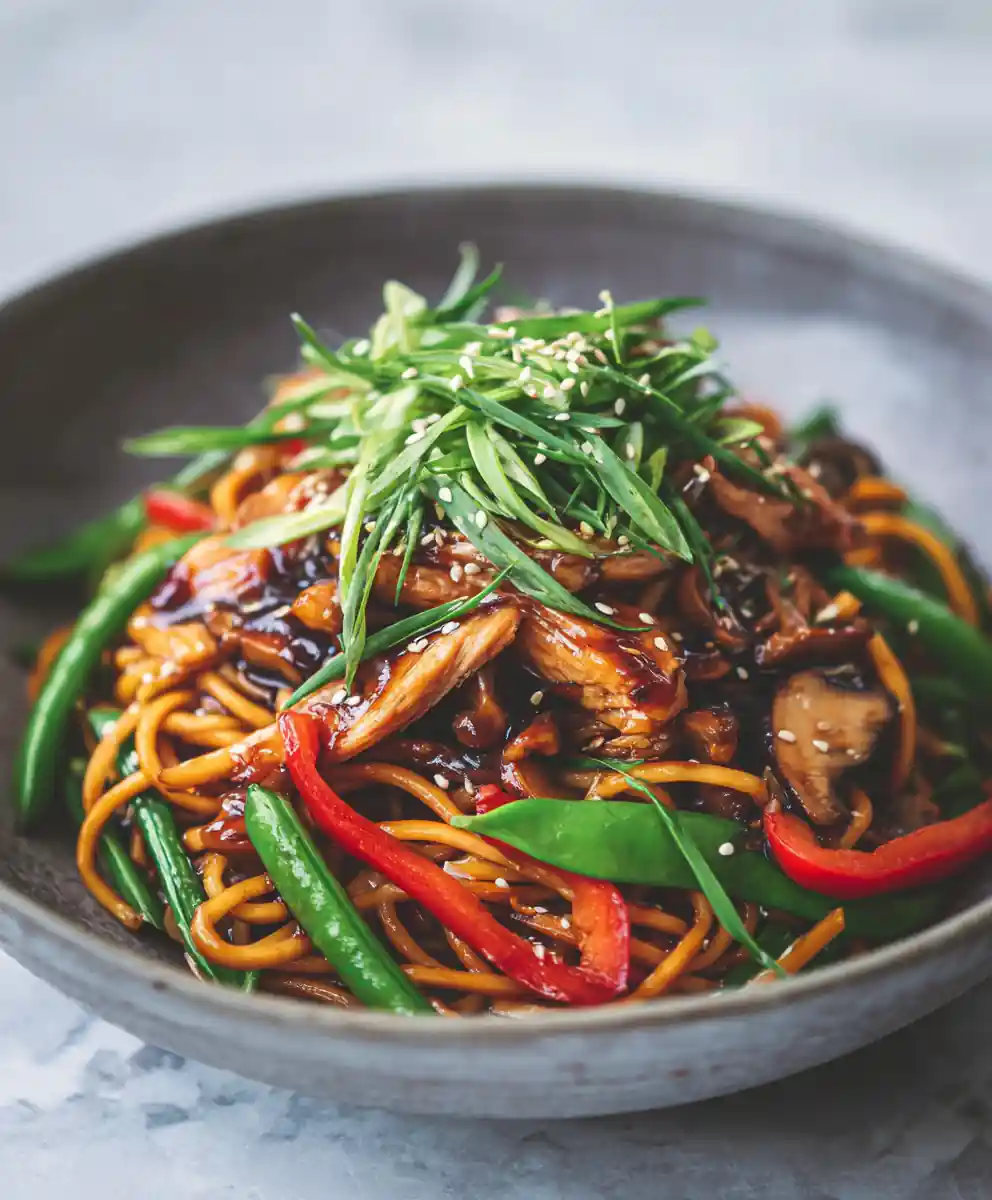
Meal Prep and Customizing Your Lo Mein Stir-Fry
This chicken lo mein recipe is highly adaptable for customization and meal prepping, making it perfect for busy families. I often double the sauce base and freeze half for another quick dinner later in the month.
- Make-Ahead Sauce: Prepare the black garlic and caramelized onion glaze up to 3 days in advance and store it in an airtight container in the refrigerator. This cuts down on weeknight cooking time significantly.
- Vegetable Swaps: Feel free to customize the vegetables based on what you have on hand or what your family prefers. Good additions include broccoli florets, snow peas, water chestnuts, or mushrooms. Ensure they are sliced to cook in the same amount of time as the carrots and bell peppers.
- Protein Variations: If you want to change the protein, shrimp or thinly sliced pork tenderloin work perfectly in this recipe, following the same cooking times as the chicken. For a vegetarian option, use firm tofu pressed and cubed, or seitan.
FAQs
What is black garlic?
Black garlic is fresh garlic that has been aged under controlled heat and humidity. This fermentation process caramelizes the natural sugars, turning the cloves black and creating a soft, chewy texture with a sweet, tangy, and earthy flavor profile, losing the pungent sharpness of raw garlic.
Can I make this chicken lo mein recipe without black garlic?
While the black garlic adds a unique umami depth, you can substitute it with 1/2 teaspoon of tamarind paste or a small amount of dark soy sauce for a similar savory, rich note, though the flavor will not be identical.
How do I get my lo mein sauce to cling to the noodles and not be watery?
The key is using a cornstarch slurry. Ensure you whisk the cornstarch completely into cold water before adding it to the simmering sauce. The high heat activates the cornstarch, creating a glossy, thick sauce that coats the noodles evenly.
Can I use dried lo mein noodles instead of fresh?
Yes, you can use dried noodles. Follow the package instructions carefully and make sure not to overcook them during the initial boiling. Rinse them quickly to stop the cooking process and add them to the wok for the final toss.
How should I store and reheat leftovers?
Store leftovers in an airtight container in the refrigerator for up to 3 days. The best way to reheat is on the stovetop in a skillet over medium heat, adding a splash of water or broth to loosen the noodles and sauce as they warm up.
What other vegetables can I add to this recipe?
This stir-fry base works well with many vegetables. Try adding mushrooms, broccoli florets, sliced zucchini, or cabbage. The key is to add hard vegetables (like broccoli) first, followed by softer vegetables (like zucchini) to ensure even cooking.
Conclusion
This chicken lo mein recipe proves that family comfort food can be both quick and flavorful, elevating a weeknight staple with a special black garlic glaze.
Pin this recipe now for quick access whenever you need a delicious and easy meal prep idea.
Print
chicken lo mein recipe
- Total Time: 30 minutes
- Yield: 4 servings 1x
- Diet: General
Description
This quick and easy chicken lo mein recipe, ready in about 30 minutes, features tender chicken and vegetables tossed in a unique black garlic and caramelized onion glaze for a savory, sweet, and glossy finish.
Ingredients
- 400 g Lo Mein Noodles, fresh or dried
- 450 g Boneless, skinless chicken breast or thigh, thinly sliced against the grain
- 2 tablespoons vegetable oil, divided (high-smoke-point oil)
- 1 large red onion (200 g), thinly sliced
- 6 cloves black garlic
- 2.5 cm fresh ginger, grated
- 4 cloves garlic, minced
- 1 large carrot (150 g), julienned
- 1 large red bell pepper (150 g), thinly sliced
- 100 g snap peas, trimmed
- 100 g shiitake mushrooms, sliced, stems removed
- 100 g bok choy, chopped (white stems and green leaves separated)
- 2 tablespoons cornstarch, divided
- 60 mL (1/4 cup) alcohol-free soy sauce, plus 1 tablespoon
- 60 mL (1/4 cup) vegetable broth
- 2 tablespoons rice vinegar
- 1 tablespoon light brown sugar
- 1 teaspoon toasted sesame oil
- 2 tablespoons water (for cornstarch slurry)
- For Garnish: 2 spring onions, thinly sliced; 1 teaspoon toasted sesame seeds
Instructions
- Prepare Chicken Marinade: Combine the sliced chicken with 1 tablespoon soy sauce and 1 tablespoon cornstarch in a medium bowl. Toss gently to coat all pieces and set aside to rest for at least 15 minutes.
- Make Caramelized Onion Glaze Base: Heat 1 tablespoon vegetable oil in a large skillet or wok over medium-low heat. Add the thinly sliced red onion and cook slowly, stirring occasionally, for 15-20 minutes until deeply caramelized and tender.
- Blend Glaze: Transfer the caramelized onions to a small blender or food processor. Add the black garlic cloves, 60 mL soy sauce, vegetable broth, rice vinegar, and brown sugar to the blender. Blend until completely smooth and thick, then set aside.
- Cook Lo Mein Noodles: Cook the lo mein noodles according to package directions until al dente. Drain immediately and rinse briefly with cool water to stop the cooking process. Toss the noodles with 1 teaspoon vegetable oil to prevent clumping.
- Cook Marinated Chicken: Heat the remaining 1 tablespoon vegetable oil in the same skillet or wok over medium-high heat. Add the marinated chicken in a single layer (cook in batches if necessary) and cook for 3-4 minutes per side until browned and cooked through. Remove the chicken from the pan and set it aside.
- Stir-fry Vegetables: Add the grated ginger and minced garlic to the skillet and stir-fry for 30 seconds until fragrant. Add the julienned carrot and red bell pepper first; stir-fry for 2-3 minutes until they begin to soften. Add the snap peas and sliced shiitake mushrooms and cook for another 2 minutes. Add the bok choy stems and cook for 1 minute, followed by the green leaves for 30 seconds until just wilted.
- Combine and Thicken Sauce: Return the cooked chicken to the skillet with the vegetables. Whisk together the remaining 1 tablespoon cornstarch with 2 tablespoons water to create a smooth slurry. Pour the prepared Black Garlic & Caramelized Onion Glaze into the skillet, bringing it to a simmer. Stir in the cornstarch slurry and cook, stirring constantly, for 1-2 minutes until the sauce thickens and becomes glossy.
- Final Toss and Serve: Add the cooked lo mein noodles to the skillet with the chicken and vegetables. Toss everything together vigorously to ensure all components are thoroughly coated in the glaze. Stir in the toasted sesame oil just before serving, then garnish generously with spring onions and sesame seeds.
Notes
To achieve the best flavor for the glaze, do not rush the onion caramelization step; cook slowly over medium-low heat until deep brown and sweet. Store leftovers in an airtight container for up to 3 days. Chicken thighs can be substituted for breasts for a juicier result.
- Prep Time: 15 minutes
- Cook Time: 15 minutes
- Category: Main Course
- Method: Stir-frying
- Cuisine: Chinese-American
Nutrition
- Serving Size: 1 serving (approx. 300 g)
- Calories: 610 calories
- Sugar: 3 g
- Sodium: 750 mg
- Fat: 7.5 g
- Saturated Fat: 1.5 g
- Unsaturated Fat: 4 g
- Trans Fat: 0 g
- Carbohydrates: 75 g
- Fiber: 1.5 g
- Protein: 41 g
- Cholesterol: 100 mg
FREE PRINTABLE RECIPE
Get the Printable Recipe PDF (Free)
Enter your email and we’ll send you the ingredients + step-by-step instructions as a clean PDF you can save to your phone.
- ✅ Printable PDF (ingredients + steps)
- ✅ Save it to your phone (no long scrolling)
- ✅ Includes cook time + servings
- ✅ Easy to follow
FAQ
Where’s the full recipe?
It’s delivered as a printable PDF so you can save it and cook without scrolling.
I didn’t get the email.
Check Spam/Promotions and search your inbox for your site name. Then click Confirm to receive the PDF.