
There’s nothing quite like the aroma of fresh, homemade bread filling your kitchen, and I’ve found the perfect way to make it happen without stress. That signature tangy scent and crisp, chewy crust are truly irresistible, especially when you master this easy sourdough bread recipe with starter. Our simple guide is your ticket to bakery-quality loaves right in your kitchen. Perfect for busy families, this process makes homemade bread a joy, not a chore. I often bake a loaf on a Sunday afternoon to enjoy throughout the week with family-friendly meals.

Key Ingredients and Better Choices
To make this truly easy sourdough bread recipe with starter, here are the core ingredients and some thoughtful options for enhancing your loaf, making it perfect for healthy eating. These are the foundations of delicious, hearty, family-friendly bread.
- Active Sourdough Starter: 100 g (1/2 cup) active sourdough starter (fed and bubbly, ready to rise).
- Filtered Water: 350 g (1 1/2 cups) filtered water, lukewarm (hydration for dough, helps starter activate).
- Strong Bread Flour: 450 g (3 2/3 cups) strong bread flour (high protein content is key for good structure and elasticity). (Smart swap: You can use a portion of whole wheat flour for a heartier loaf if you prefer, like 100g of organic whole wheat flour for added nutrition).
- Fine Sea Salt: 9 g (1 1/2 teaspoons) fine sea salt (enhances flavor and controls fermentation). (Swap: Reduce by 1/4 teaspoon for a lower-sodium option if needed).
- Whole Head Garlic: 1 whole head garlic (roasts to a sweet, mellow flavor).
- Olive Oil: 15 ml (1 tablespoon) olive oil, plus extra for loaf and garnish (for roasting garlic and enriching the dough). (Better-for-you upgrade: I always reach for a good quality extra virgin olive oil for that premium ingredient touch).
- Fresh Rosemary: 15 g (2 tablespoons) fresh rosemary, finely chopped, plus small sprigs for garnish (aromatic, pairs beautifully with garlic).
For even better-for-you upgrades, opt for organic bread flour or experiment with whole grain heirloom flours for added nutrition. To maintain a vigorous sourdough starter, feed it regularly and store flour in an airtight container in a cool, dark place to keep it fresh for this easy sourdough bread recipe with starter.
Easy Step-by-Step Directions
1. Prepare Your Starter & Garlic (10 min prep)
Ensure your 100 g (1/2 cup) active sourdough starter is fed, bubbly, and passes the float test, ready to work its magic. It should have a light, yeasty aroma, signifying peak activity for this easy sourdough bread recipe with starter.
*Garlic Prep: Preheat oven to 200°C (400°F). Slice off the top 1/4 inch of one whole garlic head, drizzle with 5 ml (1 teaspoon) olive oil, wrap in foil, and roast for 30-40 minutes until cloves are very soft and golden brown. Let cool slightly, then mash and mix with 15 g (2 tablespoons) finely chopped fresh rosemary, a pinch of salt, and a dash of black pepper. Set this aromatic mixture aside for later.
2. Mix the Dough (15 min prep)
In a large mixing bowl, combine 100 g (1/2 cup) active sourdough starter and 350 g (1 1/2 cups) lukewarm filtered water, stirring gently until the starter mostly dissolves. Add 450 g (3 2/3 cups) strong bread flour and mix with a Danish whisk or your hands until no dry flour remains and a shaggy dough forms. Cover the bowl with a clean kitchen towel or plastic wrap and let it rest for 30 minutes (autolyse); the dough will feel quite sticky and somewhat coarse initially.
3. Bulk Fermentation & Folds (4-6 hours)
After the autolyse, sprinkle 9 g (1 1/2 teaspoons) fine sea salt over the dough. Incorporate the salt by gently squeezing and folding the dough for 2-3 minutes. Perform a series of coil folds: gently pull a section of dough up from the edge, stretch it over the center, and let it fall. Rotate the bowl and repeat 3-4 times. Cover and let rest for 30 minutes. Repeat these coil folds three more times, with 30-minute rest periods in between each set. After the last fold, allow the dough to bulk ferment for 2-3 hours at room temperature; it should increase in volume by about 20-30% and look airy, with visible bubbles on the surface. My little trick for weeknight baking is sometimes I’ll do the bulk ferment for longer in a slightly cooler spot if I’m busy. If your dough isn’t looking airy after bulk fermentation, try moving it to a warmer spot or giving it another hour.
4. Shape Your Loaf (10-15 min prep)
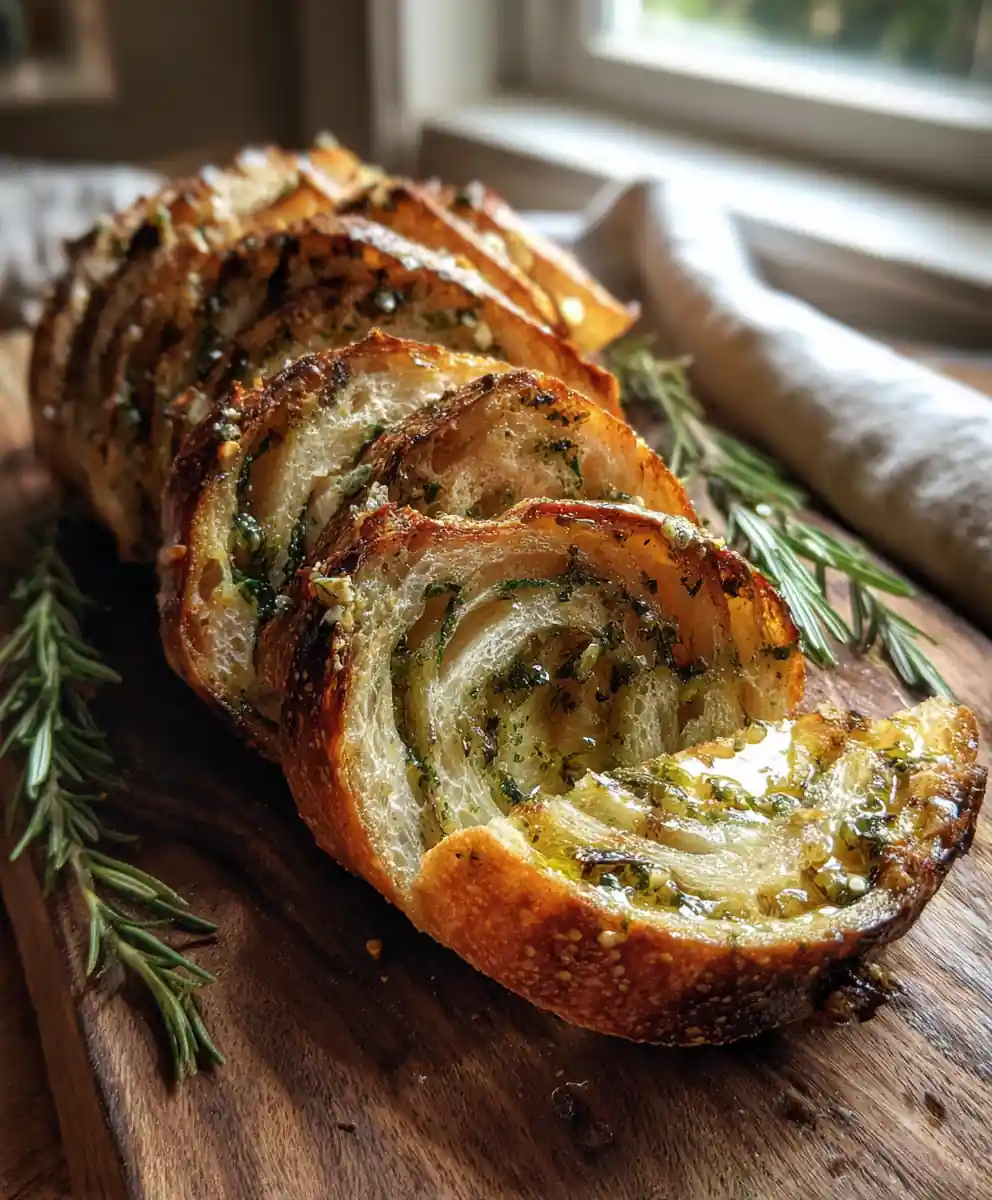
Gently turn the dough out onto a lightly floured surface. Lightly stretch the dough into a rough rectangle. Evenly spread the prepared roasted garlic and rosemary mixture over the entire surface of the dough, leaving a small border around the edges. Carefully roll the dough up tightly from one long end to create a log, ensuring the flavorful filling is enclosed. This creates a beautiful swirl in your easy sourdough bread recipe with starter.
With the seam side up, gently flatten the log slightly. Fold one end towards the middle, then the other end over it, creating a compact shape. Flip the dough over and cup your hands around it, rotating it on the counter to create tension and form a tight boule with the swirl contained inside.
5. Cold Proofing (8-12 hours or overnight)
Place the shaped dough, seam-side up, into a floured banneton basket or a bowl lined with a floured kitchen towel. Cover the banneton or bowl with plastic wrap or a shower cap and refrigerate for 12-18 hours. This cold proof deeply develops flavor and makes the dough much easier to handle and score for an impressive finish to your easy sourdough bread recipe with starter.
6. Baking Day! (45-55 min bake time)
Preheat your oven to 230°C (450°F) with a Dutch oven inside for at least 30 minutes. The Dutch oven must be very hot. Carefully remove it. Gently invert the cold dough from the banneton into the hot Dutch oven (using parchment paper can help transfer). Score the top of the dough deeply with a sharp razor blade, making one deep cut or a decorative pattern. This scoring allows the bread to expand beautifully as it bakes.
Cover the Dutch oven and bake for 25 minutes. Remove the lid and continue to bake for another 20-25 minutes, or until the crust is deep golden brown and the internal temperature reaches 93-99°C (200-210°F). The kitchen will smell incredible, a testament to your homemade easy sourdough bread recipe with starter. Transfer the finished loaf to a wire rack to cool completely for at least 2 hours; this is crucial for the crumb structure and overall flavor. (Quick-fix hack: For quicker family meals, while the cold proof is recommended for flavor, you can skip it and bake directly after shaping, though the flavor may be less complex).
Best Ways to Serve and Store It
Homemade sourdough enhances everyday meals and special gatherings.
- Occasions: Perfect for morning toast, hearty sandwiches, or as a side with soups. Great for family brunches.
- Pairing suggestions: Serve with quality butter, a drizzle of olive oil, mashed avocado, or for quick bruschetta.
- Storage and reheating: Store whole loaves in a bread bag at room temperature for 2-3 days. I slice and freeze my bread for up to 3 months. Reheat whole loaves in a 350°F (175°C) oven, or toast individual slices.
Wellness & Lifestyle Benefits of Homemade Sourdough
This easy sourdough bread recipe with starter brings significant wellness advantages.
- Enhanced Digestibility: Fermentation makes nutrients more available and the bread easier to digest.
- Wholesome Ingredients: You control all ingredients; no preservatives for pure, natural goodness.
- Family-Friendly Meals: A satisfying, healthy carb source, appealing to all ages for enjoyable family dinners.
- Mindful Baking: Crafting your own easy sourdough bread recipe with starter is rewarding and de-stressing.
Everyday Advantages of Making This Recipe
Baking your own easy sourdough bread with starter offers practical daily perks.
- Cost-Savings: Significantly reduces grocery bills versus buying artisan loaves.
- Incredible Flavor & Texture: Achieve superior, complex flavor and perfect chewy texture.
- Better Ingredients: Choose high-quality, often organic, pure ingredients.
- Sense of Accomplishment: Experience pride serving delicious, homemade bread.
Tips, Variations, and Dietary Adjustments
- Pro kitchen advice: Experiment with scoring patterns for beautiful crusts. I sometimes spray my Dutch oven with water before baking for an extra crispy crust. Cool bread completely before slicing.
- Customizations for diets: For gluten-friendly, use a dedicated gluten-free sourdough starter with GF flours. Reduce salt for low-sodium needs.
- Kid-approved variations: Bake smaller rolls or add cheese chunks during shaping for a fun snack.
- Allergy-safe swaps: Ensure your starter uses suitable flours. Check labels for cross-contamination for severe allergies.
FAQs
“Can this easy sourdough bread recipe be part of a healthy eating plan?”
Yes! Its fermentation aids digestion and nutrient absorption, making homemade sourdough excellent for healthy eating and balanced meals.
“What’s the best way to keep my sourdough starter healthy for regular baking?”
Feed your starter regularly with equal parts flour and water. Store in the fridge, feeding at least weekly. I ensure my starter is active before starting a loaf.
“Is this easy sourdough bread recipe good for weekly meal prep?”
Absolutely! Bake extra loaves early in the week. Store one at room temp; slice and freeze the rest for up to three months. This provides convenient, high-protein snacks.
“How do I get a really crispy crust on my homemade sourdough?”
Steam creates a crispy crust. Preheat your Dutch oven with the lid to 450°F (230°C). Covered baking traps steam, then uncovered baking allows perfect browning and crispness.
“Can I use whole wheat flour for this easy sourdough bread recipe?”
Yes, for added nutrition, substitute up to 50% of the bread flour with whole wheat flour. This yields a denser, heartier loaf with more robust flavor.
“How do I know when my sourdough bread is perfectly baked?”
A baked loaf has a deep golden-brown crust and sounds hollow when tapped on the bottom. Internal temperature should be 200-210°F (93-99°C).
Conclusion
Baking your own easy sourdough bread with starter is a rewarding journey, bringing delicious, wholesome food to your table with pride. For healthier, tastier family dinners, save this amazing recipe to Pinterest now!
Print
easy sourdough bread recipe with starter
- Total Time: 1080 minutes
- Yield: 1 loaf (8-10 servings) 1x
- Diet: General
Description
This recipe guides you through making an easy sourdough bread with a tangy scent and crisp, chewy crust, enhanced with roasted garlic and rosemary, perfect for family meals. The process is designed to be stress-free, yielding bakery-quality loaves right in your kitchen.
Ingredients
- 100 g active sourdough starter (0.5 cup), fed and bubbly
- 350 g filtered water (1.5 cups), lukewarm
- 450 g strong bread flour (3.67 cups) (swap: portion of whole wheat flour for heartier loaf, e.g., 100g organic whole wheat flour)
- 9 g fine sea salt (1.5 teaspoons) (swap: reduce by 0.25 teaspoon for lower-sodium)
- 1 whole head garlic
- 15 ml olive oil (1 tablespoon), plus extra for loaf and garnish (upgrade: good quality extra virgin olive oil)
- 15 g fresh rosemary (2 tablespoons), finely chopped, plus small sprigs for garnish
Instructions
- Prepare Starter & Garlic: Ensure your 100 g (0.5 cup) active sourdough starter is fed, bubbly, and passes the float test, signifying peak activity. Preheat oven to 200 degrees C (400 degrees F). Slice off the top 0.25 inch of one whole garlic head, drizzle with 5 ml (1 teaspoon) olive oil, wrap in foil, and roast for 30-40 minutes until cloves are very soft and golden brown. Let cool slightly, then mash and mix with 15 g (2 tablespoons) finely chopped fresh rosemary, a pinch of salt, and a dash of black pepper. Set this aromatic mixture aside.
- Mix The Dough: In a large mixing bowl, combine 100 g (0.5 cup) active sourdough starter and 350 g (1.5 cups) lukewarm filtered water, stirring gently until the starter mostly dissolves. Add 450 g (3.67 cups) strong bread flour and mix until no dry flour remains and a shaggy dough forms. Cover the bowl with a clean kitchen towel or plastic wrap and let it rest for 30 minutes (autolyse).
- Bulk Fermentation & Folds: After autolyse, sprinkle 9 g (1.5 teaspoons) fine sea salt over the dough. Incorporate salt by gently squeezing and folding the dough for 2-3 minutes. Perform a series of coil folds: gently pull a section of dough up from the edge, stretch it over the center, and let it fall. Rotate the bowl and repeat 3-4 times. Cover and let rest for 30 minutes. Repeat these coil folds three more times, with 30-minute rest periods between each set. After the last fold, allow the dough to bulk ferment for 2-3 hours at room temperature; it should increase in volume by about 20-30 percent and look airy, with visible bubbles.
- Shape Your Loaf: Gently turn the dough out onto a lightly floured surface. Lightly stretch the dough into a rough rectangle. Evenly spread the prepared roasted garlic and rosemary mixture over the entire surface of the dough, leaving a small border around the edges. Carefully roll the dough up tightly from one long end to create a log, ensuring the flavorful filling is enclosed. With the seam side up, gently flatten the log slightly. Fold one end towards the middle, then the other end over it, creating a compact shape. Flip the dough over and cup your hands around it, rotating it on the counter to create tension and form a tight boule.
- Cold Proofing: Place the shaped dough, seam-side up, into a floured banneton basket or a bowl lined with a floured kitchen towel. Cover the banneton or bowl with plastic wrap or a shower cap and refrigerate for 12-18 hours.
- Baking Day: Preheat your oven to 230 degrees C (450 degrees F) with a Dutch oven inside for at least 30 minutes. Carefully remove the hot Dutch oven. Gently invert the cold dough from the banneton into the hot Dutch oven (parchment paper can assist). Score the top of the dough deeply with a sharp razor blade, making one deep cut or a decorative pattern. Cover the Dutch oven and bake for 25 minutes. Remove the lid and continue to bake for another 20-25 minutes, or until the crust is deep golden brown and the internal temperature reaches 93-99 degrees C (200-210 degrees F). Transfer the finished loaf to a wire rack to cool completely for at least 2 hours.
Notes
To maintain a vigorous sourdough starter, feed it regularly and store flour in an airtight container in a cool, dark place. For quicker family meals, you can skip the cold proof and bake directly after shaping, though the flavor may be less complex.
- Prep Time: 90 minutes
- Cook Time: 90 minutes
- Category: Bread
- Method: Baking
- Cuisine: European
Nutrition
- Serving Size: 1 slice (approx. 70-80 g)
- Calories: 250 calories
- Sugar: 2 g
- Sodium: 250 mg
- Fat: 5 g
- Saturated Fat: 1 g
- Unsaturated Fat: 3 g
- Trans Fat: 0 g
- Carbohydrates: 45 g
- Fiber: 3 g
- Protein: 10 g
- Cholesterol: 0 mg
FREE PRINTABLE RECIPE
Get the Printable Recipe PDF (Free)
Enter your email and we’ll send you the ingredients + step-by-step instructions as a clean PDF you can save to your phone.
- ✅ Printable PDF (ingredients + steps)
- ✅ Save it to your phone (no long scrolling)
- ✅ Includes cook time + servings
- ✅ Easy to follow
FAQ
Where’s the full recipe?
It’s delivered as a printable PDF so you can save it and cook without scrolling.
I didn’t get the email.
Check Spam/Promotions and search your inbox for your site name. Then click Confirm to receive the PDF.