
I used to think tofu was destined to be bland and spongy, but this changed everything. This specific frozen tofu recipe transforms basic extra-firm tofu into a remarkably porous, meaty, and hearty centerpiece. When we pair that texture with a quick sweet-and-spicy gochujang-maple glaze, every bite is bursting with flavor, delivering a family-friendly meal that rivals takeout. This high-protein snack is perfect for busy weeknights, and the technique ensures every bite of this frozen tofu recipe absorbs the incredible glaze.
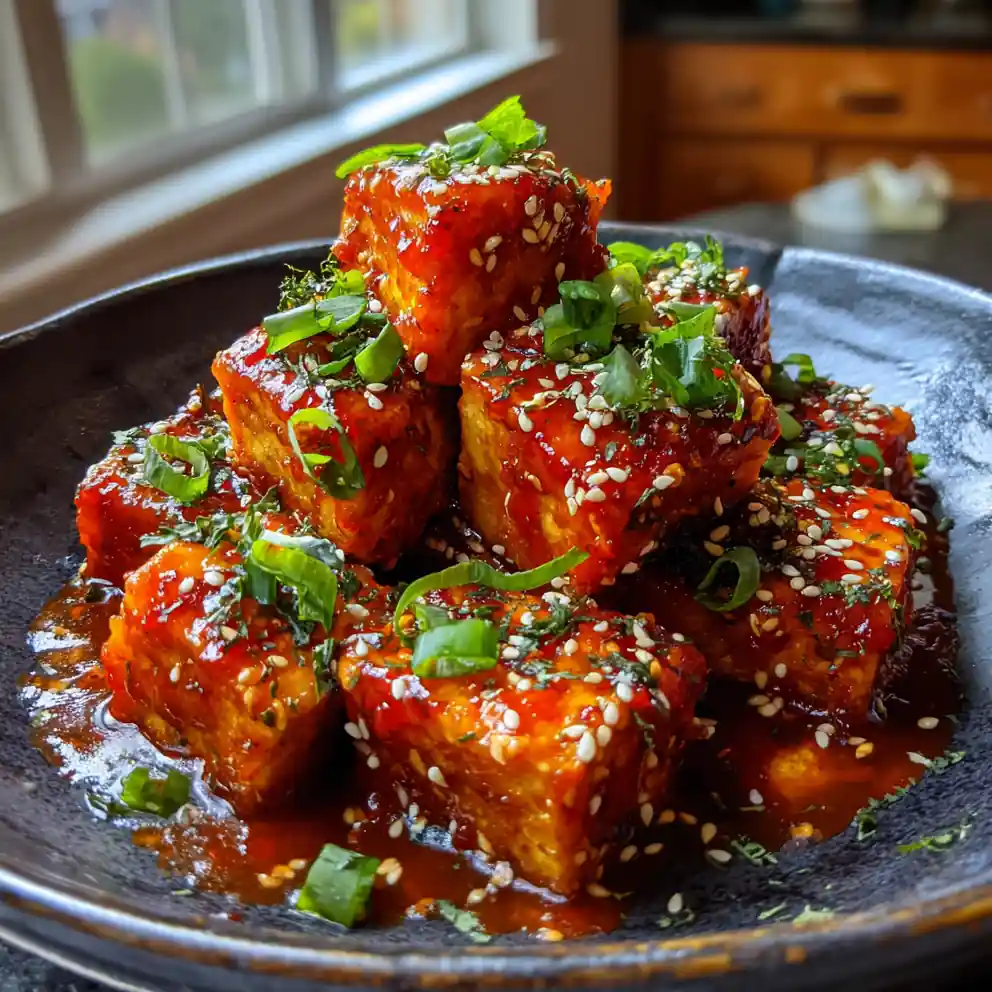
Ingredients
- 500 g (17.6 oz) extra-firm tofu block, previously frozen and thawed
Use extra-firm tofu as it holds its shape best during freezing and pressing. Freezing creates the porous texture that soaks up the glaze in this frozen tofu recipe. Do not substitute soft or silken tofu. - 15 ml (1 tbsp) vegetable oil
A high smoke-point oil like canola or sunflower oil is ideal for pan-frying. Avoid olive oil, as its flavor profile doesn’t match the Korean-inspired sauce. - 60 g (1/4 cup) gochujang (Korean chili paste)
Gochujang provides the essential fermented heat and rich red color for this glaze. Adjust the amount to control the spice level; use slightly less for a milder, more family-friendly version. (Swap: For a lower-heat version for kids, substitute some gochujang with ketchup.) - 60 ml (1/4 cup) maple syrup
Pure maple syrup provides natural sweetness to balance the gochujang’s heat. This component helps create the desirable sticky consistency of the glaze. (Swap: Use brown sugar or honey as substitutes, although maple syrup provides the best flavor for this dish.) - 45 ml (3 tbsp) naturally brewed soy sauce, alcohol-free
Soy sauce adds the crucial salty, umami depth to the sauce base. Naturally brewed varieties offer a richer flavor; choose low-sodium if available. (Swap: Use tamari for a gluten-free option.) - 15 g (1 tbsp) fresh ginger, grated, and 10 g (2 cloves) fresh garlic, minced
These fresh aromatics provide the savory foundation for the glaze. Grate the ginger and mince the garlic finely for even distribution in the sauce. - 240 ml (1 cup) vegetable broth
The broth thins the initial glaze mixture, allowing the tofu to simmer and fully absorb the flavors. Use low-sodium broth to avoid over-salting the dish. - 5 ml (1 tsp) toasted sesame oil
Added near the end, this provides a powerful aromatic finish to the dish. Toasted sesame oil has a much stronger flavor than untoasted sesame oil, so ensure you have the correct variety. - 15 g (1 tbsp) cornstarch, and 30 ml (2 tbsp) cold water
These are combined to create a cornstarch slurry used for thickening the sauce at the end. Using cold water prevents clumping and ensures a smooth, glossy glaze. - Garnish: 15 g (1 tbsp) toasted white sesame seeds and 1-2 scallions, green parts only, thinly sliced
These garnishes add contrasting color, texture, and fresh flavor to finish the dish. Ensure the sesame seeds are toasted for maximum flavor.
Instructions
- Thawing and Pressing: Thaw the previously frozen tofu block completely, ideally in the refrigerator overnight. Press the thawed tofu between layers of towels with a heavy object on top for at least 30 minutes. This essential step removes excess water and creates the signature porous texture for this frozen tofu recipe.
- Cutting and Pan-Frying: Cut the pressed tofu into 2.5 cm (1-inch) cubes. Heat the vegetable oil in a large non-stick skillet over medium-high heat. Add the tofu cubes and pan-fry for 6-8 minutes, turning occasionally, until golden brown and slightly crispy on all sides. Remove the tofu from the skillet and set aside.
- Glaze Preparation: In a medium bowl, whisk together the gochujang, maple syrup, soy sauce, grated ginger, minced garlic, vegetable broth, and toasted sesame oil until well combined. Ensure the ingredients are fully incorporated before adding them to the pan.
- Simmering the Glaze: Pour the gochujang-maple glaze mixture into the same skillet and bring to a simmer over medium heat. Cook, stirring occasionally, for 3-4 minutes until the sauce slightly thickens and reduces. The heat helps meld the flavors together and deepen the sauce’s color.
- Coating the Tofu: Return the browned tofu cubes to the skillet, ensuring they are coated thoroughly with the glaze. Reduce the heat to low, cover, and simmer for 15 minutes. This simmer time allows the porous frozen tofu to absorb the flavors, making it juicy and flavorful from the inside out. I sometimes use a high-sided 10-inch skillet for this step, as it prevents the glaze from overflowing.
- Final Thickening: In a small bowl, whisk together the cornstarch and cold water to create a slurry. Stir the slurry into the simmering glaze. Cook for an additional 1-2 minutes, stirring constantly, until the glaze is glossy and reaches your desired thick consistency, clinging to the tofu. What can go wrong: If the sauce doesn’t thicken quickly, ensure the cornstarch slurry was properly mixed; if needed, add another 1/2 tsp of cornstarch mixed with 1 tsp cold water to a hot spot in the sauce.
- Serving: Remove the skillet from the heat. Transfer the glazed frozen tofu to a shallow serving dish. Garnish generously with toasted white sesame seeds and thinly sliced green scallions.
Why Freezing Tofu Works So Well
This technique is the secret to getting truly flavorful tofu. When fresh tofu freezes, the water molecules expand into ice crystals. As the tofu thaws, these crystals melt and create small pockets and channels within the tofu structure.
These pores make the thawed frozen tofu much more absorbent than fresh tofu. The tofu acts like a sponge, soaking up marinades and glazes during cooking. This process also changes the protein structure, resulting in a chewier, meatier, and less watery texture that holds its shape better in recipes like this gochujang frozen tofu recipe.
Make It Family-Friendly: Kid-Friendly Variations
The gochujang in this frozen tofu recipe can be quite spicy for children. The heat level depends on the specific brand, so always taste a small amount first to gauge its intensity.
- Tame the Heat for Little Ones: Reduce the gochujang by half (use 2 tbsp instead of 1/4 cup) for a milder version. Alternatively, substitute some of the gochujang with ketchup or tomato paste to maintain the color and thickness without the high heat.
- Add More Sweetness: Increase the maple syrup slightly to counteract any remaining heat. A slightly sweeter glaze is often more appealing to young palates and helps balance the savory soy sauce and ginger notes.
- Serve Separately: For picky eaters, offer the tofu and glaze over a bed of plain rice with the glaze on the side for dipping. This allows children to control the amount of sauce on their portion.
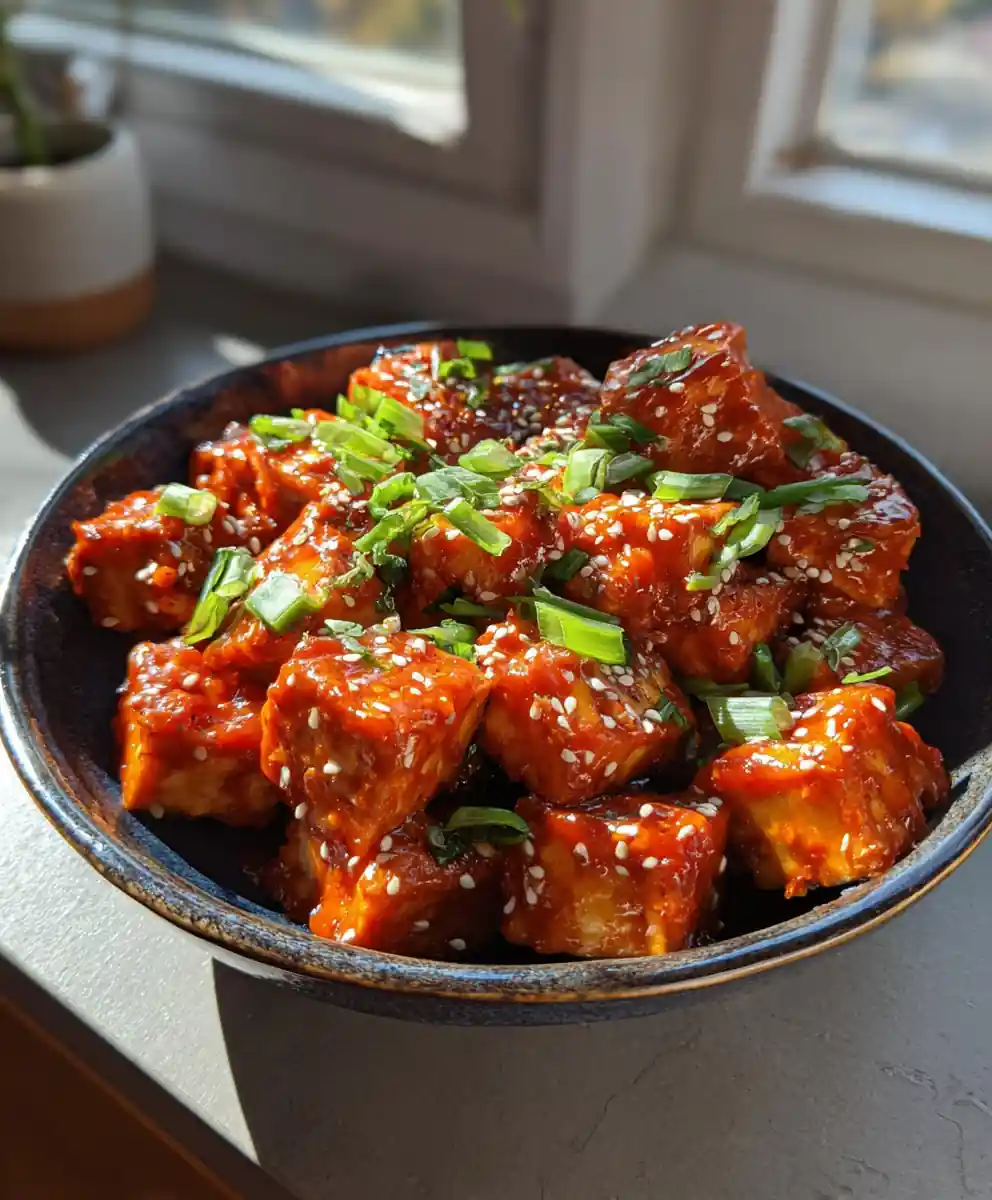
Easy Serving Suggestions
This gochujang glazed frozen tofu recipe is a delicious centerpiece for a complete meal. It works great as a healthy eating option and a high-protein main course for busy weeknights.
- The Perfect Base: Serve the glazed frozen tofu over steamed white rice, brown rice, or even quinoa to soak up every drop of the sauce. For a noodle option, use ramen or udon noodles.
- Vegetable Pairing: Pair with quick-cooking vegetables like steamed broccoli florets or snap peas. A side of quick-pickled cucumbers offers a fresh contrast to the rich, spicy glaze.
- Make-Ahead Meal Prep: This recipe holds up very well for make-ahead meals. Prepare a large batch of the glazed frozen tofu and portion it out with rice and veggies for lunch during the week. Store in airtight containers in the refrigerator for up to 4 days.
FAQs
Q: Do I have to press the tofu after thawing?
A: Yes, pressing is essential. The thawing process releases water, which must be squeezed out to create space for the glaze to be absorbed. Do not skip this step, as it prevents the tofu from becoming soggy.
Q: Can I use fresh, un-frozen tofu for this recipe?
A: You can, but the texture and flavor absorption won’t be as good. The freezing technique changes the tofu’s internal structure significantly to create those absorbent pores. If you use fresh tofu, it won’t absorb the gochujang glaze nearly as effectively.
Q: How long does it take to thaw frozen tofu?
A: Thawing in the refrigerator overnight is ideal. For a faster method, place the vacuum-sealed tofu block in a bowl of hot water for 30 minutes, changing the water once.
Q: My sauce isn’t thickening enough. What went wrong?
A: Ensure you created the cornstarch slurry correctly by whisking cornstarch with cold water. If it’s still too thin after adding it, mix up another half portion of slurry (1 tsp cornstarch + 2 tsp cold water) and stir it into the simmering sauce for another minute.
Q: Can I make this gluten-free?
A: Yes, substitute the soy sauce with tamari. Always ensure your gochujang brand is certified gluten-free, as some contain wheat.
Q: Can I bake or air fry the tofu instead of pan-frying it?
A: Yes, you can bake the pressed frozen tofu cubes on a parchment-lined sheet pan at 400°F (200°C) for 20-25 minutes, or air fry at 400°F (200°C) for 15 minutes, until golden brown.
Conclusion
This frozen tofu recipe proves that tofu can be flavorful, hearty, and satisfying when prepared correctly. Try this quick and comforting meal for your next family dinner and save it for later by saving this recipe to your Pinterest board!
Print
frozen tofu recipe
- Total Time: 55 minutes
- Yield: 4 servings 1x
- Diet: Vegan, Vegetarian
Description
Frozen extra-firm tofu achieves a porous, meaty texture, allowing it to absorb a sweet and spicy gochujang-maple glaze for a flavorful and hearty meal. This high-protein recipe is ideal for busy weeknights and serves as a great takeout alternative.
Ingredients
- 500 g extra-firm tofu block, previously frozen and thawed
- 1 tbsp vegetable oil
- 1/4 cup gochujang (Korean chili paste)
- 1/4 cup maple syrup
- 3 tbsp naturally brewed soy sauce
- 1 tbsp fresh ginger, grated
- 2 cloves fresh garlic, minced
- 1 cup vegetable broth
- 1 tsp toasted sesame oil
- 1 tbsp cornstarch
- 2 tbsp cold water
- 1 tbsp toasted white sesame seeds, for garnish
- 1–2 scallions, green parts only, thinly sliced, for garnish
Instructions
- Thawing and Pressing: Thaw the frozen tofu block completely, preferably overnight in the refrigerator. Press the thawed tofu between layers of towels with a heavy weight on top for at least 30 minutes to remove excess water.
- Pan-Frying Tofu: Cut the pressed tofu into 1-inch cubes. Heat the vegetable oil in a large non-stick skillet over medium-high heat. Add the tofu cubes and pan-fry for 6-8 minutes, turning occasionally, until all sides are golden brown and slightly crispy. Remove the tofu from the skillet and set aside.
- Glaze Preparation: In a medium bowl, whisk together the gochujang, maple syrup, soy sauce, grated ginger, minced garlic, vegetable broth, and toasted sesame oil.
- Simmering Glaze: Pour the glaze mixture into the skillet and bring it to a simmer over medium heat. Cook for 3-4 minutes, stirring occasionally, until the sauce slightly reduces.
- Coating Tofu: Return the browned tofu cubes to the skillet, coating them thoroughly in the glaze. Reduce the heat to low, cover, and simmer for 15 minutes to allow the tofu to absorb the flavors.
- Final Thickening: Create a cornstarch slurry by whisking the cornstarch and cold water together in a small bowl. Stir the slurry into the simmering glaze and cook for 1-2 minutes until the glaze is glossy and thick, clinging to the tofu.
- Serving: Transfer the glazed tofu to a serving dish and garnish with toasted sesame seeds and sliced scallions. Serve hot over rice or noodles.
Notes
To make a milder version suitable for children, reduce the amount of gochujang by half and substitute some with ketchup. Ensure the cornstarch slurry is properly mixed with cold water before adding it to the hot sauce to prevent lumps and achieve a smooth, glossy glaze.
- Prep Time: 30 minutes
- Cook Time: 25 minutes
- Category: Main Dish
- Method: Pan-Frying, Simmering
- Cuisine: Asian, Korean
Nutrition
- Serving Size: 1 serving
- Calories: 180 kcal
- Sugar: 12 g
- Sodium: 700 mg
- Fat: 6 g
- Saturated Fat: 1 g
- Unsaturated Fat: 5 g
- Trans Fat: 0 g
- Carbohydrates: 16 g
- Fiber: 1 g
- Protein: 10 g
- Cholesterol: 0 mg
FREE PRINTABLE RECIPE
Get the Printable Recipe PDF (Free)
Enter your email and we’ll send you the ingredients + step-by-step instructions as a clean PDF you can save to your phone.
- ✅ Printable PDF (ingredients + steps)
- ✅ Save it to your phone (no long scrolling)
- ✅ Includes cook time + servings
- ✅ Easy to follow
FAQ
Where’s the full recipe?
It’s delivered as a printable PDF so you can save it and cook without scrolling.
I didn’t get the email.
Check Spam/Promotions and search your inbox for your site name. Then click Confirm to receive the PDF.