
Bibimbap, meaning “mixed rice” in Korean, is more than just a meal – it’s a vibrant tapestry of flavors and textures. This recipe takes the classic Korean comfort food to new heights with a deeply savory and slightly sweet miso-gochujang glaze and a delightful sesame-nori crunch. We’ll build layers of beautifully prepared vegetables, protein-rich kimchi, and a perfectly fried egg, all brought together by a luscious sauce. Get ready to experience a symphony of taste and color in every bite!
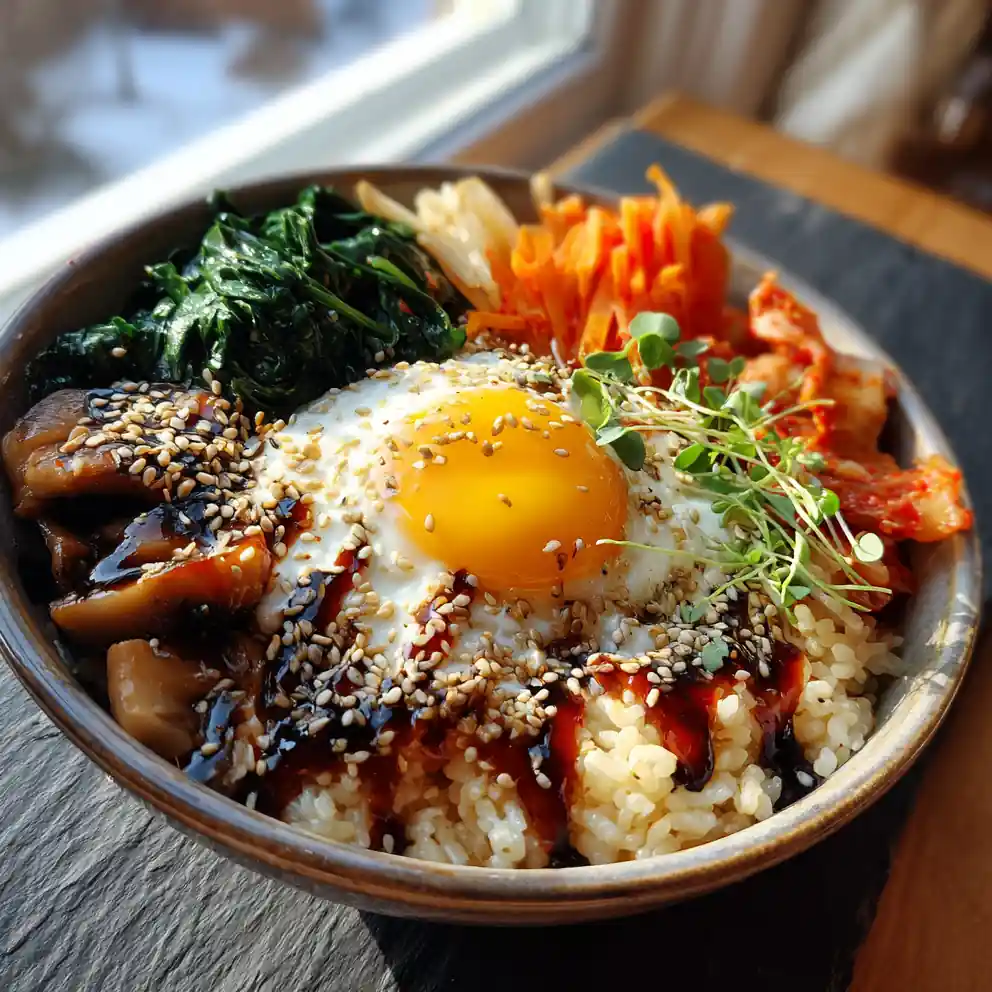
What You’ll Need: The Ingredient Rundown
- Short-Grain Rice (360g / 2 cups): The foundation of bibimbap! Short-grain rice is essential for its slightly sticky texture, which helps bind all the ingredients together. Look for Korean or Japanese short-grain rice for the best results.
- Water for Cooking Rice (540ml / 2 ¼ cups): Use filtered water for the purest flavor. The rice-to-water ratio is crucial for perfectly cooked rice – too much water will result in mushy rice, while too little will leave it undercooked.
- Fresh Spinach Leaves (200g / 7oz): Spinach adds a lovely earthy flavor and vibrant green color. Baby spinach works well, but mature spinach leaves are also great – just be sure to remove any tough stems.
- Carrots (150g / 5oz): Peeled and cut into thin matchsticks, carrots provide a sweet crunch and beautiful orange hue.
- Zucchini (150g / 5oz): Also cut into thin matchsticks, zucchini offers a mild, slightly sweet flavor and a tender texture.
- Bean Sprouts (150g / 5oz): These add a refreshing crispness and a subtle nutty flavor.
- Shiitake Mushrooms (100g / 3½oz): Sliced shiitake mushrooms contribute a rich, umami flavor. Removing the stems ensures a more tender texture.
- Cucumber (1 small ≈100g/3½oz): Sliced into matchsticks, cucumber provides a cool, refreshing element.
- Kimchi (200g / 7oz): Coarsely chopped kimchi is the heart and soul of bibimbap, bringing a spicy, fermented kick. Choose your preferred level of spiciness!
- Large Eggs (2): Fried sunny-side up, the runny yolk adds richness and creaminess when mixed into the rice and vegetables.
- Sesame Oil (30ml / 2 Tbsp): Divided – this fragrant oil is used for both cooking the vegetables and finishing the dish. It adds a nutty, toasted flavor that is characteristic of Korean cuisine.
- Vegetable Oil (15ml / 1 Tbsp): Used for stir-frying the vegetables. A neutral oil like canola or sunflower oil works best.
- Gochujang (30ml / 2 Tbsp): Korean chili paste, the star of the glaze! Gochujang provides a complex flavor profile – spicy, sweet, and umami.
- White Miso Paste (15ml / 1 Tbsp): Adds depth and umami to the glaze, balancing the spiciness of the gochujang.
- Soy Sauce (15ml / 1 Tbsp): Low-sodium soy sauce is recommended to control the saltiness of the glaze.
- Honey (15ml / 1 Tbsp): Provides a touch of sweetness to balance the savory and spicy flavors.
- Rice Vinegar (5ml / 1 tsp): Adds a subtle tanginess to the glaze.
- Toasted Sesame Oil (5ml / 1 tsp): Enhances the sesame flavor in the glaze.
- Smoked Paprika (2.5ml / ½ tsp): Adds a smoky depth to the glaze.
- Toasted Sesame Seeds (15ml / 1 Tbsp): For garnish, adding a nutty flavor and crunchy texture.
- Nori Sheets (15ml / 1 Tbsp): Finely chopped nori sheets provide a savory, umami-rich crunch.
- Microgreens or Fresh Cilantro (2 sprigs): For garnish, adding a fresh, herbaceous note.
Substitutions & Variations
Don’t have all the ingredients on hand? No problem! Here are a few substitutions you can make:
- Rice: If you don’t have short-grain rice, medium-grain rice can be used as a substitute, but the texture won’t be quite as sticky.
- Vegetables: Feel free to swap out vegetables based on your preferences and what’s in season. Bell peppers, mushrooms, or even shredded lettuce can be great additions.
- Kimchi: If you’re not a fan of spicy food, use a milder kimchi or reduce the amount.
- Gochujang: If you can’t find gochujang, you can substitute with a mixture of sriracha and miso paste, but the flavor won’t be exactly the same.
Putting It All Together: A Step-by-Step Guide
- Cook the Rice: Begin by thoroughly rinsing the short-grain rice under cold water until the water runs clear. This removes excess starch, resulting in fluffier, less sticky rice. Combine the rinsed rice with 540ml of water in a rice cooker or a heavy-bottomed pot. If using a pot, bring the mixture to a boil, then reduce the heat to low, cover, and simmer for 12-15 minutes, or until all the water is absorbed and the rice is tender. Crucially, keep the pot covered and let it sit for an additional 10 minutes. This allows the steam to redistribute, ensuring perfectly cooked rice.
- Blanch the Spinach: While the rice is cooking, prepare the spinach. Bring a pot of water to a rolling boil. Add the fresh spinach leaves and blanch for just 30 seconds. This quick blanching preserves the vibrant green color and slightly softens the leaves. Immediately drain the spinach and squeeze out any excess moisture. This prevents a soggy bibimbap. Toss the blanched spinach with ½ tablespoon of sesame oil and a pinch of salt to enhance its flavor.
- Stir-Fry the Vegetables: Heat ½ tablespoon of vegetable oil in a large skillet or wok over medium-high heat. Working in batches, quickly stir-fry each vegetable separately. Start with the carrots for 2-3 minutes, then transfer them to a bowl. Repeat this process with the zucchini, bean sprouts, and shiitake mushrooms, seasoning each batch lightly with salt. Stir-frying each vegetable individually ensures they retain their individual textures and flavors, preventing a mushy mixture.
- Prepare the Miso-Gochujang Glaze: In a small saucepan, combine the gochujang, white miso paste, soy sauce, honey, rice vinegar, toasted sesame oil, and smoked paprika. Place the saucepan over medium heat and bring the mixture to a gentle simmer, stirring constantly. Cook for 3-4 minutes, or until the glaze thickens slightly and becomes glossy. Remove from heat and set aside. The glaze should coat the back of a spoon.
- Fry the Eggs: In the same skillet used for the vegetables, add a little more oil if needed. Fry the eggs sunny-side up until the whites are set but the yolks remain runny, about 2-3 minutes. The runny yolk is a key component of bibimbap, adding richness and creaminess when mixed with the other ingredients.
- Assemble the Bibimbap: Place a generous mound of cooked rice in a wide bowl. Arrange the blanched spinach, stir-fried carrots, zucchini, bean sprouts, mushrooms, sliced cucumber, and chopped kimchi artfully around the rice, creating separate sections for each ingredient. Leave a well in the center of the rice for the fried egg.
- Glaze and Garnish: Drizzle the warm miso-gochujang glaze over the entire bowl in a zig-zag pattern, allowing some of the glaze to pool at the base. This adds a beautiful visual element and ensures every bite is flavorful. Top the bibimbap with the fried egg, then sprinkle generously with toasted sesame seeds, finely chopped nori sheets, and microgreens or fresh cilantro for a final touch of freshness and crunch.
The Art of the Bibimbap Arrangement
The visual appeal of bibimbap is almost as important as its taste. The careful arrangement of the colorful vegetables around the rice isn’t just for show; it’s a reflection of the balance and harmony that Korean cuisine strives for. Each ingredient should be distinct yet complementary, creating a feast for the eyes before the first bite. Don’t be afraid to get creative with your arrangement – there’s no right or wrong way, as long as it’s visually pleasing.Why Miso Enhances the Gochujang
The addition of white miso paste to the gochujang glaze isn’t accidental. Gochujang, while wonderfully flavorful, can sometimes be quite assertive. Miso’s umami-richness mellows the gochujang’s heat and adds a subtle depth of flavor that elevates the entire dish. The fermentation process of miso also contributes a complexity that complements the other ingredients beautifully. It’s a classic Korean technique to balance spicy and savory flavors.The Significance of Sesame and Nori
Sesame seeds and nori aren’t just garnishes; they’re integral to the bibimbap experience. Toasted sesame seeds provide a nutty aroma and a satisfying crunch, while finely chopped nori adds a subtle oceanic flavor and another layer of texture. These ingredients represent the Korean appreciation for textural contrast and the use of simple, high-quality ingredients to enhance the overall flavor profile.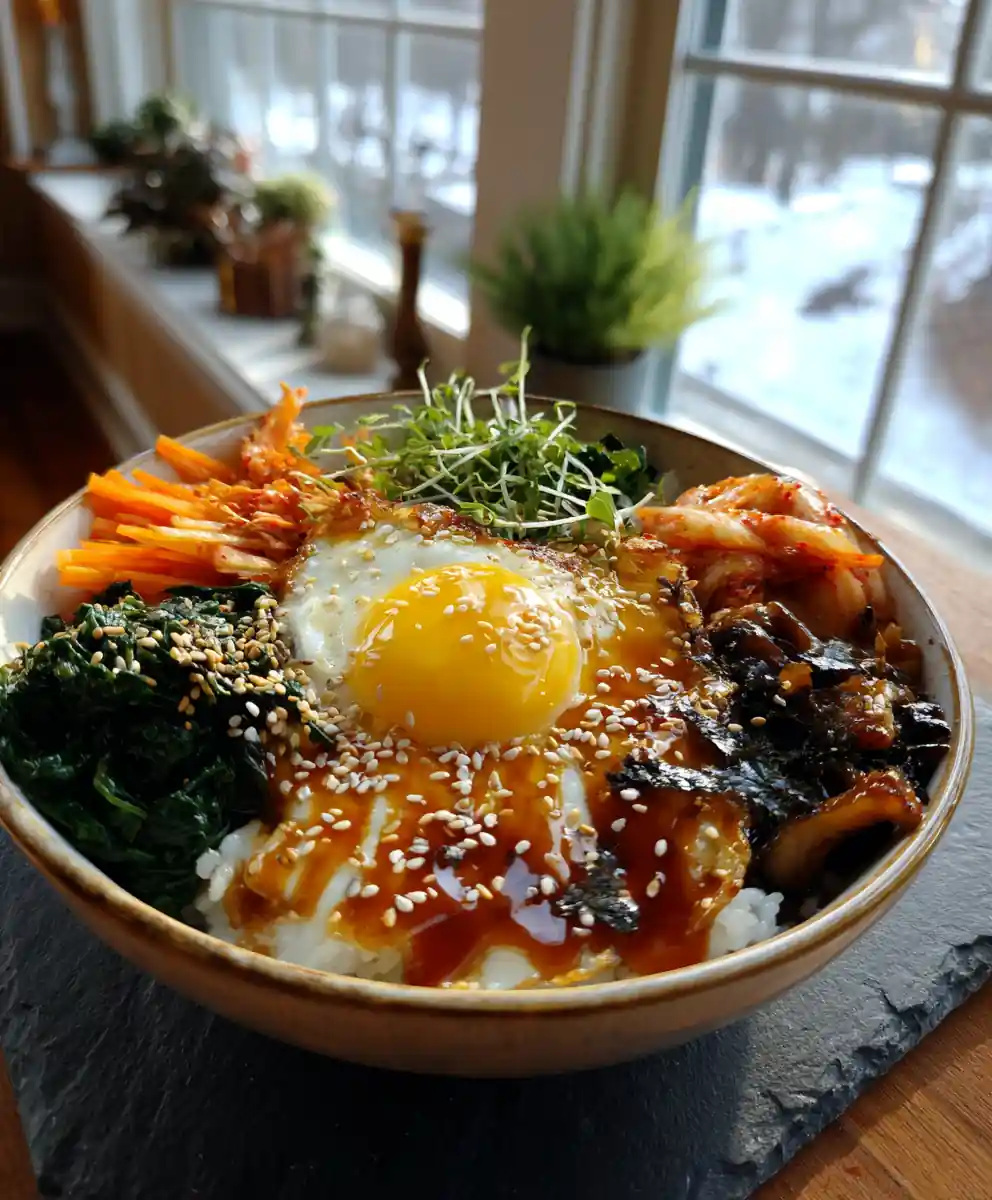
Understanding Bibimbap’s Nutritional Power
Bibimbap is a remarkably balanced meal. The rice provides carbohydrates for energy, the vegetables offer essential vitamins and minerals, the protein from the egg contributes to muscle building and repair, and the kimchi provides probiotics for gut health. The miso-gochujang glaze, while flavorful, is used in moderation, keeping the overall dish relatively healthy. It’s a complete meal in a bowl!Frequently Asked Questions
Can I use brown rice instead of white rice?
Yes, you can! Brown rice will result in a chewier texture and a nuttier flavor. You may need to adjust the cooking time and water ratio according to the package instructions.Can I make the vegetables ahead of time?
Yes, you can stir-fry the vegetables a few hours in advance and store them in the refrigerator. Reheat them briefly before assembling the bibimbap.Is bibimbap supposed to be spicy?
Bibimbap can be as spicy as you like! Adjust the amount of gochujang in the glaze to your preference.Final Thoughts
Korean Bibimbap with Miso-Gochujang Glaze & Sesame-Nori Crunch is more than just a meal; it’s an experience. The vibrant colors, the contrasting textures, and the harmonious blend of flavors create a dish that’s both satisfying and visually stunning. Don’t be intimidated by the number of components – the process is surprisingly straightforward. If you enjoyed this recipe, be sure to save it to Pinterest for later! [Pinterest Save Button/Link] Print
recipe korean bibimbap
- Total Time: 50 minutes
- Yield: 2 servings 1x
- Diet: General
Description
Bibimbap is a vibrant Korean dish featuring mixed rice with savory vegetables, protein-rich kimchi, and a flavorful miso-gochujang glaze. This recipe elevates the classic comfort food with a sesame-nori crunch for added texture and taste.
Ingredients
- 360g (2 cups) short-grain rice
- 540ml (2 ¼ cups) water
- 200g (7oz) spinach leaves
- 150g (5oz) carrots, matchsticks
- 150g (5oz) zucchini, matchsticks
- 150g (5oz) bean sprouts
- 100g (3½oz) shiitake mushrooms, sliced
- 100g (3½oz) cucumber, matchsticks
- 200g (7oz) kimchi, chopped
- 2 large eggs
- 30ml (2 Tbsp) sesame oil, divided
- 15ml (1 Tbsp) vegetable oil
- 30ml (2 Tbsp) gochujang
- 15ml (1 Tbsp) white miso paste
- 15ml (1 Tbsp) soy sauce
- 15ml (1 Tbsp) honey
- 5ml (1 tsp) rice vinegar
- 5ml (1 tsp) toasted sesame oil
- 2.5ml (½ tsp) smoked paprika
- 15ml (1 Tbsp) toasted sesame seeds
- 15ml (1 Tbsp) nori sheets, chopped
- 2 sprigs microgreens or cilantro
Instructions
- Cook the Rice: Rinse rice until water is clear, cook with water until tender, and let steam.
- Blanch Spinach: Briefly boil spinach, drain, squeeze dry, and toss with sesame oil and salt.
- Stir-Fry Vegetables: Separately stir-fry carrots, zucchini, bean sprouts, and mushrooms with a little oil.
- Make the Glaze: Simmer gochujang, miso, soy sauce, honey, vinegar, sesame oil, and paprika until thickened.
- Fry the Eggs: Fry eggs sunny-side up.
- Assemble Bibimbap: Arrange rice, vegetables, and kimchi in a bowl, topping with a fried egg.
- Glaze & Garnish: Drizzle with glaze, sprinkle with sesame seeds, nori, and microgreens.
Notes
For best results, use Korean or Japanese short-grain rice. Stir-frying vegetables separately preserves their texture. Don’t overcook the egg yolk – it should be runny.
- Prep Time: 20 minutes
- Cook Time: 30 minutes
- Category: Korean
- Method: Stir-fry
- Cuisine: Korean
Nutrition
- Serving Size: 1 serving
- Calories: 650 kcal
- Sugar: 25 g
- Sodium: 800 mg
- Fat: 30 g
- Saturated Fat: 5 g
- Unsaturated Fat: 20 g
- Trans Fat: 0 g
- Carbohydrates: 80 g
- Fiber: 8 g
- Protein: 20 g
- Cholesterol: 200 mg
FREE PRINTABLE RECIPE
Get the Printable Recipe PDF (Free)
Enter your email and we’ll send you the ingredients + step-by-step instructions as a clean PDF you can save to your phone.
- ✅ Printable PDF (ingredients + steps)
- ✅ Save it to your phone (no long scrolling)
- ✅ Includes cook time + servings
- ✅ Easy to follow
FAQ
Where’s the full recipe?
It’s delivered as a printable PDF so you can save it and cook without scrolling.
I didn’t get the email.
Check Spam/Promotions and search your inbox for your site name. Then click Confirm to receive the PDF.