
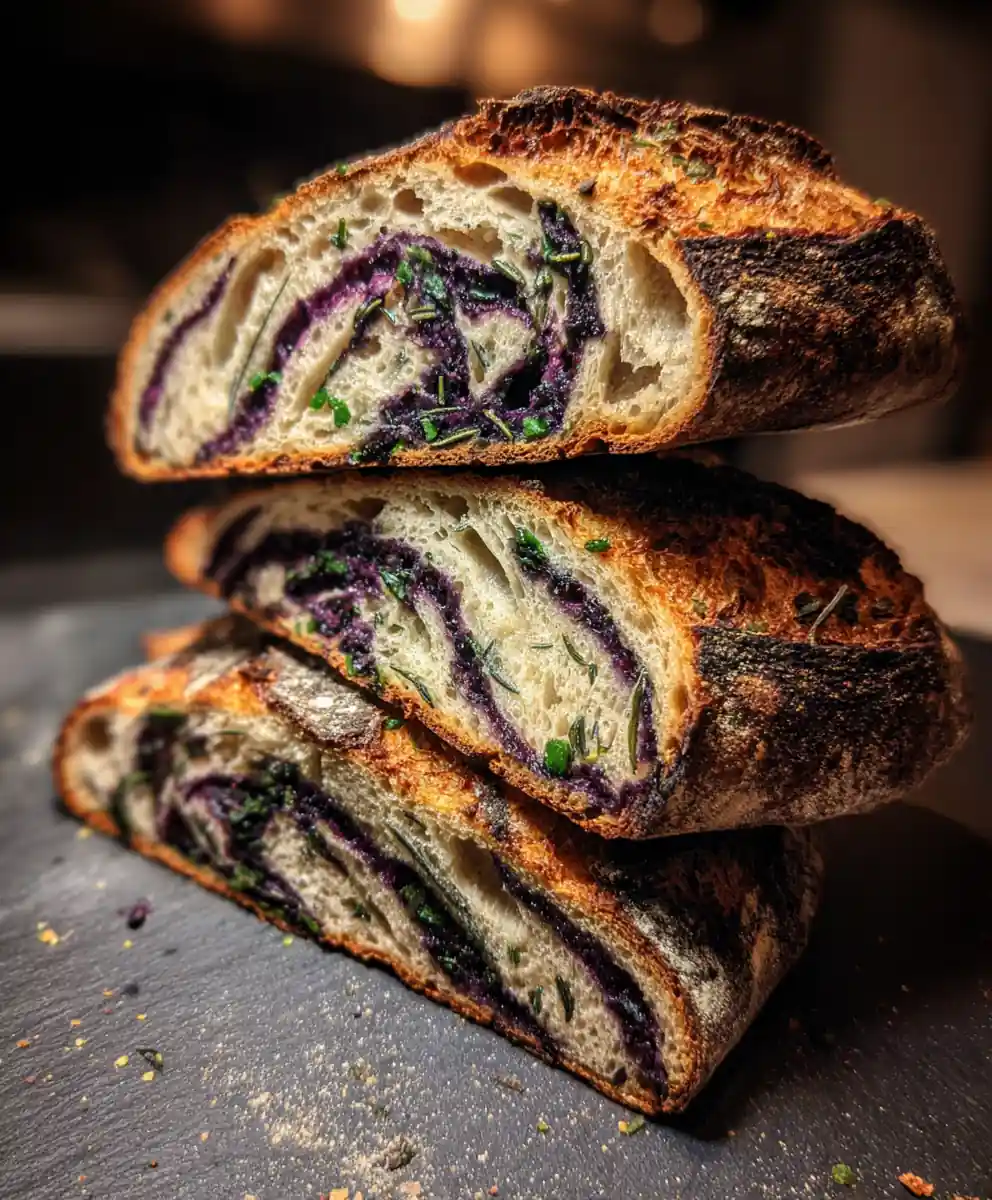
I’ve tried a lot of sourdough variations, but this rustic whole wheat sourdough bread recipe with a garlic-rosemary swirl is my current favorite. The aroma of roasted garlic and fresh rosemary transforms the classic tang of whole wheat sourdough into something truly special. This recipe transforms a classic whole wheat boule into a showstopper, infusing every slice with sweet, roasted garlic and aromatic rosemary. We’ll use a straightforward process that includes a long cold proof for maximum flavor development, perfect for advanced meal planning. Follow these steps for an impressive, hearty loaf that makes any family meal feel extraordinary and pairs beautifully with soup or cheese. This method focuses on developing deep flavor and a beautiful open crumb with a striking swirl.

Ingredients
- Active Sourdough Starter: 100 g (1/2 cup) active starter
Ensure your starter has been fed recently and is active (bubbly and nearly doubled in size). A healthy starter is crucial for the rise and texture of this whole wheat loaf. If your starter isn’t robust, feed it 4-6 hours before starting the dough. - Flours: 100 g (3/4 cup + 2 tbsp) whole wheat flour and 400 g (3 1/4 cups) strong bread flour
The whole wheat flour provides a rustic flavor and adds nutritional depth to the crumb. Strong bread flour (high protein, 12-14%) is essential for creating the strong gluten structure needed for a high-rise rustic whole wheat sourdough bread recipe. You can substitute with all-purpose flour in a pinch, but the results will be less lofty. - Water: 350 g (1 1/2 cups) warm water, 30-35°C (86-95°F)
Warm water helps to activate the starter and make it more efficient in fermentation. Do not use hot water, which can kill the wild yeast in the starter. The temperature is key to controlling the bulk fermentation time. - Salt: 10 g (1 1/2 tsp) fine sea salt
Salt not only enhances the flavor but also slows down fermentation and strengthens the dough. It’s important to add the salt after the autolyse to prevent it from inhibiting water absorption by the flours. - Flavor Swirl Components: 1 whole head garlic, 2 sprigs fresh rosemary, and 15 ml (1 tbsp) olive oil
Roasting the garlic makes it sweet, creamy, and spreadable, eliminating the harsh sharpness of raw garlic. Fresh rosemary adds a distinct aromatic quality; do not substitute dried rosemary here. The olive oil is used to roast the garlic and also for serving.
Instructions
- Prepare the Roasted Garlic and Rosemary
Preheat oven to 200°C (400°F). Slice off about 1/2 inch from the top of the whole garlic head to expose the cloves, then place on aluminum foil. Drizzle with 15 ml (1 tbsp) olive oil and wrap tightly; roast for 40-50 minutes until very soft and golden brown. Let cool, squeeze out the cloves, mash them into a paste, and set aside; finely chop the fresh rosemary. - Autolyse the Dough Base
In a large mixing bowl, combine the active sourdough starter and warm water until mostly dissolved. Add the whole wheat flour and strong bread flour; mix with a wooden spoon or hands until no dry spots remain (shaggy dough). Cover and let rest (autolyse) for 30 minutes. - Incorporate Salt and Begin Bulk Fermentation
Add the fine sea salt to the dough. Gently mix it in by squeezing the dough with your hands for 1-2 minutes to ensure even distribution. Cover and allow to rest for another 30 minutes before beginning the stretch and fold process. - Perform Stretch and Folds and Create the Swirl
Perform 4 sets of stretch and folds, spaced 30 minutes apart; for each set, wet your hand, stretch a portion of the dough upwards, and fold it over itself. After the second or third set, turn the dough out onto a lightly floured surface and gently flatten into a rectangle. Spread the mashed roasted garlic and chopped rosemary evenly over the dough, then fold in thirds (tri-fold) and roll from one end to the other to create the swirl log. I usually find this step works best if I spread the garlic and rosemary gently, then perform one final set of folds after returning it to the bowl to really make sure the flavors are well integrated without completely losing the swirl effect. This whole wheat sourdough bread recipe is very forgiving during this process. - Complete Bulk Fermentation and Pre-shape
Allow the dough to continue bulk fermenting at room temperature for another 1-2 hours, or until it has increased in volume by about 20-30% and feels airy. Gently turn the dough out onto a lightly floured surface and pre-shape into a loose round (boule). Cover with a towel and let rest for 20-30 minutes before final shaping. - Final Shape and Cold Proof
Lightly flour a banneton (proofing basket) or a bowl lined with a floured kitchen towel. Shape the dough into its final form, creating tension on the surface by tucking and pulling. Place the shaped dough seam-side up into the prepared banneton; cover with plastic wrap. Refrigerate for a cold proof of 12-18 hours to develop deep flavor and improve structure. - Bake the Loaf
The next day, preheat your oven to 230°C (450°F) with a Dutch oven inside for at least 30 minutes. Carefully invert the cold dough into the hot Dutch oven; score the top with a sharp blade. Bake covered for 30 minutes, then remove the lid, reduce the oven temperature to 220°C (425°F), and bake for another 15-20 minutes, or until deeply golden brown. The internal temperature for this rustic whole wheat sourdough bread recipe should reach 96-99°C (205-210°F). - Cool Completely
Remove the bread from the Dutch oven and place on a wire rack to cool completely for at least 2 hours before slicing. Slicing hot sourdough can ruin the crumb structure and make it gummy inside.
Troubleshooting for Whole Wheat Sourdough Swirl Bread
My dough feels too sticky and unmanageable after adding the whole wheat flour.
Whole wheat flour absorbs water differently and can make the dough feel heavier and less elastic initially. Resist adding extra flour, as this will lead to a dense, tough loaf. The dough will strengthen as you perform the stretch and folds; keep your hands wet during this process to reduce stickiness and maintain hydration for a better crumb.
My garlic swirl disappeared during the shaping process.
When incorporating the garlic and rosemary, avoid overworking the dough during the folding process. A gentle tri-fold and roll will preserve the layers and prevent the swirl from disappearing into the dough. If you overwork the dough at this stage, the ingredients will mix fully into the crumb rather than creating the distinct swirl pattern.
The bread didn’t rise enough during the bake.
Ensure your starter is robust and active before beginning the recipe. Check the bulk fermentation for a proper volume increase (20-30%); if it’s too cold in your kitchen, bulk fermentation may take longer. Finally, make sure your Dutch oven is fully preheated for maximum oven spring; this provides a steam room effect crucial for a high rise on your rustic whole wheat sourdough bread.
Tips for a Better Crumb and Swirl
How to Handle the Sticky Roasted Garlic Spread
When spreading the roasted garlic paste and chopped rosemary onto the flattened dough rectangle, use minimal pressure. A spatula or offset knife works well to avoid tearing the dough surface. If a large glob of garlic gets stuck in one spot, use your fingers to carefully distribute it. The key is to be gentle while applying even coverage.
The Cold Proofing Advantage
When I first started baking whole wheat sourdough, I often skipped the cold proof, thinking it would save time. I found that I constantly struggled with gummy bread and poor rise. The long cold proof (12-18 hours) is the non-negotiable step for developing complex, deep flavor and firming up the dough structure, which makes shaping easier and results in a truly artisanal, airy crumb.
Achieving a Good Score
Scoring the cold dough with a sharp razor blade or lame creates a weak spot that guides the expansion of the loaf during baking. A single, confident cut results in better oven spring and prevents cracks from forming randomly. A deep score helps ensure your rustic whole wheat sourdough bread rises beautifully and develops an impressive ‘ear’.
Serving Suggestions and Pairings
What to Serve with This Rustic Garlic Rosemary Loaf
This bread pairs wonderfully with hearty soups like minestrone or a rich tomato soup. For family dinners, try using thick slices to sop up the broth from a beef stew. It’s also perfect for a cheese board, complementing sharp cheddar or a soft goat cheese beautifully.
Perfect Dipping Options
The simplest way to enjoy this loaf is by dipping it in high-quality extra virgin olive oil. A little balsamic glaze adds a sweet, tangy contrast that complements the garlic and rosemary beautifully.
The Ultimate Sandwich
This rustic whole wheat sourdough bread makes an elevated grilled cheese or panini. Use a flavorful cheese like Gruyère or sharp cheddar for a luxurious melt. For a hearty sandwich, try it with roast turkey and Swiss cheese.
FAQs
Can I use dried rosemary instead of fresh?
For this recipe, fresh rosemary is highly recommended for its potent oils and aroma. Dried rosemary can be overpowering and texturally unpleasant in this context; it won’t infuse the bread with the same rich fragrance that fresh herbs provide during baking.
What is the purpose of the long cold proof in the fridge?
The extended cold proof serves two main purposes: it enhances the flavor of the rustic whole wheat sourdough bread and makes handling easier. The slow fermentation develops the characteristic tangy taste, and the chilled dough holds its shape better for scoring and transferring to the hot Dutch oven.
How do I store leftover whole wheat sourdough bread?
Store the cooled loaf cut-side down on a cutting board, covered lightly with a cloth, for up to 3 days at room temperature. For longer storage, slice the bread and freeze in an airtight container for up to 3 months. To reheat, toast slices or warm a larger piece in a 180°C (350°F) oven for a few minutes.
Can I make this rustic whole wheat sourdough bread recipe without a Dutch oven?
While a Dutch oven provides the best environment for oven spring by trapping steam, you can substitute a baking stone or sheet pan. To replicate the steam, place a metal pan of water on the rack below the bread for the first 15-20 minutes of baking.
Is it okay to make a sourdough recipe with part whole wheat flour?
Yes, adding whole wheat flour increases the nutritional profile, adding fiber and a complex, rustic flavor to the bread. A strong bread flour base ensures sufficient gluten structure for a high rise, resulting in a healthy, family-friendly bread. Using whole wheat flour adds complexity without sacrificing texture.
How do I ensure a beautiful, open crumb?
I’ve found that the most critical steps for an open crumb in this rustic whole wheat sourdough bread recipe are ensuring a sufficient cold proof and building surface tension during the final shaping. The cold proof allows for better handling, and a tight shape ensures the dough expands upwards during the bake rather than flattening out.
Conclusion
Baking a beautiful rustic whole wheat sourdough bread recipe at home, especially one with a striking swirl, provides unmatched satisfaction and results in a beautiful, aromatic loaf. This showstopping loaf transforms simple bread into a memorable experience; save this easy dinner idea for later by pinning it to your favorite board.
Print
rustic whole wheat sourdough bread recipe
- Total Time: 1080 minutes
- Yield: 1 loaf 1x
- Diet: Vegetarian
Description
This rustic whole wheat sourdough bread recipe features a garlic-rosemary swirl and a long cold proof for deep flavor and a beautiful open crumb.
Ingredients
- 100 g (0.5 cup) active sourdough starter
- 100 g (0.75 cup + 2 tbsp) whole wheat flour
- 400 g (3.25 cups) strong bread flour
- 350 g (1.5 cups) warm water (30-35°C)
- 10 g (1.5 tsp) fine sea salt
- 1 whole head garlic
- 2 sprigs fresh rosemary
- 15 ml (1 tbsp) olive oil
Instructions
- Prepare Roasted Garlic and Rosemary: Preheat oven to 200°C (400°F). Slice off about 0.5 inch from the top of the whole garlic head, place on aluminum foil, drizzle with 1 tbsp olive oil, and wrap tightly. Roast for 40-50 minutes until soft and golden brown. Let cool, squeeze out cloves, mash into a paste, and set aside; finely chop the fresh rosemary.
- Autolyse the Dough Base: In a large mixing bowl, dissolve the sourdough starter in warm water. Add whole wheat flour and strong bread flour; mix until no dry spots remain. Cover and let rest (autolyse) for 30 minutes.
- Incorporate Salt and Rest: Add fine sea salt to the dough. Squeeze dough with hands for 1-2 minutes to ensure even distribution. Cover and allow to rest for another 30 minutes before beginning the stretch and fold process.
- Perform Stretch and Folds and Create Swirl: Perform 4 sets of stretch and folds, spaced 30 minutes apart. After the second or third set, turn the dough onto a lightly floured surface and flatten into a rectangle. Spread the mashed roasted garlic and chopped rosemary evenly over the dough, then fold in thirds (tri-fold) and roll from one end to the other to create the swirl log.
- Complete Bulk Fermentation and Pre-shape: Allow the dough to continue bulk fermenting at room temperature for another 1-2 hours, or until it has increased in volume by about 20-30% and feels airy. Gently turn the dough out onto a lightly floured surface and pre-shape into a loose round. Cover with a towel and let rest for 20-30 minutes before final shaping.
- Final Shape and Cold Proof: Lightly flour a banneton or a bowl lined with a floured kitchen towel. Shape the dough into its final form, creating tension on the surface. Place the shaped dough seam-side up into the prepared banneton, cover with plastic wrap, and refrigerate for a cold proof of 12-18 hours.
- Bake the Loaf: The next day, preheat your oven to 230°C (450°F) with a Dutch oven inside for at least 30 minutes. Carefully invert the cold dough into the hot Dutch oven and score the top with a sharp blade. Bake covered for 30 minutes, then remove the lid, reduce the oven temperature to 220°C (425°F), and bake for another 15-20 minutes, or until deeply golden brown (internal temperature 96-99°C/205-210°F).
- Cool Completely: Remove the bread from the Dutch oven and place on a wire rack to cool completely for at least 2 hours before slicing to avoid ruining the crumb structure.
Notes
Ensure your sourdough starter is active before starting. Do not substitute dried rosemary for fresh; the flavor profile will be different. Cool the bread completely (at least 2 hours) before slicing to avoid ruining the crumb structure.
- Prep Time: 60 minutes
- Cook Time: 50 minutes
- Category: Bread
- Method: Baking
- Cuisine: General
Nutrition
- Serving Size: 1 slice
- Calories: 250 calories
- Sugar: 1 g
- Sodium: 400 mg
- Fat: 3 g
- Saturated Fat: 0.5 g
- Unsaturated Fat: 2.5 g
- Trans Fat: 0 g
- Carbohydrates: 45 g
- Fiber: 4 g
- Protein: 8 g
- Cholesterol: 0 mg
FREE PRINTABLE RECIPE
Get the Printable Recipe PDF (Free)
Enter your email and we’ll send you the ingredients + step-by-step instructions as a clean PDF you can save to your phone.
- ✅ Printable PDF (ingredients + steps)
- ✅ Save it to your phone (no long scrolling)
- ✅ Includes cook time + servings
- ✅ Easy to follow
FAQ
Where’s the full recipe?
It’s delivered as a printable PDF so you can save it and cook without scrolling.
I didn’t get the email.
Check Spam/Promotions and search your inbox for your site name. Then click Confirm to receive the PDF.