
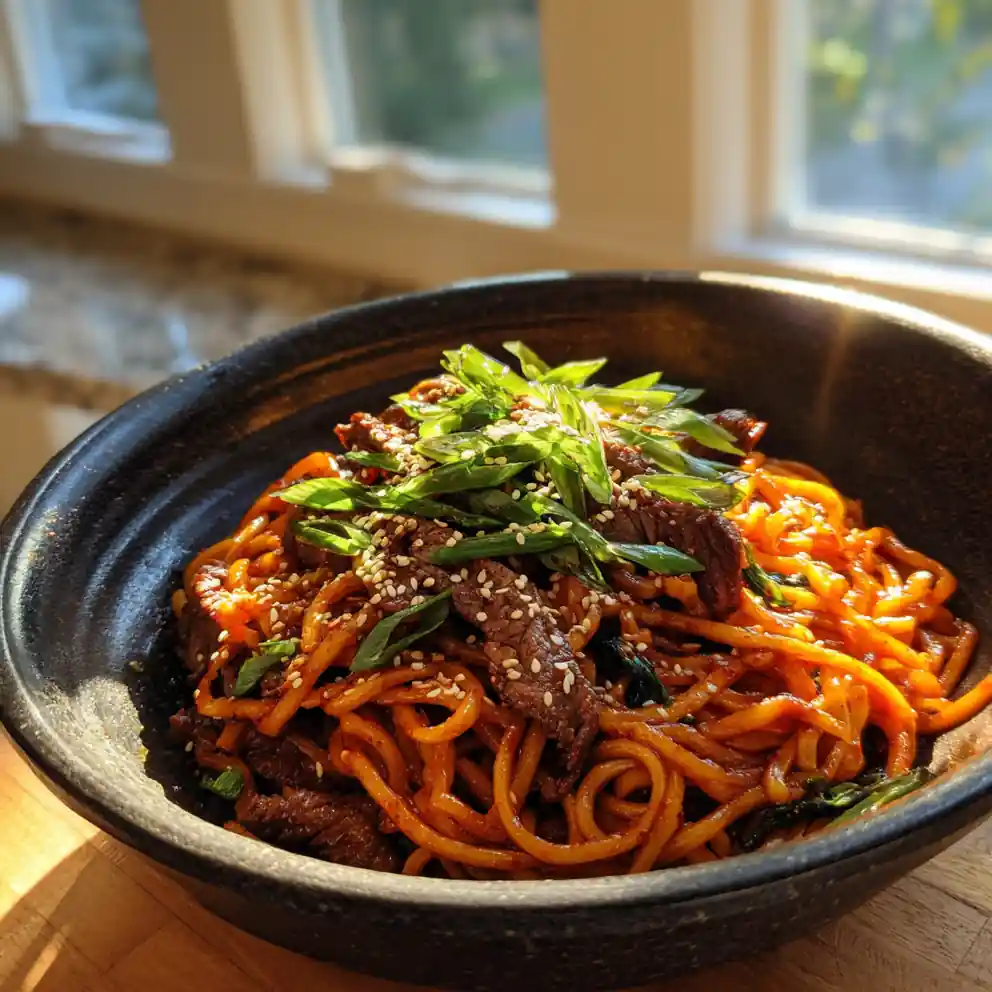
Craving a weeknight meal that’s both incredibly flavorful and surprisingly easy to make? Look no further! These Spicy Korean Gochujang Beef Noodles with a luscious Coconut-Cream Swirl are a delightful fusion of Korean spice and creamy tropical goodness. The rich, savory, and slightly sweet gochujang sauce coats perfectly cooked noodles and tender beef, creating a symphony of textures and tastes. The finishing touch of toasted coconut and fresh scallions adds a beautiful contrast and a burst of freshness. Get ready to experience a new noodle obsession!
What You’ll Need: The Ingredient Rundown
- 250g (9oz) Beef Sirloin, thinly sliced: We’re using sirloin for its tenderness and flavor, but ribeye or flank steak also work beautifully. Thinly slicing against the grain is key for quick cooking and maximum tenderness.
- 200g (7oz) Thick Wheat Noodles (Udon or Spaghetti): Thick noodles are ideal for holding onto the flavorful sauce. Udon noodles offer a classic chewy texture, while spaghetti provides a readily available alternative.
- 2 Tbsp (30ml) Vegetable Oil, divided: A neutral oil like vegetable, canola, or grapeseed oil is perfect for stir-frying and sautéing without overpowering the other flavors.
- 3 Cloves Garlic, minced: Freshly minced garlic is essential for that aromatic base. Don’t skimp – garlic is a flavor powerhouse!
- 1 Tbsp (15ml) Fresh Ginger, minced: Ginger adds a warm, spicy, and slightly citrusy note that complements the gochujang perfectly.
- 3 Tbsp (45ml) Gochujang (Korean Chili Paste): The star of the show! Gochujang is a fermented Korean chili paste that delivers a complex flavor profile – spicy, savory, and slightly sweet. Adjust the amount to your spice preference.
- 2 Tbsp (30ml) Low-Sodium Soy Sauce: Soy sauce provides umami and saltiness. Using low-sodium allows you to control the overall salt level.
- 1 Tbsp (15ml) Honey: A touch of honey balances the spice and adds a subtle sweetness. Maple syrup can be used as a vegan alternative.
- ½ cup (120ml) Full-Fat Coconut Milk: Full-fat coconut milk is crucial for achieving that creamy, luxurious swirl. Light coconut milk won’t provide the same richness.
- 1 tsp (5ml) Lime Juice: A squeeze of lime juice brightens the flavors and adds a refreshing tang.
- 1 tsp (5ml) Toasted Sesame Oil: Sesame oil adds a nutty aroma and flavor that’s characteristic of Korean cuisine.
- 1 Tbsp (15ml) Rice Vinegar: Rice vinegar provides a mild acidity that balances the richness of the sauce.
- 1 tsp (5g) Toasted Sesame Seeds: Toasted sesame seeds add a delightful crunch and nutty flavor as a garnish.
- 2 Green Onions, thinly sliced (white and green parts separated): Green onions add a fresh, mild onion flavor. We’ll use both the white and green parts at different stages of cooking.
- 1 Tbsp (15g) Toasted Shredded Coconut: Toasted coconut adds a subtle sweetness and textural contrast.
- Optional: ½ tsp (2g) Chili Flakes for extra heat: For those who like it extra spicy, a pinch of chili flakes will kick things up a notch.
Step-by-Step Instructions for Spicy Korean Gochujang Beef Noodles
- Cook the Noodles: Bring a large pot of generously salted water to a rolling boil. Add the thick wheat noodles (udon or spaghetti work well) and cook according to package directions, usually around 8-10 minutes, until al dente. ‘Al dente’ means the noodles should be firm to the bite, offering a slight resistance. Once cooked, immediately drain the noodles and rinse briefly under cold water. This stops the cooking process and prevents them from sticking together. Set aside.
- Marinate the Beef: In a medium-sized bowl, prepare the beef marinade. Combine 1 tablespoon of soy sauce, ½ teaspoon of honey, ½ teaspoon of lime juice, 1 tablespoon of gochujang (Korean chili paste), and ½ tablespoon of vegetable oil. Add the thinly sliced beef sirloin to the bowl. Ensure each slice is well coated with the marinade. This step is crucial for tenderizing the beef and infusing it with flavor. Let the beef marinate for at least 15 minutes while you prepare the other ingredients.
- Stir-Fry the Beef: Heat a large skillet or wok over high heat. Add 1 tablespoon of vegetable oil. Once the oil is shimmering, quickly stir-fry the marinated beef for 2-3 minutes. The goal is to brown the beef while keeping it slightly pink inside. Overcooking will result in tough beef. Transfer the stir-fried beef to a plate and keep it warm.
- Sauté the Aromatics: Without cleaning the skillet or wok, reduce the heat to medium. Add the remaining 1 tablespoon of vegetable oil. Add the minced garlic, minced ginger, and the white and light green parts of the sliced scallions. Sauté for about 30 seconds, stirring constantly, until fragrant. Be careful not to burn the garlic.
- Build the Gochujang Sauce: Stir in the remaining 2 tablespoons of gochujang, the remaining 1 tablespoon of soy sauce, the remaining ½ teaspoon of honey, and the rice vinegar. Cook, stirring continuously, for 1 minute. This allows the flavors to meld together and the gochujang to bloom.
- Simmer with Coconut Milk: Pour in the full-fat coconut milk. Bring the sauce to a gentle simmer and let it thicken slightly, about 2-3 minutes. Stir occasionally to prevent sticking. The coconut milk adds a creamy richness that balances the spice of the gochujang.
- Finish the Sauce: Finish the sauce with the toasted sesame oil and the remaining ½ teaspoon of lime juice. Taste the sauce and adjust the seasoning as needed. If you prefer more heat, add the optional ½ teaspoon of chili flakes.
- Combine Noodles and Sauce: Add the cooked noodles to the sauce and toss to coat them evenly. Return the stir-fried beef to the pan. Gently mix everything together and heat through for another minute.
- Plate and Garnish: To plate, twirl a portion of the coated noodles into a nest on a dark-colored, shallow bowl. Drizzle a spoonful of the extra sauce over the top, creating a glossy orange-cream swirl. Scatter toasted sesame seeds, toasted shredded coconut, and the green parts of the scallions over the dish for added texture and visual appeal.
The Magic of Gochujang: A Flavor Profile
Gochujang isn’t just heat; it’s a complex fermented chili paste that forms the heart of Korean cuisine. Its deep, savory, slightly sweet, and umami-rich flavor profile is what makes this dish so addictive. The fermentation process develops layers of flavor that simple chili flakes can’t replicate. Using a high-quality gochujang is key to achieving the authentic taste. Different brands vary in spice level and sweetness, so feel free to adjust the amount to your preference.Why Coconut Milk Works Wonders
The addition of full-fat coconut milk might seem unconventional in a Korean-inspired dish, but it’s a stroke of genius. The creamy texture and subtle sweetness of the coconut milk beautifully temper the fiery gochujang, creating a harmonious balance of flavors. It also adds a luxurious mouthfeel that elevates the entire experience. Don’t substitute with light coconut milk; the full-fat version is essential for the right consistency and richness.Beef Selection and Preparation Tips
For the best results, use a tender cut of beef like sirloin or ribeye. Thinly slicing the beef against the grain is crucial for tenderness. If you’re not comfortable slicing it yourself, ask your butcher to do it for you. Marinating the beef not only adds flavor but also helps to break down the muscle fibers, resulting in a more tender final product.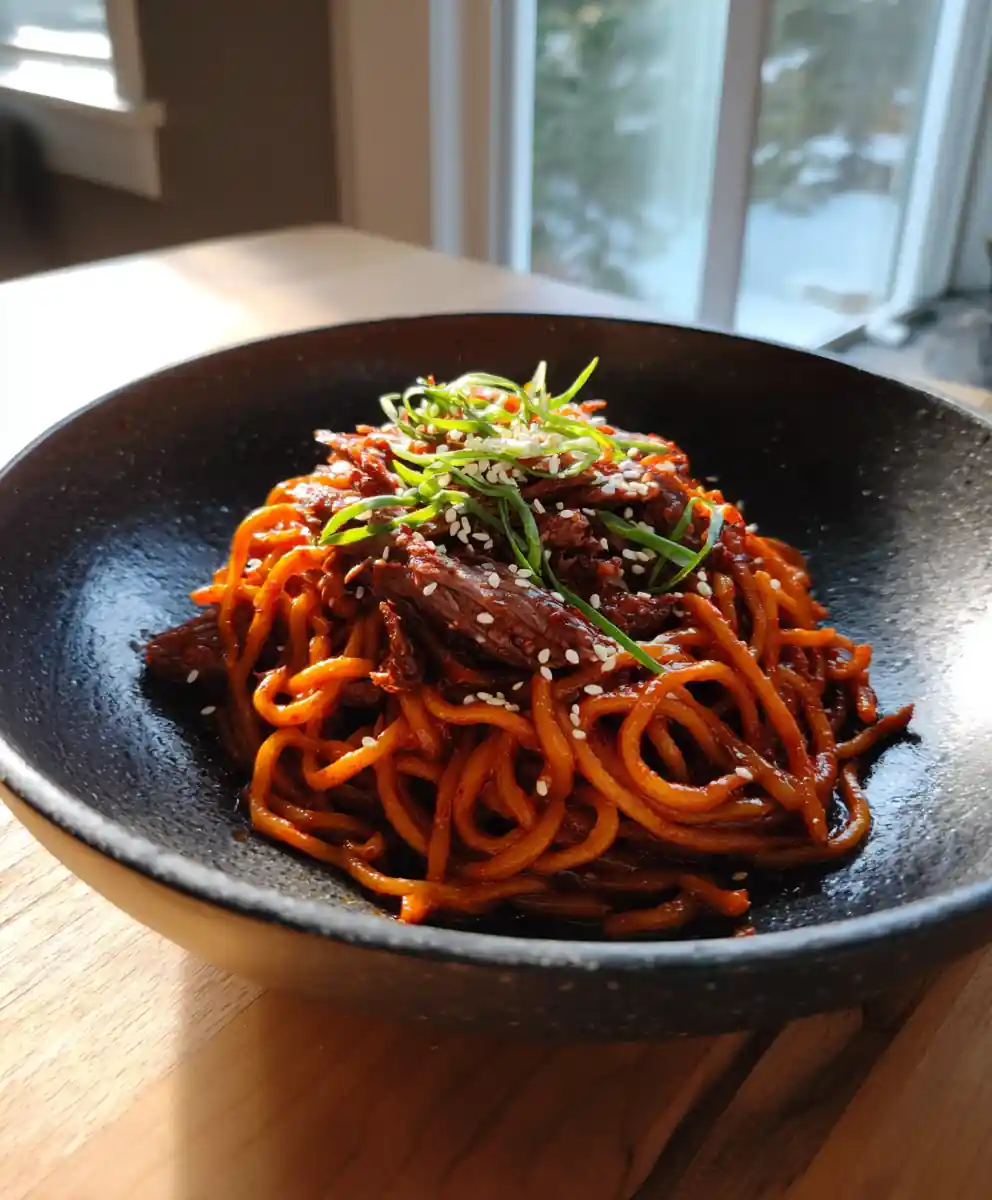
Adjusting the Spice Level
This recipe is designed to be moderately spicy, but you can easily adjust the heat to your liking. If you’re sensitive to spice, start with less gochujang and add more gradually, tasting as you go. For those who crave extra heat, add the optional chili flakes or a dash of gochugaru (Korean chili powder). Remember, a little goes a long way!Serving Suggestions & Pairings
These Spicy Korean Gochujang Beef Noodles are fantastic on their own, but they also pair well with a variety of side dishes. Consider serving them with kimchi, pickled vegetables, or a simple cucumber salad. A light and refreshing Korean beer or a glass of chilled sake would also complement the flavors beautifully.Frequently Asked Questions (FAQ)
Can I use different noodles?
Yes, while udon or spaghetti are recommended, you can experiment with other types of noodles like ramen or soba. Just adjust the cooking time accordingly.Can I make this vegetarian?
Absolutely! Substitute the beef with firm tofu or mushrooms. Ensure you press the tofu to remove excess water before marinating and stir-frying.How long does the sauce keep?
The sauce can be stored in an airtight container in the refrigerator for up to 3 days. Reheat gently before using.These Spicy Korean Gochujang Beef Noodles with Coconut-Cream Swirl are a flavor explosion you won’t soon forget! The perfect balance of sweet, spicy, and savory, they’re sure to become a new favorite. Don’t forget to save this recipe to Pinterest for easy access later!
Print
recipe spicy korean gochujang beef noodles
- Total Time: 40 minutes
- Yield: 2 servings 1x
- Diet: General
Description
These Spicy Korean Gochujang Beef Noodles combine Korean spice with creamy coconut milk for a flavorful and easy weeknight meal. Tender beef and thick noodles are coated in a luscious gochujang sauce, finished with toasted coconut and scallions.
Ingredients
- 250g beef sirloin, thinly sliced
- 200g thick wheat noodles (udon or spaghetti)
- 2 Tbsp vegetable oil, divided
- 3 cloves garlic, minced
- 1 Tbsp ginger, minced
- 3 Tbsp gochujang (Korean chili paste)
- 2 Tbsp low-sodium soy sauce
- 1 Tbsp honey
- ½ cup full-fat coconut milk
- 1 tsp lime juice
- 1 tsp toasted sesame oil
- 1 Tbsp rice vinegar
- 1 tsp toasted sesame seeds
- 2 green onions, thinly sliced
- 1 Tbsp toasted shredded coconut
- Optional: ½ tsp chili flakes
Instructions
- Cook Noodles: Boil noodles until al dente, drain, and rinse.
- Marinate Beef: Combine beef with 1 Tbsp soy sauce, ½ tsp honey, ½ tsp lime juice, 1 Tbsp gochujang, and ½ Tbsp oil; marinate for 15 minutes.
- Stir-Fry Beef: Stir-fry marinated beef until browned, about 2-3 minutes.
- Sauté Aromatics: Sauté garlic, ginger, and white/light green scallions in oil until fragrant.
- Build Sauce: Stir in gochujang, soy sauce, honey, and rice vinegar; cook for 1 minute.
- Simmer with Coconut Milk: Add coconut milk and simmer until thickened, about 2-3 minutes.
- Finish Sauce: Stir in sesame oil and lime juice; adjust seasoning.
- Combine: Add noodles and beef to sauce; heat through.
- Plate: Serve noodles with sauce, sesame seeds, coconut, and green scallions.
Notes
Using full-fat coconut milk is crucial for a creamy texture. Adjust the amount of gochujang to control the spice level. Thinly slicing the beef against the grain ensures tenderness.
- Prep Time: 20 minutes
- Cook Time: 20 minutes
- Category: Main Course
- Method: Stir-Fry
- Cuisine: Korean
Nutrition
- Serving Size: 1 serving
- Calories: 650 kcal
- Sugar: 25 g
- Sodium: 800 mg
- Fat: 35 g
- Saturated Fat: 20 g
- Unsaturated Fat: 10 g
- Trans Fat: 0 g
- Carbohydrates: 60 g
- Fiber: 5 g
- Protein: 30 g
- Cholesterol: 100 mg
FREE PRINTABLE RECIPE
Get the Printable Recipe PDF (Free)
Enter your email and we’ll send you the ingredients + step-by-step instructions as a clean PDF you can save to your phone.
- ✅ Printable PDF (ingredients + steps)
- ✅ Save it to your phone (no long scrolling)
- ✅ Includes cook time + servings
- ✅ Easy to follow
FAQ
Where’s the full recipe?
It’s delivered as a printable PDF so you can save it and cook without scrolling.
I didn’t get the email.
Check Spam/Promotions and search your inbox for your site name. Then click Confirm to receive the PDF.