
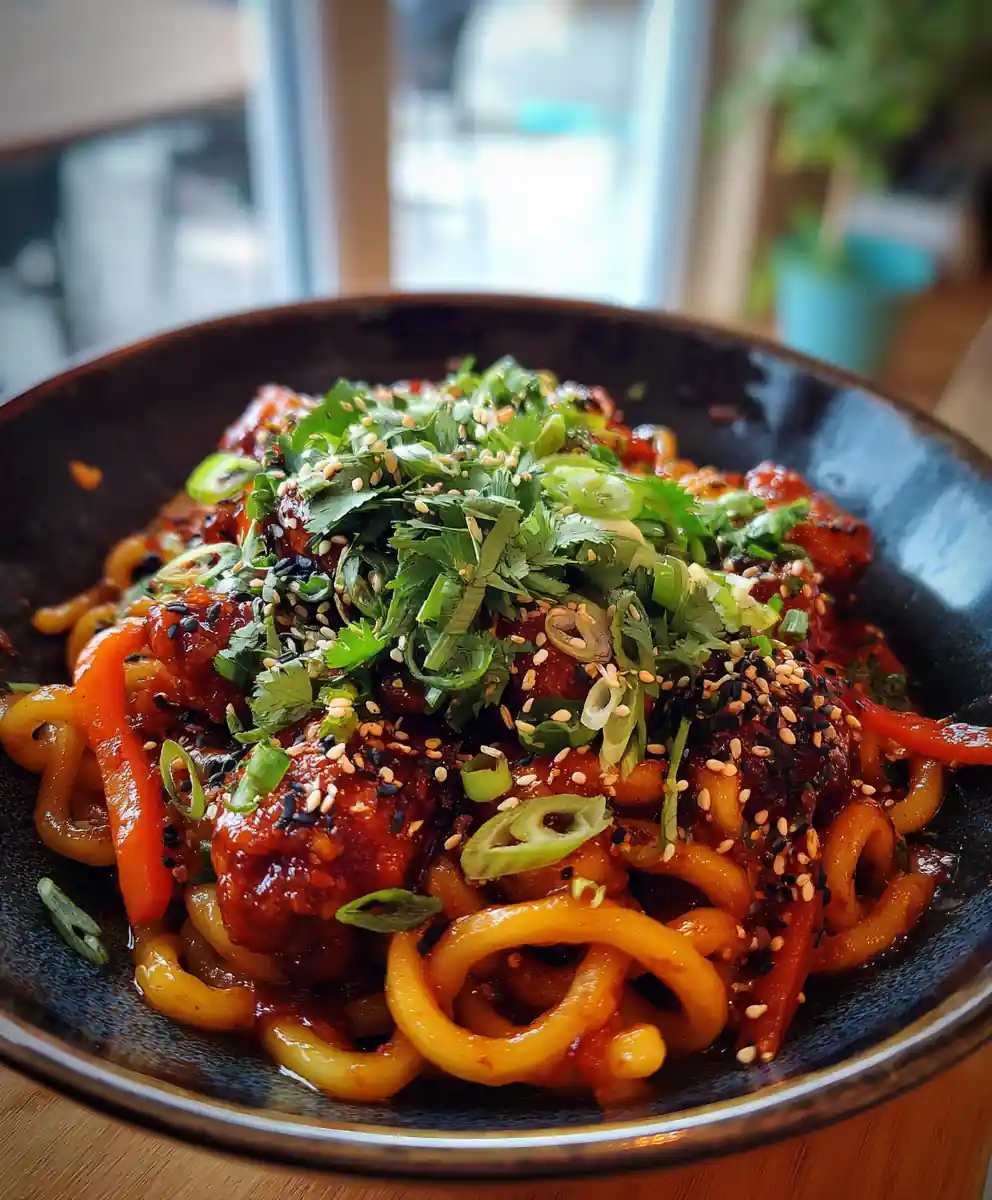
I’ve been looking for easy dinner ideas that break us out of the usual rotation, and this spicy teriyaki noodles recipe is exactly what we needed. This isn’t just a simple stir-fry; it’s a truly flavorful and easy teriyaki noodles recipe that uses a spicy gochujang glaze to turn basic chicken and noodles into something truly special. The rich, glossy red sauce coating the noodles and vegetables looks as good as it tastes. It’s designed for busy families, delivering a high-protein, family-friendly meal in under 20 minutes. We’re taking a classic profile and adding a spicy kick, making it a new favorite for easy dinner ideas at home.

Ingredients
Udon Noodles (300 g / 10.6 oz)
Choose fresh udon noodles for a chewy, satisfying texture that quickly absorbs the sauce. Dried udon noodles work just as well; follow the package instructions to cook them al dente. Rinsing with cold water after cooking is essential to stop the process and prevent the noodles from sticking together while you prepare the stir-fry.
Boneless, Skinless Chicken Breast (450 g / 1 lb)
Cutting the chicken into uniform 2.5 cm (1 inch) pieces ensures fast and even cooking. This lean protein base can be easily swapped for boneless, skinless chicken thighs for extra juiciness if preferred. Ensure the chicken is patted dry before cooking to achieve a nice golden-brown sear.
Neutral Oil (15 ml / 1 tbsp)
Use a high-smoke point oil for stir-frying; avoid olive oil as it can burn at high temperatures. Canola or vegetable oil both work well here for a clean flavor.
Aromatics (Garlic and Ginger)
We use 2 cloves of minced garlic and 15 g (1 tbsp) of grated fresh ginger. These aromatics form the flavor foundation of the sauce and vegetables. Grating the ginger and garlic releases maximum flavor quickly; do not add them too early, or they will burn.
Vegetables (Broccoli, Carrot, Red Bell Pepper)
This recipe calls for 150 g (5.3 oz) broccoli florets, 1 large carrot (thinly sliced), and 1 red bell pepper (thinly sliced). Use fresh, crisp vegetables for optimal crunch and color contrast. The quick stir-fry method keeps the vegetables crisp-tender (al dente). Feel free to swap with other quick-cooking options like snap peas, mushrooms, or bok choy.
Spicy Gochujang Glaze
- 120 ml (½ cup) low-sodium soy sauce
- 60 ml (¼ cup) water
- 45 g (3 tbsp) light brown sugar, packed
- 30 g (2 tbsp) gochujang (Korean chili paste)
- 30 ml (2 tbsp) rice vinegar (alcohol-free)
The combination of gochujang (Korean chili paste) and brown sugar provides a perfect balance of sweet, spicy, and savory. Use low-sodium soy sauce to control the overall saltiness of the dish. The rice vinegar adds essential brightness to balance the richness of the glaze.
Thickening Slurry
- 15 ml (1 tbsp) cornstarch
- 30 ml (2 tbsp) extra water
The cornstarch slurry is essential for achieving a glossy, thick sauce that adheres well to the noodles. Whisk the slurry in a separate small bowl to avoid lumps before adding to the hot pan.
Garnishes
- 3 green onions, thinly sliced
- 15 g (¼ cup) fresh cilantro, roughly chopped
- 5 g (1 tsp) toasted white sesame seeds
- 5 g (1 tsp) toasted black sesame seeds
Garnishes are non-negotiable for freshness, texture, and visual appeal. The toasted sesame seeds add a nutty crunch, while the cilantro and green onions brighten the flavors of this teriyaki noodles recipe.
Instructions
Here’s how to execute this flavorful teriyaki noodles recipe quickly, using a large wok or skillet to achieve a delicious, restaurant-quality result in a single pan.
Cook the Udon Noodles
Cook the fresh or dried udon noodles according to package directions until al dente. Drain the noodles thoroughly in a colander. Immediately rinse with cold water to halt the cooking process and prevent the noodles from sticking together while you prepare the stir-fry; set aside.
Prepare the Sauce and Slurry
In a small mixing bowl, whisk together the soy sauce, 60 ml (¼ cup) water, brown sugar, gochujang, and rice vinegar until smooth. In a separate tiny bowl, whisk the cornstarch with the 30 ml (2 tbsp) extra water to create a smooth slurry; set both aside. Whisking the slurry separately prevents clumping when added to the hot sauce later in the process.
Cook the Crispy Chicken
Heat the neutral oil in a large wok or skillet over medium-high heat. Add the chicken pieces in a single layer and stir-fry for 4-6 minutes, or until golden brown and cooked through to an internal temperature of 165°F (74°C). Remove the chicken from the wok using a slotted spoon and set aside on a plate; do not clean the wok, leaving the flavorful remnants behind for the next step.
Stir-fry Vegetables and Aromatics
Add the minced garlic and grated ginger to the hot wok, stirring constantly for 30 seconds until fragrant. Add the broccoli florets, sliced carrot, and sliced red bell pepper. Stir-fry for 3-5 minutes, until the vegetables are crisp-tender (they should retain a slight crunch) and vibrant in color.
Thicken the Gochujang Glaze
Return the cooked chicken to the wok with the vegetables. Pour in the prepared gochujang sauce mixture from Step 2 and bring to a gentle simmer. Slowly whisk in the cornstarch slurry, stirring constantly for 1-2 minutes until the sauce thickens and becomes glossy, visibly coating all ingredients. I always wait for a strong simmer before adding the slurry; otherwise, the cornstarch can clump instead of thickening properly. If the sauce looks too thick, simply whisk in another tablespoon of water.
Combine Noodles and Serve
Add the drained udon noodles to the wok with the thickened sauce. Use tongs to toss everything together quickly, ensuring the noodles are thoroughly coated in the vibrant red glaze. Cook for 1 minute or until the noodles are heated through. To plate, arrange a generous portion in a bowl, drizzle with any extra glaze, and top generously with green onions, cilantro, and toasted sesame seeds.
Recipe Variations and Flavor Swaps
This teriyaki noodles recipe is incredibly versatile. Don’t be afraid to experiment with different proteins and vegetables to suit what you have on hand or what your family prefers.
Protein Options
While chicken breast is quick-cooking, this recipe works beautifully with shrimp (cook for only 2-3 minutes) or boneless chicken thighs (cook for 6-8 minutes for extra juiciness). For a vegetarian option, press extra-firm tofu, cube it, and pan-fry until crispy before adding in Step 5. This makes for a great high-protein alternative.
Noodle Swaps
If you don’t have udon, use thick wheat ramen noodles, rice noodles, or even spaghetti. Adjust cooking times based on the noodle type, but ensure they are cooked al dente before adding them to the sauce.
Spice Control
If you prefer less heat, reduce the gochujang to 1 tablespoon or omit it entirely for a sweeter teriyaki profile. To make it hotter, add a pinch of red pepper flakes along with the gochujang. This allows for easy customization for the whole family, a key for easy dinner ideas.
Make-Ahead Tips and Meal Prep Strategy
This recipe is great for preparing ahead of time for healthy eating lunches or dinners during the week.
Meal Prep Strategy
Store the noodles, chicken, and vegetables in separate airtight containers in the refrigerator. When reheating, add a splash of water or soy sauce to prevent the noodles from drying out and reheat in a pan or microwave. This approach keeps everything fresh for up to 3 days.
Sauce Preparation
The teriyaki gochujang sauce can be made completely in advance and stored in the refrigerator for up to 5 days. This saves time during the cooking process and allows you to quickly assemble this teriyaki noodles recipe on a busy night.
Storage and Reheating
Store leftovers in an airtight container for up to 3 days in the refrigerator. Reheat gently in a pan with a little added water or oil to revive the sauce and noodles. Avoid high heat to keep the chicken from getting tough.
FAQs about Teriyaki Noodles
Q: Can I make this teriyaki noodles recipe vegetarian?
A: Yes, simply replace the chicken with 1 pound of firm or extra-firm tofu, cubed and pan-fried until crispy. The sauce itself is already vegetarian-friendly. For a complete healthy meal prep, this swap works perfectly.
Q: How can I adjust the spice level of the gochujang glaze?
A: For a milder dish, use just 1 tablespoon of gochujang. To increase the heat, add extra gochujang to taste or stir in 1 teaspoon of chili oil at the end. This teriyaki noodles recipe can be customized to your family’s preference.
Q: What is gochujang and where do I find it?
A: Gochujang is a savory, sweet, and spicy Korean fermented chili paste. It adds unique depth to the sauce and is typically found in the international or Asian food aisle of most supermarkets. Look for it near the soy sauce and rice vinegar.
Q: Can I add different vegetables besides broccoli and carrots?
A: Absolutely. Feel free to use snap peas, mushrooms, edamame, or bok choy. Ensure all vegetables are cut to a similar size for even cooking. My kids prefer green beans in this recipe, so I always swap those in for the broccoli to make it a guaranteed hit.
Q: What’s the best way to keep the chicken crispy in the sauce?
A: To maintain texture, ensure the chicken is browned well and remove it from the pan before adding vegetables. Toss it back in quickly when adding the sauce, but avoid overcooking once the sauce thickens. I always make sure the wok is super hot before adding the chicken to get a proper sear, which helps it stay crispy even after being coated.
Q: Can I use pre-cooked chicken?
A: Yes, if using pre-cooked chicken (like rotisserie chicken), add it during step 5 to heat it through, rather than pan-frying, to prevent drying out. This works well for a quick meal prep solution for busy families and is great for high-protein meals.
Conclusion
This spicy teriyaki noodles recipe delivers a powerful flavor punch that will satisfy your takeout cravings with fresh, homemade ingredients. Pin this easy family-friendly recipe to save it for your next quick weeknight dinner!
Print
teriyaki noodles recipe
- Total Time: 20 minutes
- Yield: 4 servings 1x
- Diet: General
Description
A quick and flavorful stir-fry featuring tender chicken and udon noodles coated in a spicy gochujang glaze, ready in under 20 minutes for a satisfying weeknight meal.
Ingredients
- 300 g fresh udon noodles
- 450 g boneless, skinless chicken breast, cut into 1-inch pieces
- 1 tbsp neutral oil
- 2 cloves garlic, minced
- 1 tbsp fresh ginger, grated
- 150 g broccoli florets
- 1 large carrot, thinly sliced
- 1 red bell pepper, thinly sliced
- ½ cup low-sodium soy sauce
- ¼ cup water
- 3 tbsp light brown sugar, packed
- 2 tbsp gochujang (Korean chili paste)
- 2 tbsp rice vinegar
- 1 tbsp cornstarch
- 2 tbsp extra water
- 3 green onions, thinly sliced
- ¼ cup fresh cilantro, chopped
- 1 tsp toasted white sesame seeds
- 1 tsp toasted black sesame seeds
Instructions
- Cook and Prepare Noodles: Cook udon noodles according to package directions until al dente. Drain thoroughly, then rinse immediately with cold water to halt the cooking process and prevent sticking; set aside.
- Mix Sauce and Slurry: Whisk together soy sauce, ¼ cup water, brown sugar, gochujang, and rice vinegar in a small bowl. In a separate tiny bowl, whisk the cornstarch with 2 tbsp extra water to create a smooth slurry; set both aside.
- Brown the Chicken: Heat the neutral oil in a large wok or skillet over medium-high heat. Add the chicken pieces in a single layer and stir-fry for 4-6 minutes until golden brown and cooked through. Remove chicken from the pan and set aside.
- Stir-fry Vegetables: Add minced garlic and grated ginger to the hot pan, stirring constantly for 30 seconds until fragrant. Add the broccoli, carrot, and red bell pepper; stir-fry for 3-5 minutes until the vegetables are crisp-tender.
- Thicken Gochujang Glaze: Return the cooked chicken to the wok. Pour in the prepared sauce mixture and bring to a gentle simmer. Slowly whisk in the cornstarch slurry, stirring constantly for 1-2 minutes until the sauce thickens and becomes glossy, coating all ingredients.
- Combine and Serve: Add the drained udon noodles to the wok with the thickened sauce. Toss everything together quickly for about 1 minute or until the noodles are thoroughly coated and heated through. Serve immediately, topped generously with green onions, cilantro, and toasted sesame seeds.
Notes
To achieve a crispy sear on the chicken, pat it completely dry before cooking. For added juiciness, substitute boneless, skinless chicken thighs. Ensure the cornstarch slurry is fully mixed to prevent clumping and wait for the sauce to simmer strongly before adding the slurry for best results.
- Prep Time: 10 minutes
- Cook Time: 10 minutes
- Category: Main Course
- Method: Stir-frying
- Cuisine: Asian
Nutrition
- Serving Size: 1 serving
- Calories: 400 kcal
- Sugar: 15 g
- Sodium: 1100 mg
- Fat: 5 g
- Saturated Fat: 1 g
- Unsaturated Fat: 4 g
- Trans Fat: 0 g
- Carbohydrates: 34 g
- Fiber: 3 g
- Protein: 28 g
- Cholesterol: 80 mg
FREE PRINTABLE RECIPE
Get the Printable Recipe PDF (Free)
Enter your email and we’ll send you the ingredients + step-by-step instructions as a clean PDF you can save to your phone.
- ✅ Printable PDF (ingredients + steps)
- ✅ Save it to your phone (no long scrolling)
- ✅ Includes cook time + servings
- ✅ Easy to follow
FAQ
Where’s the full recipe?
It’s delivered as a printable PDF so you can save it and cook without scrolling.
I didn’t get the email.
Check Spam/Promotions and search your inbox for your site name. Then click Confirm to receive the PDF.