
I’ve always loved making katsu at home, but I wanted a version that felt lighter and quicker for weeknights, which is where this amazing **tofu katsu recipe** comes in.
This recipe delivers exactly that: the ultimate crispy exterior, a satisfying tender inside, all coated in a vibrant, savory-sweet glaze. The smell of the toasted sesame oil hitting the hot glaze is incredible.
This plant-based twist on a classic comfort food provides a delicious family-friendly meal that comes together quickly. It’s a high-protein dinner that even my pickiest eaters ask for again and again.
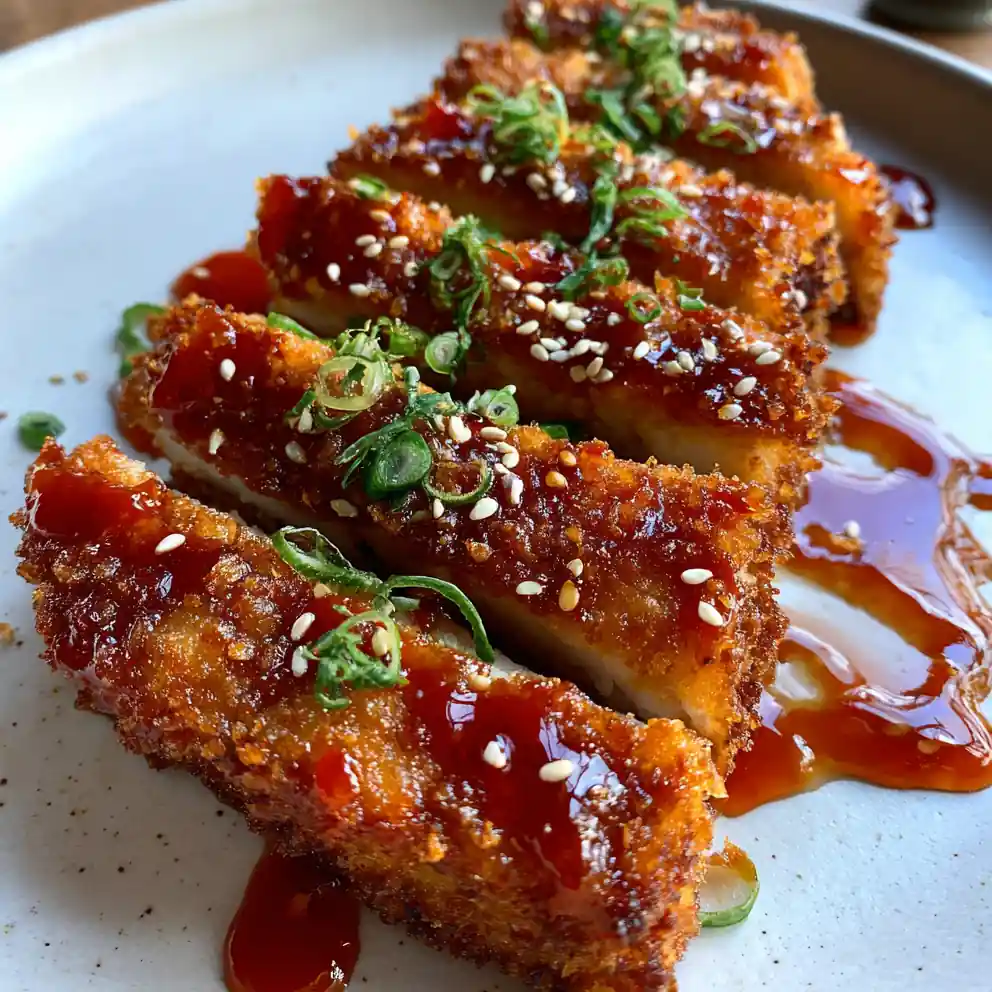
Ingredients for Crispy Tofu Katsu
Here’s what you’ll need to create perfect **tofu katsu** at home. The key to success is getting the right ingredients and prepping them properly before you start frying.
- 400 g (14 oz) Extra-firm tofu, pressed well
The key here is pressing out as much moisture as possible to ensure maximum crispiness when frying. Slice into four even cutlets, about ½-inch thick. - 60 g (½ cup) All-purpose flour
Used for the initial dredge to create a dry surface for the liquid binder. Season lightly with salt and pepper to add flavor to the crust. - 120 ml (½ cup) Unsweetened plant-based milk (e.g., soy, oat) mixed with 15 ml (1 tablespoon) cornstarch
This creates a thick, dairy-free slurry that replaces eggs as the binder for the breadcrumbs. The cornstarch helps the Panko adhere firmly to the tofu cutlet. - 150 g (1 ½ cups) Panko breadcrumbs
Essential for achieving the signature crunchy texture of authentic katsu. Do not substitute with regular breadcrumbs; Panko creates a much lighter, crispier crust. - 500 ml (2 cups) Neutral vegetable oil, for frying
Use canola, sunflower, or grapeseed oil for a clean flavor and high smoke point. You need enough oil for shallow frying, ensuring the oil temperature stays stable during cooking.
For the Sticky Gochujang Glaze:
- 60 ml (bc; cup) Gochujang (Korean chili paste)
Use a brand like Sunchang for an authentic flavor base. - 30 ml (2 tablespoons) low-sodium soy sauce
Adds savory depth without excess saltiness. Ensure it’s alcohol-free if adhering to certain dietary needs. - 30 ml (2 tablespoons) rice vinegar
Balances the sweetness and heat with a tangy note. - 30 ml (2 tablespoons) maple syrup
Provides sweetness; substitute with honey or brown sugar if preferred. - 15 ml (1 tablespoon) freshly grated ginger
Essential aromatic for the Korean flavor profile. - 2 cloves garlic, minced
Adds pungent depth to the sauce. - 60 ml (bc; cup) water or vegetable broth
Helps thin the glaze and bring everything together. - 15 ml (1 tablespoon) cornstarch, dissolved in 30 ml (2 tablespoons) cold water
The cornstarch slurry is crucial for creating the glossy, thick texture of the glaze.
For Garnish:
- 5 g (1 teaspoon) toasted sesame seeds
Adds nutty flavor and visual appeal. - 1-2 scallions, thinly sliced
Provides a fresh, sharp contrast to the rich katsu.
Instructions for Tofu Katsu with Gochujang Glaze
Here’s how to make the crispy **tofu katsu recipe** quickly and easily. Follow these steps for the best results, ensuring a perfectly crunchy coating every time.
1. Slice and Prepare the Tofu
Carefully slice the pressed extra-firm tofu block into four even ½-inch thick cutlets. Pat the surfaces of the cutlets very dry using paper towels or a clean kitchen towel. Excess moisture is the enemy of crispiness; ensure they are as dry as possible before breading.
2. Set Up the Breading Station
Prepare three shallow dishes or bowls for the breading process. Dish 1: Place the all-purpose flour, lightly seasoned with salt and pepper. Dish 2: Place the plant-based milk and cornstarch mixture. Dish 3: Place the Panko breadcrumbs.
3. Bread the Tofu Cutlets
Dredge each tofu cutlet first in the seasoned flour, ensuring a complete coating on all sides; shake off any excess flour gently. Next, dip the floured cutlet into the plant-based milk mixture, letting any excess drip off before moving to the next dish. Finally, press the cutlet firmly into the Panko breadcrumbs until thoroughly coated, ensuring the entire surface is covered.
4. Fry the Tofu Katsu
Heat the vegetable oil in a large skillet or shallow pot over medium-high heat until it reaches 175°C (350°F). Carefully place 2-3 breaded tofu cutlets into the hot oil, ensuring not to overcrowd the pan; frying in batches ensures the oil temperature doesn’t drop too much. Fry for 3-4 minutes per side, turning once, until deeply golden brown and crispy on all sides.
5. Drain and Make the Glaze
Once fried, transfer the tofu katsu cutlets to a wire rack set over a baking sheet to drain any excess oil. While the katsu drains, prepare the Sticky Gochujang Glaze by whisking together the gochujang, soy sauce, rice vinegar, maple syrup, grated ginger, minced garlic, and water/broth in a small saucepan. Bring to a simmer over medium heat, whisking constantly.
6. Thicken the Glaze and Coat the Katsu
Stir in the cornstarch slurry (cornstarch dissolved in cold water) to the simmering sauce. Cook for 1-2 minutes, continuing to whisk, until the glaze thickens to a glossy, pourable consistency. Remove from heat and stir in the toasted sesame oil; brush generously over the fried tofu katsu, or toss gently to coat. I always make sure the cornstarch slurry is fully mixed before adding it to avoid lumps.
7. Slice and Garnish for Serving
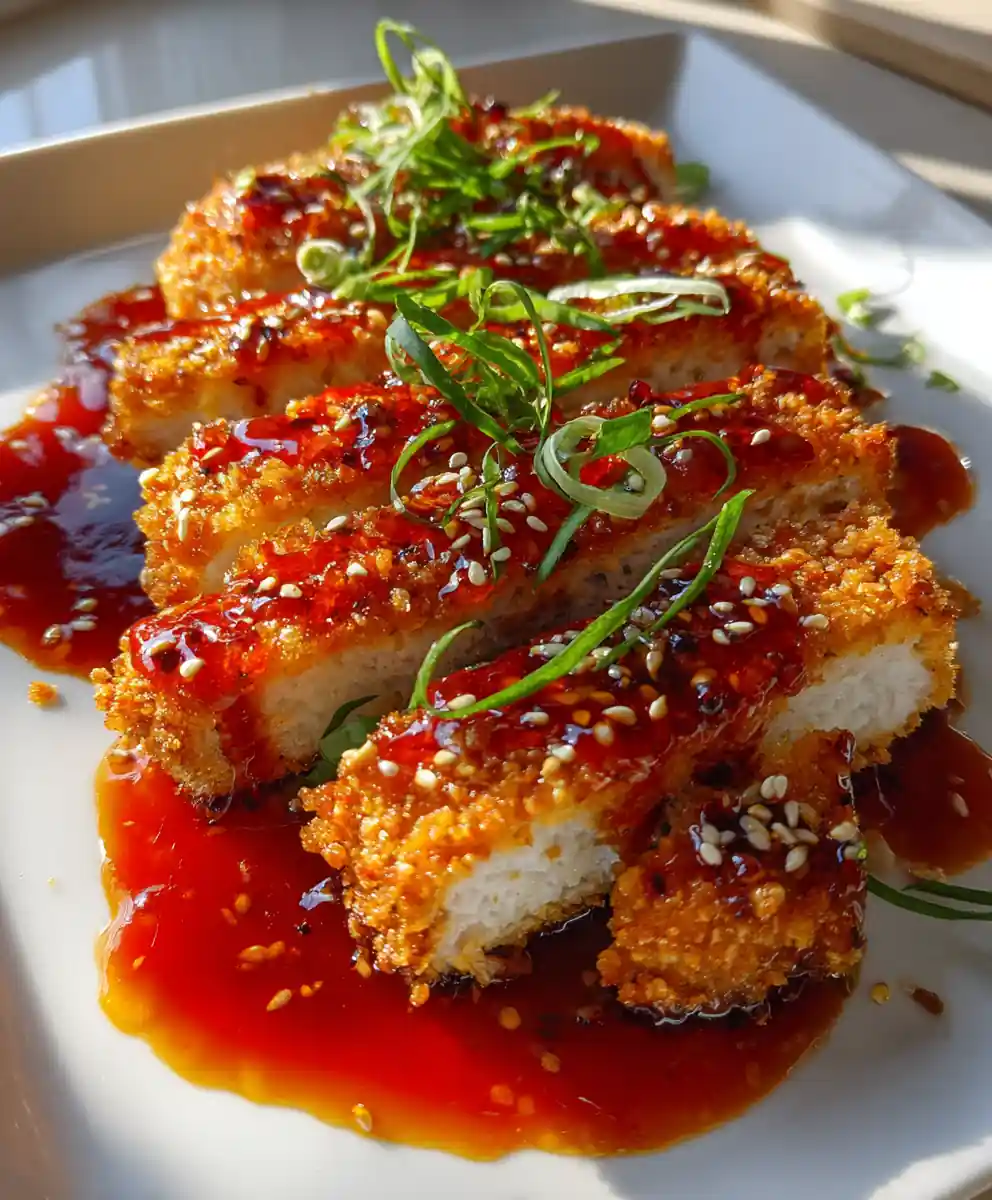
To serve, slice each glazed tofu katsu diagonally into 3-4 thick strips. Arrange the slices fanned out on a simple serving platter or individual plates. Sprinkle generously with toasted sesame seeds and fresh sliced scallions for color and aroma.
Making it a Full Meal: Best Sides for Tofu Katsu
- Steamed white rice: The perfect base to absorb the savory gochujang sauce.
- Quick cucumber salad: A refreshing side made with sliced cucumbers, rice vinegar, and a pinch of sugar to cut through the richness.
- Simple stir-fried vegetables: Broccoli, bell peppers, or snap peas lightly sautéed in a soy sauce and garlic mixture.
- Miso soup: A light, warm starter that complements the Japanese-Korean flavor profile.
FAQs for Perfect Tofu Katsu
Can I use an air fryer instead of deep frying?
Yes, an air fryer works well for this recipe. Spray the breaded cutlets lightly with oil and air fry at 390°F (200°C) for 10-12 minutes, flipping halfway through, until crispy. This creates a healthy eating option that still satisfies.
How do I keep my katsu from getting soggy?
The two main enemies of a crispy crust are moisture and steam. Ensure the tofu is pressed very well before breading. After frying, drain on a wire rack (not paper towels) to allow air circulation, which prevents steam buildup and keeps your katsu crisp. I find that preheating the air fryer for reheating leftovers also helps keep the texture intact.
Can I prepare the tofu ahead of time?
You can press the tofu up to 24 hours in advance and keep it in the refrigerator. However, for best results, bread and fry the cutlets right before serving to prevent the panko from absorbing moisture from the tofu. This quick meal prep helps streamline dinner.
Is this recipe suitable for dietary restrictions?
Yes, this recipe is naturally vegetarian and vegan if you confirm your gochujang brand does not contain fish sauce (most do not, but always check). It is also dairy-free. Use gluten-free tamari instead of soy sauce and gluten-free flour/panko for a gluten-free version of this high-protein meal.
What other sauces pair well with this recipe?
While the gochujang glaze is fantastic, you could also serve this with a traditional tonkatsu sauce, a spicy mayo (sriracha aioli), or a simple soy-ginger dipping sauce. The versatility of this tofu katsu recipe makes it a great family dinner idea.
What if my glaze doesn’t thicken?
Ensure the cornstarch slurry is fully mixed before adding it to the simmering sauce, and bring the sauce back to a gentle boil for 1-2 minutes after adding the slurry; cornstarch needs heat to activate its thickening power. Don’t be afraid to add a little extra slurry if you prefer a thicker coating for your tofu katsu.
Storage and Reheating Tips
To store leftover tofu katsu, place completely cooled katsu in an airtight container lined with paper towels (to absorb moisture) and store in the refrigerator for up to 3 days. Store the glaze separately if possible to maintain crispiness. To reheat katsu (for maximum crispiness), reheat in an air fryer at 350°F (175°C) for 5-7 minutes or in an oven on a wire rack at 400°F (200°C) for 8-10 minutes. Avoid the microwave, as it will make the breading soggy.
Conclusion
This crispy tofu katsu recipe provides a hearty, flavorful, and weeknight-friendly meal that satisfies the whole family. The sticky gochujang glaze elevates this tofu katsu, making it truly special and memorable. Don’t wait—try this recipe for dinner tonight, and be sure to pin it for future family dinner planning.
Print
tofu katsu recipe
- Total Time: 35 minutes
- Yield: 4 servings 1x
- Diet: Vegetarian, Vegan, Dairy-free
Description
This plant-based twist on classic katsu features extra-firm tofu with a crispy Panko exterior, coated in a savory-sweet gochujang glaze. It’s a quick, high-protein weeknight meal.
Ingredients
- 400 g extra-firm tofu, pressed well
- 60 g all-purpose flour
- 120 ml plant-based milk
- 15 ml cornstarch (for milk slurry)
- 150 g panko breadcrumbs
- 500 ml neutral oil, for frying
- 60 ml gochujang (Korean chili paste)
- 30 ml low-sodium soy sauce
- 30 ml rice vinegar
- 30 ml maple syrup
- 15 ml freshly grated ginger
- 2 cloves garlic, minced
- 60 ml water or vegetable broth
- 15 ml cornstarch (for glaze slurry)
- 30 ml cold water (for glaze slurry)
- 5 g toasted sesame seeds, for garnish
- 1–2 scallions, thinly sliced, for garnish
Instructions
- Slice and Prepare Tofu: Slice the pressed extra-firm tofu block into four even 1/2-inch thick cutlets. Pat the cutlets completely dry with paper towels to ensure crispiness.
- Set Up Breading Station: Prepare three shallow dishes: one with seasoned flour, one with the plant-based milk and cornstarch mixture (slurry), and one with panko breadcrumbs.
- Bread Tofu Cutlets: Dredge each cutlet in the seasoned flour first, shaking off excess. Next, dip in the milk slurry, letting excess drip off. Finally, press firmly into the panko until thoroughly coated on all sides.
- Fry Tofu Katsu: Heat the neutral oil in a large skillet to 350°F (175°C). Fry the breaded cutlets in batches for 3-4 minutes per side, turning once, until deeply golden brown and crispy.
- Drain and Start Glaze: Transfer fried katsu to a wire rack to drain. Whisk together gochujang, soy sauce, rice vinegar, maple syrup, ginger, garlic, and water in a small saucepan over medium heat, bringing to a simmer.
- Thicken Glaze and Coat Katsu: Stir in the cornstarch slurry (cornstarch dissolved in cold water) to the simmering sauce. Whisk for 1-2 minutes until thick and glossy. Brush generously over the fried tofu katsu or toss gently to coat.
- Slice and Garnish: Slice each glazed tofu katsu diagonally into strips and arrange on plates. Garnish generously with toasted sesame seeds and sliced scallions for serving.
Notes
To maximize crispiness, ensure the tofu is thoroughly pressed and dry before breading, and drain fried cutlets on a wire rack to prevent steam buildup. To reduce oil, air fry cutlets at 390°F (200°C) for 10-12 minutes, flipping halfway through, instead of shallow frying. Reheat leftovers in an air fryer to maintain crisp texture.
- Prep Time: 20 minutes
- Cook Time: 15 minutes
- Category: Main Course
- Method: Fried
- Cuisine: Korean
Nutrition
- Serving Size: 1 cutlet
- Calories: 450 kcal
- Sugar: 12 g
- Sodium: 650 mg
- Fat: 25 g
- Saturated Fat: 4 g
- Unsaturated Fat: 21 g
- Trans Fat: 0 g
- Carbohydrates: 40 g
- Fiber: 3 g
- Protein: 22 g
- Cholesterol: 0 mg
FREE PRINTABLE RECIPE
Get the Printable Recipe PDF (Free)
Enter your email and we’ll send you the ingredients + step-by-step instructions as a clean PDF you can save to your phone.
- ✅ Printable PDF (ingredients + steps)
- ✅ Save it to your phone (no long scrolling)
- ✅ Includes cook time + servings
- ✅ Easy to follow
FAQ
Where’s the full recipe?
It’s delivered as a printable PDF so you can save it and cook without scrolling.
I didn’t get the email.
Check Spam/Promotions and search your inbox for your site name. Then click Confirm to receive the PDF.