
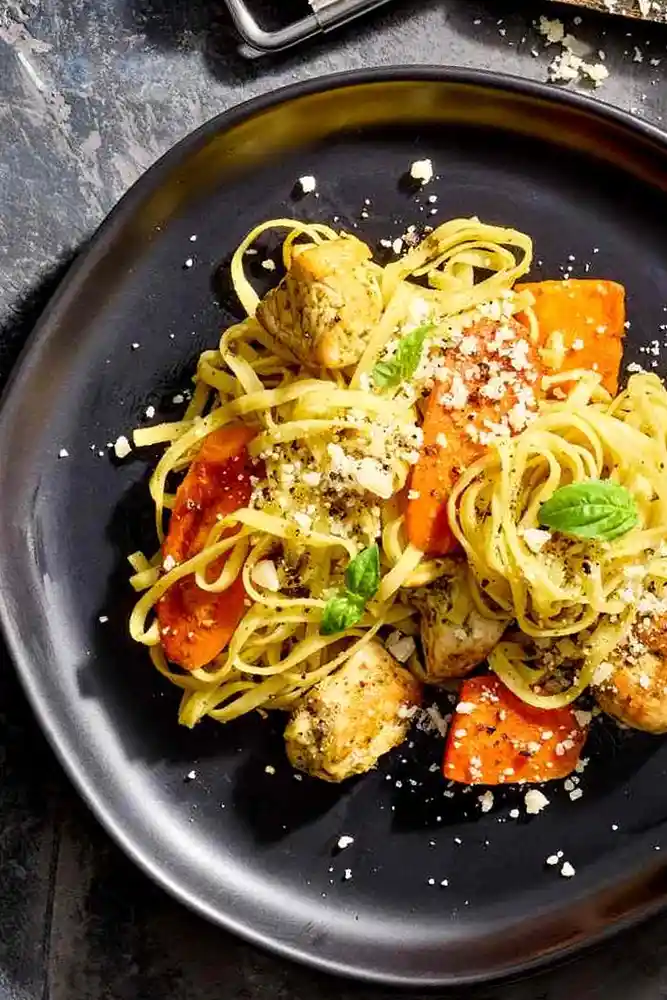
This efficient weeknight meal combines tender chicken and sliced carrots with a flavorful basil pesto sauce. It is a balanced dinner that comes together in just 20 minutes using a few smart shortcuts.
List of ingredients
- 1 9-ounce package refrigerated angel hair pasta (or other long noodles like fettuccine or linguine) – provides a quick-cooking base.
- 4 large carrots, thinly sliced – adds color and a hint of sweetness.
- 2 tablespoon butter – used for sautéing and enriching the pasta.
- 1.5 pound skinless, boneless chicken breast halves, cut into bite-size pieces – the main protein source.
- 6 tablespoon purchased basil pesto – acts as the primary seasoning and sauce.
- 0.25 cup finely shredded Parmesan cheese – adds a salty, nutty finish.
- Olive oil (optional) – for a final flavorful drizzle.
- Fresh basil (optional) – for a bright, aromatic garnish.
step-by-step instructions
- Prepare the Pasta: Cook the refrigerated angel hair pasta according to the specific package directions.
- Sauté the Carrots: Melt 1 tablespoon of butter in a 12-inch skillet over medium heat and cook the thinly sliced carrots for about 3 minutes.
- Cook the Chicken: Add the bite-size chicken pieces to the skillet; cook and stir for 4 to 5 minutes until no pink remains in the meat.
- Flavor the Protein: Stir in 4 tablespoons of the basil pesto and toss the chicken and carrots until they are evenly coated.
- Finish the Noodles: Drain the cooked pasta and return it to the pot; toss with the remaining 1 tablespoon of butter and the remaining 2 tablespoons of pesto.
- Assemble and Serve: Serve the pesto pasta topped with the chicken mixture. Sprinkle with Parmesan cheese and ground black pepper, then drizzle with olive oil and garnish with fresh basil.
Pesto Selection and Customization
Selecting Refrigerated Pesto for Vibrancy
Refrigerated pestos generally offer a brighter green color and a fresher taste than shelf-stable jarred versions. This is because they are processed differently and often contain fresher basil leaves. For the best visual result in this dish, choose the chilled option from the produce section.
Substituting with Sun-Dried Tomato Pesto
If you prefer a deeper, more concentrated flavor, replace the basil pesto with a sun-dried tomato pesto. This variation shifts the profile from a fresh herbal taste to a rich, savory one. The cooking method remains exactly the same regardless of the pesto type used.
Preparing a Simple Homemade Basil Pesto
For those who prefer to avoid store-bought options, a quick blend of fresh basil, pine nuts, garlic, olive oil, and parmesan works well. Pulse these ingredients in a food processor until smooth but slightly textured. Ensure the homemade version is well-emulsified so it coats the pasta evenly.
Adapting Pesto for Nut Allergies
Many commercial pestos use pine nuts or walnuts, which may not be suitable for everyone. You can find nut-free pesto alternatives or make your own by substituting toasted sunflower seeds or pumpkin seeds. This maintains the creamy texture without the risk of allergens.
Choosing the Right Pasta
Benefits of Angel Hair Pasta
Angel hair is the fastest cooking long pasta, making it ideal for a 20-minute meal. Its thin strands allow the pesto to coat every surface efficiently without needing a large volume of sauce. This ensures a light yet flavorful experience in every bite.
Using Fettuccine for More Volume
Fettuccine is a wider noodle that provides a more substantial chew and a heartier feel to the meal. Because it is thicker, it may require a few more minutes of boiling than angel hair. It is an excellent choice if you want the pasta to feel like the dominant part of the dish.
The Role of Linguine in Sauce Retention
Linguine is a middle ground between angel hair and fettuccine, offering a flat surface that holds pesto very well. It provides a classic Mediterranean feel and is sturdy enough to handle the weight of the chicken and carrots. Use this if you want a traditional pasta texture.
Integrating Whole Wheat Pasta
For a more nutritious option, whole wheat versions of these long noodles can be used. Whole wheat pasta has a nuttier flavor and more fiber, which pairs well with the earthiness of the carrots. Be mindful that whole wheat noodles may require slightly more cooking time.
Perfecting the Chicken
Maintaining Uniform Chicken Cuts
Cutting the chicken breast into consistent, bite-sized pieces is crucial for even cooking. If some pieces are significantly larger than others, the small ones may overcook while the large ones remain raw. Aim for pieces roughly one inch in diameter for consistent results.
Preventing Overcooking for Tender Meat
Chicken breast can dry out quickly if left on the heat too long. Remove the chicken from the skillet as soon as the pink color disappears and the internal temperature reaches 165°F. Tossing it with pesto at the end adds moisture back into the meat.
Searing for Deep Flavor
To add more depth, allow the chicken to sit undisturbed in the butter for a minute before stirring. This creates a light golden-brown sear on the surface, known as the Maillard reaction. This step adds a savory dimension that complements the herbal notes of the pesto.
Substituting Chicken Breast with Thighs
Boneless, skinless chicken thighs are a great alternative if you prefer a juicier, more flavorful protein. Thighs are more forgiving and less likely to dry out during the sautéing process. They will take roughly the same amount of time to cook as the breast pieces.
Enhancing the Vegetable Component
Slicing Carrots for Rapid Cooking
To ensure the carrots are tender in just three minutes, slice them into thin rounds or matchsticks. Thinly sliced vegetables cook much faster and blend better with the size of the chicken pieces. This creates a more cohesive texture throughout the meal.
Adding Spinach for Nutritional Value
Fresh baby spinach can be stirred into the skillet during the last minute of chicken cooking. The residual heat will wilt the leaves quickly without overcooking them. This adds a boost of iron and a vibrant green color to the dish.
Incorporating Bell Peppers for Color
Slicing a red or yellow bell pepper into thin strips adds a sweet crunch and visual appeal. Sauté the peppers alongside the carrots to ensure they soften properly. This addition makes the meal feel more like a complete primavera-style pasta.
Adding Sautéed Zucchini
Zucchini is another excellent addition that cooks quickly and absorbs the pesto flavor well. Dice the zucchini into half-moons and add them after the carrots have softened. This adds a mild, summer-squash taste that keeps the dish light.
Serving and Plating Suggestions
Garnishing with Toasted Pine Nuts
Adding a handful of toasted pine nuts on top provides a professional finish and a necessary crunch. Toast them in a dry pan over medium heat for two minutes until golden. This mirrors the ingredients found inside the pesto itself.
Pairing with a Fresh Garden Salad
Because this dish is rich in butter and cheese, a side salad with a lemon-vinaigrette helps balance the palate. Use mixed greens, cucumber, and cherry tomatoes for a refreshing contrast. The acidity of the dressing cuts through the creaminess of the Parmesan.
Enhancing Flavor with Fresh Lemon Juice
A small squeeze of fresh lemon juice over the finished plate brightens all the flavors. The citric acid enhances the basil and cuts through the richness of the butter. This is a simple way to make the dish taste more like restaurant-quality cuisine.
Using High-Quality Parmesan Shavings
While finely shredded cheese is used in the recipe, finishing the dish with large shaved curls of Parmesan adds visual elegance. Use a vegetable peeler to create thin ribbons from a block of aged Parmesan. This provides concentrated bursts of salty flavor.
Storage and Maintenance
Optimal Airtight Storage Methods
Store leftovers in a glass airtight container to keep the pasta from drying out. Separate the chicken and carrots from the noodles if you plan to store them for more than two days. This prevents the pasta from absorbing all the moisture from the sauce.
Reheating Techniques for Pasta
When reheating, avoid the microwave if possible, as it can make the chicken rubbery. Instead, warm the pasta in a skillet over low heat. Add a splash of water, milk, or chicken broth to loosen the pesto and restore the creamy consistency.
Freezing Instructions for Leftovers
This dish is not ideal for long-term freezing because the pesto can separate and the noodles can become mushy. However, you can freeze the cooked chicken and carrot mixture. Simply thaw and reheat them before tossing with freshly cooked pasta.
Preventing Pasta Dryness in the Fridge
Pasta naturally absorbs sauce as it sits in the refrigerator. To prevent a dry result, toss the noodles with a tiny bit of extra olive oil before storing. This creates a barrier that helps the noodles maintain their structure and moisture.
Cooking Troubleshooting
Adjusting Sauce Viscosity
If the pesto seems too thick or clumpy when tossing the pasta, add a tablespoon of the pasta cooking water. The starchy water emulsifies with the fats in the pesto and butter. This creates a smoother, silkier sauce that clings better to the noodles.
Stopping Pesto from Breaking
Pesto can ‘break’ or separate into oil and solids if overheated. To prevent this, avoid boiling the pesto; instead, toss it in at the end over low heat or off the heat entirely. This preserves the fresh flavor and the integrated texture of the sauce.
Ensuring Carrots are Tender
If your carrots are still too firm after three minutes, add a tablespoon of water to the skillet and cover it with a lid for one minute. The steam will penetrate the carrots quickly, softening them without burning the butter. This is especially helpful for very thick carrots.
Balancing High Salt Content
Store-bought pesto and Parmesan are both naturally high in sodium. To balance this, avoid adding extra salt to the chicken or the pasta water. Taste the final dish before adding any additional seasoning to ensure it is not overly salty.
Frequently Asked Questions
Can I use frozen chicken breast?
Yes, but you must thaw the chicken completely in the refrigerator before cutting and cooking. Cooking frozen chicken pieces directly in the skillet will lead to uneven cooking and a loss of texture. Pat the thawed chicken dry with paper towels to ensure a better sear.
What is the best Parmesan variety?
Parmigiano-Reggiano is the gold standard for this recipe due to its sharp, salty profile. However, any high-quality aged Parmesan will work well. Avoid the pre-shredded canisters with cellulose coatings, as they do not melt as smoothly into the pasta.
How to make this recipe dairy-free?
Replace the butter with olive oil and use a vegan pesto that is made without cheese. Instead of Parmesan, you can use nutritional yeast or a cashew-based parmesan alternative. This maintains the savory flavor while removing all dairy products.
Can I use other proteins?
This recipe works well with shrimp, scallops, or tofu. For shrimp, reduce the cooking time to 2-3 minutes per side to avoid toughness. For tofu, press it firmly to remove moisture and sauté until golden before adding the pesto.
How long do leftovers remain safe?
Refrigerated leftovers are typically safe to eat for 3 to 4 days. Ensure the container is sealed tightly to prevent the chicken from picking up other odors in the fridge. Always reheat to an internal temperature of 165°F for safety.
Print
20-Minute Chicken with Parmesan Noodles
- Total Time: 20 minutes
- Yield: 6 servings 1x
- Diet: General
Description
Combine carrots, chicken, and pasta for a light weeknight dinner that’s ready in less than 30 minutes.
Ingredients
- 1 9 ounce package refrigerated angel hair pasta, or other long noodle-shape pasta such as fettuccine or linguine
- 4 large carrots, thinly sliced
- 2 tablespoon butter
- 1.5 pound skinless, boneless chicken breast halves, cut into bite-size pieces
- 6 tablespoon purchased basil pesto
- 0.25 cup finely shredded Parmesan cheese
- Olive oil (optional)
- Fresh basil (optional)
Instructions
- Cook Pasta: Cook pasta according to package directions.
- Cook Chicken: Meanwhile, in 12-inch skillet cook carrots in 1 tablespoon melted butter over medium heat for 3 minutes. Add chicken; cook and stir 4 to 5 minutes or until no pink remains in chicken. Add 4 tablespoons pesto; toss to coat.
- Assemble and Serve: Drain pasta. Return to pan; toss with remaining butter and pesto. Serve with chicken mixture. Sprinkle pasta with Parmesan cheese and ground black pepper. Drizzle with olive oil and top with basil.
Notes
For the best flavor and color, use refrigerated pesto rather than shelf-stable jarred versions.
- Prep Time: 5 minutes
- Cook Time: 15 minutes
- Category: Entree
- Method: Stovetop
- Cuisine: American
Nutrition
- Serving Size: 1 serving
- Calories: 390 kcal
- Sugar: 4 g
- Sodium: 369 mg
- Fat: 16 g
- Saturated Fat: 5 g
- Unsaturated Fat: 11 g
- Trans Fat: 0 g
- Carbohydrates: 28 g
- Fiber: 3 g
- Protein: 33 g
- Cholesterol: 114 mg