
This recipe provides a fast and nutrient-dense meal using simple pantry staples. It combines savory beef with a sweet and spicy glaze, served over a bed of rice for a balanced dinner. The total preparation and cooking time is minimal, making it ideal for weeknight schedules.
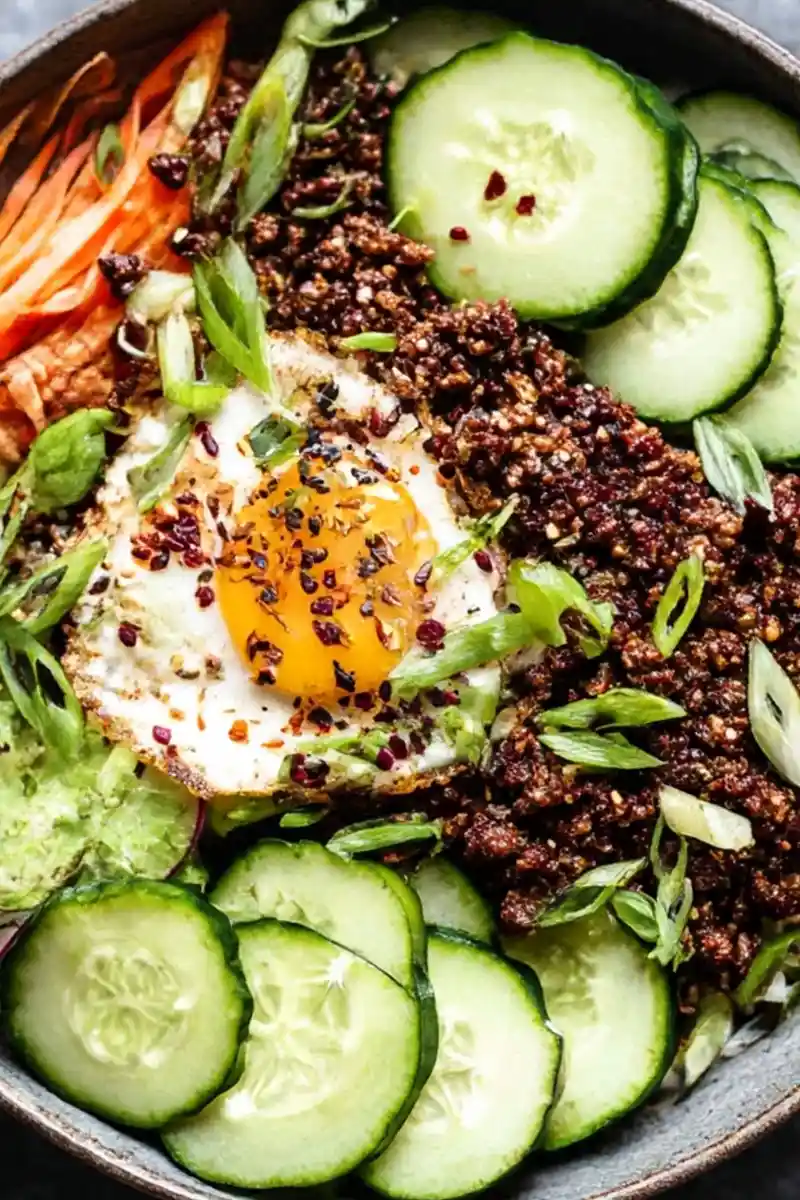
List of ingredients
- 1 lb lean ground beef – can substitute with ground turkey or chicken for a lighter option.
- Salt and freshly ground black pepper – use for basic seasoning to taste.
- 5 cloves garlic, minced – provides a strong aromatic base.
- 1 tbsp sesame oil – adds a distinct nutty flavor.
- 1 tbsp freshly grated ginger – adds a bright, zesty kick.
- 2/3 cup light brown sugar – balances the salty notes of the soy sauce.
- 1 cup low-sodium soy sauce – provides umami without excessive salt.
- 2 tsp Sriracha hot sauce – adds mild heat; can be replaced with chili garlic sauce or red pepper flakes.
- 1 bunch green onions, chopped – used for both cooking and garnishing.
- Hot cooked brown or white rice – serves as the base of the bowl.
- Fresh cucumber, sliced – an optional garnish for a cool, crisp contrast.
step-by-step instructions
- Brown the beef: Heat a large skillet over medium-high heat. Season the ground beef with salt and pepper, add it to the pan, and cook while breaking it into small crumbles with a wooden spoon. Once browned, drain any excess grease from the skillet. For extra fine pieces, you may pulse the cooked beef in a food processor 2-3 times before returning it to the pan.
- Sauté aromatics: Stir in the sesame oil, minced garlic, and grated ginger. Cook for about one minute until the garlic is fragrant and begins to golden at the edges.
- Simmer the sauce: Add the brown sugar, soy sauce, and sriracha (or chosen alternative) to the skillet. Stir well to ensure the sugar dissolves and simmer for a few minutes so the sauce thickens and absorbs into the meat.
- Incorporate green onions: Stir in half of the chopped green onions and remove the pan from the heat. This allows the onions to soften slightly without losing their color.
- Assemble and serve: Spoon the beef mixture over bowls of hot cooked rice. Garnish each portion with the remaining chopped green onions and fresh cucumber slices.
Professional Cooking Tips
Drain Excess Fat to Prevent an Oily Sauce
Even lean ground beef releases a significant amount of grease during the browning process. If you leave the fat in the pan, the soy-based sauce will separate and become oily rather than glossy. Use a spoon or a colander to remove the grease before adding the sesame oil and aromatics.
Simmer the Sauce for Maximum Caramelization
Do not rush the simmering process after adding the brown sugar and soy sauce. Allowing the mixture to bubble for 2 to 3 minutes causes the sugars to caramelize, which creates a thick glaze that clings to the beef. This step is essential for achieving the deep, savory-sweet flavor profile characteristic of this dish.
Prioritize Fresh Ginger Over Ground Powder
Freshly grated ginger contains volatile oils that provide a bright, zesty heat that ground ginger cannot replicate. If you only have ground ginger, use a quarter teaspoon, but for the best results, use a microplane to grate fresh root. You can freeze leftover ginger root to preserve its freshness for future recipes.
Synchronize Rice Cooking with the Beef
Since the beef cooks in only 20 minutes, start your rice cooker or pot before you begin browning the meat. This ensures that the rice is hot and fluffy the moment the beef is finished. If the beef sits too long, the sauce may over-reduce and become too salty or sticky.
Ingredient Substitutions
Using Ground Turkey or Chicken for Leaner Protein
You can replace the lean ground beef with ground turkey or ground chicken to reduce the saturated fat content. Because these meats are leaner, you may need to add an extra teaspoon of sesame oil to prevent the meat from sticking to the pan. The flavor profile remains consistent regardless of the protein choice.
Replacing Brown Sugar with Natural Sweeteners
If you prefer not to use refined brown sugar, honey or maple syrup are excellent alternatives. Use a slightly smaller quantity, about 1/2 cup, as liquid sweeteners are more potent than granulated sugar. Honey adds a floral note, while maple syrup provides a deeper, earthy sweetness.
Using Coconut Aminos for a Low-Sodium Alternative
For those avoiding soy or seeking even lower sodium levels, coconut aminos are a suitable substitute for soy sauce. Use a 1:1 ratio, but be aware that coconut aminos are naturally sweeter than soy sauce. You may want to reduce the amount of brown sugar to maintain the balance of flavors.
Swapping Sriracha for Other Spicy Elements
If Sriracha is unavailable, chili garlic sauce offers a similar heat and garlic punch. For a drier heat, use 1 teaspoon of crushed red pepper flakes. If you prefer a more traditional Korean taste, a tablespoon of Gochujang (Korean chili paste) can be stirred in, though you should slightly reduce the soy sauce to account for the salt in the paste.
Creative Bowl Variations
Adding Sautéed Spinach for Nutrition
To increase the vegetable content, sauté a handful of fresh spinach in the pan immediately after the beef is cooked. The residual heat will wilt the spinach quickly without overcooking it. This adds a boost of iron and vitamins while complementing the savory sauce.
Topping with a Fried Egg for Richness
Adding a sunny-side-up or over-easy egg on top of the bowl adds a creamy element to the dish. When the yolk breaks, it mixes with the soy-ginger glaze to create a richer sauce. This variation mimics traditional Bibimbap bowls.
Incorporating Shredded Carrots and Radishes
For added texture and color, add julienned carrots and sliced Korean radishes to the bowl. These can be served raw for a crisp crunch or lightly pickled in vinegar and sugar. The acidity of pickled vegetables cuts through the richness of the beef.
Using Cauliflower Rice for a Low-Carb Option
Substitute white or brown rice with steamed cauliflower rice to make the meal keto-friendly or lower in calories. Sauté the cauliflower rice briefly with a pinch of salt and garlic powder. This allows the beef sauce to coat the cauliflower grains effectively.
Serving and Pairing Suggestions
Pairing with Kimchi for Acidity
Serving these bowls with a side of fermented kimchi provides a sharp, sour contrast to the sweet beef. The probiotics in kimchi aid digestion and the acidity cleanses the palate between bites. It is the most traditional pairing for Korean-style beef dishes.
Adding Toasted Sesame Seeds for Texture
Sprinkle toasted white or black sesame seeds over the final dish for a professional finish. Toasting the seeds in a dry pan for 2 minutes enhances their nutty aroma. This adds a subtle crunch and visual appeal to the bowl.
Serving with Steamed Bok Choy
Steamed or sautéed bok choy provides a fresh, bitter element that balances the sugar in the sauce. Lightly steam the bok choy with a splash of water and a pinch of salt. Place it on the side of the rice bowl for a complete, balanced meal.
Making a Family-Style Platter
Instead of individual bowls, place a large mound of rice in the center of a platter and surround it with the beef and various vegetable toppings. This presentation allows family members to customize their own portions. It is an efficient way to serve a larger group during dinner parties.
Storage and Reheating Guide
Refrigerating Beef Mixture for Meal Prep
Store the cooked beef mixture in an airtight glass container in the refrigerator for up to 4 days. Keep the rice and fresh toppings, such as cucumber and green onions, in separate containers. This prevents the rice from becoming mushy and the vegetables from wilting.
Freezing the Beef for Long-Term Storage
The beef mixture freezes well for up to 3 months. Allow the beef to cool completely before transferring it to a freezer-safe bag or container. Thaw the beef overnight in the refrigerator before reheating to maintain the texture of the meat.
Reheating in a Skillet for Best Results
To maintain the best texture, reheat the beef in a skillet over medium heat. Add a splash of water or a teaspoon of soy sauce to loosen the glaze and prevent the meat from drying out. This method restores the caramelized edges better than a microwave.
Microwave Reheating Instructions
If using a microwave, place the beef and rice in a microwave-safe bowl and cover it with a damp paper towel. Heat in 1-minute intervals, stirring in between, to ensure the heat is distributed evenly. The cover traps steam, which keeps the beef moist.
Troubleshooting Common Issues
Fixing a Sauce That Is Too Salty
If the sauce tastes overly salty, add a small amount of brown sugar or a squeeze of lime juice. The sweetness or acidity helps neutralize the saltiness of the soy sauce. In extreme cases, stir in a tablespoon of water or unsalted beef broth to dilute the concentration.
Preventing the Beef from Burning
If the beef begins to stick or burn, lower the heat to medium and add a tablespoon of water. This deglazes the pan, lifting the browned bits (fond) and incorporating them back into the sauce. Avoid using high heat once the sugar has been added, as sugar burns quickly.
Improving a Sauce That Is Too Thin
If the sauce remains watery, continue to simmer it over medium heat for another 2 to 5 minutes. Ensure you are stirring frequently to prevent the bottom from scorching. The sauce will thicken as the water evaporates and the sugars concentrate.
Balancing Overly Sweet Flavors
If the beef tastes too sweet, balance the flavor with a teaspoon of rice vinegar or apple cider vinegar. The acid cuts through the sugar and brightens the overall taste of the dish. Adding a bit more Sriracha or red pepper flakes can also distract from excessive sweetness.
Frequently Asked Questions
What is a Korean beef bowl called?
While there is no single official name for this simplified version, it is often referred to as Korean ground beef and rice. In traditional Korean terms, a rice bowl is called ‘bap,’ so this dish is similar to a simplified ‘sogogi bap’ (beef rice) or a modified version of Bulgogi.
How do I make this a healthier choice?
To increase the nutritional value, use 93% lean ground turkey and serve the mixture over brown rice or cauliflower rice. Increase the ratio of vegetables by adding shredded carrots, steamed broccoli, or fresh spinach. Reducing the brown sugar by half also lowers the glycemic impact of the meal.
Can I use different types of rice?
Yes, white jasmine or basmati rice works well for a fluffy texture, while short-grain sushi rice provides the traditional sticky consistency found in Korean meals. Brown rice is a great option for added fiber and a nuttier flavor.
What are the best side dishes for these bowls?
The best sides are those that offer acidity or freshness. Sliced cucumbers, pickled radishes, or a side of steamed cabbage are excellent. For a more filling meal, serve with a side of miso soup or a simple Asian-style slaw with sesame dressing.
Print
Korean Ground Beef Bowls
- Total Time: 20 minutes
- Yield: 6 servings 1x
- Diet: General
Description
These Korean Ground Beef Bowls are quick, flavorful, and packed with savory umami, making them a perfect weeknight dinner.
Ingredients
- 1 lb lean ground beef
- Salt and freshly ground black pepper
- 5 cloves garlic, minced
- 1 tbsp sesame oil
- 1 tbsp freshly grated ginger
- 2/3 cup light brown sugar
- 1 cup low-sodium soy sauce
- 2 tsp Sriracha hot sauce
- 1 bunch green onions, chopped
- Hot cooked brown or white rice
- Fresh cucumber, sliced
Instructions
- Brown the beef: Heat a large skillet over medium-high heat. Season the ground beef with salt and pepper, then add it to the skillet. Cook, stirring and breaking it into small pieces with a wooden spoon, until browned. Drain any excess grease.
- Add aromatics and sauce: Add sesame oil, minced garlic, and grated ginger to the pan. Stir in the brown sugar, soy sauce, and sriracha (or chili garlic sauce). Cook for a few minutes, allowing the sauce to absorb into the meat.
- Add green onions: Stir in half of the chopped green onions, saving the rest for garnish.
- Serve: Serve the beef mixture over hot rice and garnish with the remaining green onions and fresh cucumber slices.
Notes
This meal is incredibly versatile-serve it over brown or white rice, and add fresh cucumber slices for a refreshing touch. Great for meal prep!
- Prep Time: 10 minutes
- Cook Time: 10 minutes
- Category: Main Course
- Method: Stovetop
- Cuisine: Korean
Nutrition
- Serving Size: 1 bowl
- Calories: 367 kcal
- Sugar: 36 g
- Sodium: 2264 mg
- Fat: 9 g
- Saturated Fat: 3 g
- Unsaturated Fat: 6 g
- Trans Fat: 0 g
- Carbohydrates: 43 g
- Fiber: 3 g
- Protein: 27 g
- Cholesterol: 70 mg