
This efficient recipe transforms standard ground beef into a savory Korean-inspired meal using a sweet and salty glaze. It is a perfect weeknight dinner that delivers bold flavors in under 30 minutes.
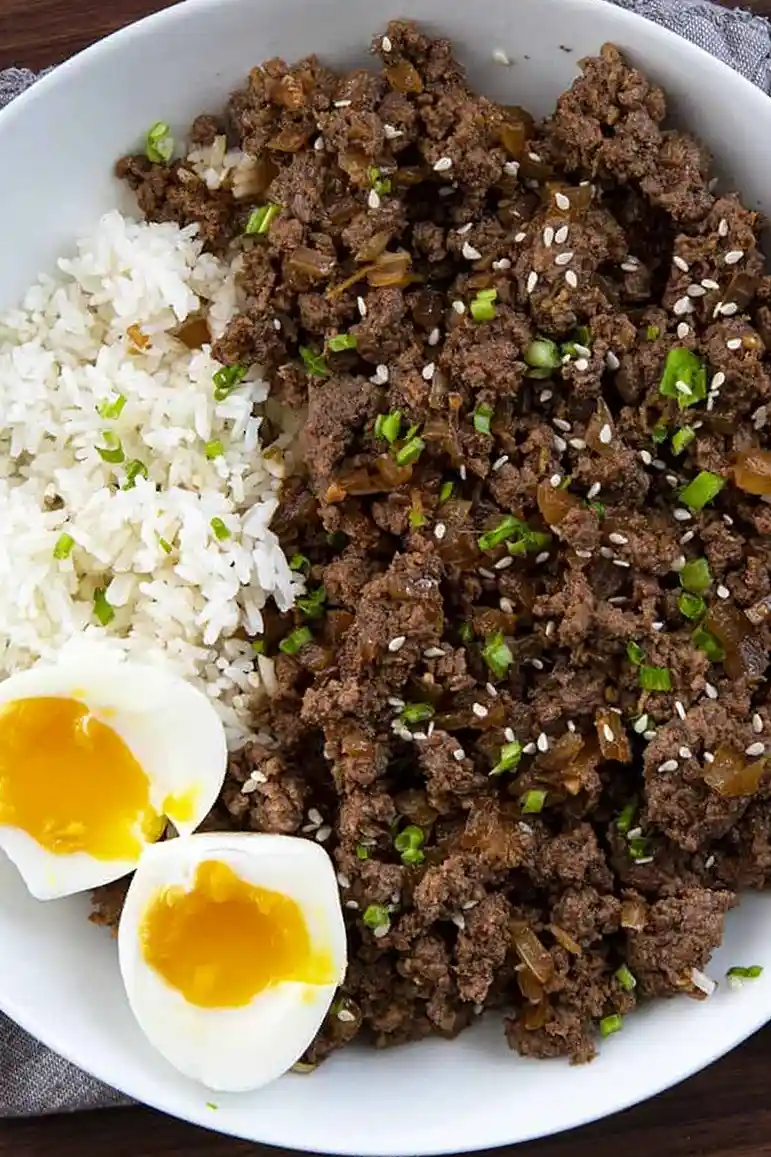
List of ingredients
- 1/4 cup soy sauce – provides the primary salty base.
- 2 tablespoons rice vinegar – adds a necessary acidic balance.
- 1 tablespoon plus 2 teaspoons brown sugar – creates the signature sweetness and glaze.
- 2 teaspoons sesame oil – adds a rich, nutty aroma.
- 1 teaspoon fresh ginger, minced – provides a zesty, pungent kick.
- 1 teaspoon fresh garlic, minced – adds aromatic depth.
- 1 pound ground beef – the main protein source.
- 1/2 small yellow onion, diced – adds sweetness and texture.
- 1 tablespoon scallion, diced – used for fresh garnish.
- 1 teaspoon sesame seeds – adds crunch and visual appeal.
- 4 large soft boiled eggs – adds creaminess to the dish.
- Cooked white rice – used as the base for serving.
step-by-step instructions
- Prepare the Bulgogi Sauce: In a medium bowl, combine the soy sauce, rice vinegar, brown sugar, sesame oil, minced ginger, and minced garlic. Stir the mixture well until the sugar is fully dissolved and set it aside.
- Brown the Beef and Onion: Place a skillet over medium heat and add the ground beef and diced yellow onion. Cook the mixture for about 5 minutes until the meat is browned, though it may still be slightly pink in the center.
- Simmer the Mixture: Pour the prepared bulgogi sauce over the beef and onion. Stir well to coat the meat and simmer for an additional 6 to 10 minutes until the sauce thickens.
- Prepare the Soft-Boiled Eggs: Bring a pot of water to a boil over medium-high heat. Carefully lower the eggs into the water and boil for exactly six minutes. Immediately transfer the eggs to an ice water bath to stop the cooking process, then carefully peel them.
- Assemble the Bowls: Divide the cooked white rice among four bowls. Top each portion of rice with the simmered beef mixture. Finish each bowl with diced scallions, sesame seeds, and one soft-boiled egg.
Culinary Tips for Success
Browning the Beef for Maximum Flavor
Ensure the skillet is sufficiently heated before adding the meat to achieve a proper sear. Avoid overcrowding the pan if you are doubling the recipe, as this can cause the meat to steam rather than brown. A deep brown color on the beef adds a layer of savory complexity known as the Maillard reaction.
Achieving the Perfect Soft-Boiled Egg
The six-minute boiling time is critical for achieving a set white and a liquid gold yolk. Using eggs that are a few days old often makes the peeling process much easier. Always use an ice bath immediately after boiling to prevent the yolk from overcooking due to residual heat.
Managing the Simmering Process
Keep the heat at a steady medium to allow the sauce to reduce without burning the sugars. Stir occasionally to ensure the beef is evenly coated and the sauce thickens into a glossy glaze. The beef should be tender and the sauce should cling to the meat rather than pooling at the bottom.
Controlling Sauce Consistency
If the sauce reduces too quickly and becomes overly thick, add a tablespoon of water to loosen it. Conversely, if the sauce is too thin after 10 minutes, increase the heat slightly for one minute. The goal is a syrupy consistency that coats the beef thoroughly.
Ingredient Alternatives
Swapping Soy Sauce for Tamari or Coconut Aminos
For a gluten-free version, replace the soy sauce with tamari or coconut aminos. Coconut aminos are naturally sweeter and less salty, so you may need to reduce the amount of brown sugar slightly. Tamari provides a flavor profile very similar to traditional soy sauce.
Using Honey instead of Brown Sugar
Honey is an excellent substitute for brown sugar and helps create a very sticky, glossy glaze. Use a 1:1 ratio, but be mindful that honey can burn more quickly than brown sugar. You may need to lower the heat slightly during the simmering phase.
Substituting Fresh Ginger and Garlic
If fresh aromatics are unavailable, you can use ground ginger and garlic powder. Use 1/4 teaspoon of ground ginger for every teaspoon of fresh ginger and 1/4 teaspoon of garlic powder for every teaspoon of fresh garlic. Fresh ingredients provide a brighter flavor, but powders are a convenient alternative.
Alternatives to Rice Vinegar
Apple cider vinegar is a suitable replacement if rice vinegar is not on hand. It has a similar acidity level, although it possesses a slightly fruitier profile. White distilled vinegar can also be used, though it is sharper and may require a pinch more sugar to balance.
Flavor Customizations
Adding Gochujang for a Spicy Kick
To add heat and depth, stir in one tablespoon of gochujang (Korean chili paste) into the sauce. This adds a fermented, spicy element that complements the sweetness of the brown sugar. Adjust the amount based on your preferred spice tolerance.
Incorporating Fresh Vegetables
You can increase the nutritional value by adding shredded carrots or thinly sliced bell peppers. Sauté these vegetables along with the onion before adding the beef. This adds color, crunch, and extra vitamins to the final bowl.
Using Fresh Spinach or Kale
Stirring in a handful of baby spinach during the last minute of simmering allows the leaves to wilt into the beef. This provides a fresh, earthy contrast to the rich sauce. Ensure you do not overcook the greens to maintain their vibrant color.
Swapping the Protein Source
While ground beef is traditional for this quick version, ground turkey or ground chicken also work well. Leaner meats may require an extra teaspoon of sesame oil to prevent the dish from becoming too dry. These alternatives offer a lighter version of the meal.
Serving Recommendations
Pairing with Traditional Side Dishes
Serve these bowls with a side of kimchi or pickled radish to provide a fermented, acidic contrast. The sourness of the pickles cuts through the richness of the beef and the creaminess of the egg. These sides are standard in Korean-inspired meals.
Alternative Grain Bases
If you prefer a low-carb option, replace the white rice with cauliflower rice or quinoa. Brown rice is another healthy alternative that provides more fiber and a nuttier flavor. Ensure the grain is fully cooked and hot before adding the beef topping.
Adding Fresh Cucumber Ribbons
Thinly sliced cucumber ribbons tossed in a bit of rice vinegar and salt make a refreshing topping. The coolness of the cucumber balances the warmth of the simmered beef. This adds a professional touch to the presentation of the bowl.
Enhancing the Garnish
In addition to sesame seeds and scallions, try adding a drizzle of sriracha or toasted sesame oil on top. A sprinkle of red pepper flakes can also add a subtle heat. Freshly torn cilantro is another great option for added brightness.
Storage and Preservation
Refrigerating the Beef Mixture
Store the cooked beef and onion mixture in an airtight container in the refrigerator for up to three days. Keep the eggs and rice in separate containers to maintain their texture. This makes the recipe ideal for weekday meal preparation.
Freezing for Long-Term Storage
The beef mixture can be frozen for up to three months. Allow the meat to cool completely before transferring it to a freezer-safe bag or container. Do not freeze the soft-boiled eggs, as the texture of the yolk will change and become rubbery.
Thawing Frozen Beef Bulgogi
For best results, thaw the frozen beef in the refrigerator overnight. Avoid thawing at room temperature to maintain food safety. Once thawed, the beef can be reheated using the methods described below.
Storing Soft-Boiled Eggs
Store peeled soft-boiled eggs in a container covered with cold water, changing the water daily. They are best consumed within two days of preparation. Keeping the shell on will extend their shelf life slightly longer in the fridge.
Reheating Instructions
Stovetop Reheating Method
Place the beef in a small skillet over medium-low heat. Add a splash of water or beef broth to loosen the sauce and prevent it from sticking. Heat until the beef is steaming and the sauce has returned to a glossy state.
Microwave Reheating Tips
Place the beef and rice in a microwave-safe bowl and cover it with a damp paper towel. Heat in 30-second intervals, stirring in between to ensure even warming. This prevents the rice from drying out and the beef from overcooking.
Avoiding Overcooked Eggs
Do not reheat the soft-boiled eggs in the microwave, as this will cause the yolk to harden or the egg to burst. Instead, serve the eggs at room temperature or gently warm them by dipping them in hot water for a minute.
Refreshing the Sauce Texture
If the sauce has thickened too much during storage, stir in a teaspoon of rice vinegar or water during reheating. This restores the original balance of flavors and the silky consistency of the glaze.
Advance Preparation Strategies
Mixing the Bulgogi Sauce Early
The sauce can be prepared several days in advance and stored in a glass jar in the refrigerator. Mixing it early allows the ginger and garlic flavors to infuse more deeply into the liquid. Simply shake the jar before using to redistribute the brown sugar.
Pre-Browning the Meat
You can brown the beef and onions in a large batch at the start of the week. Store the browned meat in the fridge and then simmer it with the sauce just before serving. This reduces the active cooking time to under ten minutes per meal.
Organizing the Toppings
Dice the scallions and toast the sesame seeds ahead of time. Store the chopped scallions in a small airtight container with a damp paper towel to keep them crisp. This streamlines the final assembly process.
Scheduling the Egg Boil
Prepare the soft-boiled eggs a few hours before dinner. Once peeled and chilled, they can sit in the refrigerator until you are ready to plate the meal. This ensures you are not rushing the time-sensitive boiling process while the meat is hot.
Common Cooking Solutions
Fixing an Overly Salty Sauce
If the sauce tastes too salty, add a teaspoon of brown sugar or a splash of water. A small amount of extra rice vinegar can also help neutralize the saltiness. Balance the flavors by tasting the sauce before adding the beef.
Preventing the Garlic from Burning
Add the minced garlic during the last minute of browning the beef rather than at the beginning. Garlic burns quickly at high temperatures and can become bitter. Adding it late ensures the aromatic flavor remains sweet and pungent.
Solving Egg Peeling Difficulties
If the eggs are difficult to peel, try cracking the shell all over and peeling them under a stream of cold running water. This helps separate the membrane from the egg white. Using older eggs is the most effective way to prevent this issue.
Handling Excess Grease in the Pan
If the ground beef releases a significant amount of fat, drain the excess grease before adding the sauce. Use a spoon or a paper towel to remove the oil from the skillet. This prevents the final sauce from becoming oily or separating.
Frequently Asked Questions
Can I use lean ground beef?
Yes, you can use 90% lean beef or higher. However, lean beef can be drier, so you may need to add a tablespoon of oil to the pan for browning and be careful not to over-simmer the meat.
Which rice works best for this dish?
Short-grain white rice or sushi rice is ideal because the sticky texture helps hold the beef and sauce. Jasmine rice is also a great option if you prefer a lighter, more floral aromatic rice.
How long do the soft-boiled eggs last?
Peeled soft-boiled eggs should be consumed within 48 hours when stored in the refrigerator. Unpeeled eggs can last up to one week, but the yolk texture is best immediately after cooking.
Is the sauce gluten-free?
The original recipe uses soy sauce, which contains wheat. To make it gluten-free, simply replace the soy sauce with tamari or coconut aminos.
Print
Quick Ground Beef Bulgogi Bowls
- Total Time: 25 minutes
- Yield: 4 servings 1x
- Diet: General
Description
This Easy Beef Bulgogi recipe is made with ground beef that is simmered in a bulgogi sauce and served topped with scallion, sesame seeds, and a soft boiled egg.
Ingredients
- 1/4 cup soy sauce
- 2 tablespoons rice wine vinegar
- 1 tablespoon plus 2 teaspoons brown sugar
- 2 teaspoons sesame oil
- 1 teaspoon fresh ginger, minced
- 1 teaspoon fresh garlic, minced
- 1 pound ground beef
- 1/2 small yellow onion, diced
- 1 tablespoon scallion, diced
- 1 teaspoon sesame seeds
- 4 large soft boiled eggs
- white rice, cooked, for serving
Instructions
- Combine Sauce: In a medium bowl combine soy sauce, rice wine vinegar, brown sugar, sesame oil, ginger, and garlic. Mix well to combine and set aside.
- Brown Meat: In a skillet over medium heat, add ground beef and onion and cook until browned (about 5 minutes).
- Mix: Add the Bulgogi sauce and mix well.
- Simmer: Simmer for 6-10 more minutes, and remove from heat.
- Plate: Add cooked rice to four bowls.
- Distribute: Evenly distribute the beef mixture between the bowls of rice.
- Garnish: Top with scallion, sesame seeds, and a soft-boiled egg.
Notes
To soft-boil eggs: Bring water to a boil, add eggs, cover and boil for six minutes, then immediately transfer to an ice water bath before peeling.
- Prep Time: 10 minutes
- Cook Time: 15 minutes
- Category: Dinner
- Method: Stovetop
- Cuisine: American
Nutrition
- Serving Size: 1 portion
- Calories: 340 kcal
- Sugar: 7 g
- Sodium: 920 mg
- Fat: 22 g
- Saturated Fat: 8 g
- Unsaturated Fat: 14 g
- Trans Fat: 0 g
- Carbohydrates: 10 g
- Fiber: 1 g
- Protein: 25 g
- Cholesterol: 210 mg