
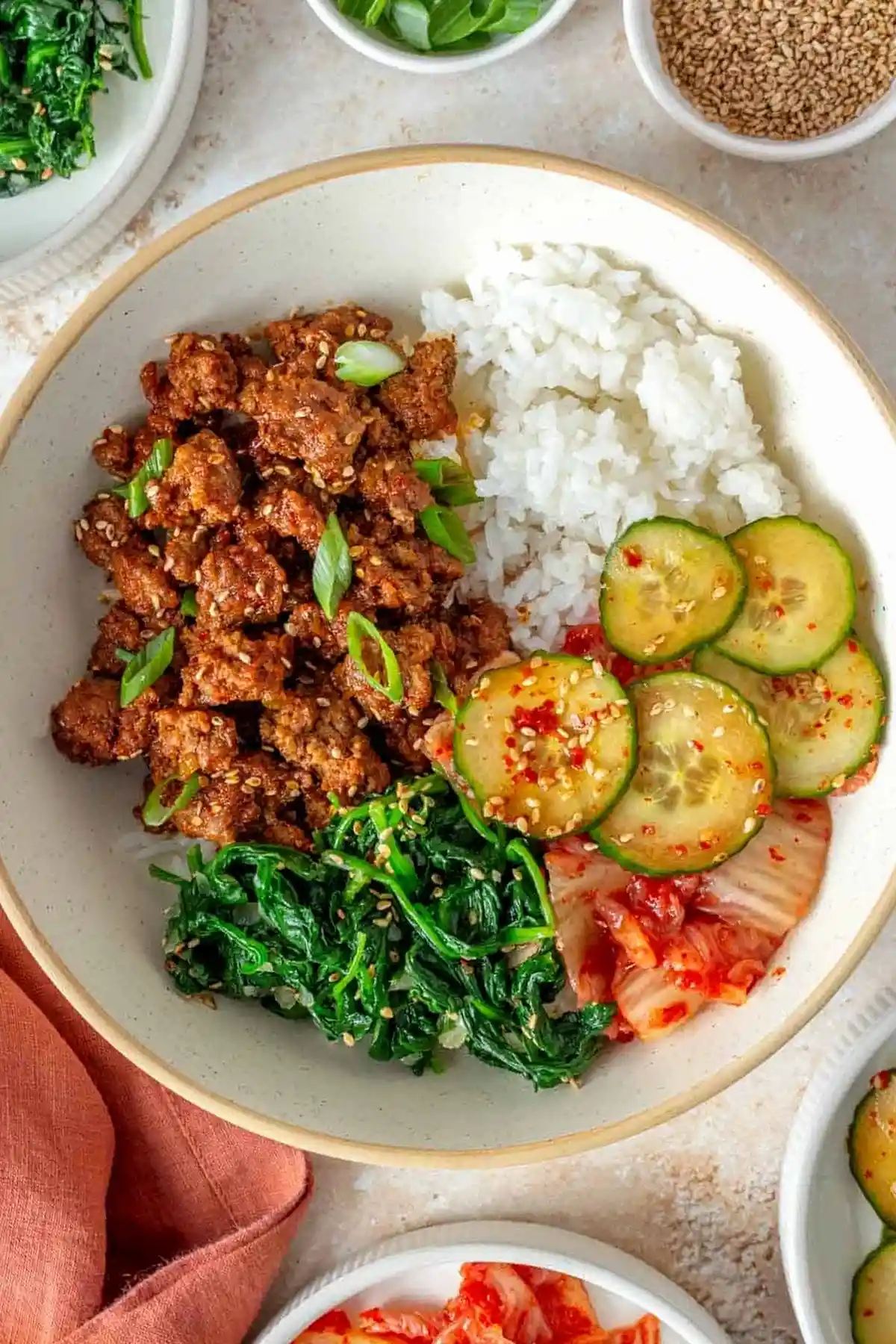
This savory meal combines spicy Korean pepper paste with lean ground beef for a fast, flavor-packed dinner. It takes less than 30 minutes to prepare and pairs perfectly with steamed rice.
List of ingredients
- 2 tablespoons sesame oil – provides a nutty base for the sauce.
- 2 tablespoons gochujang – fermented Korean chili paste for heat and depth.
- 1 teaspoon gochugaru – Korean red chili flakes for added spice.
- 2 tablespoons brown sugar – balances the heat with a rich sweetness.
- 2 tablespoons soy sauce (low sodium) – adds essential savory saltiness.
- 1/8 teaspoon salt – enhances the overall seasoning.
- 1 teaspoon garlic powder – provides a consistent garlic flavor.
- 1 teaspoon onion powder – adds a subtle aromatic sweetness.
- 1/2 tablespoon olive oil – used for searing the beef.
- 1 pound ground beef (lean) – the main protein source.
- 2 green onions (sliced, whites and dark green separated) – used for both cooking and garnishing.
- 4 cups cooked rice – serves as the base for the beef bowls.
- Toasted sesame seeds – used for the final garnish.
step-by-step instructions
- Prepare the sauce: In a small mixing bowl, combine the sesame oil, gochujang, gochugaru, brown sugar, soy sauce, salt, garlic powder, and onion powder. Mix until the ingredients are well combined and set the bowl aside.
- Sear the beef: Heat the olive oil in a large skillet over medium heat and add the ground beef. Brown the beef, breaking it into small pieces with a wooden spoon as it cooks.
- Add aromatics: After 3 minutes of browning, add the sliced white parts of the green onions to the pan. Saute for 2 minutes until the onions have softened.
- Thicken the sauce: Pour the prepared sauce into the skillet. Mix until the ground beef is completely coated and allow it to cook down for 3 to 5 minutes until the sauce thickens.
- Garnish and serve: Finish the dish by garnishing with the sliced dark green parts of the green onions and toasted sesame seeds. Serve the beef over warm cooked rice with your preferred side dishes.
Practical Cooking Tips
Use Lean Beef to Minimize Excess Fat
Selecting lean ground beef ensures that the sauce clings to the meat rather than floating in grease. If you use a higher-fat blend, drain the rendered fat from the skillet after browning the meat but before adding the sauce. This prevents the final dish from feeling oily.
Toast Sesame Seeds for Maximum Aroma
While pre-toasted seeds are convenient, toasting them yourself in a dry pan for 2-3 minutes enhances the nutty flavor. Keep the seeds moving constantly to prevent them from burning. This small step significantly elevates the aromatic profile of the bowls.
Adjusting the Spice Level
Gochujang and gochugaru vary in heat depending on the brand. If you prefer a milder dish, reduce the gochugaru to a half teaspoon. For those who enjoy more heat, you can increase the gochugaru or add a pinch of cayenne pepper.
Achieving the Right Meat Texture
Use a wooden spoon or a meat masher to break the beef into very small crumbles while browning. Smaller pieces provide more surface area for the sauce to coat, ensuring every bite is flavorful. Avoid overworking the meat to keep it tender.
Ingredient Substitutions
Replacing Brown Sugar with Alternative Sweeteners
If brown sugar is unavailable, honey or maple syrup can be used as a substitute. These liquid sweeteners may make the sauce slightly stickier, so you might need an extra minute of simmering to thicken it. Adjust the quantity based on the sweetness of the substitute.
Using Coconut Aminos Instead of Soy Sauce
For a soy-free alternative, replace the soy sauce with coconut aminos. Since coconut aminos are naturally sweeter and less salty, you may need to add an extra pinch of salt. The flavor remains savory and works well with the gochujang.
Substituting Olive Oil with Neutral Oils
While olive oil works well, avocado oil or grapeseed oil are excellent alternatives due to their high smoke points. These oils provide a neutral base that does not interfere with the Korean seasonings. Avoid using butter as it can burn at the temperature needed to brown the beef.
Alternative Rice Options
Jasmine rice is a traditional choice, but short-grain sushi rice provides a stickier texture that holds the sauce well. You can also use brown rice, purple rice, or cauliflower rice for a lower-carb version. Ensure the rice is hot when serving to contrast with the savory beef.
Creative Bowl Variations
Incorporating Mixed Vegetables
You can add frozen peas, diced carrots, or corn to the skillet just before adding the sauce. Saute them for 2-3 minutes until tender. This adds color, nutrition, and a slight crunch to the final bowl.
Adding a Protein Topping
A fried or poached egg placed on top of the beef adds a rich, creamy element. The runny yolk blends with the spicy gochujang sauce to create a smoother flavor. Soft-boiled eggs also work well for meal prep versions.
Using Different Protein Bases
While this recipe focuses on ground beef, ground turkey or ground chicken can be used. These leaner meats may require a tiny bit more oil for browning. The sauce flavor remains consistent regardless of the meat used.
Adding Fresh Greens
Fold in some fresh baby spinach or kale at the very end of the cooking process. The residual heat will wilt the greens without overcooking them. This is a great way to incorporate more nutrients into a single meal.
Serving Suggestions
Pairing with Smashed Cucumber Salad
A cold, vinegary cucumber salad provides a refreshing contrast to the warm, spicy beef. Use rice vinegar, sesame oil, and a pinch of sugar for the dressing. This helps cleanse the palate between bites of the rich meat.
Integrating Fermented Kimchi
Serving a side of kimchi adds a sour, probiotic element that complements the sweet and spicy notes of the gochujang. The crunch of the fermented cabbage balances the softness of the rice and beef. It is a classic Korean pairing.
Adding Seasoned Spinach
Blanched spinach tossed with garlic, soy sauce, and sesame oil is a traditional accompaniment. This side dish adds an earthy flavor and a vibrant green color to the bowl. It helps balance the intensity of the chili paste.
Using Lettuce Wraps for a Low-Carb Option
Instead of rice, scoop the gochujang beef into large Romaine or butter lettuce leaves. This transforms the bowls into spicy beef wraps. Top with sliced radishes or shredded carrots for extra crunch.
Storage and Preservation
Refrigerating for Meal Prep
Once the beef has cooled completely, store it in an airtight glass container in the refrigerator. It will remain fresh and flavorful for up to 4 days. Store the cooked rice separately to prevent it from absorbing all the sauce.
Freezing Guidelines
The cooked beef can be frozen for up to 3 months. Ensure the meat is fully cooled before transferring it to a freezer-safe bag or container. Squeeze out as much air as possible to prevent freezer burn.
Preventing Sauce Separation
When storing the beef, the sauce may slightly separate or thicken. This is normal due to the fats and sugars in the gochujang. A quick stir during the reheating process will bring the emulsion back together.
Thawing Frozen Beef
For the best results, thaw the frozen beef in the refrigerator overnight. If you are in a hurry, you can use the defrost setting on your microwave. Avoid thawing at room temperature to maintain food safety.
Reheating Best Practices
Stovetop Reheating Method
Place the beef in a small skillet over medium-low heat. Add a tablespoon of water or beef broth to loosen the sauce and prevent it from burning. Stir occasionally until heated through.
Microwave Reheating Instructions
Place the beef and rice in a microwave-safe bowl and cover it with a damp paper towel. This traps the steam and prevents the rice from drying out. Heat in 30-second intervals, stirring in between.
Reviving Dried-Out Rice
If the rice has become hard in the fridge, add a teaspoon of water before microwaving. The steam will rehydrate the grains, making them fluffy again. Avoid overcooking, as this can make the rice mushy.
Adding Fresh Garnishes After Reheating
Do not reheat the green onions or sesame seeds. Add fresh sliced green onions and a sprinkle of toasted sesame seeds after the beef is hot. This restores the bright color and fresh aroma to the dish.
Common Troubleshooting
Managing Sauce Thickness
If the sauce becomes too thick or sticky, stir in a teaspoon of water or beef broth during the final simmering stage. This thins the sauce just enough to coat the meat without losing flavor. Avoid adding too much liquid, or the beef will boil rather than glaze.
Preventing Meat Clumping
If the beef is clumping into large chunks, use a stiff spatula or wooden spoon to press down and break the meat apart during the browning phase. Do this before the meat fully sears to ensure a fine, consistent texture.
Balancing Excessive Saltiness
If the dish tastes too salty, add a small amount of extra brown sugar or a squeeze of fresh lime juice. The sweetness or acidity helps neutralize the sodium from the soy sauce and gochujang. You can also serve it with unseasoned rice to dilute the saltiness.
Fixing a Lack of Spice
If the final dish is not spicy enough for your preference, stir in an extra teaspoon of gochugaru after the beef is cooked. This adds a fresh layer of heat without requiring you to recook the entire dish. Alternatively, serve with extra kimchi on the side.
Frequently Asked Questions
Can I use ground turkey instead of beef?
Yes, ground turkey is a great substitute. Because turkey is leaner than beef, you may need to add an extra teaspoon of oil to the pan to prevent sticking.
Where can I find gochujang and gochugaru?
These ingredients are available at most Asian grocery stores or the international aisle of larger supermarkets. They can also be purchased through online specialty food retailers.
How do I make the dish less spicy?
Reduce the amount of gochugaru and gochujang. Adding more brown sugar or serving the beef with a dollop of Greek yogurt or sour cream can also help mellow the heat.
Can this recipe be made in a slow cooker?
This recipe is designed for quick stovetop cooking to maintain the texture of the beef. Using a slow cooker would likely make the meat too soft and the sauce too watery.
Is this dish suitable for meal prep?
Yes, the flavors actually develop further after a day in the fridge. It is an excellent choice for weekday lunches because it reheats very well.
Print
Gochujang Ground Beef Bowls
- Total Time: 20 minutes
- Yield: 4 servings 1x
- Diet: General
Description
This simple gochujang ground beef bowl recipe is the perfect balance of sweet, spicy, and savory. It comes together so quickly and easily and makes for the perfect weeknight dinner.
Ingredients
- 2 tablespoons sesame oil
- 2 tablespoons gochujang
- 1 teaspoon gochugaru
- 2 tablespoons brown sugar
- 2 tablespoons soy sauce (low sodium)
- ⅛ teaspoon salt
- 1 teaspoon garlic powder
- 1 teaspoon onion powder
- ½ tablespoon olive oil
- 1 pound ground beef (lean)
- 2 green onions (sliced, whites and dark green separated)
- 4 cups cooked rice
- Toasted sesame seeds for garnish
Instructions
- Step: In a small mixing bowl, combine the sesame oil, gochujang, gochugaru, brown sugar, soy sauce, salt, garlic powder, and onion powder. Mix until well combined and set aside.
- Step: Heat the olive oil in a large skillet over medium heat and add the ground beef.
- Step: Brown the ground beef, breaking it up into small pieces with a wooden spoon as it cooks. After 3 minutes, add the diced light parts of the green onions to the pan. Saute for 2 minutes, or until the green onions have softened and then add the sauce to the skillet.
- Step: Mix until the ground beef is well coated by the sauce and allow it to cook down until it has thickened (about 3 to 5 minutes).
- Step: Finish off the ground beef by garnishing with green onion and toasted sesame seeds. Serve with rice and your sides of choice.
Notes
You can serve this with an egg (fried, poached, or boiled). To add more veggies, you can add frozen peas, corn, and/or carrots to the beef near the end when adding the sauce. Store in an airtight container for up to 4 days in the fridge or up to 3 months in the freezer.
- Prep Time: 10 minutes
- Cook Time: 10 minutes
- Category: Main Course
- Method: Sautéing
- Cuisine: Korean
Nutrition
- Serving Size: 1 serving
- Calories: 481 kcal
- Sugar: 7 g
- Sodium: 450 mg
- Fat: 15 g
- Saturated Fat: 4 g
- Unsaturated Fat: 11 g
- Trans Fat: 0.4 g
- Carbohydrates: 55 g
- Fiber: 1 g
- Protein: 30 g
- Cholesterol: 70 mg