
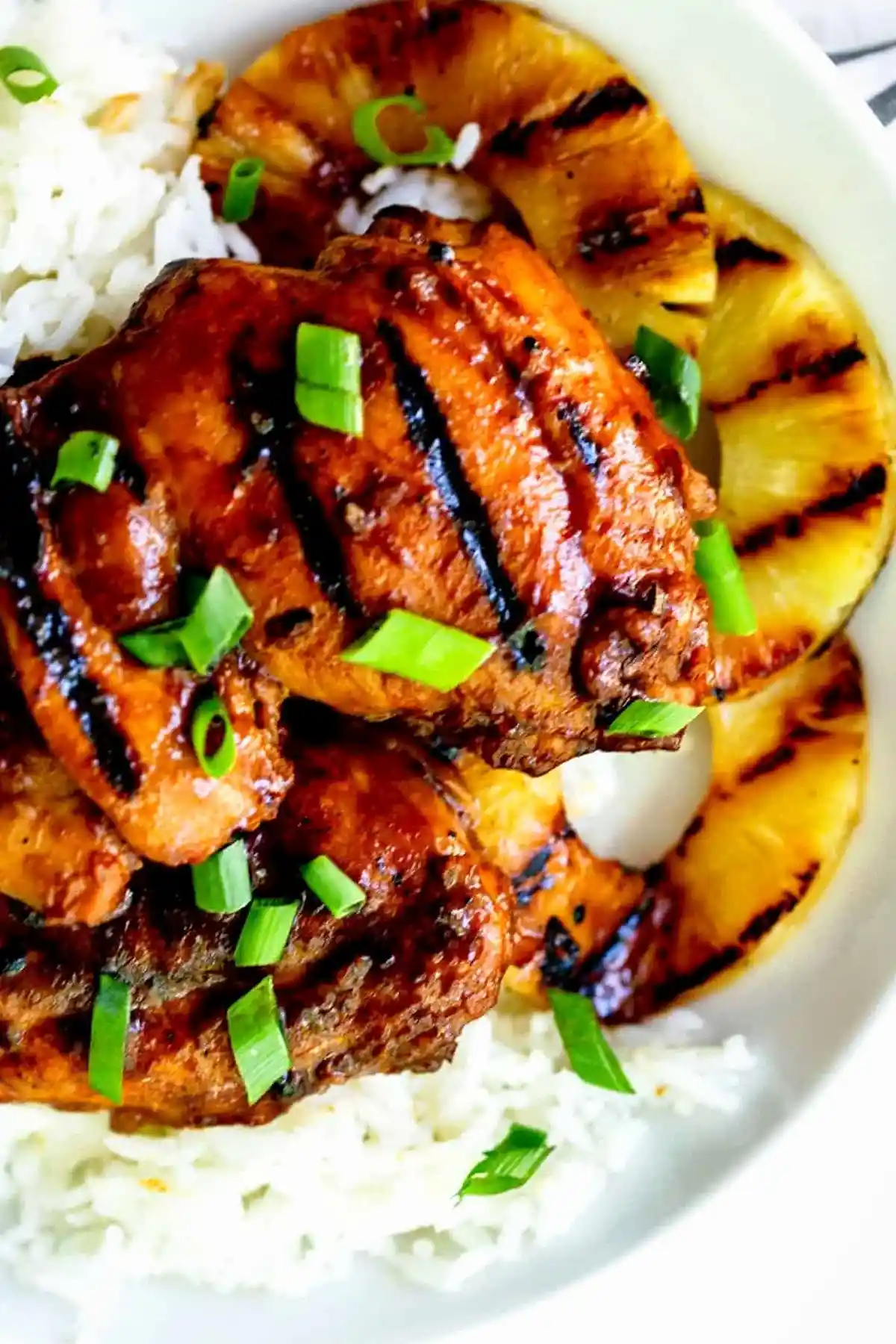
This Hawaiian-style chicken uses a sweet and savory marinade to create a deeply caramelized glaze. It is a versatile dinner option that performs equally well on an outdoor grill or in a standard oven.
List of ingredients
- 2 lbs boneless, skinless chicken thighs – provides juicy meat that resists overcooking.
- 1/2 cup ketchup – adds umami depth and helps the sauce thicken.
- 1/2 cup low sodium soy sauce – provides the salty base without overpowering the dish.
- 1/4 cup rice vinegar – balances the sweetness with a mild tang.
- 1/2 cup brown sugar – creates the signature sweetness and helps with caramelization.
- 4 garlic cloves, minced – adds pungent aromatic flavor.
- 1 TBSP ginger root, grated – provides a fresh, spicy kick.
step-by-step instructions
- Prepare the Sauce: Whisk together the ketchup, low sodium soy sauce, rice vinegar, brown sugar, minced garlic, and grated ginger in a bowl until the sugar is completely dissolved.
- Reserve Glaze: Carefully pour out 1/2 cup of the prepared sauce and set it aside in a separate container for brushing and dipping later.
- Marinate Chicken: Add the chicken thighs to the remaining sauce and turn the pieces until every surface is thoroughly coated. Place the mixture in the refrigerator to marinate for at least one hour, or ideally overnight.
- Grill Method: Heat your grill to medium-high. Cook the chicken for five minutes, flip the pieces, and cook for another 3-5 minutes until the internal temperature reaches 165 degrees F. Brush the reserved sauce onto the meat during the final minutes of cooking.
- Oven Method: Preheat the oven to 375 degrees F. Line a baking sheet with aluminum foil and place a wire rack on top. Arrange the chicken on the rack and bake for 20-25 minutes until the internal temperature reaches 165 degrees F. Brush with the reserved sauce and place under the broiler for a few minutes until the surface browns and caramelizes.
Mastering the Grilling Process
Managing High Heat to Prevent Burning
The high sugar content from the brown sugar and ketchup can cause the chicken to char quickly. Keep the grill at a steady medium-high heat and avoid extreme flare-ups. If the exterior browns too fast, move the meat to a cooler part of the grill.
Implementing Two-Zone Grilling
Create a hot zone and a cool zone on your grill by leaving one side without charcoal or turning off some burners. Start the chicken on the hot side to sear the outside. Move the pieces to the cool side to finish cooking through without burning the glaze.
Timing the Final Sauce Application
Apply the reserved sauce only during the last few minutes of grilling. Applying sugar-heavy glazes too early leads to carbonized, bitter burnt spots. A final brush gives a glossy finish and a fresh burst of flavor.
Oven Baking Technicalities
Using a Wire Rack for Airflow
Placing chicken on a wire rack allows hot air to circulate 360 degrees around the meat. This prevents the bottom of the chicken from steaming in its own juices. The result is a more consistent roast and a better texture on the underside.
Controlling the Broiler for Caramelization
The broiler provides intense top-down heat that mimics the char of a grill. Keep the oven door slightly cracked or watch closely to ensure the sugar does not burn. Remove the chicken immediately once the sauce bubbles and turns a dark golden brown.
Ensuring Even Oven Heat
Avoid overcrowding the baking sheet, as this creates steam and lowers the oven temperature. Leave at least one inch of space between each chicken thigh. This ensures the heat distributes evenly for consistent cooking times.
Ingredient Substitutions and Tweaks
Replacing Soy Sauce with Coconut Aminos
For a soy-free alternative, use coconut aminos in a 1:1 ratio. Coconut aminos are naturally sweeter and lower in sodium than soy sauce. You may want to slightly reduce the brown sugar to maintain the flavor balance.
Using Honey Instead of Brown Sugar
Honey can be substituted for brown sugar for a different kind of sweetness. Because honey is a liquid, it may make the marinade slightly thinner. Use 1/2 cup of honey to match the volume of the brown sugar.
Substituting Rice Vinegar with Apple Cider Vinegar
If rice vinegar is unavailable, apple cider vinegar is a suitable replacement. It provides a similar acidity and tanginess. The flavor profile will be slightly fruitier, but it complements the ginger and garlic well.
Adjusting Heat with Red Pepper Flakes
To add a spicy element to the savory glaze, stir in 1/2 teaspoon of red pepper flakes. This adds a slow heat that cuts through the sweetness of the ketchup and sugar. Add the flakes during the initial whisking stage for even distribution.
Optimal Chicken Selection
Benefits of Boneless Skinless Thighs
Thighs contain more fat than breasts, making them more forgiving during high-heat grilling. They remain moist and juicy even if cooked slightly past the target temperature. The texture also absorbs the marinade more effectively.
Adjusting Cook Times for Chicken Breasts
Chicken breasts cook faster and dry out more quickly than thighs. Reduce the grilling time by 1-2 minutes per side. Monitor the internal temperature closely and remove them from the heat exactly at 165 degrees F.
Handling Bone-In Chicken Pieces
Bone-in pieces require a longer cooking time to ensure the meat near the bone is safe. Increase the oven baking time to 35-45 minutes. Use a meat thermometer to verify that the thickest part of the meat has reached the proper temperature.
Serving and Pairing Ideas
Pairing with Grilled Pineapple
Slice a fresh pineapple into rings and grill them alongside the chicken. The acidity and charred sweetness of the pineapple complement the savory huli huli sauce. Serve the pineapple as a side or directly on top of the chicken.
Preparing Coconut Rice
Replace half of the cooking water for white rice with full-fat coconut milk. This adds a creamy texture and a subtle coconut flavor that balances the saltiness of the soy sauce. Simmer on low heat until the rice is fluffy.
Integrating Stir-Fried Vegetables
Quickly sauté bok choy, snap peas, and carrots in a wok with a small amount of sesame oil. The crisp texture and natural bitterness of the greens contrast well with the sweet glazed chicken. Serve these as a bed for the meat.
Complementing with Creamy Salads
A cold macaroni salad or a tangy coleslaw provides a refreshing temperature contrast. The creaminess of a mayo-based salad cuts through the intensity of the ginger and garlic. Use a light vinegar dressing for the coleslaw to keep it bright.
Storage and Preservation
Refrigeration and Container Choice
Store leftover chicken in airtight glass containers to prevent the sauce from absorbing other fridge odors. Ensure the chicken is completely cooled before sealing the lid to avoid condensation. This helps maintain the texture of the glaze.
Freezing Marinated Chicken
You can place the raw chicken and marinade in a heavy-duty freezer bag and freeze them together. The chicken will marinate as it thaws in the refrigerator. This is an efficient way to prep meals for the following week.
Maximum Storage Duration
Cooked huli huli chicken stays fresh in the refrigerator for 3 to 4 days. Beyond this time, the texture of the meat may begin to degrade. Label your containers with the date of preparation for safety.
Reheating for Quality
Oven Reheating for Texture
To maintain the best texture, reheat chicken in the oven at 325 degrees F. Place the pieces in a baking dish and add a tablespoon of water or extra sauce to prevent drying. Heat until the internal temperature reaches 165 degrees F.
Microwave Reheating Tips
When using a microwave, cover the chicken with a damp paper towel to trap moisture. Heat in short 30-second intervals, turning the meat between sessions. This prevents the edges from becoming rubbery or tough.
Using a Skillet for Fresh Glaze
Place the chicken in a skillet over medium heat with a small amount of oil. Add a spoonful of reserved sauce and toss the meat as it warms. This recreates the caramelized finish and refreshes the flavor profile.
Preparation Logistics
Optimizing Marination Time
While one hour is the minimum, marinating for 12 to 24 hours allows the flavors to penetrate deeper into the meat. The acids in the vinegar also help tenderize the chicken fibers. Do not exceed 48 hours, as the vinegar may begin to break down the meat too much.
Preparing Sauce in Bulk
The marinade can be made in large batches and stored in the refrigerator for up to one week. This allows you to simply add chicken to the pre-made sauce for faster weeknight prep. Store the sauce in a mason jar for easy shaking.
Techniques for Fresh Ginger
Use a microplane or a fine grater to process the ginger root. This creates a paste that distributes evenly throughout the sauce. Peeling the ginger with the edge of a spoon is the most efficient way to remove the skin without wasting the root.
Troubleshooting Common Issues
Fixing Overly Salty Sauce
If the sauce tastes too salty, add another tablespoon of brown sugar or a splash of water. The sweetness and volume will help dilute the sodium concentration. Always use low-sodium soy sauce to avoid this issue from the start.
Preventing Dry Chicken
Dry meat is usually the result of overcooking. Use a digital meat thermometer to pull the chicken off the heat exactly at 165 degrees F. Let the meat rest for 5 minutes before serving to allow the juices to redistribute.
Handling Sauce Thickening
If the reserved sauce becomes too thick to brush, whisk in a teaspoon of warm water. This thins the consistency while keeping the flavor intact. Ensure the sauce is smooth before applying it to the chicken.
Frequently Asked Questions
Can I use a slow cooker for this recipe?
Yes, you can cook the chicken in a slow cooker on low for 6-7 hours. However, you will miss the caramelized char. To fix this, transfer the cooked chicken to a broiler or grill for 3 minutes at the end.
How do I know when the chicken is safely cooked?
The only reliable method is using a meat thermometer. Insert the probe into the thickest part of the thigh, avoiding the bone. The chicken is safe and ready once it hits 165 degrees F.
Is it possible to make this recipe spicy?
Yes, you can add sriracha, cayenne pepper, or red pepper flakes to the marinade. Start with a small amount and taste the sauce before adding the chicken. Adjust the spice level based on your preference.
Can the marinade be used as a dipping sauce?
Only the reserved sauce that never touched raw chicken can be used for dipping. The sauce used for marinating must be boiled or cooked to be safe. You can simmer the marinating sauce in a pan for 5 minutes to make a glaze.
Print
Savory Hawaiian Huli Huli Chicken
- Total Time: 20 minutes
- Yield: 6 servings 1x
- Diet: General
Description
A flavorful Hawaiian-inspired chicken dish using boneless, skinless chicken thighs marinated in a sweet and savory sauce.
Ingredients
- 2 lbs boneless, skinless chicken thighs
- 1/2 cup ketchup
- 1/2 cup low sodium soy sauce
- 1/4 cup rice vinegar
- 1/2 cup brown sugar
- 4 garlic cloves, minced
- 1 TBSP ginger root, grated
Instructions
- Whisk: Whisk together ingredients for huli huli sauce until sugar is dissolved. Reserve 1/2 a cup of the sauce for brushing and dipping.
- Marinate: Add chicken and turn pieces until they are all coated in sauce. Allow chicken to marinate in the fridge for at least one hour, or overnight.
- Grill: Heat grill to medium high. Cook chicken for five minutes, flip and cook for another 3-5 minutes, or until internal temperature reaches 165 degrees F. Towards the end of cooking, brush with reserved sauce.
- Bake: Pre heat oven to 375degrees F. Line a baking sheet with foil and fit with a rack. Place chicken on top of rack and bake 20-25 minutes or until internal temperature reaches 165 degrees F. Brush with reserved sauce, place under the broiler for a few minutes until chicken is starting to brown and caramelize.
Notes
The longer you marinate the chicken, the better the flavor. Serve with grilled pineapple and white rice.
- Prep Time: 5 minutes
- Cook Time: 15 minutes
- Category: Dinner
- Method: Grilling
- Cuisine: Hawaiian
Nutrition
- Serving Size: 1 serving
- Calories: 289 kcal
- Sugar: 23 g
- Sodium: 1030 mg
- Fat: 6 g
- Saturated Fat: 2 g
- Unsaturated Fat: 4 g
- Trans Fat: 1 g
- Carbohydrates: 26 g
- Fiber: 1 g
- Protein: 31 g
- Cholesterol: 144 mg