
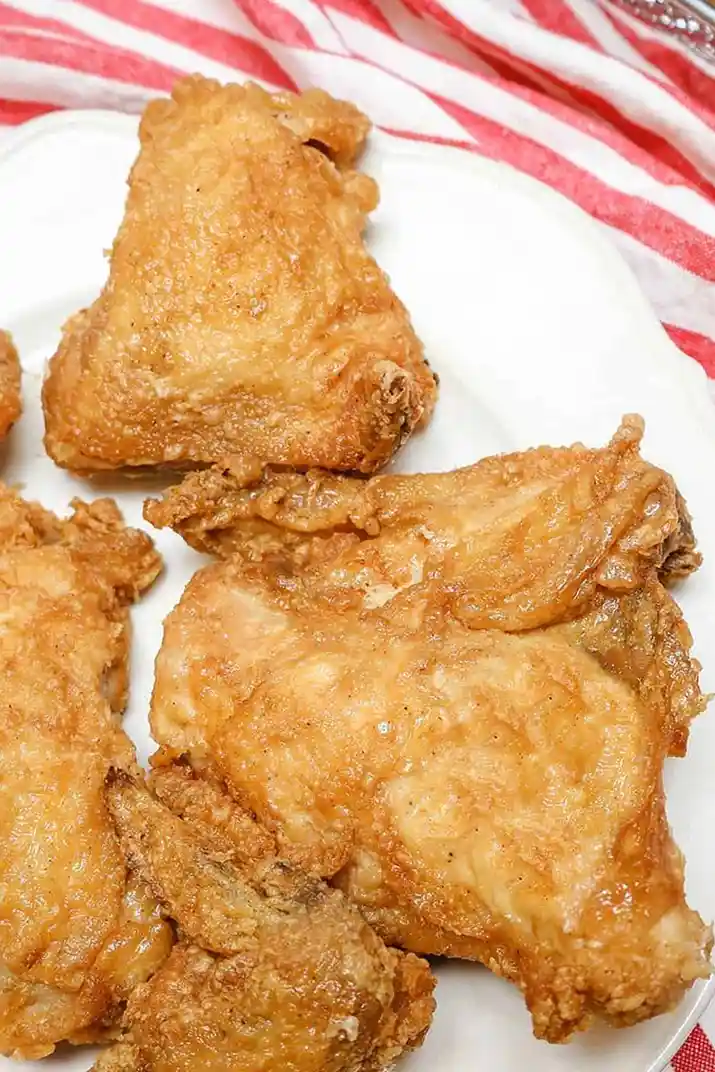
Achieve a perfectly crispy exterior and tender interior with this traditional buttermilk frying method. This approach uses a double-dredge technique to ensure the breading adheres firmly to the meat.
List of ingredients
- 3 cups buttermilk – used for the initial tenderizing marinade.
- 6-8 pieces chicken – or one 3-pound chicken cut into pieces.
- 48 oz peanut oil or vegetable oil – for deep frying.
- 2 cups all-purpose flour – divided into two separate coatings.
- 1 ½ teaspoon garlic powder – provides savory depth to the crust.
- 1 ½ teaspoon onion powder – adds aromatic sweetness.
- 1 ½ teaspoon paprika – contributes color and earthy flavor.
- 1 tablespoon poultry seasoning or all-purpose seasoning – for a classic herb profile.
- 1 ½ teaspoon salt – the primary flavor enhancer.
- ¾ teaspoon red pepper – provides a subtle background heat.
- ¾ teaspoon black pepper – adds a bold, peppery warmth.
- 1 large egg – acts as a binder for the coating.
- ½ tablespoon buttermilk – combined with the egg for the dip.
step-by-step instructions
- Marinate the meat: Place chicken pieces in a large bowl and cover with buttermilk. Cover and refrigerate for 4 to 24 hours to maximize tenderness.
- Apply base seasoning: Remove chicken from the marinade and discard the liquid. Mix poultry seasoning, salt, and black pepper in a small bowl, then rub this mixture directly onto each piece of chicken.
- Prepare the frying oil: Pour oil into a skillet until it is 1 inch deep or half full. Heat over medium heat until it reaches 350°F.
- Mix the seasoned flour: Combine 1 cup of flour, garlic powder, onion powder, paprika, and red pepper in a mixing bowl or resealable bag. Shake well to combine and set aside.
- Set up plain flour and binder: Pour the remaining 1 cup of flour into a separate bowl or bag. In a third bowl, whisk together the egg and ½ tablespoon of buttermilk.
- Execute the triple-dredge: First, coat the seasoned chicken in the seasoned flour. Second, dip the floured chicken into the egg and buttermilk mixture. Third, toss the chicken in the plain flour until thoroughly coated.
- Fry the chicken: Carefully place chicken skin-side down in the hot oil. Do not overcrowd the pan to ensure the oil temperature remains stable.
- Cook to golden brown: Fry for 10 to 12 minutes per side, turning occasionally. Remove pieces once the crust is golden brown and the internal temperature reaches 180°F.
- Drain and serve: Place the fried chicken in a closed container lined with paper towels. This allows the chicken to stay warm while absorbing excess oil.
Oil Management and Frying Techniques
Maintaining a Consistent Oil Temperature
Keeping the oil at 350°F is critical for a crispy crust that isn’t greasy. Use a clip-on thermometer to monitor the heat throughout the process. If the temperature drops too low, the chicken will absorb more oil and become soggy.
Avoiding Pan Overcrowding
Adding too many pieces of chicken at once causes the oil temperature to plummet. Fry in small batches to ensure each piece sears immediately upon contact. This maintains the high heat necessary for a golden-brown finish.
Selecting the Right Frying Oil
Peanut oil is preferred for its high smoke point and neutral flavor. Vegetable oil or canola oil are effective alternatives if peanut oil is unavailable. Avoid using butter or extra virgin olive oil, as they burn at temperatures required for frying.
Managing Oil Splatter
Ensure the chicken is shaken free of excess loose flour before placing it in the oil. Dry the exterior slightly if the batter is too wet to prevent aggressive popping. Using a deep skillet helps contain splatters more effectively than a shallow pan.
Buttermilk Marinade Optimization
Ideal Marinating Duration
A minimum of 4 hours is required to allow the lactic acid to tenderize the proteins. For the best results, marinate for up to 24 hours. Exceeding 24 hours may cause the meat to become overly soft or mushy.
Creating a Homemade Buttermilk Substitute
If buttermilk is unavailable, combine 3 cups of whole milk with 3 tablespoons of apple cider vinegar. Let the mixture sit for 5 minutes until it curdles. Use this substitute in the exact same quantities as the recipe calls for.
The Role of Lactic Acid in Tenderness
The acidity in buttermilk breaks down the tough connective tissues in the chicken. This process ensures the meat remains juicy even after being exposed to high frying temperatures. It also provides a tangy base that complements the savory spices.
Maintaining Cold Temperatures
Always marinate the chicken in the refrigerator rather than on the counter. Keeping the meat cold prevents bacterial growth and ensures the marinade works efficiently. Remove the chicken only when you are ready to begin the dredging process.
Breading and Coating Mastery
The Triple-Dredge Process
The three-step process of seasoned flour, liquid binder, and plain flour creates a thick, durable crust. The first layer adds flavor directly to the meat. The second and third layers build the structural crunch that prevents the skin from peeling.
Balancing the Spice Mixture
Seasoning both the meat and the flour ensures flavor is present at every level of the bite. The rub provides deep seasoning, while the seasoned flour ensures the crust is not bland. Adjust the red pepper amount to control the heat level of the final dish.
Managing Excess Flour
Shake off excess flour after the first dredge and before the final fry. Too much loose flour can burn in the oil, creating dark specks on the chicken. A clean, tight coat results in a more professional, uniform appearance.
Using Resealable Bags for Dredging
Using gallon-sized bags for the flour steps minimizes mess and ensures even coating. Simply place the chicken inside and shake vigorously. This method is faster than hand-tossing and keeps the workstation cleaner.
Ensuring Perfect Doneness
Utilizing an Instant-Read Thermometer
Visual cues can be deceiving, especially with dark-colored seasonings like paprika. Use a digital thermometer to check the thickest part of the thigh or breast. The chicken is safely cooked and juicy when it hits 180°F.
Identifying Visual Cues for Readiness
The crust should be a deep golden brown and feel hard to the touch when tapped with tongs. The oil should stop bubbling as vigorously once the moisture has evaporated from the crust. These signs indicate the chicken is nearly finished.
Resting the Fried Chicken
Allow the chicken to rest in a covered container for 5 to 10 minutes before serving. This allows the juices to redistribute within the meat. Resting also helps the crust set, making it even crunchier.
Dealing with Underdone Centers
If the crust is browning too quickly but the center is raw, lower the heat slightly. You can also finish larger pieces in a 350°F oven for 10 minutes. This ensures the meat is cooked through without burning the exterior.
Storage and Reheating Advice
Refrigerating Leftovers
Store leftover chicken in an airtight container in the refrigerator for up to three days. Avoid stacking pieces too tightly to prevent the crust from softening. Ensure the chicken has cooled slightly before sealing the container to avoid steam buildup.
Freezing Fried Chicken
Flash-freeze pieces on a baking sheet for one hour before transferring them to a freezer bag. This prevents the pieces from sticking together. Fried chicken can be kept in the freezer for up to two months.
Reheating in the Oven
Preheat the oven to 350°F and place the chicken on a wire rack over a baking sheet. Heat for 10 to 15 minutes. This method is superior to microwaving as it restores the crispness of the breading.
Using an Air Fryer for Reheating
Place the chicken in an air fryer at 375°F for 3 to 5 minutes. The rapid air circulation removes surface moisture and crisps the skin quickly. This is the fastest way to achieve a fresh-fried texture.
Ingredient Substitutions and Variations
Replacing All-Purpose Flour
For a crispier, lighter crust, replace half of the flour with cornstarch. This reduces the gluten development and creates a more brittle, crunchy exterior. Ensure the spices are redistributed evenly in the new blend.
Adjusting Heat Levels
To increase the spice, substitute the red pepper with cayenne pepper or add a pinch of crushed red pepper flakes. For a milder version, omit the red pepper entirely and increase the paprika for a sweeter, smokier flavor.
Using Different Chicken Cuts
While a whole cut-up chicken is traditional, you can use boneless thighs for faster cooking. Boneless cuts require less frying time per side. Adjust the cooking time to 6-8 minutes per side depending on thickness.
Alternative Oil Options
If peanut oil is unavailable, grapeseed oil is an excellent high-smoke-point alternative. Avoid using butter-based oils for the primary fry as they burn at 350°F. You can add a tablespoon of butter to the oil for flavor, but only at the end of the process.
Troubleshooting Common Issues
Preventing Breading from Peeling
Breading often peels if the chicken is too wet when it hits the flour. Ensure the buttermilk is shaken off well before the first dredge. The egg binder is essential for gluing the flour to the meat.
Fixing Oil Temperature Drops
If the oil temperature falls significantly, remove the chicken and let the oil return to 350°F before adding the next batch. Adding more pieces to cold oil results in a greasy, soggy crust. Patience between batches is key to quality.
Managing Burnt Flour Specks
Small bits of flour often fall off and burn in the oil, sticking to the chicken. Use a fine-mesh strainer or tongs to skim these bits out of the oil between batches. This keeps the chicken looking clean and golden.
Correcting Overly Salty Crusts
If the seasoning feels too salty, reduce the salt in the flour dredge. Since the chicken is rubbed with salt before the flour, the second layer of salt in the flour can be excessive. Balance the salt by increasing the poultry seasoning.
Frequently Asked Questions
Can I use whole milk instead of buttermilk?
Whole milk lacks the acidity needed to tenderize the chicken. If you use milk, the meat will not be as tender and the breading may not adhere as well. Use the lemon juice or vinegar substitution method mentioned in the marinade section.
Why is my breading falling off after frying?
This usually happens if the chicken wasn’t properly dredged in the egg binder or if it was moved too much in the pan. Ensure the triple-dredge is thorough and let the chicken sit for a few minutes after breading before frying.
How do I stop the chicken from absorbing too much oil?
Ensure your oil is exactly 350°F before adding the chicken. If the oil is too cool, the breading absorbs the fat instead of searing. Also, avoid overcrowding the pan to keep the heat high.
What is the best pan for frying chicken?
A heavy-bottomed cast iron skillet is ideal because it retains heat better than stainless steel. This prevents the temperature from dropping when the cold chicken is added. A deep pot is also useful for larger quantities of oil.
Print
Southern Buttermilk Fried Chicken
- Total Time: 4 hours 40 minutes
- Yield: 6 servings 1x
- Diet: General
Description
Tender, juicy, fried chicken with flavorful, crispy, crunchy skin, marinated in buttermilk for a soul food legacy.
Ingredients
- 3 cups buttermilk
- 6–8 pieces chicken (or one 3-pound chicken cut into pieces)
- 48 oz peanut oil or vegetable oil
- 2 cups all-purpose flour, divided
- 1 ½ teaspoon garlic powder
- 1 ½ teaspoon onion powder
- 1 ½ teaspoon paprika
- 1 tablespoon poultry seasoning or all-purpose seasoning
- 1 ½ teaspoon salt
- ¾ teaspoon red pepper
- ¾ teaspoon black pepper
- 1 large egg
- ½ tablespoon buttermilk
Instructions
- Marinate: Place the chicken pieces in a large bowl and pour the buttermilk over them.
- Chill: Cover the bowl and marinate the chicken in the refrigerator for 4 to 24 hours.
- Prep: Remove the chicken from the bowl and discard the buttermilk.
- Season: Mix the poultry seasoning, salt, and pepper in a small bowl and rub the seasoning mixture all over each piece of chicken.
- Heat Oil: Pour the oil into the skillet until it’s approximately 1 inch deep or half full and heat over medium heat until it reaches 350 degrees F.
- Seasoned Flour: Place 1 cup of the divided flour, garlic powder, onion powder, paprika, and red pepper in a medium-size mixing bowl or bag and mix to combine.
- Plain Flour: Pour the second cup of flour into a second resealable bag or medium-sized mixing bowl.
- Egg Wash: In another medium-sized bowl, whisk together the buttermilk and egg.
- First Coat: Place the chicken in the seasoned flour and shake or toss to coat the chicken evenly.
- Dip: Shake off the excess flour and dip the chicken into the buttermilk mixture.
- Second Coat: Transfer the chicken to the last bag or bowl of flour and shake or toss until it’s very well coated.
- Fry: Place the coated chicken into the pre-heated oil, skin-side down, ensuring you do not overcrowd the oil.
- Cook: Cook the chicken pieces for 10 to 12 minutes, occasionally turning to prevent excessive browning.
- Drain: Remove from the hot oil and allow the chicken to drain in a closed container with a paper towel under the chicken.
Notes
To make homemade buttermilk, combine milk with apple cider vinegar and let it sit for 5 minutes. Use an instant-read thermometer to ensure chicken reaches an internal temperature of 180 degrees F.
- Prep Time: 10 minutes
- Cook Time: 30 minutes
- Category: Main Course
- Method: Frying
- Cuisine: Soul Food
Nutrition
- Serving Size: 1 serving
- Calories: 2249 kcal
- Sugar: 6 g
- Sodium: 1108 mg
- Fat: 232 g
- Saturated Fat: 41 g
- Unsaturated Fat: 179 g
- Trans Fat: 1 g
- Carbohydrates: 39 g
- Fiber: 1 g
- Protein: 9 g
- Cholesterol: 41 mg