
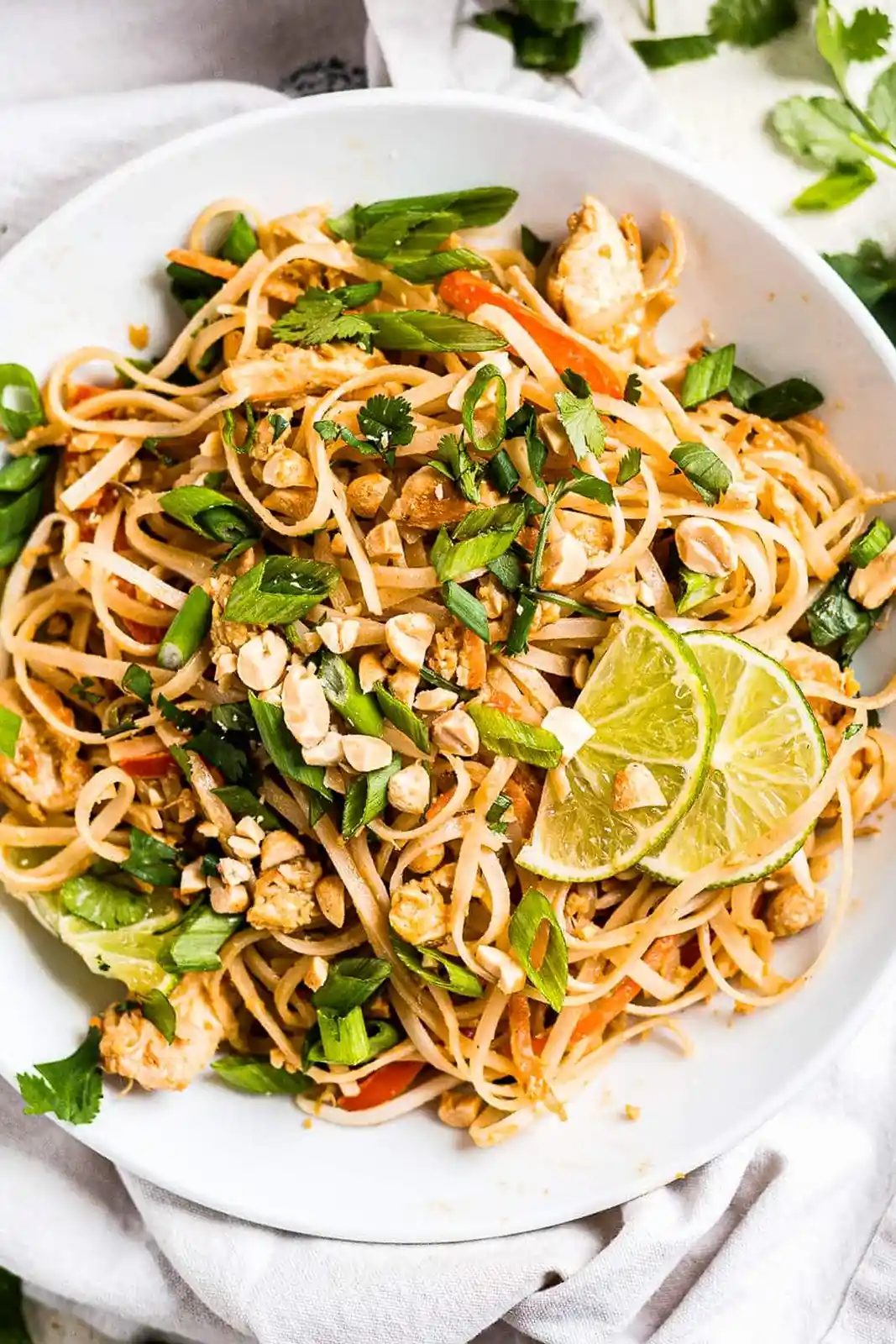
This homemade chicken pad thai provides a balanced meal with high protein and fresh vegetables. It is a quick 30-minute dinner that mimics the flavors of a professional Thai restaurant without the excess calories.
List of ingredients
- 8 oz wide rice noodle – soak until just tender to avoid mushiness
- 2 Tablespoons sesame oil – divided for searing and coating
- 1 lb chicken breast – sliced into thin strips then 2 inch pieces
- 1 red bell pepper – thinly sliced then halved
- 1 shallot – minced for a mild onion flavor
- 1 cup matchstick carrots – adds crunch and color
- 4 cloves garlic – minced
- 3 eggs – beaten well
- 2 cups bean sprouts – for a fresh, crisp finish
- 2 green onions – chopped
- 1/2 cup unsalted peanuts – roughly chopped for texture
- 1/4 cup chopped cilantro – for a fresh herbal note
- 1/4 cup soy sauce – or coconut aminos for a gluten-free alternative
- 1 tablespoon lime juice – adds necessary acidity
- 2 tablespoons rice vinegar – for a tangy balance
- 1 tablespoon fish sauce – provides an authentic salty depth
- 3 tablespoons coconut sugar – or brown sugar for sweetness
- 1 tablespoon sriracha or red chili paste – adjust based on heat preference
- 3 tablespoons creamy peanut butter – ensures a rich, smooth sauce
- 1/2 teaspoon ground ginger – for a subtle warm spice
step-by-step instructions
- Prepare the noodles: Cook the rice noodles according to the package directions. Most varieties require soaking in hot water for about 10 minutes; be careful not to overcook them as they will soften further once tossed in the sauce.
- Mix the sauce: While the noodles soak, whisk all the sauce ingredients together in a small bowl. Stir until the mixture is completely incorporated and the peanut butter is no longer clumpy.
- Oil the noodles: Once the noodles are done, strain them thoroughly. Toss them with 1 tablespoon of sesame oil to prevent them from sticking together and set them aside.
- Sear the chicken: Heat the remaining tablespoon of sesame oil in a wok or deep skillet over medium-high heat. Add the sliced chicken and let it cook undisturbed for 1-2 minutes to develop a golden-brown crust, then flip and cook until the internal temperature reaches 165°F.
- Sauté the aromatics: Remove the cooked chicken to a clean plate. In the same pan, add the red pepper and shallots, cooking on medium heat for 2-3 minutes, then stir in the carrots and garlic for another 1-2 minutes.
- Scramble the eggs: Turn the heat down to medium-low. Pour in the beaten eggs and stir gently to scramble them, ensuring you remove them from the heat just as they set to avoid overcooking.
- Combine all elements: Return the cooked chicken to the pan along with the oiled noodles and the prepared peanut sauce. Mix well until every noodle is evenly coated.
- Final garnish: Gently fold in the bean sprouts, green onions, cilantro, and chopped peanuts. Serve immediately while warm, adding extra lime juice or peanuts if desired.
Mastering the Cooking Process
Avoid Overcooking the Rice Noodles
Rice noodles continue to absorb liquid and soften when mixed with the hot sauce and other ingredients. Soak them until they are slightly firm to the bite rather than fully soft. This ensures the noodles maintain their integrity and do not turn into a mushy mass in the pan.
Achieving a Golden Brown Sear on Chicken
To get the best texture, allow the chicken to sit undisturbed in the hot sesame oil for at least two minutes. Moving the meat too frequently prevents the Maillard reaction, which is responsible for the savory brown crust. Use a high-smoke point oil and a wide pan to ensure the chicken sears rather than steams.
Preventing Scrambled Eggs from Drying Out
Eggs cook very quickly in a hot wok, often becoming rubbery if left too long. Lower the heat to medium-low before adding the beaten eggs to the vegetable mixture. Stir them just until they are set but still moist, then immediately proceed to add the noodles and sauce.
Using a Wok for Better Heat Distribution
A wok is ideal for this recipe because its sloping sides allow for easy tossing and concentrated heat at the bottom. If you do not have a wok, use a large deep skillet or a cast-iron pan. Ensure the pan is sufficiently preheated before adding the oil to prevent the chicken from sticking.
Ingredient Customizations and Swaps
Using Coconut Aminos for Gluten-Free Diets
For those avoiding gluten, coconut aminos are an excellent replacement for soy sauce. They provide a similar salty and savory profile but with a slightly sweeter undertone. The ratio is typically 1:1, making it a seamless swap in this peanut sauce.
Replacing Peanut Butter for Allergies
If you have a peanut allergy, almond butter or sunflower seed butter are viable alternatives. Almond butter offers a similar richness, while sunflower seed butter provides a nut-free option. Note that the flavor profile will shift slightly, but the creamy texture will remain.
Substituting Chicken with Other Proteins
While chicken breast is the standard, you can easily swap it for shrimp, extra-firm tofu, or thinly sliced beef. For shrimp, cook them quickly for 1-2 minutes per side and remove them early to avoid overcooking. For tofu, press out the excess water first to ensure it sears properly.
Alternative Sweeteners for the Sauce
Coconut sugar is preferred for its caramel-like flavor and lower glycemic index compared to white sugar. Brown sugar is a great pantry staple substitute that provides a similar depth. For a refined sugar-free version, a small amount of maple syrup can be used, though it may make the sauce slightly thinner.
Ways to Vary the Flavor Profile
Increasing the Heat Level
If you prefer a spicier dish, increase the amount of sriracha or add a teaspoon of red chili flakes during the vegetable sauté phase. You can also add sliced fresh Thai bird’s eye chilies for a more authentic, sharp heat. Always taste the sauce before adding more to balance it with the peanut butter.
Adding Extra Vegetable Volume
To increase the nutrient density, add shredded cabbage, snap peas, or baby corn to the stir-fry. These vegetables complement the texture of the rice noodles well. Add denser vegetables like carrots and cabbage first, and softer ones like snap peas toward the end.
Experimenting with Different Nut Butters
Cashew butter is a wonderful alternative to peanut butter, offering a milder, creamier taste that pairs well with the lime and fish sauce. Tahini can also be used for a seed-based creaminess, though it adds a slightly bitter note that may require an extra teaspoon of coconut sugar to balance.
Enhancing the Umami Depth
If the sauce feels like it is missing something, add a small splash of mushroom seasoning or a pinch of MSG. This enhances the savory quality of the fish sauce and soy sauce. Ensure you adjust the salt levels if you add these components to avoid over-salting the dish.
Serving and Presentation Ideas
Adding Fresh Citrus Accents
Serving the dish with fresh lime wedges on the side allows each person to customize the acidity of their portion. A fresh squeeze of lime juice right before eating brightens the heavy peanut flavors. It also helps cut through the richness of the sesame oil.
Garnishing for Texture and Color
The contrast between the soft noodles and crunchy peanuts is key to the experience. Use a mix of roughly chopped and slivered peanuts for varied texture. Fresh cilantro and sliced green onions add a pop of bright green that makes the dish visually appealing.
Pairing with Side Dishes
This meal is hearty on its own, but it pairs well with a light side of steamed bok choy or a refreshing cucumber salad. A side of smashed cucumber with rice vinegar and sesame oil complements the spicy-sweet notes of the Pad Thai. Avoid serving it with rice, as the noodles are already the primary starch.
Plating for Family Style
For a dinner party, serve the Pad Thai on a large platter rather than individual plates. Pile the noodles high in the center and scatter the garnishes across the top. Place the lime wedges around the perimeter for an attractive and interactive presentation.
Storage and Preservation Guide
Refrigeration Limits for Rice Noodles
Store leftover Pad Thai in an airtight container in the refrigerator for up to four days. Be aware that rice noodles tend to absorb the sauce over time, which can make them appear drier the next day. Ensure the container is well-sealed to prevent the noodles from drying out further.
Avoiding Microwave Mushiness
Microwaving rice noodles often results in an uneven texture where some parts are mushy and others are hard. To maintain the best quality, avoid the microwave if possible. If you must use one, add a tablespoon of water to the bowl and cover it with a damp paper towel to steam the noodles.
Best Reheating Method for Texture
The best way to reheat this dish is in a skillet over medium heat. Add a splash of water or a teaspoon of sesame oil to the pan to loosen the sauce and re-hydrate the noodles. Toss gently until heated through to avoid breaking the noodles.
Freezing Considerations
It is not recommended to freeze this dish. Rice noodles change texture significantly when frozen and thawed, often becoming grainy or breaking apart. The fresh components like bean sprouts and cilantro will also lose their crispness and color.
Preparation and Time-Saving Strategies
Pre-cutting Vegetables for Fast Cooking
Since stir-frying happens very quickly, have all your vegetables sliced and ready before you turn on the stove. This is known as mise en place. Chop the bell peppers, shallots, and carrots and keep them in separate bowls for easy access during the cooking process.
Making the Sauce in Advance
The peanut sauce can be whisked together up to two days in advance and stored in a jar in the refrigerator. If the peanut butter firms up in the cold, simply shake the jar vigorously or let it sit at room temperature for ten minutes. This saves significant time during the actual cooking process.
Batch Prepping Protein
You can slice the chicken breast in bulk and store it in airtight bags in the freezer. When ready to cook, thaw it in the refrigerator overnight. This eliminates the prep time for the meat on busy weeknights.
Preparing Noodles for the Week
While noodles are best fresh, you can soak them and toss them in sesame oil ahead of time. Store them in a sealed container for up to 24 hours. When cooking, simply add them to the pan at the designated step without needing to re-soak.
Common Cooking Challenges and Solutions
Fixing a Sauce That Is Too Thick
If the peanut butter makes the sauce too thick to coat the noodles evenly, stir in a tablespoon of warm water or extra lime juice. Add the liquid one teaspoon at a time until the sauce reaches a pourable consistency. This ensures the sauce clings to the noodles without clumping.
Preventing Noodles from Sticking Together
Tossing the strained noodles in sesame oil is the most effective way to prevent them from clumping. If they still stick, ensure you are using a wide enough pan to allow the noodles to move freely. Using a pair of tongs instead of a spoon helps in separating the noodles gently.
Managing Heat in a Small Skillet
In a smaller pan, ingredients can crowd, which leads to steaming instead of searing. To avoid this, cook the chicken in two smaller batches instead of one large one. This ensures the pan stays hot enough to brown the meat and the vegetables.
Correcting Over-Salty Sauce
If the fish sauce or soy sauce makes the dish too salty, add a touch more coconut sugar or a squeeze of lime juice. The sweetness and acidity help neutralize the saltiness. In extreme cases, adding a handful of unsalted bean sprouts can help balance the overall flavor.
Frequently Asked Questions
Can I use thin rice noodles instead of wide ones?
Yes, you can use thin rice noodles, but the texture will be different and they will cook much faster. Be extra cautious not to over-soak them, as thin noodles turn mushy more quickly than wide ones. You may need to reduce the soaking time by several minutes.
How do I replace fish sauce?
You can replace fish sauce with an equal amount of soy sauce mixed with a pinch of salt, or use a vegan fish sauce made from seaweed. Another option is to increase the amount of soy sauce and add a tiny bit of miso paste for that fermented, salty depth.
Is this dish suitable for a low-carb diet?
To make this low-carb, replace the rice noodles with zucchini noodles (zoodles) or shredded cabbage. If using zucchini noodles, do not soak them; simply sauté them for 1-2 minutes at the very end of the process to avoid releasing too much water.
Can I use chicken thighs instead of breasts?
Yes, chicken thighs are a great alternative and often stay juicier than breasts. Sauté them using the same method, though they may require an extra minute of cooking time due to their higher fat content. They provide a richer flavor to the final dish.
Print
Healthy Chicken Pad Thai
- Total Time: 30 minutes
- Yield: 6 servings 1x
- Diet: Gluten-free
Description
You won’t know this Healthy Chicken Pad Thai isn’t from your favorite takeout spot! It’s full of veggies, flavorful chicken, a creamy peanut butter sauce and only takes 30 minutes to make!
Ingredients
- 8 oz wide rice noodle
- 2 Tablespoons sesame oil (divided)
- 1 lb chicken breast (sliced into thin strips then 2 inch pieces)
- 1 red bell pepper (thinly sliced then halved)
- 1 shallot (minced)
- 1 cup matchstick carrots
- 4 cloves garlic (minced)
- 3 eggs (beaten)
- 2 cups bean sprouts
- 2 green onions (chopped)
- 1/2 cup unsalted peanuts (roughly chopped)
- 1/4 cup chopped cilantro
- 1/4 cup soy sauce (or coconut aminos for gluten free option)
- 1 tablespoon lime juice
- 2 tablespoons rice vinegar
- 1 tablespoon fish sauce
- 3 tablespoons coconut sugar (could also use brown sugar)
- 1 tablespoon sriracha or red chili paste
- 3 tablespoons creamy peanut butter
- 1/2 teaspoon ground ginger
Instructions
- Step: Cook the rice noodles according to the package directions, being careful not to overcook because they’ll cook longer once mixed in the sauce.
- Step: Whisk all of the sauce ingredients together in a small bowl until completely incorporated and the peanut butter is no longer clumpy then set aside.
- Step: Strain the noodles then toss them with 1 tablespoon of sesame oil and set aside.
- Step: Heat the remaining tablespoon of sesame oil in a wok or deep skillet over medium-high heat; add the sliced chicken and cook without moving for 1-2 minutes until crispy and golden brown, then flip and cook until the internal temp reaches 165°F.
- Step: Remove the chicken to a plate. Add the red pepper and shallots and cook on medium heat for 2-3 minutes, then add the carrot and garlic and cook again for 1-2 minutes. Turn the heat to medium low, add the beaten eggs and stir to scramble.
- Step: Add the chicken back to the pan with the cooked noodles and sauce and mix well to coat everything.
- Step: Top with the bean sprouts, green onion, cilantro and peanuts and toss gently.
Notes
Don’t overcook the noodles; they should be slightly firm before being tossed with the sauce. For a gluten-free option, use coconut aminos instead of soy sauce.
- Prep Time: 10 minutes
- Cook Time: 20 minutes
- Category: Dinner
- Method: Stir-frying
- Cuisine: Asian
Nutrition
- Serving Size: 1 serving
- Calories: 493 kcal
- Sugar: 13.5 g
- Sodium: 691 mg
- Fat: 20 g
- Saturated Fat: 4 g
- Unsaturated Fat: 16 g
- Trans Fat: 0 g
- Carbohydrates: 50.7 g
- Fiber: 4.3 g
- Protein: 28 g
- Cholesterol: 148 mg