
Prepare a hearty Southern-style meal with this easy slow cooker recipe. It combines nutrient-dense greens and legumes for a filling main course that is perfect for any season.
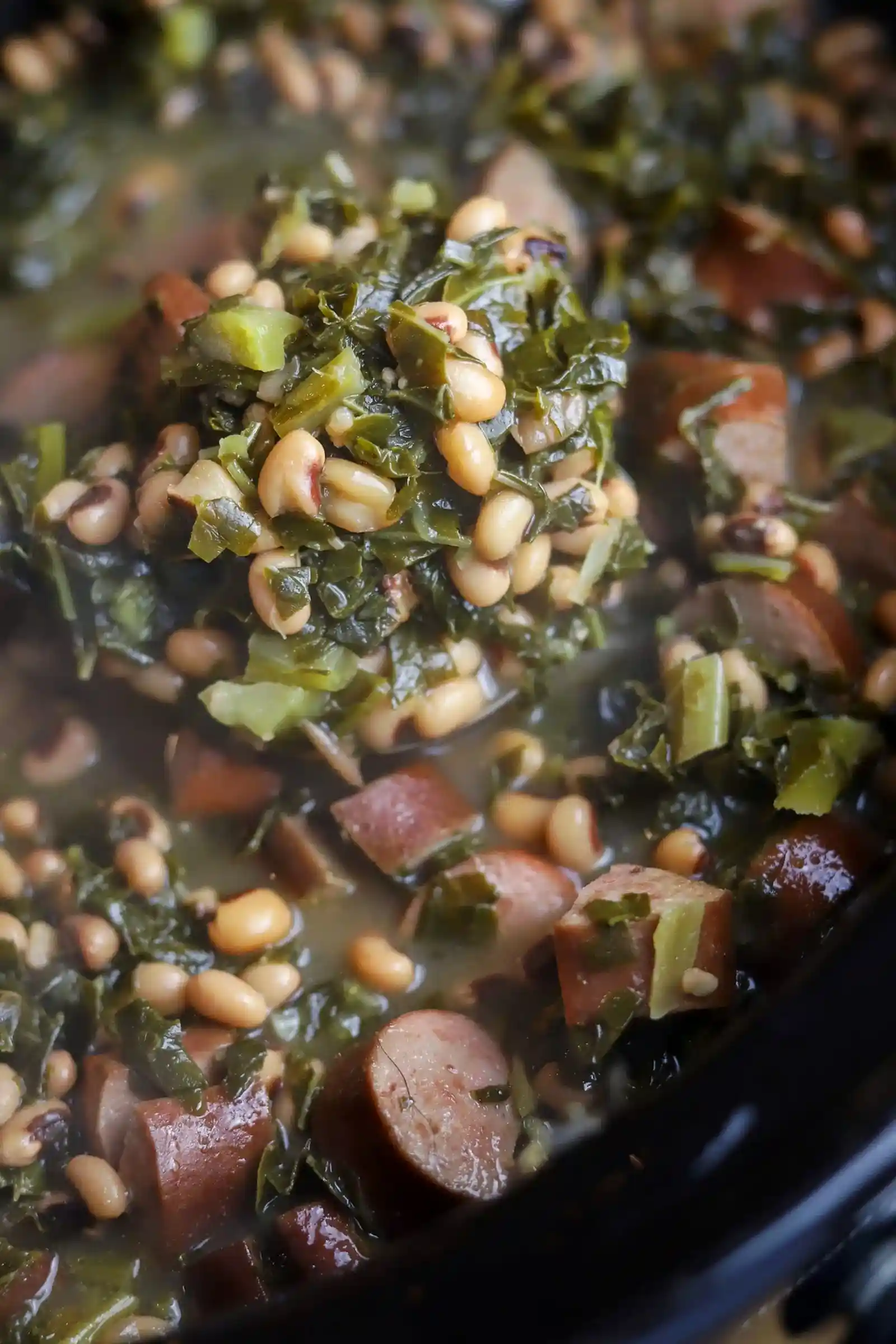
List of ingredients
- 4 cans Black-Eyed Peas – rinsed and drained for a cleaner flavor.
- 2 12 oz packets Frozen Chopped Collard Greens – a convenient pre-cut option.
- 14 oz Beef or Turkey Smoked Sausage – sliced into small bite-sized rounds.
- 4 cups Chicken or Vegetable Broth – low sodium recommended to control salt.
- 1 tsp Salt – adjust based on the saltiness of your broth.
- 1 tsp Garlic Powder – adds a savory depth to the base.
- 1 tsp Pepper – provides a subtle heat.
- 1 tsp Onion Powder – enhances the savory profile.
- 1/2 tsp Paprika – adds a mild, smoky undertone.
step-by-step instructions
- Combine Ingredients: Chop the smoked sausage into bits. Place the sausage, black-eyed peas, collard greens, broth, and all seasonings into a large crockpot.
- Slow Cook: Set the crockpot to the high heat setting. Allow the mixture to cook undisturbed for 5 to 6 hours.
- Final Adjustments: Stir the contents thoroughly once the cooking time is complete. If the consistency is too thick, stir in one cup of water at a time until the desired thickness is reached.
Meat Selection and Protein Alternatives
Using Turkey Smoked Sausage
Turkey sausage provides a leaner protein option while maintaining the characteristic smokiness associated with traditional Southern cooking. It blends well with the earthy tones of the collard greens and provides a healthier alternative. This choice keeps the dish savory without adding excessive saturated fats.
Beef Smoked Sausage Options
Beef smoked sausage offers a richer, deeper flavor and a slightly higher fat content than turkey. This creates a more decadent broth that complements the creaminess of the black eyed peas. It is an excellent choice for those who prefer a bold, meaty taste in their slow cooker meals.
Plant-Based Meat Substitutes
Use a high-quality plant-based smoked sausage made from pea or soy protein for a vegan or vegetarian version. Ensure the substitute is pre-cooked and sliced thinly to distribute the flavor evenly throughout the crockpot. Check the label to ensure it has a smoky profile to match the original recipe.
Greens Preparation and Choices
Benefits of Frozen Collard Greens
Frozen greens are often flash-frozen at peak freshness, which preserves their nutrients and flavor. They come pre-chopped, which eliminates the need for tedious washing and the removal of tough center stems. This makes the preparation process much faster for busy weeknight meals.
Using Fresh Collard Greens
If you choose to use fresh greens, wash them thoroughly in cold water to remove any lingering grit or soil. Remove the tough center ribs and chop the leaves into one-inch pieces. Fresh greens may require slightly more liquid to ensure they soften completely during the cooking process.
Substituting with Kale
Kale is a heartier green that holds its shape better than collards during long cooking times. It provides a similar nutritional profile and a robust texture that stands up well to the slow cooker. Kale is a great alternative if collard greens are unavailable at your local store.
Substituting with Mustard Greens
Mustard greens offer a sharper, more peppery taste than the milder collard greens. They are an excellent choice if you prefer a more pungent flavor profile in your stew. These greens add a unique zing that pairs well with the smokiness of the sausage.
Legume Tips and Variations
Why Canned Black Eyed Peas are Efficient
Canned peas significantly reduce the preparation time by removing the need for overnight soaking. They maintain a consistent texture when cooked in a slow cooker, ensuring that they do not become too soft or remain too hard. This is the most convenient option for a quick setup.
Converting the Recipe for Dried Beans
If you prefer using dried beans, soak them in water for at least eight hours or overnight before cooking. You will need to increase the amount of broth to account for the higher absorption rate of dried legumes. Dried beans often provide a slightly heartier texture.
Importance of Rinsing Canned Beans
Rinsing canned beans under cold water removes the thick, starchy liquid and excess preservatives from the can. This results in a cleaner flavor and allows you to have more control over the final consistency of the broth. It also helps reduce the overall sodium content.
Liquid and Seasoning Guide
Selecting the Best Broth
Low-sodium chicken or vegetable broth allows you to control the salt levels more effectively as the dish reduces. Vegetable broth is a great option for a lighter, cleaner taste that lets the greens shine. Always ensure the broth is fully incorporated before starting the cooker.
Managing Total Sodium Levels
Since smoked sausage and canned beans already contain a significant amount of salt, be cautious with additional seasonings. It is recommended to taste the dish towards the end of the cooking time before adding the full amount of salt. This prevents the meal from becoming overly salty.
Boosting Smoky Flavor Profiles
If your chosen sausage is mild, you can add a small amount of liquid smoke or a pinch of extra smoked paprika. This enhances the traditional Southern character of the dish without requiring pork products. These additions create a deep, aromatic base for the vegetables.
Serving and Pairing Suggestions
Pairing with Southern Cornbread
Serve this hearty dish with a side of warm, buttery cornbread for a complete meal. The natural sweetness of the corn balances the savory and salty notes of the peas and greens. Cornbread is also perfect for soaking up the flavorful broth.
Incorporating Spicy Condiments
A splash of vinegar-based hot sauce adds both acidity and heat to the final bowl. This cuts through the richness of the smoked sausage and brightens the earthy flavors of the collard greens. Adjust the amount based on your personal heat preference.
Serving Over White or Brown Rice
Spoon the pea and green mixture over a bed of fluffy rice to make the meal more filling and satisfying. Brown rice adds an extra layer of nuttiness and fiber, while white rice provides a neutral base. This is a great way to stretch the recipe for more people.
Storage and Shelf Life
Safe Refrigeration Practices
Store any remaining leftovers in an airtight container and place them in the refrigerator immediately after cooling. The dish will stay fresh and safe to eat for up to five days. Ensure the container is sealed tightly to prevent the greens from absorbing other fridge odors.
Freezing and Thawing Methods
Transfer the stew to freezer-safe bags or airtight containers, leaving a bit of room at the top for expansion. These can be stored in the freezer for up to three months. Thaw them in the refrigerator overnight before reheating for the best quality.
Preventing Legume Texture Breakdown
Avoid stirring the slow cooker too frequently during the cooking process to keep the peas intact. Over-stirring can break the delicate skins of the beans, which may make the broth cloudy and the peas mushy. Stir only once at the very end.
Reheating Strategies
Stovetop Reheating Method
Place the leftovers in a heavy-bottomed pot over low to medium heat. Add a small amount of water or broth to restore the original consistency, as the beans will have absorbed liquid while sitting. Stir gently until heated through.
Microwave Heating Tips
Heat the leftovers in short intervals, stirring in between to ensure the heat is distributed evenly. Cover the bowl with a damp paper towel to trap steam and keep the greens from drying out. This method is fastest for individual servings.
Adjusting Consistency After Storage
It is normal for the beans to absorb most of the liquid while they are stored in the refrigerator. When reheating, stir in a bit of water or broth one tablespoon at a time until the desired thickness is achieved. This restores the stew-like quality.
Advanced Meal Planning
Preparing Ingredients in Advance
To save time on a busy morning, chop the sausage and measure out all the dry seasonings the night before. Store them in small containers or a zip-top bag. This makes the actual assembly in the crockpot take only a few minutes.
Cooking for Better Flavor Development
This dish often tastes even better the next day as the ingredients have more time to meld and the flavors deepen. Consider cooking it a day in advance and reheating it for your main meal. This allows the smokiness to penetrate the greens.
Scaling for Large Gatherings
If you need to serve a larger crowd, double the ingredients and use a large 7-quart slow cooker. Ensure there is enough headspace in the pot so the ingredients can heat evenly without bubbling over. You may need to add a bit more broth.
Common Troubleshooting Solutions
Fixing Thin or Watery Consistency
If you find the stew is too thin after the cooking time, leave the lid off for the last hour of cooking on high. This allows some of the excess liquid to evaporate, naturally thickening the broth. Alternatively, you can simmer it on the stove.
Reducing Excessive Saltiness
If the dish becomes too salty due to the sausage or broth, add a peeled and halved potato to the pot. The potato acts as a sponge and helps absorb some of the excess salt during the final hour of cooking. Remove the potato before serving.
Counteracting Bitter Greens
Some batches of collard greens can have a natural bitterness that overpowers the dish. To balance this, stir in a teaspoon of brown sugar or a small splash of apple cider vinegar. This neutralizes the bitterness and adds a complex depth.
Frequently Asked Questions
Can I use a different slow cooker setting?
Yes, you can cook this recipe on the low heat setting for 10 to 12 hours. This is an ideal option for overnight cooking or for those with very long workdays. The slower cook time can result in even more tender greens.
Do I need to soak the beans if I use canned?
No, canned beans are already processed and cooked, meaning they are ready for immediate use. Simply rinse them under cold water to remove the canning liquid and excess sodium. This is the primary advantage of using canned peas.
How long do the greens stay vibrant?
Collard greens will naturally darken and soften the longer they are cooked in the slow cooker. While they lose their bright green color, they gain a rich, deep flavor and a tender texture. This is expected for a slow-cooked Southern dish.
Print
Slow Cooker Black Eyed Peas and Collard Greens
- Total Time: 5 hours 5 minutes
- Yield: 8 servings 1x
- Diet: General
Description
These crockpot black eyed peas and collard greens are a perfect, southern, comfort food. The savory flavors from the smoked turkey sausage, slow cooked with the peas and greens make for a perfect meal for New Year’s Day or any time of the year.
Ingredients
- 4 cans black-eyed peas
- 2 12 oz packets frozen chopped collard greens
- 14 oz smoked turkey sausage
- 4 cups chicken or vegetable broth
- 1 tsp salt
- 1 tsp garlic powder
- 1 tsp pepper
- 1 tsp onion powder
- 1/2 tsp paprika
Instructions
- Step 1: Chop your sausage into bits and place all ingredients in a large crockpot. Place on high for 5-6 hours.
- Step 2: Stir once time is finished. If you find that they are too thick for your liking, add in one cup of water at a time. Serve and enjoy!
Notes
This dish is even better the second day. It can be stored in the refrigerator for up to 5 days.
- Prep Time: 5 minutes
- Cook Time: 5 hours
- Category: Main Course
- Method: Slow Cooking
- Cuisine: American
Nutrition
- Serving Size: 1 serving
- Calories: 340 kcal
- Sugar: 4 g
- Sodium: 850 mg
- Fat: 11 g
- Saturated Fat: 3 g
- Unsaturated Fat: 8 g
- Trans Fat: 0 g
- Carbohydrates: 36 g
- Fiber: 13 g
- Protein: 23 g
- Cholesterol: 45 mg