
I’ve tried many ways to use up my sourdough discard, but this recipe might be my favorite. The aroma of rosemary and roasted garlic fills my kitchen when I bake this loaf, creating a truly special moment.
This sourdough discard sandwich bread recipe transforms leftover starter discard into a flavorful, soft loaf with a rich, aromatic swirl of roasted garlic and fresh rosemary. It’s the perfect way to elevate everyday sandwiches, make gourmet grilled cheese, or serve alongside a cozy bowl of soup.
This specific recipe speeds up the process, eliminating the long wait of traditional sourdough while still providing that classic tang and soft crumb. Get ready to bake a unique loaf that’s perfect for family dinners and impressive enough for guests.

Ingredients
- Active Sourdough Discard (180 g | ¾ cup)
Use active discard, meaning it was recently fed but past its peak, or unfed discard that has been sitting in your fridge for a few days.
Ensure it hasn’t completely separated; a little hooch is fine, but avoid a thick, dry layer on top.
The active bacteria provide flavor and assist in the rise without a full-strength starter. - All-Purpose Flour (350 g | 2 ¾ cups)
Standard all-purpose flour provides the best texture for a soft sandwich loaf.
For a slightly heartier loaf, you can substitute up to half of the flour with bread flour, but avoid using whole wheat flour completely as it may make the bread too dense.
Weighing the flour is always preferred over using cup measurements for accurate baking. - Granulated Sugar (15 g | 1 tbsp)
The sugar provides food for the yeast and discard, aiding in the leavening process.
It also balances the savory flavors and helps achieve a golden-brown crust during baking.
You can substitute brown sugar or honey for a slightly different flavor profile. - Fine Sea Salt (7 g | 1 ¼ tsp)
Essential for controlling yeast activity and enhancing the overall flavor of the bread.
Do not omit the salt, as it impacts both the structure and taste significantly.
Ensure you are using fine sea salt or kosher salt, adjusting if necessary for larger crystal sizes. - Lukewarm Water (200 mL | ¾ cup + 1 tbsp)
The water should be around 100-110°F (38-43°C) to activate the discard and yeast without killing them.
Adjust the amount slightly based on the absorption rate of your specific flour, aiming for a soft, pliable dough.
Filtered water is preferred for best results in baking. - Olive Oil (20 g | 1 ½ tbsp)
Adds richness and softness to the final crumb texture, keeping the loaf moist for longer.
Use a good quality olive oil for a subtle, fruity flavor that complements the garlic and rosemary.
You can substitute melted unsalted butter if preferred. - Unsalted Butter, softened (40 g | 3 tbsp)
Used for the savory filling to create a rich, spreadable mixture that swirls through the loaf.
Ensure the butter is truly softened to room temperature, not melted, for easy spreading.
If you only have salted butter, reduce the amount of added fine sea salt by ¼ teaspoon. - Head Garlic and Fresh Rosemary
One full head of garlic is roasted to sweeten the flavor; do not use raw garlic, as it will be too harsh.
Fresh rosemary provides a vibrant, piney aroma; avoid substituting with dry rosemary for this specific flavor profile.
Flaky sea salt (for garnish) adds visual appeal and a crunchy texture contrast to the soft crust.
Instructions
- Prepare the Dough and First Rise
In a large mixing bowl, combine the sourdough discard, all-purpose flour, granulated sugar, fine sea salt, lukewarm water, and olive oil.
Mix by hand or using a stand mixer until a shaggy dough forms, then knead for 8-10 minutes until smooth and elastic, checking for the windowpane test (the dough stretches thin without tearing).
Place the dough in a lightly oiled bowl, cover, and let it bulk ferment for 2-3 hours in a warm spot, or until noticeably puffy and slightly increased in volume. - Roast the Garlic and Prepare Filling
While the dough ferments, preheat your oven to 400°F (200°C) and prepare the garlic: slice off the top ¼ inch of a whole head, drizzle with olive oil, and wrap in foil.
Roast for 30-40 minutes until very soft and golden, then let it cool.
Squeeze the roasted garlic pulp into a bowl and mix with the softened unsalted butter and finely chopped fresh rosemary until well combined and spreadable. - Roll and Shape the Loaf
Lightly grease a 9×5 inch loaf pan and gently deflate the risen dough, turning it out onto a lightly floured surface.
Use a rolling pin to shape the dough into a rectangle approximately 12×8 inches (30×20 cm).
Evenly spread the rosemary roasted garlic butter mixture over the dough surface, leaving a small border (½ inch) along one long edge to ensure a tight seam. - Roll and Second Proof
Tightly roll the dough into a log starting from the long edge opposite the border.
Pinch the seam closed securely to prevent the filling from leaking out during proofing and baking.
Place the dough log, seam-side down, into the prepared loaf pan, cover loosely, and let proof for 1-2 hours in a warm location until it almost doubles in size and rises slightly above the rim of the pan. - Bake the Savory Sourdough Bread
During the last 30 minutes of proofing, preheat your oven to 375°F (190°C).
Bake this savory sourdough discard sandwich bread recipe for 35-45 minutes, or until the crust is deep golden brown and the internal temperature reaches 200-205°F (93-96°C).
Remove the bread from the oven and immediately turn it out onto a wire rack to prevent a soggy bottom. - Cool Completely Before Slicing
It is essential to cool the bread completely on the wire rack for 1-2 hours before slicing.
Slicing hot bread results in a gummy texture inside because the starches haven’t set yet.
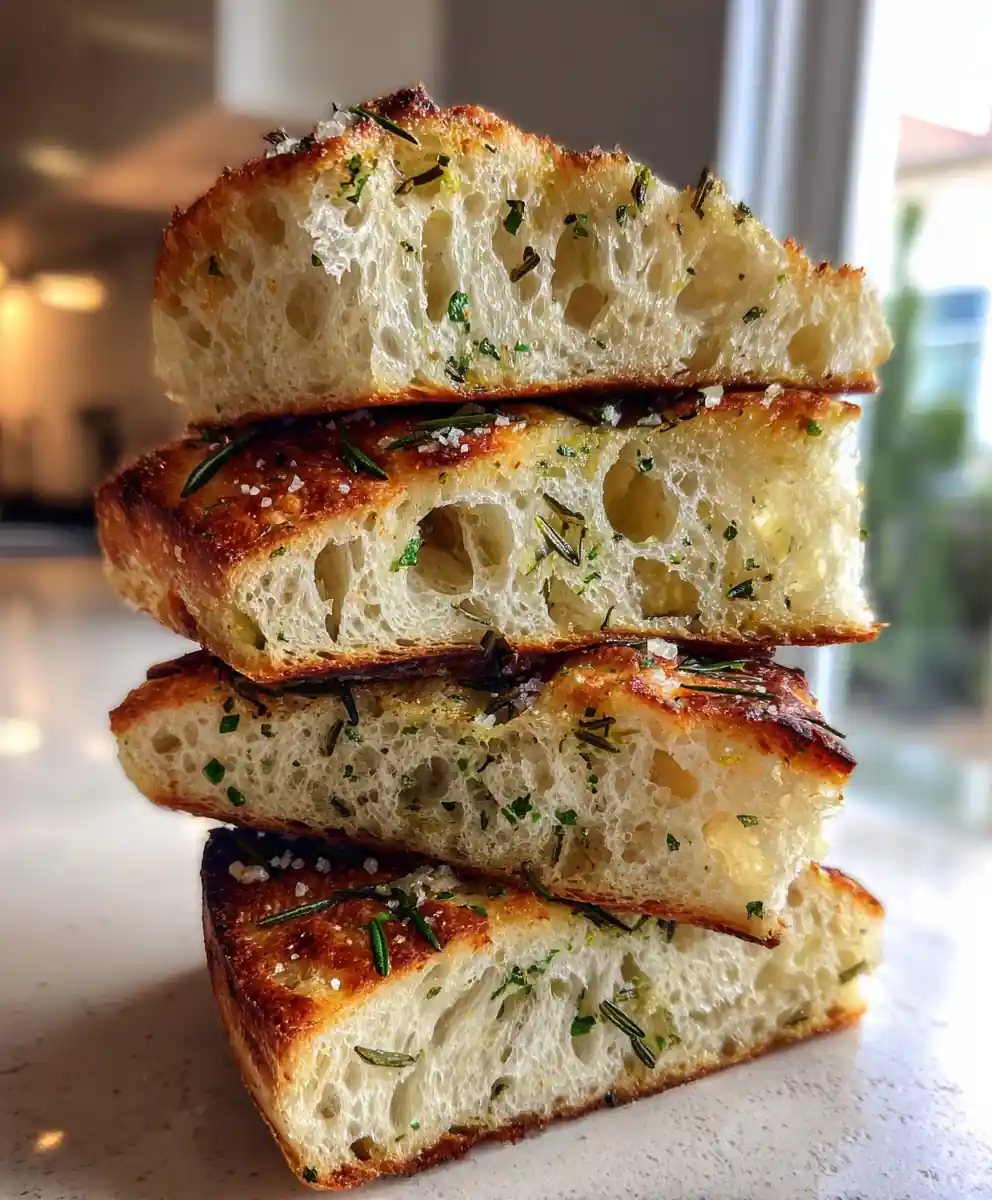
Once cooled, slice into thick pieces to show off the swirl, and garnish with flaky sea salt and fresh rosemary for extra visual appeal. I love how this savory sourdough discard sandwich bread recipe looks when sliced, revealing the swirl.
Serving Suggestions: How to Use Savory Garlic and Rosemary Bread
- Elevate Sandwiches: This savory bread instantly elevates simple lunch and easy dinner ideas. Use thick slices for grilled cheese with provolone and a little pesto, or for hearty roast beef and arugula sandwiches.
- Serve with Soup: Pair thick slices with a creamy tomato soup, a hearty lentil stew, or a French onion soup. The garlic and rosemary flavor profile makes it perfect for dipping.
- Garlic Bread Twist: Cut thick slices, lightly toast, and serve alongside pasta dishes like carbonara or lasagna for a quick meal upgrade. This bread makes a great side dish for family dinners.
- Make Croutons: Cube leftover bread, toss in olive oil and additional rosemary, and bake until crispy. Use them on salads or as a topping for soup.
Common Questions and Troubleshooting
Why is my bread so dense?
The primary reasons for a dense loaf are under-kneading, resulting in poor gluten development, or over-proofing, where the yeast runs out of energy before baking. Ensure you knead thoroughly (windowpane test) and watch for visual cues during proofing rather than relying strictly on time. I find that if the dough collapses when lightly pressed, it is over-proofed and will be dense.
Can I substitute dried rosemary for fresh rosemary?
Yes, you can substitute dried rosemary for fresh, but use less (about 1 teaspoon of dried herbs per tablespoon of fresh) as dried herbs are more concentrated. The flavor profile will change slightly, so fresh is highly recommended for the best results in this sourdough discard sandwich bread recipe.
Does this sourdough discard sandwich bread recipe freeze well?
Yes, once fully cooled, wrap the loaf tightly in plastic wrap and then aluminum foil. Store in the freezer for up to 3 months for easy meal prep recipes. Thaw overnight at room temperature before slicing or toasting for fresh-tasting bread.
What if I don’t have a stand mixer?
The recipe provides instructions for kneading by hand on a lightly floured surface. Kneading by hand usually takes slightly longer (10-12 minutes) than using a stand mixer with a dough hook. Be patient; the dough should become smooth and elastic to get the right structure for this sourdough discard sandwich bread recipe.
Can I make this recipe without the garlic and rosemary swirl?
Yes, you can omit the roasted garlic and rosemary mixture entirely for a more traditional sourdough discard sandwich bread recipe. For plain bread, proceed with all steps but skip the filling preparation and spreading. Add 1 tablespoon of olive oil to the initial dough mixture for extra richness.
Why is the filling leaking out when I bake?
The seam of the dough log was likely not sealed completely. Make sure to pinch the seam very tightly and place the dough seam-side down in the pan to prevent unraveling during the second proof and baking. This prevents a messy bake and keeps the swirl contained in your sourdough discard sandwich bread recipe.
Is it okay to use cold discard straight from the fridge?
Yes, but ensure your lukewarm water is slightly warmer (110°F | 43°C) to compensate for the cold discard. Using cold discard may extend the bulk fermentation and proofing times slightly. This sourdough discard sandwich bread recipe works well with both active discard or unfed discard.
Conclusion
This sourdough discard sandwich bread recipe offers a flavorful and healthy twist on a family staple, turning simple ingredients into a delicious savory loaf. By following these easy steps, you can create a soft crumb and stunning swirl that elevates every family dinner. Save this sourdough discard sandwich bread recipe on Pinterest so you can come back to it again and again.
Print
sourdough discard sandwich bread recipe
- Total Time: 245 minutes
- Yield: 1 loaf 1x
- Diet: Vegetarian
Description
This savory sourdough discard sandwich bread recipe transforms leftover starter discard into a flavorful, soft loaf with a rich, aromatic swirl of roasted garlic and fresh rosemary, perfect for sandwiches or soup.
Ingredients
- 180 g (0.75 cup) active sourdough discard
- 350 g (2.75 cups) all-purpose flour
- 15 g (1 tbsp) granulated sugar
- 7 g (1.25 tsp) fine sea salt
- 200 mL (0.75 cup + 1 tbsp) lukewarm water
- 20 g (1.5 tbsp) olive oil
- 40 g (3 tbsp) unsalted butter, softened
- 1 head garlic, roasted
- fresh rosemary
- flaky sea salt, for garnish
Instructions
- Prepare the Dough and First Rise: In a large mixing bowl, combine the sourdough discard, all-purpose flour, granulated sugar, fine sea salt, lukewarm water, and olive oil. Knead for 8-10 minutes until smooth and elastic. Place the dough in a lightly oiled bowl, cover, and let it bulk ferment for 2-3 hours in a warm spot, or until noticeably puffy and slightly increased in volume.
- Roast Garlic and Prepare Filling: While the dough ferments, preheat the oven to 400°F (200°C). Slice off the top quarter inch of the garlic head, drizzle with olive oil, and wrap in foil. Roast for 30-40 minutes until very soft and golden, then let cool. Squeeze the roasted garlic pulp into a bowl and mix with the softened unsalted butter and finely chopped fresh rosemary until well combined.
- Roll and Shape the Loaf: Grease a 9×5 inch loaf pan. Gently deflate the risen dough and turn it out onto a lightly floured surface. Roll the dough into a rectangle approximately 12×8 inches (30×20 cm). Evenly spread the rosemary roasted garlic butter mixture over the dough surface, leaving a small border (0.5 inch) along one long edge.
- Roll and Second Proof: Tightly roll the dough into a log starting from the long edge opposite the border. Pinch the seam closed securely. Place the dough log, seam-side down, into the prepared loaf pan, cover loosely, and let proof for 1-2 hours in a warm location until it almost doubles in size and rises slightly above the rim of the pan.
- Bake the Savory Sourdough Bread: Preheat the oven to 375°F (190°C) during the last 30 minutes of proofing. Bake for 35-45 minutes, or until the crust is deep golden brown and the internal temperature reaches 200-205°F (93-96°C). Remove the bread from the oven and immediately turn it out onto a wire rack to prevent a soggy bottom.
- Cool Completely Before Slicing: Cool the bread completely on the wire rack for 1-2 hours before slicing. Slicing hot bread results in a gummy texture inside.
Notes
Slicing hot bread results in a gummy texture because the starches haven’t set yet; ensure the loaf cools completely on a wire rack for 1-2 hours before cutting. For the filling, use truly softened room temperature butter, not melted butter, for easy spreading.
- Prep Time: 25 minutes
- Cook Time: 40 minutes
- Category: Bread
- Method: Baking
- Cuisine: American
Nutrition
- Serving Size: 1 slice (approx. 80 g)
- Calories: 210 calories
- Sugar: 2 g
- Sodium: 280 mg
- Fat: 6 g
- Saturated Fat: 2 g
- Unsaturated Fat: 4 g
- Trans Fat: 0 g
- Carbohydrates: 45 g
- Fiber: 1 g
- Protein: 4 g
- Cholesterol: 6 mg
FREE PRINTABLE RECIPE
Get the Printable Recipe PDF (Free)
Enter your email and we’ll send you the ingredients + step-by-step instructions as a clean PDF you can save to your phone.
- ✅ Printable PDF (ingredients + steps)
- ✅ Save it to your phone (no long scrolling)
- ✅ Includes cook time + servings
- ✅ Easy to follow
FAQ
Where’s the full recipe?
It’s delivered as a printable PDF so you can save it and cook without scrolling.
I didn’t get the email.
Check Spam/Promotions and search your inbox for your site name. Then click Confirm to receive the PDF.