
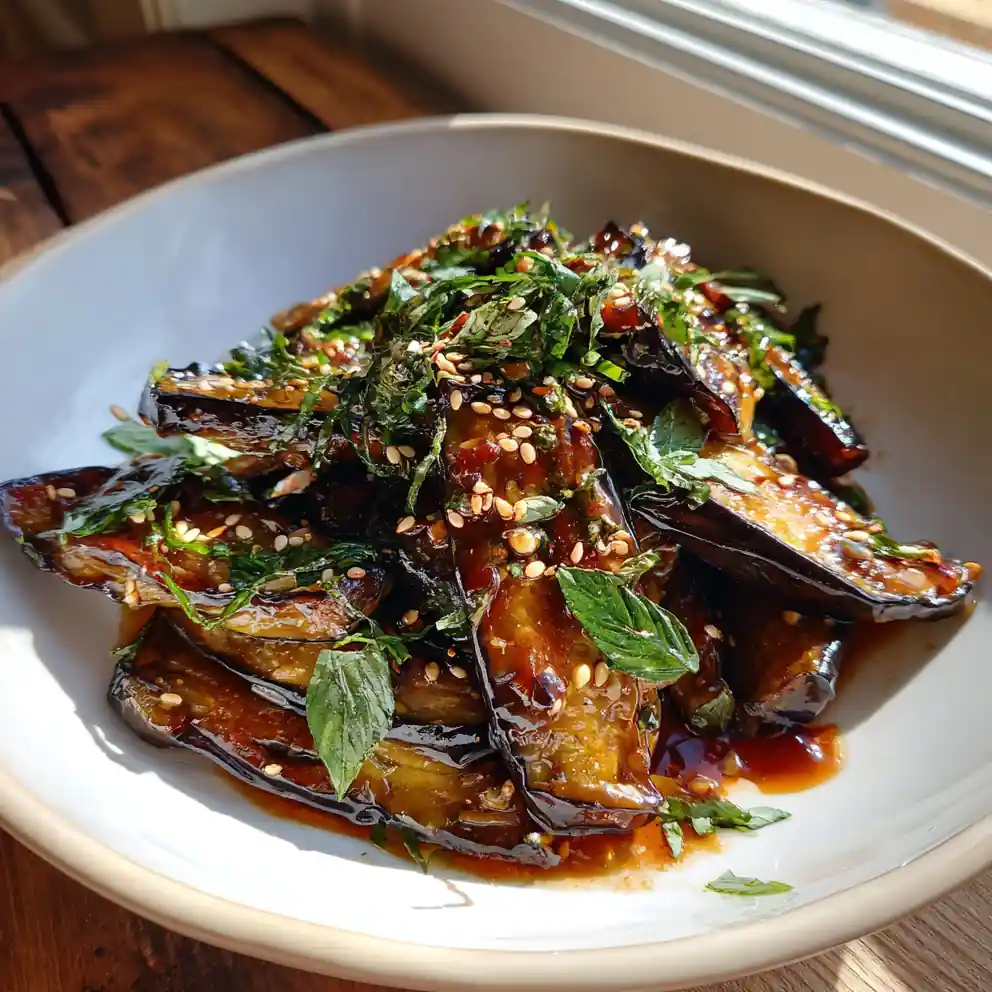
Looking for a vibrant and flavorful side dish or vegetarian main course? This Charred Thai Basil Eggplant with Tamarind Palm Sugar Glaze is a delightful explosion of sweet, savory, and slightly spicy flavors. The eggplant gets beautifully charred, offering a wonderful textural contrast to the glossy, tangy-sweet glaze. Fresh Thai basil adds an aromatic freshness that ties everything together. This recipe is surprisingly easy to make and is sure to impress your family and friends with its authentic Thai taste!
What You’ll Need
- Eggplant (2 medium ≈500g / 1 lb): We’re using medium-sized eggplants, cut into 1 cm (½-inch) strips. Japanese or Chinese eggplants work particularly well due to their thinner skin and fewer seeds, but globe eggplants are also perfectly fine. Salting the eggplant helps draw out excess moisture, resulting in a better texture when charred.
- Vegetable Oil (2 Tbsp / 30 ml): A neutral-flavored oil like canola, sunflower, or peanut oil is ideal for stir-frying. It has a high smoke point, which is important for achieving that beautiful char.
- Garlic (4 cloves): Freshly minced garlic is essential for building a flavorful base. Don’t skimp – garlic is a cornerstone of Thai cuisine!
- Thai Red Chilies (2, thinly sliced – optional): These add a lovely kick of heat. Adjust the quantity to your spice preference, or omit them entirely if you prefer a milder dish. Remember to handle chilies with care and avoid touching your eyes.
- Thai Basil (1 cup / 240 ml, packed): Thai basil is *not* the same as Italian basil! It has a slightly anise-like flavor that is crucial to the authentic taste of this dish. Look for it at Asian grocery stores.
- Soy Sauce (2 Tbsp / 30 ml, halal-certified): We’re using soy sauce for its umami and salty notes. Halal-certified soy sauce ensures it meets specific dietary requirements.
- Fish Sauce (1 Tbsp / 15 ml, halal-certified): Fish sauce adds a complex savory depth that is characteristic of Thai cooking. Again, halal-certified ensures dietary compliance.
- Lime Juice (1 Tbsp / 15 ml): Freshly squeezed lime juice provides a bright acidity that balances the sweetness of the palm sugar.
- Tamarind Paste (1 Tbsp / 15 ml): Tamarind paste is made from the pulp of the tamarind fruit and offers a unique sweet and sour flavor. It’s a key ingredient in many Thai sauces.
- Palm Sugar (2 Tbsp / 25g, grated): Palm sugar has a caramel-like flavor that is less refined than granulated sugar. It adds a wonderful depth of sweetness to the glaze. If you can’t find palm sugar, brown sugar can be used as a substitute.
- Toasted Sesame Oil (1 tsp / 5 ml): A small amount of toasted sesame oil adds a nutty aroma and flavor.
- Toasted Sesame Seeds (1 tsp / 5g, plus extra for garnish): Toasted sesame seeds provide a subtle crunch and nutty flavor.
- Fresh Cilantro (1 Tbsp / 15 ml, chopped, for garnish): Fresh cilantro adds a bright, herbaceous note and a pop of color.
Ingredient Substitutions
While we recommend using the ingredients as listed for the most authentic flavor, here are a few substitutions if needed:
- Palm Sugar: Brown sugar can be used in a 1:1 ratio.
- Fish Sauce: For a vegetarian/vegan option, substitute with a vegetarian fish sauce alternative made from seaweed or mushrooms, or use an extra tablespoon of soy sauce.
- Thai Basil: While not a perfect substitute, Italian basil can be used in a pinch, but the flavor profile will be different.
Step-by-Step Instructions for Charred Thai Basil Eggplant
- Prepare the Eggplant: Begin by slicing the eggplants into approximately 1 cm (½-inch) thick strips. This uniform size ensures even cooking. Place the sliced eggplant in a colander and sprinkle generously with a pinch of salt. This crucial step draws out excess moisture from the eggplant, preventing it from becoming soggy during stir-frying. Allow it to sit for 15 minutes, then thoroughly pat dry with paper towels. Removing the moisture is key to achieving that desirable charred texture.
- Make the Tamarind-Palm Sugar Glaze: In a small saucepan, combine the tamarind paste, grated palm sugar, soy sauce, fish sauce, lime juice, and toasted sesame oil. The tamarind paste provides a delightful tang, while palm sugar offers a unique caramel-like sweetness. Place the saucepan over medium heat and bring to a gentle simmer, stirring constantly until the palm sugar is completely dissolved and the sauce thickens into a glossy syrup. This should take about 3 minutes. Remove from heat and set aside – the glaze will thicken further as it cools.
- Aromatics First: Heat the vegetable oil in a large wok or a large, heavy-bottomed skillet over medium-high heat. The wok’s sloped sides are ideal for stir-frying, but a skillet works well too. Once the oil is shimmering, add the minced garlic and thinly sliced Thai red chilies (if using). Stir-fry quickly for about 30 seconds, until fragrant. Be careful not to burn the garlic, as it will become bitter.
- Char the Eggplant: Add the prepared eggplant strips to the hot wok. Stir-fry continuously, tossing frequently, for approximately 5-6 minutes. The goal is to achieve tender eggplant with noticeable char marks. Don’t overcrowd the wok; if necessary, work in batches to ensure proper charring.
- Glaze and Coat: Pour the prepared tamarind-palm sugar glaze over the charred eggplant. Toss vigorously to ensure every piece is evenly coated in the luscious glaze. Continue cooking for another 1-2 minutes, allowing the glaze to cling to the eggplant and create a beautiful, shiny coating.
- Basil Infusion: Turn off the heat. This is important to prevent the basil from overcooking and losing its vibrant color and flavor. Gently fold in the packed Thai basil leaves, stirring just until they wilt and release their characteristic aroma – this should only take about 30 seconds.
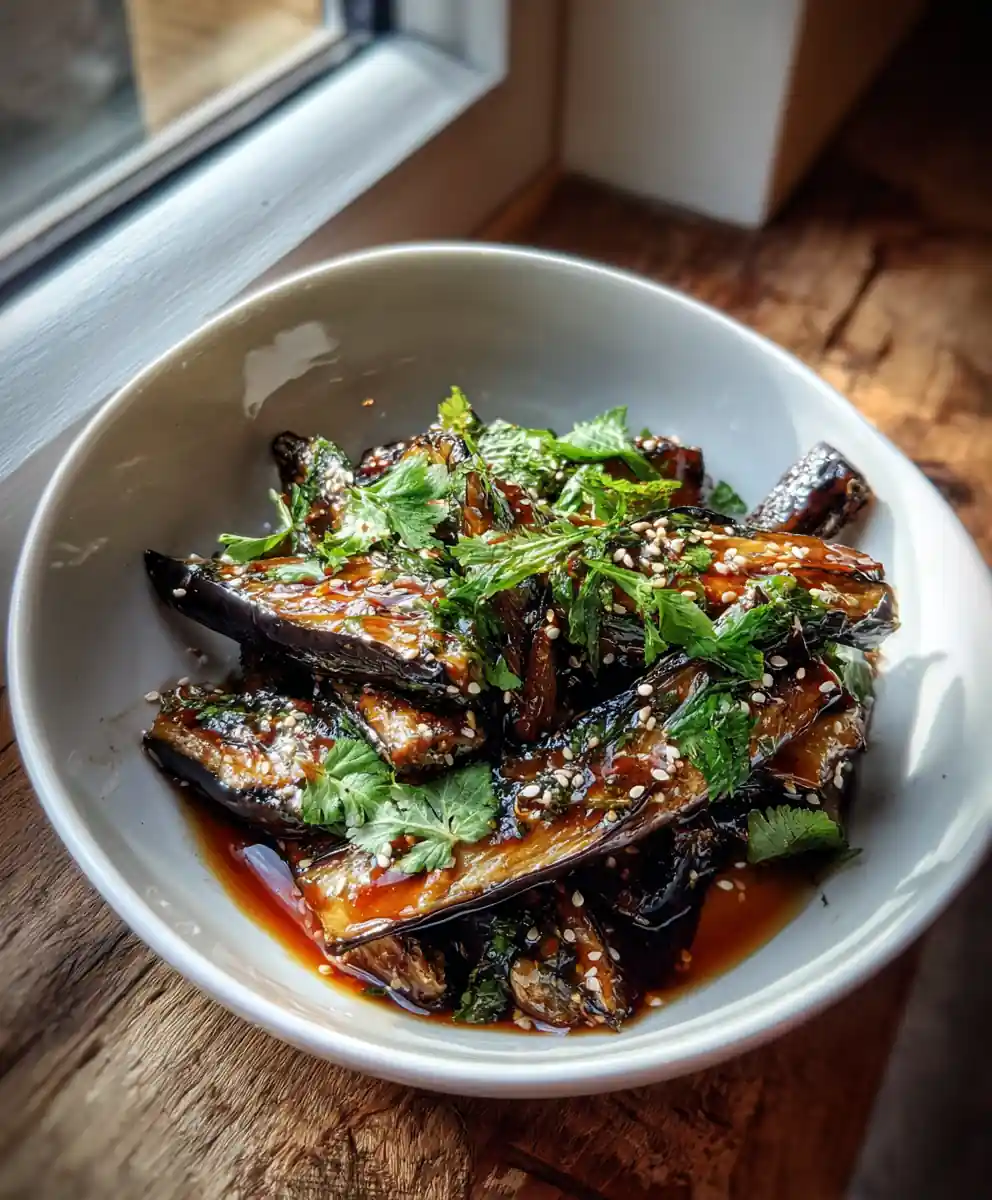
- Serve Immediately: Transfer the glazed eggplant to a serving bowl. Drizzle any remaining glaze over the top for extra flavor and visual appeal. Sprinkle generously with toasted sesame seeds and chopped fresh cilantro for added texture, aroma, and a pop of color. Serve immediately while warm.
Understanding the Char: Why It Matters
The “charred” aspect of this dish isn’t just for aesthetics. High-heat cooking, specifically stir-frying, creates the Maillard reaction – a chemical reaction between amino acids and reducing sugars that gives browned food its distinctive flavor. In this case, it adds a smoky depth to the eggplant that complements the sweet, sour, and savory flavors of the glaze. Properly drying the eggplant before charring is essential for maximizing this effect.
The Magic of Tamarind and Palm Sugar
The tamarind-palm sugar glaze is the heart and soul of this dish. Tamarind provides a unique sourness that’s different from lemon or vinegar – it’s fruity, tangy, and slightly sweet. Palm sugar, unlike refined sugar, has a complex caramel-like flavor that adds depth and richness. The combination creates a balanced glaze that perfectly coats the eggplant without being overly sweet.
Choosing the Right Thai Basil
Thai basil (Ocimum basilicum var. thyrsiflora) is crucial for authentic flavor. It has a slightly anise-like flavor that distinguishes it from Italian basil. Look for vibrant green leaves with a slightly purple hue. Adding the basil at the very end, off the heat, preserves its delicate flavor and prevents it from becoming bitter. Don’t substitute with Italian basil if you want the true Thai experience!
Serving Suggestions & Pairings
This Charred Thai Basil Eggplant is delicious on its own as a flavorful side dish, but it also pairs beautifully with grilled fish, chicken, or tofu. Serve it with steamed jasmine rice to soak up the delicious glaze. For a complete Thai-inspired meal, consider adding a side of spicy cucumber salad or a fragrant lemongrass soup.
Frequently Asked Questions (FAQ)
- Can I use regular sugar instead of palm sugar? While you can, palm sugar offers a unique flavor profile that regular sugar doesn’t. If substituting, use brown sugar for a slightly more complex flavor.
- Is fish sauce essential? Fish sauce adds umami and depth. If you’re vegetarian or vegan, you can substitute with a vegetarian fish sauce alternative or a splash of soy sauce with a pinch of seaweed flakes.
- How spicy is this dish? The spice level depends on the amount of Thai red chilies you use. Feel free to adjust the quantity to your preference or omit them altogether.
Enjoy this vibrant and flavorful Charred Thai Basil Eggplant! It’s a dish that’s sure to impress. Don’t forget to save this recipe to Pinterest for later!
Print
thai basil eggplant recipe a flavorful delight awaits
- Total Time: 35 minutes
- Yield: 4 servings 1x
- Diet: Vegetarian
Description
This recipe creates a vibrant and flavorful Charred Thai Basil Eggplant with a sweet, savory, and slightly spicy tamarind palm sugar glaze. It’s an easy-to-make dish that delivers authentic Thai taste and textural contrast.
Ingredients
- 2 medium (500g / 1 lb) eggplant, cut into 0.5-inch strips
- 2 Tbsp (30 ml) vegetable oil
- 4 cloves garlic, minced
- 2 Thai red chilies, thinly sliced (optional)
- 1 cup (240 ml) packed Thai basil
- 2 Tbsp (30 ml) soy sauce (halal-certified)
- 1 Tbsp (15 ml) fish sauce (halal-certified)
- 1 Tbsp (15 ml) lime juice
- 1 Tbsp (15 ml) tamarind paste
- 2 Tbsp (25g) grated palm sugar
- 1 tsp (5 ml) toasted sesame oil
- 1 tsp (5g) toasted sesame seeds, plus extra for garnish
- 1 Tbsp (15 ml) chopped fresh cilantro, for garnish
Instructions
- Prepare Eggplant: Slice eggplant, salt to remove moisture, and pat dry.
- Make Glaze: Simmer tamarind paste, palm sugar, soy sauce, fish sauce, lime juice, and sesame oil until thickened.
- Sauté Aromatics: Stir-fry garlic and chilies in oil until fragrant.
- Char Eggplant: Stir-fry eggplant until tender and charred.
- Coat with Glaze: Toss eggplant with glaze until evenly coated.
- Infuse with Basil: Gently fold in Thai basil until wilted.
- Serve: Garnish with sesame seeds and cilantro; serve immediately.
Notes
Salting the eggplant draws out moisture for better charring. Use Thai basil for authentic flavor. Adjust chili quantity to your spice preference.
- Prep Time: 20 minutes
- Cook Time: 15 minutes
- Category: Side Dish
- Method: Stir-Fry
- Cuisine: Thai
Nutrition
- Serving Size: 1 cup
- Calories: 220 kcal
- Sugar: 15 g
- Sodium: 450 mg
- Fat: 12 g
- Saturated Fat: 2 g
- Unsaturated Fat: 9 g
- Trans Fat: 0 g
- Carbohydrates: 25 g
- Fiber: 5 g
- Protein: 5 g
- Cholesterol: 0 mg
FREE PRINTABLE RECIPE
Get the Printable Recipe PDF (Free)
Enter your email and we’ll send you the ingredients + step-by-step instructions as a clean PDF you can save to your phone.
- ✅ Printable PDF (ingredients + steps)
- ✅ Save it to your phone (no long scrolling)
- ✅ Includes cook time + servings
- ✅ Easy to follow
FAQ
Where’s the full recipe?
It’s delivered as a printable PDF so you can save it and cook without scrolling.
I didn’t get the email.
Check Spam/Promotions and search your inbox for your site name. Then click Confirm to receive the PDF.