
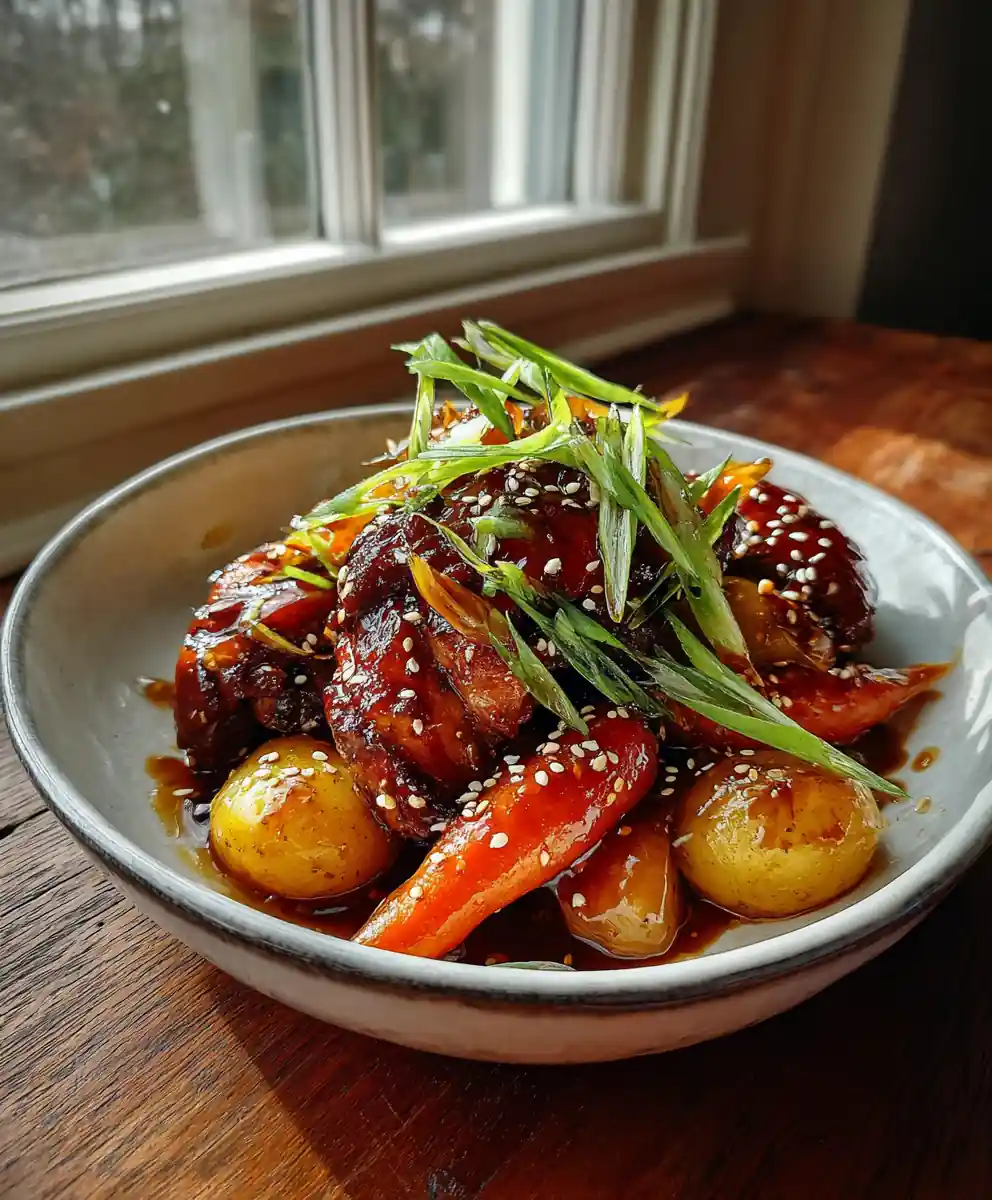
Jjimdak (찜닭) is a beloved Korean braised chicken dish that’s bursting with savory, sweet, and slightly spicy flavors. This comforting and satisfying meal features tender chicken simmered in a rich, flavorful sauce with vegetables and a unique caramelized pear glaze. It’s a dish perfect for sharing with family and friends, especially on a cozy night in. Our recipe captures the authentic taste of Jjimdak, bringing the warmth of Korean cuisine right to your kitchen. Get ready to experience a truly unforgettable culinary adventure!
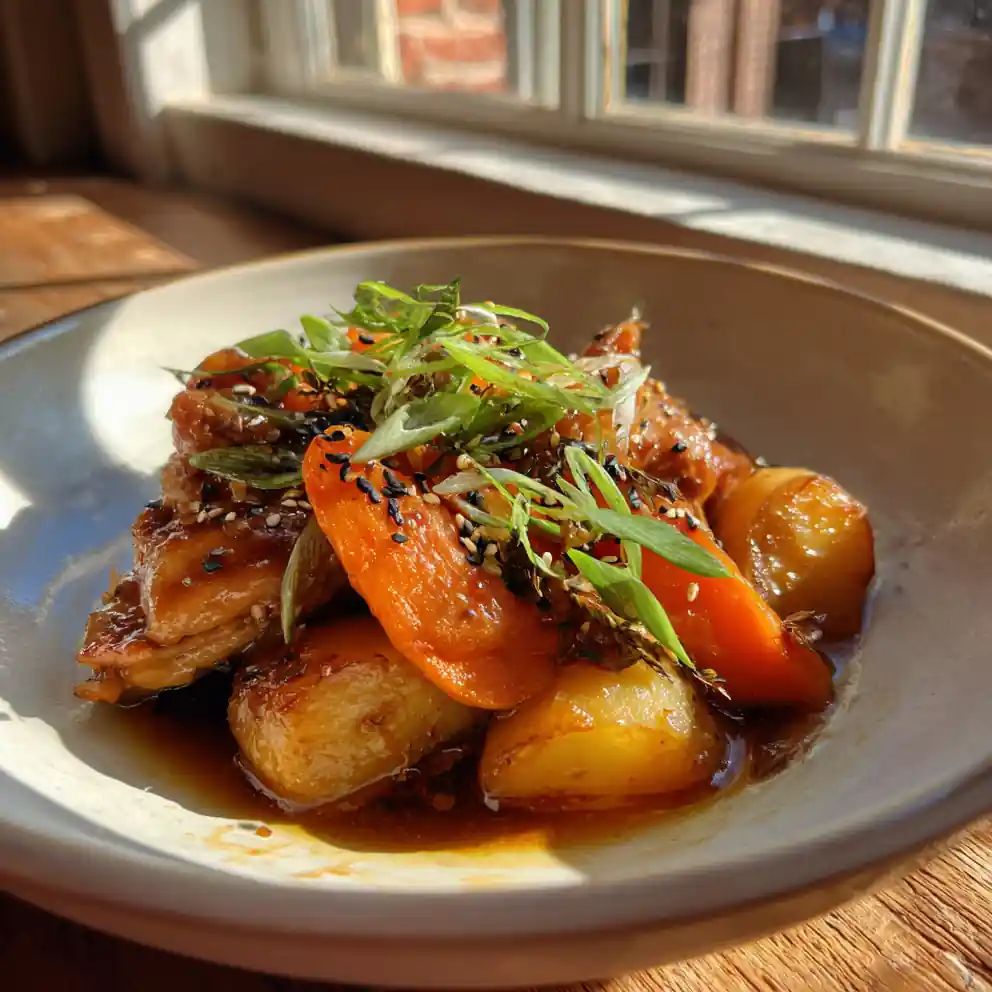
What You’ll Need: Jjimdak Ingredients
- 1.5 kg (3.3 lb) bone-in skinless chicken thigh pieces: We recommend using chicken thighs for their rich flavor and ability to stay incredibly tender during the long braising process. Bone-in pieces add even more depth of flavor to the sauce.
- 2 Tbsp (30 ml) vegetable oil: A neutral-flavored oil like vegetable or canola oil is perfect for searing the chicken and sautéing the vegetables.
- 1 large onion, sliced: Yellow onions provide a foundational sweetness and aromatic base for the Jjimdak sauce. Slicing them thinly ensures they cook down nicely and meld into the flavors.
- 2 carrots, cut into 2 cm (0.8 in) pieces: Carrots add a touch of sweetness and vibrant color to the dish. Cutting them into roughly 2cm pieces ensures they cook through at the same rate as the other vegetables.
- 2 potatoes, cut into wedges: Waxy potatoes like Yukon Gold or red potatoes hold their shape well during braising and absorb the delicious sauce. Wedges provide a good surface area for flavor absorption.
- 4 cloves garlic, minced: Garlic is essential for adding a pungent and savory depth to the Jjimdak. Freshly minced garlic provides the best flavor.
- 2 cm (¾ in) piece ginger, minced: Ginger complements the garlic and adds a warm, slightly spicy note to the dish.
- ½ cup (120 ml) low-sodium soy sauce: Soy sauce is the primary seasoning agent, providing umami and saltiness. Using low-sodium soy sauce allows you to control the overall salt level.
- ¼ cup (60 ml) gochujang (Korean red pepper paste): Gochujang is a fermented Korean chili paste that adds a complex, spicy-sweet flavor. It’s a key ingredient in Jjimdak and gives it its signature kick.
- 2 Tbsp (30 ml) Korean chili flakes (gochugaru), optional for heat: Gochugaru adds an extra layer of heat and a vibrant red color. Adjust the amount to your spice preference.
- 2 Tbsp (30 ml) sugar or honey: Sugar or honey balances the savory and spicy flavors, creating a harmonious taste profile. Honey will add a subtle floral note.
- 1½ cups (360 ml) water or vegetable stock: Liquid is needed for braising the chicken and creating the sauce. Vegetable stock will add more depth of flavor than water.
- 1 medium Asian pear, peeled and grated (≈200 g / 7 oz): This is the secret ingredient! Asian pears are incredibly juicy and sweet, and when grated, they create a natural caramelization that adds a unique sweetness and glaze to the dish.
- 1 Tbsp (15 ml) non-alcoholic rice vinegar, optional: A touch of rice vinegar adds a subtle tanginess that brightens the flavors.
- 1 tsp (5 ml) sesame oil: Sesame oil adds a nutty aroma and flavor that enhances the overall taste of the Jjimdak.
- 1 tsp (5 g) toasted sesame seeds: Toasted sesame seeds provide a crunchy texture and nutty flavor as a garnish.
- 2 scallions, thinly sliced for garnish: Scallions add a fresh, oniony flavor and a pop of color.
- Salt and black pepper to taste: Seasoning to enhance the flavors.
Ingredient Substitutions
While we recommend using the ingredients listed above for the most authentic flavor, here are a few substitutions you can make if needed:
- Chicken: You can substitute chicken thighs with bone-in, skin-on chicken pieces, but you may need to adjust the cooking time.
- Asian Pear: If you can’t find an Asian pear, you can use a Bosc pear, but it won’t have the same level of sweetness and juice.
- Gochujang: If you don’t have gochujang, you can use a combination of miso paste and chili powder, but the flavor will be different.
- Gochugaru: You can substitute with regular chili flakes, but the flavor profile will be different.
Step-by-Step Instructions for Perfect Jjimdak
- Prepare the Chicken: Pat the chicken thighs thoroughly dry with paper towels. This is crucial for achieving a good sear. Season generously with salt and freshly ground black pepper. Don’t be shy – the seasoning will permeate the chicken during the long braising process.
- Sear the Chicken: Heat the vegetable oil in a large, heavy-bottomed pot (Dutch oven is ideal) over medium-high heat. Add the chicken in batches, ensuring not to overcrowd the pot. Sear for 3-4 minutes per side, until lightly browned. This step builds flavor and texture. Remove the chicken and set aside.
- Sauté the Vegetables: Reduce the heat to medium. Add the sliced onion, carrots, and potatoes to the pot. Sauté for 5-7 minutes, stirring occasionally, until the onion softens and begins to become translucent. The vegetables should start to caramelize slightly, adding depth to the dish.
- Bloom the Aromatics: Add the minced garlic and ginger to the pot. Cook for 1 minute, stirring constantly, until fragrant. Be careful not to burn the garlic, as it can become bitter. This step releases the essential oils and aromas of the garlic and ginger.
- Create the Braising Sauce: Stir in the soy sauce, gochujang, gochugaru (if using), sugar (or honey), and rice vinegar (if using). Mix well to coat the vegetables evenly. The gochujang and gochugaru provide the signature Korean spice and color.
- Braise the Chicken: Return the seared chicken to the pot. Pour in the water or vegetable stock, ensuring the chicken is mostly submerged. Bring the mixture to a gentle boil, then reduce the heat to low, cover the pot, and simmer for 25-30 minutes, or until the chicken is incredibly tender and the potatoes are cooked through.
- Prepare the Pear Glaze: While the jjimdak simmers, prepare the caramelized pear glaze. In a small saucepan, combine the grated Asian pear with 1 tablespoon of the braising liquid. Cook over medium heat, stirring constantly, until the mixture thickens into a glossy glaze, about 5-6 minutes. Remove from heat and stir in the sesame oil. The pear adds a subtle sweetness and unique flavor profile.
- Finish and Glaze: Once the chicken and vegetables are tender, stir the caramelized pear glaze into the pot, ensuring everything is evenly coated. Taste and adjust the seasoning with additional salt or pepper if needed.
- Serve and Garnish: Transfer the jjimdak to a shallow serving bowl. Drizzle any remaining pear glaze over the top for a beautiful, shiny finish. Garnish generously with toasted sesame seeds and thinly sliced scallions.
The Secret to Jjimdak’s Depth of Flavor
Jjimdak isn’t just about braising chicken; it’s about building layers of flavor. The initial searing of the chicken creates a Maillard reaction, developing a rich, savory base. The long, slow braising process allows the flavors of the soy sauce, gochujang, and spices to deeply penetrate the chicken and vegetables. But the real magic lies in the caramelized pear glaze. The natural sugars in the pear concentrate during cooking, creating a sweet and savory glaze that perfectly complements the spicy and umami-rich braising sauce.
Choosing the Right Pear for the Glaze
The type of pear you use significantly impacts the glaze’s flavor. Asian pears (also known as apple pears) are ideal because of their crisp texture, subtle sweetness, and high juice content. If you can’t find Asian pears, Bosc or Anjou pears can be used as substitutes, but they may require a slightly longer cooking time to achieve the desired consistency. Avoid using overly ripe pears, as they may become mushy and lack the necessary structure for a glossy glaze.
Understanding Gochujang and Gochugaru
Gochujang and gochugaru are essential ingredients in Korean cuisine, and they contribute significantly to the flavor profile of jjimdak. Gochujang is a fermented red chili paste that provides a complex, savory, and slightly sweet flavor. Gochugaru is Korean chili flakes, which add heat and a vibrant red color. The level of spice can be adjusted by controlling the amount of gochugaru used. Start with 2 tablespoons for a mild heat and increase to your preference.
Serving Suggestions and Accompaniments
Jjimdak is traditionally served with steamed white rice, which perfectly absorbs the flavorful braising sauce. It’s also delicious with a side of Korean pickled vegetables (banchan) like kimchi or seasoned spinach. For a complete Korean meal, consider serving jjimdak with a light soup like miyeok guk (seaweed soup) or doenjang jjigae (soybean paste stew).
Frequently Asked Questions (FAQ)
- Can I use chicken breast instead of thighs? While you can use chicken breast, thighs are recommended for their richer flavor and ability to remain tender during the long braising process. If using chicken breast, reduce the braising time to prevent it from drying out.
- Can I make jjimdak ahead of time? Yes! Jjimdak actually tastes even better the next day as the flavors meld together. Store it in an airtight container in the refrigerator for up to 3 days.
- Is jjimdak spicy? The level of spice depends on the amount of gochugaru used. You can adjust the amount to your preference.
This Korean Braised Chicken Jjimdak with Caramelized Pear Glaze is a truly satisfying and flavorful dish. The combination of tender chicken, savory vegetables, and sweet-spicy glaze is simply irresistible. Don’t forget to save this recipe to Pinterest for later!
Print
recipe jjimdak korean braised chicken
- Total Time: 65 minutes
- Yield: 6 servings 1x
- Diet: General
Description
Jjimdak is a flavorful Korean braised chicken dish with tender chicken, vegetables, and a unique caramelized pear glaze. It’s a comforting and satisfying meal perfect for sharing.
Ingredients
- 1.5 kg chicken thigh pieces, bone-in skinless
- 2 Tbsp vegetable oil
- 1 large onion, sliced
- 2 carrots, cut into 2 cm pieces
- 2 potatoes, cut into wedges
- 4 cloves garlic, minced
- 2 cm ginger, minced
- 0.5 cup low-sodium soy sauce
- 0.25 cup gochujang (Korean red pepper paste)
- 2 Tbsp gochugaru (Korean chili flakes), optional
- 2 Tbsp sugar or honey
- 1.5 cups water or vegetable stock
- 1 medium Asian pear, grated (≈200 g)
- 1 Tbsp rice vinegar, optional
- 1 tsp sesame oil
- 1 tsp toasted sesame seeds
- 2 scallions, thinly sliced
- Salt and pepper to taste
Instructions
- Sear Chicken: Brown chicken in oil, then set aside.
- Sauté Vegetables: Cook onion, carrots, and potatoes until softened.
- Bloom Aromatics: Add garlic and ginger; cook until fragrant.
- Create Sauce: Stir in soy sauce, gochujang, sugar, and vinegar.
- Braise Chicken: Return chicken to pot, add liquid, and simmer until tender (25-30 minutes).
- Prepare Glaze: Cook grated pear with braising liquid until thickened.
- Finish & Glaze: Stir glaze into jjimdak; season to taste.
- Serve: Garnish with sesame seeds and scallions.
Notes
For best results, use chicken thighs and Asian pears. Adjust gochugaru to control spice level. Jjimdak tastes even better the next day.
- Prep Time: 20 minutes
- Cook Time: 45 minutes
- Category: Main Course
- Method: Braising
- Cuisine: Korean
Nutrition
- Serving Size: 1 serving
- Calories: 550 kcal
- Sugar: 25 g
- Sodium: 800 mg
- Fat: 30 g
- Saturated Fat: 8 g
- Unsaturated Fat: 18 g
- Trans Fat: 0 g
- Carbohydrates: 40 g
- Fiber: 5 g
- Protein: 40 g
- Cholesterol: 150 mg
FREE PRINTABLE RECIPE
Get the Printable Recipe PDF (Free)
Enter your email and we’ll send you the ingredients + step-by-step instructions as a clean PDF you can save to your phone.
- ✅ Printable PDF (ingredients + steps)
- ✅ Save it to your phone (no long scrolling)
- ✅ Includes cook time + servings
- ✅ Easy to follow
FAQ
Where’s the full recipe?
It’s delivered as a printable PDF so you can save it and cook without scrolling.
I didn’t get the email.
Check Spam/Promotions and search your inbox for your site name. Then click Confirm to receive the PDF.