
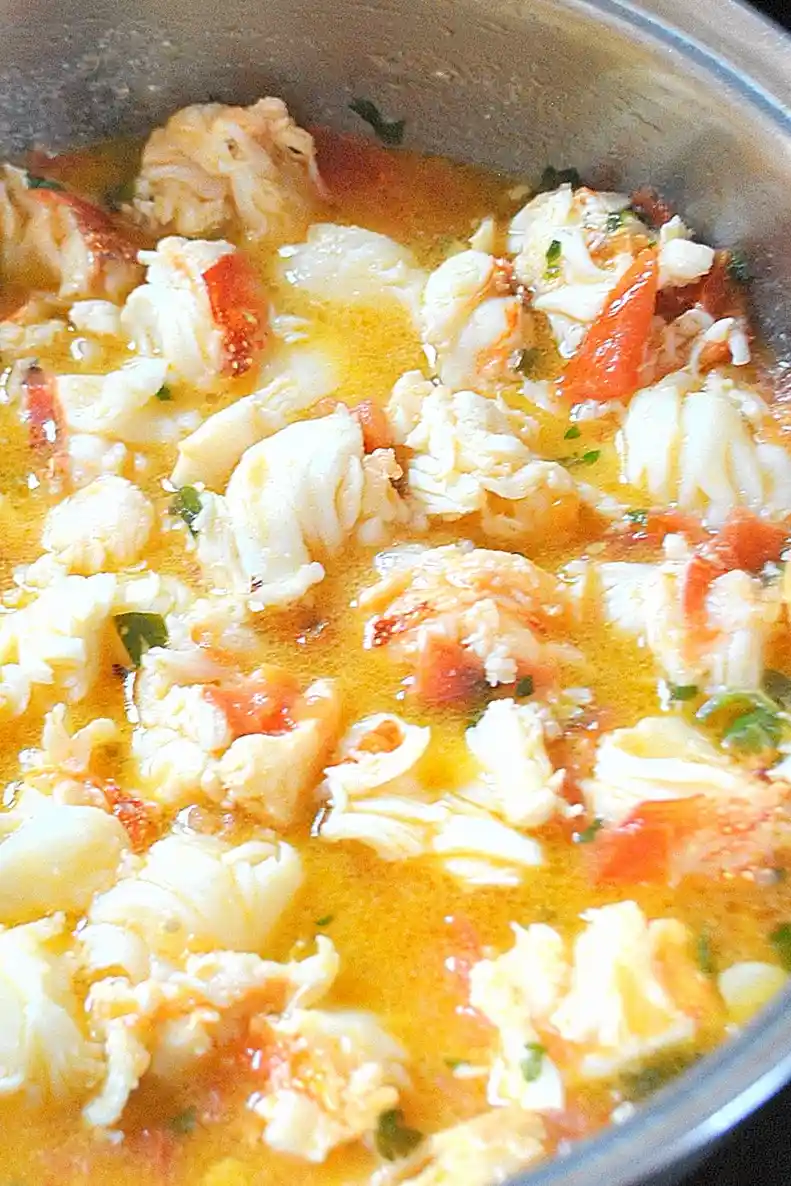
This restaurant-quality lobster sauce features succulent chunks of lobster simmered in a rich garlic and butter reduction. It is a sophisticated yet approachable dish that pairs perfectly with pasta or rice for a special occasion meal.
List of ingredients
- 4 frozen Lobster Tails (6 to 7-ounces each) – thawed, with fins and tails cut off, rinsed, and drained.
- 6 Tbsp. extra virgin olive oil – divided for sautéing and sauce enrichment.
- 8 garlic cloves – sliced thin for optimal flavor release.
- 1/4 tsp. crushed red pepper flakes – for a hint of warmth.
- 5 Tbsp. salted butter – divided to create a velvety texture.
- 1 + 1/2 cups chopped ripe tomatoes – about one large tomato for color and acidity.
- dash of cayenne pepper – to add a subtle spicy kick.
- 1/8 tsp. paprika – for a smoky undertone and rich color.
- 1/4 cup freshly chopped Italian parsley – provides a fresh, herbal finish.
- 3/4 cup chicken broth with a squeeze of lemon juice – used as a non-alcoholic substitute for white wine.
- 1/4 cup chicken broth – to add depth and moisture to the sauce.
- 1 or 2 Tbsp. tomato paste – optional, used to thicken the consistency.
- 1/4 to 1/2 tsp. sea salt – to enhance all the natural flavors.
- 1 pound of linguini, or spaghetti – optional, for serving.
step-by-step instructions
- Sauté Garlic: Heat 4 tablespoons of olive oil and the sliced garlic in a large deep skillet over medium heat.
- Sear Lobster: Place the lobster tails face down in the hot oil. Add 3 tablespoons of butter and the crushed red pepper flakes, cooking for about 2 to 3 minutes before flipping. Continue cooking for another 5 to 8 minutes, turning frequently until the shells are bright red.
- Deglaze: Pour in the chicken broth and lemon juice mixture. Cover the skillet with a lid and simmer for 1 to 2 minutes to infuse the meat.
- Prepare Lobster Meat: Remove the tails from the pan and transfer them to a cutting board to cool slightly. Carefully remove the meat from the shells and cut it into bite-sized chunks, then set them aside.
- Start the Sauce: In the same skillet, add the chopped tomatoes, fresh parsley, and sea salt. Stir and simmer the mixture for 1 to 2 minutes.
- Build the Base: Stir in the remaining 2 tablespoons of butter, the remaining 2 tablespoons of olive oil, cayenne pepper, and paprika. Pour in the additional 1/4 cup of chicken broth and the optional tomato paste.
- Thicken the Sauce: Cover the skillet and simmer on low heat for 3 to 5 minutes to allow the flavors to meld.
- Final Combine: Return the lobster chunks to the skillet and simmer for an additional 2 minutes until the meat is fully opaque and white. Turn off the heat immediately.
- Season: Taste the sauce and adjust the salt and red pepper flakes to suit your personal preference.
- Cook Pasta: Boil a pot of water with 1 teaspoon of salt and cook the linguini or spaghetti until al-dente.
- Emulsify: Reserve about 1/3 cup of the starchy pasta water and stir it into the lobster sauce for a glossier finish. Drain the pasta.
- Plate: Divide the pasta into bowls and spoon the lobster sauce generously over the top, serving immediately.
Optimizing Your Lobster Preparation
Thawing Lobster Tails Correctly
Always thaw your frozen lobster tails in the refrigerator for 24 hours rather than on the counter. This ensures the meat remains firm and reduces the risk of bacterial growth. Pat the tails dry with paper towels before cooking to achieve a better sear.
Efficient Shell Removal
Use a pair of kitchen shears to cut along the top of the shell from the head toward the tail. This allows you to lift the meat out in one piece without tearing the delicate flesh. A small fork can help nudge the meat out if it is stuck.
Achieving Uniform Lobster Chunks
Cut the lobster meat into consistent, one-inch pieces to ensure they heat through evenly. Avoid cutting them too small, as they can easily overcook and become rubbery during the final simmering stage. Uniform sizes also make for a better presentation on the plate.
Cleaning and Rinsing Techniques
Rinse the thawed tails under cold running water to remove any ice crystals or debris. Ensure the fins are trimmed clean to prevent any unwanted bits from entering the sauce. Draining them thoroughly prevents the oil from splattering during the initial sear.
Refining the Sauce Texture and Flavor
The Role of Tomato Paste
Adding tomato paste provides a deeper red color and a more concentrated savory flavor. It also acts as a natural thickener, helping the butter and oil emulsify into a cohesive sauce. If you prefer a very light sauce, you can omit this ingredient.
Balancing the Spicy Elements
The combination of crushed red pepper, cayenne, and paprika creates a multi-layered heat profile. If you prefer a milder sauce, reduce the cayenne to a tiny pinch. The paprika is primarily for color and earthiness, so it does not add significant heat.
Controlling the Salt Levels
Since salted butter and chicken broth both contain sodium, add the sea salt gradually. Taste the sauce after the simmering process is complete before adding more salt. This prevents the sauce from becoming overly salty as it reduces.
Using Fresh vs Dried Parsley
Always use fresh Italian parsley for this recipe to provide a bright, clean contrast to the rich butter. Dried parsley lacks the aromatic quality and can look like small flakes in the sauce. Stir it in toward the end to maintain its vibrant green color.
Serving and Pairing Ideas
Choosing the Best Pasta Shape
Linguine and spaghetti are ideal because their long strands hold onto the buttery sauce effectively. Fettuccine is another great option if you prefer a wider noodle with more surface area for the sauce. Ensure the pasta is cooked al-dente so it doesn’t mush when combined with the lobster.
Alternative Grain Bases
Steamed jasmine or basmati rice is an excellent alternative for those avoiding gluten. The rice absorbs the garlic butter sauce, making every bite flavorful. Polenta or grits can also be used for a more comforting, rustic presentation.
Suggested Side Vegetable Pairings
Pair this dish with steamed asparagus or sautéed broccolini to add a fresh, crisp element to the meal. A simple side salad with a lemon vinaigrette helps cut through the richness of the butter sauce. Roasted carrots also complement the sweetness of the lobster meat.
Garnish for Presentation
Add a sprinkle of extra fresh parsley and a wedge of lemon on the side of the plate. A light dusting of freshly grated Parmesan cheese can add a salty punch, though it is optional. A few cracks of fresh black pepper on top provide a professional finish.
Storage and Preservation Guidelines
Refrigerating Lobster Leftovers
Store any remaining lobster sauce in an airtight glass container to keep the flavors locked in. Ensure the sauce has cooled slightly before sealing the lid to prevent excessive condensation. Keep it in the coldest part of the refrigerator.
Freezing for Long-Term Use
You can freeze the sauce for up to one month, although the texture of the lobster may change slightly. Freeze the sauce in small, single-serving portions for easier thawing. Avoid freezing the pasta with the sauce, as the noodles will become soggy.
Safe Consumption Timelines
Consume refrigerated lobster sauce within three days to ensure the seafood remains fresh. If you notice any change in smell or color, discard the leftovers immediately. Freshness is key when dealing with high-protein seafood dishes.
Effective Reheating Methods
Stovetop Reheating Process
The best way to reheat the sauce is in a small skillet over low heat. Add a tablespoon of water or chicken broth to loosen the sauce as it warms. Stir gently to avoid breaking up the lobster chunks.
Microwave Precautions
If using a microwave, heat the sauce in 30-second intervals on medium power. Stir between each interval to ensure the heat is distributed evenly. This prevents the lobster from hitting extreme temperatures that cause rubberiness.
Preventing Overcooked Seafood
Stop reheating the sauce as soon as it is warmed through; do not let it reach a rolling boil. Lobster meat continues to cook even after the heat is off. Overheating the meat will result in a tough, chewy texture.
Common Troubleshooting Tips
Fixing a Thin Sauce
If the sauce feels too watery, simmer it uncovered for a few extra minutes to allow the liquid to reduce. Alternatively, whisk in a small amount of cornstarch slurry or extra tomato paste. The reserved pasta water should also help thicken the sauce through starch emulsification.
Dealing with Rubbery Lobster
Rubbery lobster is usually a sign of overcooking. To prevent this, ensure you remove the meat from the pan as soon as it turns opaque. When returning the chunks to the sauce, only simmer for the minimum time required to heat them through.
Managing Burnt Garlic
If the garlic turns dark brown or black, it will taste bitter and ruin the sauce. Keep the heat at a steady medium and stir the garlic frequently. If the garlic burns, it is better to wipe the pan and start the oil and garlic step over.
Adjusting Excessive Acidity
If the tomatoes or lemon juice make the sauce too acidic, add a tiny pinch of sugar. This neutralizes the sharp notes without making the sauce taste sweet. A small knob of extra butter can also mellow out the acidity.
Frequently Asked Questions
Can I use fresh lobster instead of frozen?
Yes, fresh lobster tails are a wonderful substitute. Follow the same cleaning and trimming process, but be mindful that fresh meat may cook slightly faster than thawed frozen meat.
What is the best type of tomato for this recipe?
Roma or plum tomatoes are best because they have more flesh and fewer seeds. This prevents the sauce from becoming too watery while providing a concentrated tomato flavor.
Can this recipe be made in a slow cooker?
A slow cooker is not recommended for this specific recipe because lobster overcooks very quickly. The high-heat searing and quick simmering required for the sauce are best achieved on a stovetop.
What can I use if I don’t have chicken broth?
Vegetable broth is a suitable alternative that provides a similar savory base. In a pinch, you can use water with a bit of extra salt and a pinch of garlic powder.
Can I use a different type of oil?
While extra virgin olive oil is preferred for flavor, avocado oil or light olive oil works well. These oils have a higher smoke point, which is useful if you prefer a higher-heat sear on the lobster.
Print
Gourmet Garlic Butter Lobster Sauce
- Total Time: 45 minutes
- Yield: 6 servings 1x
- Diet: General
Description
The Best Lobster Sauce is loaded with juicy chunks of lobster cooked in a light buttery sauce that’s packed with delicious flavors! This lobster sauce is relatively easy to make, very flavorful, and deliciously tender with every bite. Serve with your favorite pasta or steamed rice for an exquisite dinner.
Ingredients
- 4 frozen Lobster Tails (6 to 7-ounces each) – thawed, with fins and tails cut off, rinsed, and drained
- 6 Tbsp. extra virgin olive oil
- 8 garlic cloves – sliced
- 1/4 tsp. crushed red pepper flakes
- 5 Tbsp. salted butter
- 1 1/2 cups chopped ripe tomatoes
- dash of cayenne pepper
- 1/8 tsp. paprika
- 1/4 cup freshly chopped Italian parsley
- 3/4 cup alcohol-free white wine
- 1/4 cup chicken broth
- 1 or 2 Tbsp. tomato paste (optional)
- 1/4 to 1/2 tsp. sea salt
- 1 pound of linguini, or spaghetti (optional)
Instructions
- Cook the Lobster: In a large deep skillet, add 4 tablespoons olive oil and garlic slices on medium heat.
- Sauté: When the oil is hot, add the lobster tails, face down. Toss in the 3 tablespoons of butter, and crushed red pepper flakes. Cook the lobsters for about 2 minutes, then flip them over. And continue to cook them for an additional 5 minutes, turning them often.
- Simmer: Pour in the alcohol-free white wine, cover with a lid and simmer for about 1 to 2 minutes.
- Prepare Meat: Use kitchen tongs to remove the lobster tails and transfer them to a nearby dish or cutting board to cool a little. Open the shells and remove the lobster meat, then cut into bite-size pieces.
- Make Sauce: Toss into the same skillet the chopped tomato and freshly chopped parsley and sea salt. Turn back on the heat. Stir and cook the tomato, for about 1 to 2 minutes.
- Simmer Sauce: Add into the skillet, additional 2 tablespoons of butter, and the remaining 2 tablespoons of extra virgin olive oil, along with the cayenne pepper, and paprika. Pour in a splash of chicken broth, and add in some tomato paste.
- Combine: Cover with a lid, and simmer on low heat for about 2 to 3 minutes. Toss back in the chunks of lobster meat and simmer for additional 2 minutes, until the lobster meat is fully cooked and turned white. Turn off the heat.
- Adjust: Taste the sauce, and adjust the seasonings with salt and pepper flakes to your preference.
- Pasta: Cook your favorite pasta in boiling water with 1 teaspoon of salt. Reserve one ladle full of pasta water (about 1/3 cup), and pour it into the lobster sauce. Then drain the pasta.
- Serve: Serve into individual pasta bowls and spoon of the lobster sauce over the pasta and serve immediately.
Notes
Leftovers should be stored in an airtight container and kept chilled in the refrigerator for up to 3 days. You can freeze leftovers for up to 1 month.
- Prep Time: 25 minutes
- Cook Time: 20 minutes
- Category: Seafood Recipes
- Method: Sautéing
- Cuisine: Italian
Nutrition
- Serving Size: 1 serving
- Calories: 303 kcal
- Sugar: 2.5 g
- Sodium: 467 mg
- Fat: 24.3 g
- Saturated Fat: 8.2 g
- Unsaturated Fat: 16.1 g
- Trans Fat: 0 g
- Carbohydrates: 5.7 g
- Fiber: 1.1 g
- Protein: 12.2 g
- Cholesterol: 108 mg