
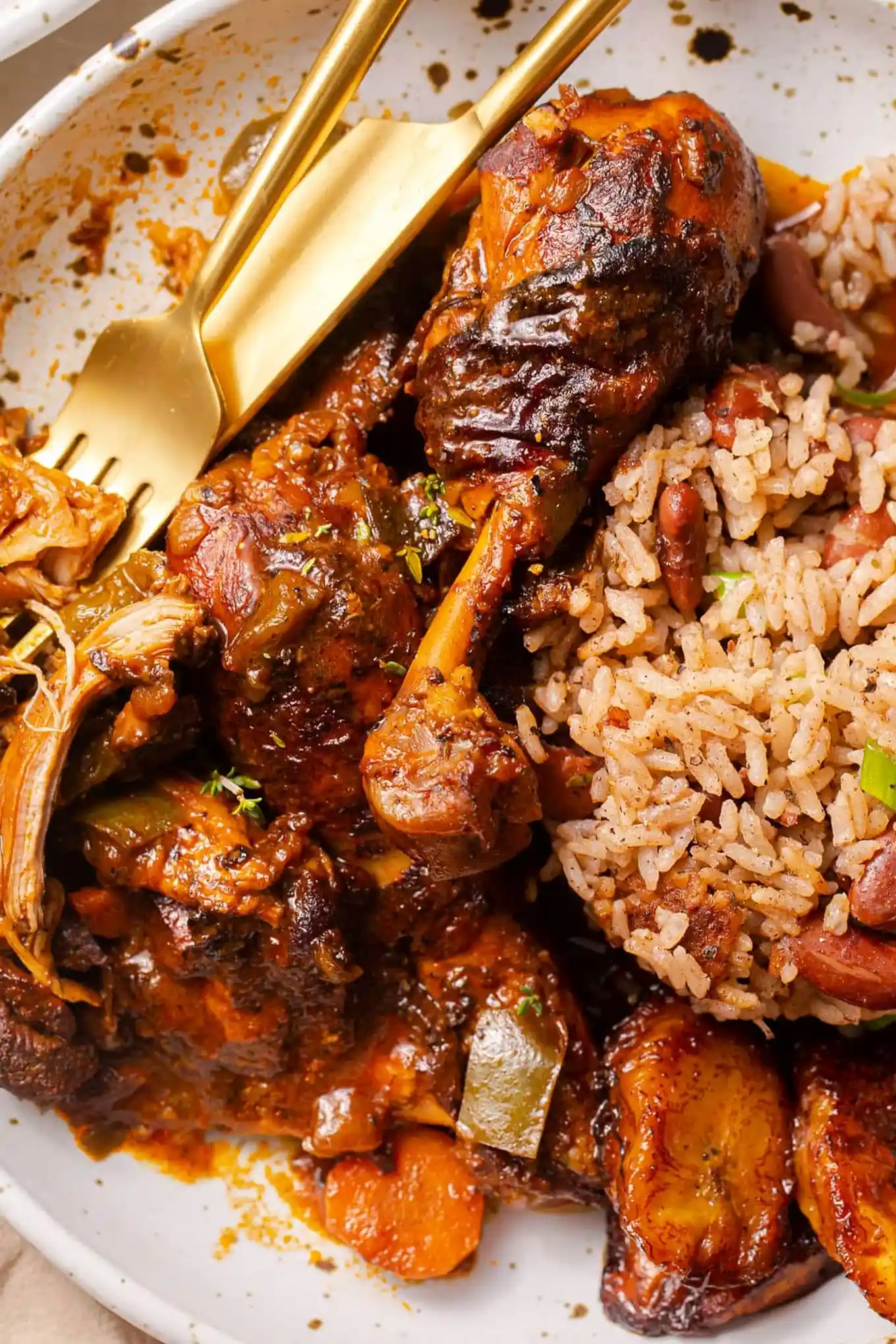
This traditional Caribbean dish features tender chicken braised in a rich, aromatic gravy. It is a hearty one-pot meal that balances savory spices with a hint of sweetness.
List of ingredients
- 1/2 medium yellow onion, chopped – provides a savory base.
- 1 large bell pepper, chopped – adds sweetness and color.
- 4 scallions, chopped – essential for Caribbean aromatic flavor.
- 6 cloves of garlic, minced or 1 tablespoon garlic paste – adds pungent depth.
- 1 tablespoon packed light or dark brown sugar – balances the savory notes.
- 1 teaspoon smoked paprika – adds a subtle woodsy flavor.
- 1/2 teaspoon Jamaican ground allspice – the signature spice of the region.
- 1/2 teaspoon ground ginger – adds a zesty warmth.
- Kosher salt & freshly ground black pepper, to taste – for primary seasoning.
- 8-9 chicken pieces, such as a mix of legs and boneless/skinless thighs – best for slow braising.
- 3 teaspoons browning sauce – provides the deep mahogany color.
- 3 tablespoons vegetable or canola oil, plus more as needed – for searing the meat.
- 2 medium-sized carrots, chopped – adds natural sweetness and texture.
- 1 (8-ounce) can tomato sauce – thickens and flavors the gravy.
- 4-6 sprigs fresh thyme – provides earthy herbal notes.
- 2 bay leaves – adds a subtle floral aroma.
- 1 scotch bonnet pepper, left whole – provides heat without overwhelming the dish.
- 3 cups chicken stock or broth – the braising liquid.
step-by-step instructions
- Prepare the marinade: In a large bowl or gallon-sized ziplock bag, combine the chopped onion, bell pepper, scallions, minced garlic, brown sugar, smoked paprika, allspice, ginger, salt, and pepper. Mix these ingredients thoroughly by hand or with a utensil. Pat the chicken pieces dry with paper towels, then add them to the mixture along with the browning sauce. Massage the aromatics and spices into the chicken until every piece is evenly coated.
- Marinate the meat: Seal the bag or cover the bowl with a lid or plastic wrap. Transfer to the refrigerator for at least 2 hours, though overnight (8+ hours) is recommended for the best flavor penetration. If marinating overnight, stir or massage the chicken once during the process to ensure even distribution.
- Prep for searing: Remove the chicken pieces from the marinade, shaking off excess vegetables, but keep the remaining marinade in the bowl for later use. Place the chicken on a baking sheet or large platter.
- Brown the chicken: Heat oil in a large heavy-bottomed pot or dutch oven over medium-high heat. Once the oil shimmers, sear chicken pieces in batches to avoid overcrowding the pan. Cook for 2-3 minutes per side until a deep brown crust forms. Remove the browned chicken to a clean plate and reduce the heat to medium.
- Sauté aromatics and assemble: Pour the reserved marinade into the same pot. Sauté for 2-3 minutes using a wooden spoon to scrape up the brown bits (fond) from the bottom. Return the browned chicken and any collected juices to the pot. Add the carrots, tomato sauce, fresh thyme, bay leaves, whole scotch bonnet pepper, and chicken stock. Stir gently to combine all ingredients.
- Slow stew: Cover the pot with a tight-fitting lid and reduce the heat to medium-low. Let the chicken stew for 1.5 to 2 hours until the meat is tender enough to fall off the bone.
- Final adjustments: Remove and discard the thyme stems, bay leaves, and the whole scotch bonnet pepper. To thicken the gravy, increase the heat to medium-high and simmer, stirring gently, until the desired consistency is reached. Taste and add more salt or pepper if needed.
- Serve: Plate the chicken in shallow bowls. Serve immediately alongside rice and peas or plantains, pouring extra gravy over the top.
Advanced Searing Techniques
Selecting the Optimal Cookware
A heavy-bottomed pot, such as a cast iron dutch oven or a stainless steel braiser, is essential for this recipe. These materials distribute heat evenly, which prevents the chicken from burning while creating a consistent brown crust. Thin-bottomed pots often create hot spots that can scorch the browning sauce.
Managing Oil Temperature
Wait until the oil is shimmering before adding the chicken to ensure an immediate sear. If the oil is too cool, the chicken will steam in its own juices rather than brown, resulting in a rubbery texture. If the oil smokes, reduce the heat immediately to avoid a bitter taste.
Preventing Pan Overcrowding
Searing chicken in small batches is critical to maintaining the pan temperature. When too many pieces are added at once, the temperature drops and the chicken releases moisture, which prevents the Maillard reaction. Leave space between each piece to ensure maximum surface contact with the heat.
Alternative Cooking Methods
Using the Oven for Braising
Preheat your oven to 325°F. Follow the stovetop instructions through step 5 using an oven-safe vessel. Instead of simmering on the stove, cover the pot and transfer it to the oven for approximately 2 hours until the chicken is meltingly tender.
Slow Cooker Instructions
Follow the recipe steps for marinating and searing. Transfer the seared chicken and the sautéed marinade mixture into a slow cooker. Cook on the low setting for 7-8 hours or on the high setting for 4-5 hours. If your slow cooker has a sear function, you can perform steps 4 and 5 directly in the ceramic insert.
Pressure Cooker Adaptation
Perform the marinating and searing steps as usual. Add all the stew ingredients into the pressure cooker vessel. Seal the lid and cook on high pressure for 10-15 minutes. Note that the gravy may be thinner than the stovetop version, so you will likely need to simmer it on the “Sauté” setting afterward to thicken it.
Ingredient Substitutions and Variations
Replacing Browning Sauce
If browning sauce is unavailable, you can use a mixture of dark soy sauce and a small amount of molasses. Alternatively, you can caramelize extra brown sugar in the oil until it reaches a deep amber color before adding the marinade. This provides the necessary dark hue and rich flavor.
Substituting Scotch Bonnet Peppers
For a similar heat profile, habanero peppers are the closest substitute. If you prefer a milder dish, use a red bell pepper or a mild jalapeño. Regardless of the pepper used, keep it whole to infuse the gravy with flavor without adding excessive spice.
Alternative Sweeteners
While brown sugar is traditional, honey or maple syrup can be used as a substitute. These options provide a similar depth of flavor but may change the viscosity of the gravy slightly. Avoid using refined white sugar, as it lacks the molasses notes required for a traditional brown stew.
Using Different Chicken Cuts
While legs and thighs are preferred for their fat content and tenderness, you can use chicken breasts. However, reduce the stewing time for breasts to avoid drying out the meat. For a leaner version, remove the skin from all pieces before searing.
Serving Suggestions and Pairings
Traditional Rice and Peas
The most authentic pairing is coconut rice and peas, typically made with kidney beans or gungo peas. The creaminess of the coconut milk complements the spicy, savory notes of the brown stew gravy perfectly. Serve the chicken directly on top of a bed of rice.
Fried Sweet Plantains
Sliced ripe plantains fried in oil provide a sweet contrast to the salty and spicy chicken. Ensure the plantains are very ripe (black skin) for the best natural sweetness. These are typically served as a side dish on the same plate.
Steamed Caribbean Cabbage
Steamed cabbage with carrots and bell peppers adds a fresh, crunchy element to the meal. Sauté the cabbage quickly with a bit of onion and butter to maintain its texture. This provides a nutritional balance to the heavy braised meat.
Roasted Root Vegetables
For a modern twist, serve the stew with roasted yams, sweet potatoes, or cassava. These starchy vegetables soak up the gravy efficiently. Roast them with a drizzle of oil and a pinch of salt at 400°F until tender.
Storage and Reheating Advice
Refrigeration Limits
Store leftover brown stew chicken in an airtight container in the refrigerator. The stew will remain safe to eat for 3-4 days. In many cases, the flavor improves the next day as the spices continue to meld.
Freezing the Stew
This dish freezes well for up to three months. Place the chicken and gravy in a freezer-safe container, leaving a small amount of space for expansion. Thaw completely in the refrigerator before reheating to maintain the texture of the chicken.
Stovetop Reheating
For the best results, reheat the stew in a saucepan over medium-low heat. Add a splash of chicken stock or water to loosen the gravy, which tends to thicken during refrigeration. Cover the pan and simmer until the chicken is heated through.
Microwave Method
If using a microwave, place the chicken and gravy in a microwave-safe dish and cover it with a damp paper towel. Heat in 1-minute intervals, stirring in between, to ensure the chicken is heated evenly without overcooking the outer edges.
Troubleshooting Common Issues
Reducing Excess Liquid
If the gravy is too watery after the stewing process, remove the lid and increase the heat to medium-high. Simmer the liquid rapidly while stirring occasionally to evaporate the excess water. This concentrates the flavors and creates a syrupy consistency.
Fixing an Overly Thick Gravy
If the gravy becomes too thick or paste-like, stir in small amounts of chicken stock or warm water. Add one tablespoon at a time until the sauce reaches a pourable consistency. Avoid adding cold water, as it can shock the fats in the sauce.
Balancing Salt Levels
If the stew tastes too salty, add a teaspoon of brown sugar or a squeeze of lime juice. The acidity of the lime or the sweetness of the sugar helps neutralize the perceived saltiness. Alternatively, adding a few more chunks of carrot can help absorb some of the salt.
Managing Heat Intensity
If the stew is too spicy, it is likely that the scotch bonnet pepper burst during cooking. To mellow the heat, stir in a tablespoon of butter or a splash of heavy cream. The fats bind with the capsaicin and reduce the burn on the palate.
Frequently Asked Questions
Can I make this without browning sauce?
Yes, you can omit it, but the chicken will be a light golden color instead of deep brown. For a similar effect, use dark soy sauce or caramelize sugar in the pan before adding the meat.
Which chicken parts are best for this recipe?
Bone-in, skin-on thighs and drumsticks are the best choice because they stay moist during the long braising process. Breast meat can be used but is prone to drying out if cooked for the full two hours.
How do I keep the pepper from bursting?
Place the scotch bonnet pepper gently on top of the ingredients and avoid stirring it aggressively. Do not pierce the skin with a fork or knife before adding it to the pot.
Can I use a different type of onion?
While yellow onions are standard, white onions work just as well. Red onions can be used but may slightly alter the color of the marinade; they provide a similar flavor profile.
Print
Authentic Jamaican Brown Stew Chicken
- Total Time: 2 hours 30 minutes
- Yield: 4 servings 1x
- Diet: General
Description
Incredibly flavorful stewed chicken pieces that are braised to perfection until fall-off-the-bone tender in heaps of aromatics and spices. An insanely scrumptious chicken dinner with a taste of flavor-forward ingredients all over, you’ll love this Caribbean favorite!
Ingredients
- 1/2 medium yellow onion, chopped
- 1 large bell pepper, chopped
- 4 scallions, chopped
- 6 cloves of garlic, minced or 1 tablespoon garlic paste
- 1 tablespoon packed light or dark brown sugar
- 1 teaspoon smoked paprika
- 1/2 teaspoon Jamaican ground allspice
- 1/2 teaspoon ground ginger
- kosher salt & freshly ground black pepper, to taste
- 8–9 chicken pieces (legs & boneless/skinless thighs)
- 3 teaspoons browning sauce
- 3 tablespoons vegetable or canola oil, plus more as needed
- 2 medium-sized carrots, chopped
- 1 (8-ounce) can tomato sauce
- 4–6 sprigs fresh thyme
- 2 bay leaves
- 1 scotch bonnet pepper, left whole
- 3 cups chicken stock or broth
Instructions
- Marinate: In a large bowl or ziplock bag, combine onion, bell pepper, scallions, garlic, brown sugar, paprika, allspice, ginger, salt, and pepper. Pat chicken dry, add to the mixture with browning sauce, massage well, and refrigerate for at least 2 hours or overnight.
- Brown: Remove chicken from marinade (reserve marinade). Heat oil in a heavy-bottomed pot over medium-high heat and sear chicken in batches until a deep brown crust appears, about 2-3 minutes per side. Set chicken aside.
- Assemble: Sauté the reserved marinade in the pot for 2-3 minutes. Return the browned chicken to the pot and add carrots, tomato sauce, fresh thyme, bay leaves, scotch bonnet pepper, and chicken stock. Stir well.
- Stew: Reduce heat to medium-low, cover with a lid, and stew for 1 1/2 to 2 hours until chicken is meltingly tender.
- Finish: Discard herb stems, bay leaves, and scotch bonnet pepper. To thicken, simmer on medium-high heat until desired consistency is reached. Adjust salt and pepper to taste.
Notes
For best results, marinate the chicken overnight. Use a dutch oven or heavy-bottomed pot for the best braising results. This dish pairs perfectly with rice and peas and plantains.
- Prep Time: 30 minutes
- Cook Time: 2 hours
- Category: Main Course
- Method: Braise
- Cuisine: Caribbean
Nutrition
- Serving Size: 1 serving
- Calories: 480 kcal
- Sugar: 9 g
- Sodium: 850 mg
- Fat: 22 g
- Saturated Fat: 6 g
- Unsaturated Fat: 16 g
- Trans Fat: 0 g
- Carbohydrates: 24 g
- Fiber: 5 g
- Protein: 42 g
- Cholesterol: 130 mg