
This recipe transforms standard instant noodles into a creamy, sweet, and spicy dish. It works perfectly as a quick side or a main course when paired with a protein.
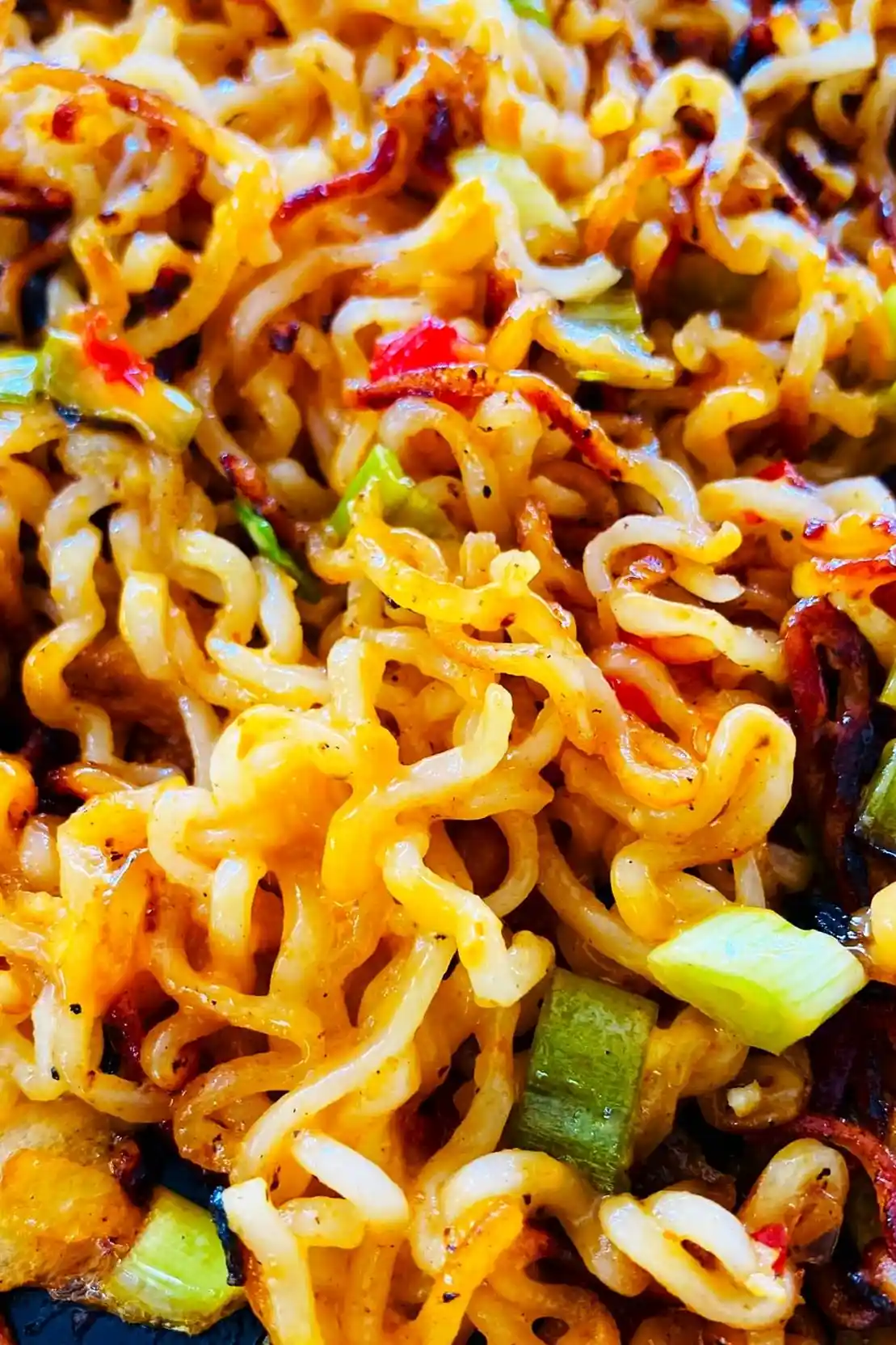
List of ingredients
- 4 packages ramen noodles – any flavor, discard the flavor packets.
- 3/4 cup Japanese mayo or regular mayonnaise – provides the creamy base.
- 3/4 cup sweet Thai chili sauce – adds sweetness and a mild tang.
- 2 to 4 tablespoons sriracha – adjust based on your spice tolerance.
- 2 tablespoons vegetable or olive oil – used for sautéing the aromatics.
- 1 onion – finely diced for texture and flavor.
- 5 to 6 cloves garlic – minced fresh for the best aroma.
- Kosher salt and pepper – to taste for basic seasoning.
- 1 bunch green onions – sliced for garnish and fresh flavor.
- 1 to 2 tablespoons lemon juice – cuts through the richness of the mayo.
step-by-step instructions
- Prepare the noodles: Boil the ramen noodles according to the package directions, but do not add the flavor packets. Drain them immediately and rinse thoroughly with cold water to stop the cooking process and prevent them from becoming mushy.
- Whisk the sauce: In a medium mixing bowl, combine the mayonnaise, sweet Thai chili sauce, and sriracha. Stir the mixture until the colors are uniform and the sauce is smooth.
- Sauté the aromatics: Place a large skillet or wok over medium-high heat for several minutes. Pour in the vegetable or olive oil and add the diced onion, cooking for 1 to 2 minutes until softened.
- Fry the noodles: Add the minced garlic, kosher salt, pepper, and the cooked, drained noodles to the skillet. Stir fry for 3 to 4 minutes to allow the noodles to sear slightly.
- First sauce application: Pour half of the prepared bang bang sauce over the noodles. Continue to cook and stir for 4 to 5 more minutes so the sauce thickens and coats the noodles.
- Final touch: Stir in the sliced green onions and lemon juice. Cook for an additional 2 to 3 minutes to integrate the flavors.
- Finish and serve: Toss the noodles with the remaining half of the bang bang sauce right before serving to ensure a fresh, creamy glaze.
Protein Additions for a Complete Meal
Adding Sautéed Chicken Breast
Cut boneless, skinless chicken breast into small, bite-sized cubes. Season them with salt and pepper before searing them in the skillet with a bit of oil over medium-high heat.
Cook the chicken until fully browned and cooked through, which usually takes about 5 to 7 minutes. Remove the chicken from the pan and set it aside, then proceed with the onion and garlic steps.
Stir the cooked chicken back into the noodles during the final sauce application step to ensure the meat is well-coated in the spicy glaze.
Integrating Seared Shrimp
Peel and devein large shrimp, patting them dry with paper towels to ensure a good sear. Sauté them in the wok for about 2 minutes per side until they turn pink and opaque.
Avoid overcooking the shrimp, as they can become rubbery. Once cooked, remove them from the pan and keep them on a plate.
Fold the shrimp into the ramen at the very end of the process, just before tossing in the final portion of the bang bang sauce.
Using Crispy Tofu Cubes
Press extra-firm tofu to remove excess water, then cut it into small cubes. Toss the cubes in a small amount of cornstarch and salt for extra crispiness.
Pan-fry the tofu in oil until all sides are golden brown and crisp. Remove the tofu from the pan to maintain its texture.
Add the crispy tofu back into the skillet along with the green onions and lemon juice to keep the edges from softening too much.
Customizing the Heat and Flavor
Increasing the Spice Level
To make the dish spicier, increase the sriracha to 5 or 6 tablespoons. You can also add a pinch of red chili flakes during the garlic sauté phase.
For an intense heat, consider adding a teaspoon of gochujang or a dash of cayenne pepper to the sauce mixture. This adds a deeper, more complex heat profile.
Reducing Heat for Mild Taste
For those who prefer a milder flavor, reduce the sriracha to 1 tablespoon or omit it entirely. The Thai chili sauce provides a very gentle warmth that is usually acceptable for children.
You can also increase the amount of mayonnaise to dilute the spice of the sriracha. This results in a creamier, sweeter sauce with less bite.
Substituting the Acid Component
While lemon juice provides a bright pop, lime juice is a great alternative that leans more toward traditional Thai flavors. Use the same quantity as the lemon juice.
Rice vinegar is another excellent substitute if you want a more pungent, vinegary tang. This helps balance the sweetness of the chili sauce more effectively.
Vegetable Enhancements
Adding Shredded Carrots
Grate fresh carrots into thin shreds and add them to the skillet at the same time as the garlic. They cook quickly and add a natural sweetness to the dish.
The bright orange color also provides a nice visual contrast against the creamy sauce and green onions.
Incorporating Bell Peppers
Thinly slice red, yellow, or green bell peppers. Sauté them with the onions for 2 to 3 minutes until they are slightly tender but still have a crunch.
Bell peppers add a fresh, peppery flavor and increase the nutritional value of the meal without altering the sauce’s consistency.
Adding Sautéed Cabbage
Use thinly sliced Napa cabbage or red cabbage for a hearty addition. Add the cabbage after the onions have softened but before the noodles go in.
Cabbage wilts down and absorbs the sauce beautifully, creating a texture similar to a traditional stir-fry chow mein.
Adding Snap Peas or Broccoli
Blanch small broccoli florets or snap peas in boiling water for one minute before adding them to the skillet. This ensures they are cooked through without overcooking the noodles.
Add these vegetables during the second sauce application stage to keep them vibrant and crisp.
Choosing the Best Noodle Base
Standard Instant Ramen
Using the noodles from instant packages is the fastest method. These noodles are pre-fried, which allows them to sear well in the wok and create those desired crispy bits.
Always discard the seasoning packet to avoid clashing with the homemade bang bang sauce.
Fresh Ramen Noodles
Fresh ramen noodles from the refrigerated section offer a chewier, more authentic texture. They tend to hold onto the sauce better than dried versions.
Be careful not to overboil fresh noodles, as they cook much faster than dried instant noodles.
Substituting with Udon
Thick udon noodles work well for a heartier version of this dish. Because udon is much thicker, it can handle a larger volume of sauce.
Ensure udon noodles are thoroughly rinsed in cold water to remove excess surface starch, otherwise, the sauce may become too gummy.
Rice Noodle Options
For a gluten-free alternative, use wide rice noodles. These require careful soaking or boiling to avoid breaking.
Since rice noodles are more delicate, stir them gently into the sauce to prevent them from tearing during the frying process.
Sauce Component Tips
Using Japanese Kewpie Mayo
Kewpie mayo is made with only egg yolks and rice vinegar, giving it a richer, creamier taste than American mayo. It enhances the savory profile of the bang bang sauce.
If you use regular mayonnaise, you may find the sauce slightly tangier and less dense.
Selecting the Right Thai Chili Sauce
Look for a brand that is labeled as ‘Sweet Chili Sauce’. It should be translucent with visible bits of red chili and garlic.
Avoid using hot chili pastes or sriracha as a replacement for this specific ingredient, as the sugar in the sweet chili sauce is essential for the caramelization during frying.
Managing Sauce Consistency
If the sauce feels too thick after the first application, add a tablespoon of water or vegetable broth to loosen it. This helps the sauce coat every strand of noodle evenly.
Conversely, if the sauce is too thin, cook it for an extra minute over medium-high heat to allow the moisture to evaporate.
Storage and Preservation
Refrigerator Storage
Store leftover noodles in an airtight container in the refrigerator for up to 3 days. The sauce will thicken and soak into the noodles over time.
Keep the garnish (green onions) separate if possible, adding them only when you are ready to eat to maintain their freshness.
Freezing Considerations
It is not recommended to freeze this dish because the mayonnaise-based sauce can separate or break when thawed. The noodles also tend to lose their texture and become mushy.
If you must freeze, freeze only the cooked proteins and noodles without the sauce, then add the fresh sauce during reheating.
Managing Sauce Separation
When stored in the fridge, you may notice a small amount of oil or liquid separating from the sauce. This is normal for emulsion-based sauces.
Simply stir the noodles vigorously during the reheating process to reintegrate the sauce components.
Reheating Guidelines
Stovetop Reheating
The best way to reheat these noodles is in a skillet over medium heat. Add a splash of water or a teaspoon of oil to prevent sticking.
Toss the noodles gently until they are heated through, adding a small squeeze of fresh lemon juice to brighten the flavors back up.
Microwave Method
Place the noodles in a microwave-safe bowl and cover with a damp paper towel. Heat in 30-second intervals, stirring in between.
This prevents the noodles from drying out and ensures the sauce is heated evenly throughout the dish.
Adding Liquid to Restore Texture
Because ramen noodles absorb liquid, they may seem dry after refrigeration. Add a tablespoon of water or vegetable broth during reheating.
This re-hydrates the noodles and makes the bang bang sauce creamy once again.
Troubleshooting Common Issues
Preventing Mushy Noodles
The most common mistake is overcooking the noodles during the boiling phase. Drain them while they are still slightly ‘al dente’ (firm to the bite).
The cold water rinse is critical because it washes away excess starch and stops the residual heat from continuing to cook the noodles.
Fixing a Sauce that is Too Thick
If the sauce becomes a thick paste in the pan, it means the heat was too high or it cooked for too long. Stir in a teaspoon of water to thin it out.
Avoid adding too much liquid at once, or the noodles will lose their stir-fried texture and become soggy.
Preventing Garlic from Burning
Garlic burns quickly at high temperatures and can turn bitter. Always add the garlic after the onions have already softened.
If the pan is smoking, remove it from the heat for a few seconds before adding the garlic to ensure a gentle sauté.
Serving and Presentation
Garnishing for Visual Appeal
Use a mix of green onion tops and sliced sesame seeds for a professional look. The contrast of white seeds and green onions makes the dish pop.
A drizzle of extra sriracha or a sprinkle of red chili flakes on top can signal the spice level to your guests.
Plating Suggestions
Serve the noodles in a shallow bowl rather than a flat plate. This keeps the heat trapped and allows the sauce to pool slightly at the bottom.
Use tongs to twist the noodles into a high mound in the center of the bowl for a restaurant-style presentation.
Pairing with Side Dishes
This dish pairs well with a crisp cucumber salad dressed in rice vinegar and sesame oil. The cool cucumber balances the creamy heat of the noodles.
Alternatively, serve with steamed edamame or a simple side of sautéed bok choy for a balanced Asian-inspired meal.
Frequently Asked Questions
Can I make this vegan?
Yes, you can make this vegan by replacing the mayonnaise with a vegan mayo brand and ensuring the Thai chili sauce does not contain fish sauce.
What can I use if I don’t have Sriracha?
You can use any hot sauce like Sambal Oelek or a mixture of hot pepper flakes and a pinch of sugar to mimic the spicy-sweet profile.
Can I use a different oil?
Any neutral oil with a high smoke point works well, such as canola or grapeseed oil. Avoid extra virgin olive oil if cooking at very high heat to prevent smoking.
How do I stop the noodles from sticking?
Ensure the noodles are rinsed well with cold water and tossed with a tiny bit of oil before adding them to the skillet. Stir frequently during the frying process.
Print
Bang Bang Ramen Noodles
- Total Time: 25 minutes
- Yield: 6 servings 1x
- Diet: General
Description
Bang Bang Ramen Noodles is an easy side dish recipe or add chicken or shrimp for a complete dinner with a sweet and spicy homemade sauce
Ingredients
- 4 packages ramen noodles (any flavor, discard flavor pack)
- 3/4 cup Japanese mayo or mayo
- 3/4 cup sweet Thai chili sauce
- 2 to 4 tablespoons sriracha
- 2 tablespoons vegetable or olive oil
- 1 onion (diced)
- 5 to 6 cloves garlic (minced)
- kosher salt
- pepper
- 1 bunch green onions (sliced)
- 1 to 2 tablespoons lemon juice
Instructions
- Boil: Boil the ramen noodles according to the package directions (don’t add flavor packet). Drain and rinse the noodles very well with cold water so they don’t get mushy.
- Mix: Put the mayo, sweet Thai chili sauce, and sriracha in a bowl. Stir until evenly combined.
- Sauté: Set a large skillet or wok over medium high heat for a few minutes. Add the vegetable or olive oil and the onion. Cook 1 to 2 minutes and then add the garlic, kosher salt, pepper, and cooked noodles.
- Fry: Stir fry the noodles for 3 to 4 minutes.
- Combine: Add half of the bang bang sauce and cook 4 to 5 more minutes. Add the green onions and lemon juice, cook 2 to 3 more minutes.
- Finish: Toss with the remaining bang bang sauce right before serving.
Notes
This can be a vegetarian side with any meal or you can add chicken or shrimp for a complete meal.
- Prep Time: 10 minutes
- Cook Time: 15 minutes
- Category: Main Course, Side Dish
- Method: Stir-fry
- Cuisine: American, Asian
Nutrition
- Serving Size: 1 serving
- Calories: 366 kcal
- Sugar: 12 g
- Sodium: 1100 mg
- Fat: 20 g
- Saturated Fat: 5 g
- Unsaturated Fat: 15 g
- Trans Fat: 0 g
- Carbohydrates: 45 g
- Fiber: 3 g
- Protein: 10 g
- Cholesterol: 40 mg