
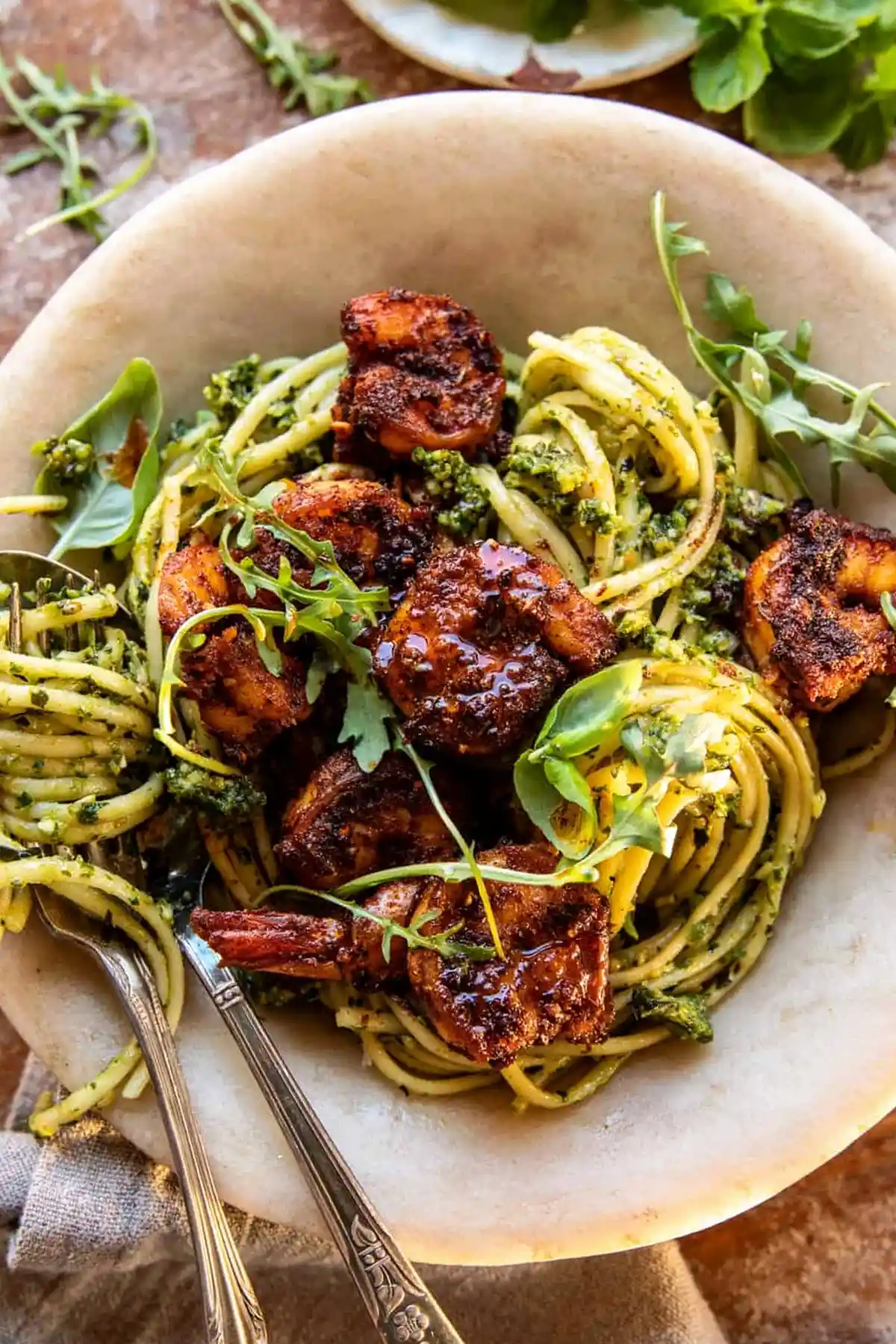
This vibrant pasta dish brings together the bold, smoky heat of Cajun-spiced shrimp with the fresh, herbaceous brightness of a homemade basil and arugula pesto. By incorporating full-fat coconut milk, the sauce achieves a velvety, luxurious texture without the need for traditional heavy cream or dairy-laden substitutes. It is a sophisticated yet accessible weeknight meal that balances spice, richness, and fresh greens in every single bite.
List of ingredients
- 1 1/2 cups fresh basil
- 1 cup baby arugula
- 1 jalapeño, seeded, if desired
- 4 cloves garlic, chopped
- 1/4 cup toasted nuts
- 1/3 cup grated parmesan cheese, or nutritional yeast
- 1/4 cup + 2 tablespoons extra virgin olive oil
- 1 pound pasta
- 1 tablespoon salted butter
- 1 1/2 pounds raw shrimp, peeled and deveined
- 1 tablespoon cajun seasoning
- juice from 1 lemon
- 1/4-1/3 cup canned full fat coconut milk
step-by-step instructions
- Step: To make the pesto, combine the basil, arugula, jalapeño, 1 clove of garlic, the nuts, parmesan, and 1/4 cup olive oil in a food processor. Season with salt and pulse until a sauce forms, adding 1-2 tablespoons of water if needed to thin.
- Step: Bring a large pot of salted water to a boil, cook pasta until al dente, and reserve 1/2 cup of cooking water before draining. Return pasta to the pot.
- Step: Add the pesto and coconut milk to the pasta, tossing to combine and adding reserved pasta water to thin as desired.
- Step: Heat olive oil in a large skillet over medium heat, add butter, shrimp, cajun seasoning, and pepper; sear for 2-3 minutes per side. Stir in remaining garlic until fragrant, then remove from heat and stir in lemon juice.
- Step: Toss the shrimp with the pasta and serve.
Refining your cooking technique
Ensuring a perfect shrimp sear
To achieve the best crust on your shrimp, ensure the protein is completely dry before adding it to the skillet. Use paper towels to pat each shrimp individually, removing excess moisture that would otherwise cause the shrimp to steam rather than sear. A hot, dry pan is the key to golden-brown edges that provide a satisfying crunch against the tender interior.
Mastering the pasta water emulsion
The secret to professional-style pasta sauces is the inclusion of starchy cooking water. Because the water contains flour released from the pasta during the boiling process, it acts as a binder that prevents the pesto and coconut milk from separating. Never discard all of your cooking water before checking the consistency of your sauce, as it is the most effective way to adjust the density of the final dish.
Selecting the best nuts for texture
While pine nuts are the traditional choice for pesto, walnuts or toasted almonds are excellent, budget-friendly alternatives that provide a similar level of fat and crunch. Always toast your nuts in a dry pan over low heat for two to three minutes until they become fragrant, as this significantly intensifies the depth of flavor in the final pesto blend. Allow them to cool slightly before pulsing them in the food processor to prevent the oils from releasing too quickly.
Substitutions and flavor adjustments
Adapting the heat level
If you prefer a milder flavor, simply remove all the seeds and white membranes from the jalapeño before adding it to the food processor. For those who enjoy an extra kick, keep the seeds or add a pinch of crushed red pepper flakes to the skillet while cooking the shrimp. Remember that Cajun seasoning blends vary greatly in intensity, so taste your seasoning mix before applying it to the shrimp to ensure you do not inadvertently make the dish too salty or spicy.
Customizing the pasta shape
While long pasta cuts such as linguine or fettuccine are aesthetically pleasing and great for twirling, shorter shapes like orecchiette or farfalle are highly functional for this recipe. Their unique structures, such as the small cups of orecchiette, excel at trapping small pieces of shrimp and pockets of the creamy pesto sauce. Choose whichever pasta you have on hand, keeping in mind that the surface area of the noodle will dictate how much sauce each bite delivers.
Vegan and dairy-free alternatives
This recipe is naturally well-suited for dairy-free diets, provided you select a high-quality vegan parmesan or nutritional yeast to mimic the cheese element. If you prefer not to use coconut milk, you can substitute it with a neutral-flavored plant-based cream or even a small amount of tahini mixed with water. Tahini adds a wonderful earthiness that pairs beautifully with the arugula and garlic, though it will slightly alter the final color and flavor profile of the dish.
Serving and presentation ideas
Creating a restaurant-style plate
To make the dish visually appealing, use tongs to twirl a portion of the pasta into the center of a shallow bowl, creating height and volume. Arrange the seared shrimp on top of the pasta mound rather than hiding them underneath, and garnish with an extra sprinkle of toasted nuts or a small cluster of fresh basil leaves. Finishing the dish with a tiny drizzle of high-quality extra virgin olive oil and a final squeeze of fresh lemon juice adds a professional sheen.
Side dishes for a complete meal
Because this pasta is quite rich, it pairs best with lighter side dishes that offer a contrast in texture and temperature. A crisp garden salad with a simple vinaigrette or roasted asparagus with a hint of sea salt helps balance the creamy nature of the pesto. If you want a heartier meal, serve with a slice of toasted crusty sourdough bread, which is perfect for wiping up any leftover garlic butter and pesto sauce from the bottom of the bowl.
Storage and preparation advice
Handling leftovers
Store any leftover pasta in an airtight container in the refrigerator for up to three days. Note that the pesto sauce may darken slightly due to the oxidation of the fresh greens, but this will not affect the safety or the overall taste of the meal. When storing, keep the shrimp with the pasta to ensure they stay coated in the sauce, which helps prevent the seafood from drying out upon reheating.
Reheating for optimal texture
When reheating, it is best to use a skillet over low heat rather than a microwave, as the latter can cause the shrimp to become rubbery and the sauce to break. Add a tiny splash of water or broth to the pan to help re-emulsify the sauce and loosen the noodles as they warm up. Stir consistently until everything is heated through, but avoid high heat which can separate the fats in the coconut milk.
Planning ahead
You can streamline the cooking process by making the pesto up to 24 hours in advance. Store it in a jar with a thin layer of olive oil on the surface to prevent the basil from turning brown, and keep it in the refrigerator until you are ready to cook. The shrimp should be cleaned and deveined early in the day, but it is best to sear them immediately before serving to ensure the best possible texture and flavor intensity.
Frequently asked questions
Does the coconut milk make the dish taste tropical?
No, the coconut milk is used primarily for its high fat content and emulsifying properties, which provide a silky mouthfeel without the need for dairy. When combined with the strong flavors of basil, garlic, lemon, and Cajun spices, the subtle sweetness of the coconut is completely neutralized and does not impart a tropical or coconutty flavor to the finished meal.
Why did my pesto turn brown?
Pesto turns brown when the fresh herbs, particularly basil, are exposed to oxygen. To prevent this, ensure your greens are washed and dried thoroughly before blending. Using a pulse setting on your food processor rather than running it continuously also helps, as it generates less heat and prevents the herbs from oxidizing too quickly. Adding the lemon juice or a small amount of acidic liquid can also help preserve the vibrant green color for longer periods.
Can I use frozen shrimp?
Yes, frozen shrimp is perfectly acceptable, but proper thawing is critical. Thaw the shrimp in the refrigerator overnight, or place them in a colander under cold running water for ten to fifteen minutes. Once thawed, you must pat them extremely dry with paper towels. If the shrimp retain excess water, they will not sear properly, and the pan will quickly fill with liquid, resulting in poached rather than caramelized, spicy shrimp.
How do I make the pasta sauce thicker?
If the sauce is not clinging to the noodles as desired, the easiest solution is to reduce the heat and continue tossing the pasta. As the pasta sits in the hot pot, the starch on the surface of the noodles will interact with the coconut milk and pasta water to naturally thicken the mixture. If it is still too thin, simply continue to cook for another minute while tossing, or add a very small amount of finely grated parmesan cheese to help bind the liquid components.
Print
Cajun Garlic Butter Shrimp with Creamy Pesto Pasta
- Total Time: PT35M
- Yield: 6 servings 1x
- Diet: Pescatarian
Description
Every twirl has delicious, cozy, and comforting fresh flavors that melt in your mouth! This dish pairs spicy cajun-seasoned garlic shrimp with a vibrant, creamy basil-arugula pesto sauce.
Ingredients
- 1 1/2 cups fresh basil
- 1 cup baby arugula
- 1 jalapeño, seeded, if desired
- 4 cloves garlic, chopped
- 1/4 cup toasted nuts
- 1/3 cup grated parmesan cheese, or nutritional yeast
- 1/4 cup + 2 tablespoons extra virgin olive oil
- 1 pound pasta
- 1 tablespoon salted butter
- 1 1/2 pounds raw shrimp, peeled and deveined
- 1 tablespoon cajun seasoning
- juice from 1 lemon
- 1/4–1/3 cup canned full fat coconut milk
Instructions
- Step: To make the pesto, combine the basil, arugula, jalapeño, 1 clove of garlic, the nuts, parmesan, and 1/4 cup olive oil in a food processor. Season with salt and pulse until a sauce forms, adding 1-2 tablespoons of water if needed to thin.
- Step: Bring a large pot of salted water to a boil, cook pasta until al dente, and reserve 1/2 cup of cooking water before draining. Return pasta to the pot.
- Step: Add the pesto and coconut milk to the pasta, tossing to combine and adding reserved pasta water to thin as desired.
- Step: Heat olive oil in a large skillet over medium heat, add butter, shrimp, cajun seasoning, and pepper; sear for 2-3 minutes per side. Stir in remaining garlic until fragrant, then remove from heat and stir in lemon juice.
- Step: Toss the shrimp with the pasta and serve.
Notes
Ensure shrimp are patted dry before searing to achieve a golden crust. Use full-fat coconut milk for a silky sauce consistency that remains neutral in flavor.
- Prep Time: PT20M
- Cook Time: PT15M
- Category: Main Course
- Method: Stovetop
- Cuisine: Fusion
Nutrition
- Serving Size: 1 bowl
- Calories: 399 kcal
- Sugar: 2 g
- Sodium: 580 mg
- Fat: 18 g
- Saturated Fat: 6 g
- Unsaturated Fat: 10 g
- Trans Fat: 0 g
- Carbohydrates: 42 g
- Fiber: 3 g
- Protein: 24 g
- Cholesterol: 145 mg