
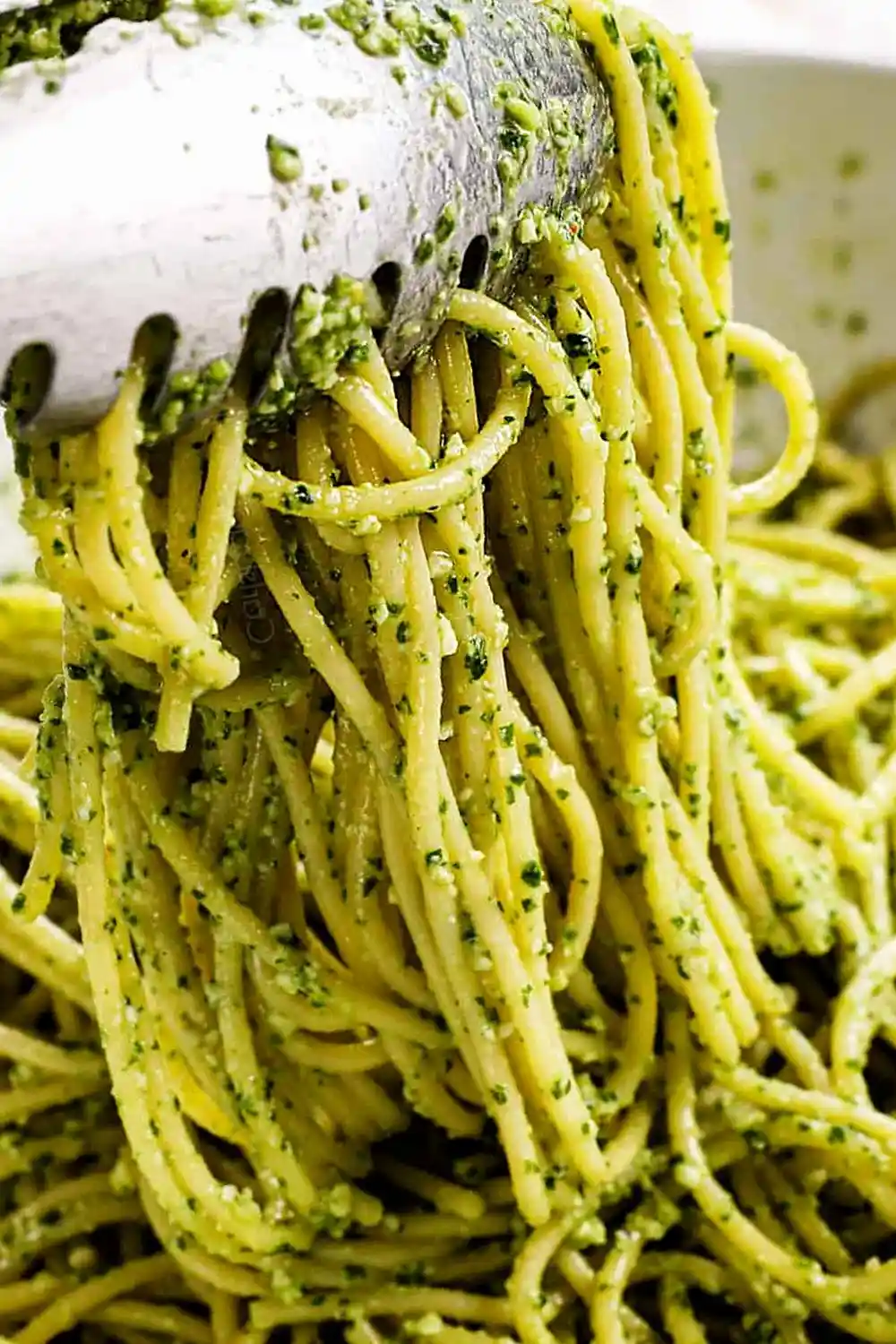
This vibrant pesto pasta is a quintessential summer meal, combining fresh, peppery basil with the richness of toasted pine nuts and nutty Parmesan cheese. By emulsifying the sauce with starchy pasta water, you create a restaurant-quality, silky coating that elevates simple ingredients into a comforting, gourmet-style dinner.
List of ingredients
- 1 pound linguine or thin spaghetti
- 1 cup reserved pasta water
- 4 tablespoons lemon juice, divided
- 1 3/4 cups freshly grated Parmigiana Reggiano, divided
- 2 cups fresh basil leaves, tightly packed
- 1/2 cup raw, unsalted pine nuts
- 3 garlic cloves, peeled
- 1/2 teaspoon salt
- 1/4 teaspoon pepper
- 1/2 cup extra virgin olive oil
- 1 tablespoon olive oil
- 12 oz cherry tomatoes
- 1 small zucchini, halved and sliced 1/2-inch thick
- 1/2 bunch asparagus, ends trimmed, cut into 1” pieces
- 1/2 teaspoon salt
- 1/4 teaspoon pepper
step-by-step instructions
- Step: Preheat the oven to 400°F. Begin boiling the water for the pasta.
- Step: Preheat a skillet over medium-high heat. Add pine nuts and toast until golden in spots. Immediately transfer the nuts to a food processor to prevent them from continuing to cook.
- Step: Add the remaining pesto ingredients except the olive oil (basil, 3/4 cup cheese, garlic, 2 tablespoons lemon juice, 1/2 teaspoon salt, 1/4 teaspoon pepper) to the food processor. Pulse until finely chopped.
- Step: With the food processor running, slowly drizzle in the extra virgin olive oil until fully combined; set aside.
- Step: Toss vegetables on a baking sheet with 1 tablespoon olive oil, 2 tablespoons prepared pesto, 1/2 teaspoon salt, and 1/4 teaspoon pepper. Roast at 400°F for 12-15 minutes or until asparagus is crisp-tender.
- Step: Cook pasta al dente in salted water. Reserve 1 cup of pasta water before draining.
- Step: In a large bowl, combine drained pasta with the remaining pesto, 1/4 cup reserved pasta water, and 2 tablespoons lemon juice. Toss to coat, adding more water if needed. Stir in roasted vegetables and serve garnished with remaining cheese.
Practical Tips for Success
Controlling the Emulsification
The texture of your pesto relies heavily on the integration of oil and starch. When processing the sauce, adding the oil in a thin, slow stream ensures it stays emulsified rather than separating. When tossing with the pasta, the starchy water acts as a glue that helps the sauce cling to the noodles rather than pooling at the bottom of the bowl.
Selecting the Best Herbs
While Genovese basil is the traditional choice, the quality of your leaves drastically impacts the result. Look for stems that are supple rather than woody, and ensure the leaves are bright, vibrant green without dark spots or bruising. If you choose to mix in other greens like baby spinach or arugula, treat them gently during the blending process to keep the sauce light and vibrant.
Managing the Oven Heat
Roasting vegetables at 400°F allows for caramelization without turning them into mush. By tossing them briefly with a bit of the pesto before they hit the oven, you intensify their flavor and infuse them with the herbaceous notes of the sauce. Keep an eye on the asparagus; once it is bright green and just tender, it is ready to be pulled from the oven to prevent overcooking.
Variations and Substitutions
Exploring Nut Substitutions
If you find that pine nuts are too expensive or hard to source, don’t worry. Cashews offer the most similar creamy texture and subtle sweetness, while walnuts provide a slightly more robust, earthy profile that pairs beautifully with the intensity of basil. For a nut-free version, toasted pumpkin seeds or sunflower seeds provide a wonderful crunch without altering the recipe safety or flavor balance significantly.
Adding Lean Proteins
Transform this dish into a heartier meal by adding pre-cooked proteins. Sliced pan-seared chicken breast, grilled shrimp, or roasted chickpeas add protein without clashing with the delicate herb sauce. Always stir these additions in during the final assembly stage rather than cooking them with the pesto to preserve their specific textures.
Customizing the Cheese
While Parmigiana Reggiano is the gold standard for its sharp, crystalline texture, you can experiment with Pecorino Romano if you prefer a saltier, tangier punch. If you are serving individuals with different dietary preferences, keep the cheese on the side and offer nutritional yeast as a savory, vegan-friendly alternative for a nutty kick.
Serving Ideas for Every Occasion
Perfect Pairings
Pesto pasta thrives when served alongside bright, contrasting side dishes. A crisp Caesar salad or a simple shaved fennel and citrus salad cuts through the richness of the oil and cheese. For a more casual meal, warm crusty garlic bread serves as the perfect vessel to mop up any lingering sauce left on the plate.
Planning the Presentation
Since the sauce is quite vibrant, serve this dish in wide, shallow bowls to show off the bright green color. A final garnish of fresh, chiffonade-cut basil leaves right before serving adds a fresh aroma that hits the diner before the first bite. Providing an extra side of lemon wedges allows guests to brighten their individual portions to their personal preference.
Storage and Make-Ahead Advice
Maintaining Freshness
This dish is best served fresh because the bright green color of basil can oxidize when exposed to air. If you must store leftovers, transfer them to an airtight glass container and press a piece of plastic wrap directly onto the surface of the pasta to minimize air exposure. The pasta will stay delicious for up to three days, though the color may deepen slightly due to the natural oxidation of the basil.
Stovetop Reheating
When you are ready to enjoy your leftovers, avoid the microwave if possible to prevent the sauce from separating. Place the pasta in a non-stick skillet over low heat, add a small splash of water or a tiny amount of olive oil, and stir gently. The gentle heat will re-emulsify the sauce, returning it to its original, velvety consistency without cooking the basil further and risking a bitter flavor.
Preparing Components in Advance
You can save significant time on the night of the meal by prepping components ahead of time. Grate your Parmesan, toast the pine nuts, and wash and dry your basil leaves the morning of or the day before. Keep the pesto sauce separate in the refrigerator, and wait to boil the pasta and roast the vegetables until you are ready to assemble for the freshest experience.
Common Questions Regarding Pesto
Can I make pesto without a food processor?
Absolutely. You can use a traditional mortar and pestle to crush the ingredients. This method is actually preferred by many chefs because it crushes the cell walls of the basil leaves rather than chopping them, which releases more essential oils and flavor. If using this method, start with the garlic and nuts, then add the basil, and finish by folding in the oil and cheese.
Why does my pesto taste bitter?
Bitterness in pesto is often caused by over-processing the olive oil or using low-quality oil that has a high polyphenol content. When olive oil is spun at high speeds in a processor, the heat and mechanical force can cause it to oxidize. To avoid this, pulse your ingredients until finely chopped, then stir in the olive oil by hand with a spatula to maintain a delicate, fresh flavor.
What is the secret to avoiding brown pesto?
Browning occurs due to oxidation. If you need to make your pesto hours before serving, you can blanch your basil leaves in boiling water for exactly ten seconds and then submerge them in an ice bath. Dry them thoroughly before blending. This process effectively kills the enzymes responsible for browning while keeping the flavor profile intact and the color incredibly vibrant.
Print
Classic Homemade Pesto Pasta with Roasted Vegetables
- Total Time: PT35M
- Yield: 6 servings 1x
- Diet: Vegetarian
Description
Pesto Pasta is a deliciously cheesy, garlicky and herbaceous meal with the option of roasted veggies! It’s light, vibrant and comforting, brimming with peppery basil, nutty pine nuts, zingy garlic, rich olive oil, a kiss of lemon, and a crescendo of Parmesan cheese.
Ingredients
- 1 pound linguine or thin spaghetti
- 1 cup reserved pasta water
- 4 tablespoons lemon juice, divided
- 1 3/4 cups freshly grated Parmigiana Reggiano, divided
- 2 cups fresh basil leaves, tightly packed
- 1/2 cup raw, unsalted pine nuts
- 3 garlic cloves, peeled
- 1/2 teaspoon salt
- 1/4 teaspoon pepper
- 1/2 cup extra virgin olive oil
- 1 tablespoon olive oil
- 12 oz cherry tomatoes
- 1 small zucchini, halved and sliced 1/2-inch thick
- 1/2 bunch asparagus, ends trimmed, cut into 1” pieces
- 1/2 teaspoon salt
- 1/4 teaspoon pepper
Instructions
- Step: Preheat the oven to 400°F. Begin boiling the water for the pasta.
- Step: Preheat a skillet over medium-high heat. Add pine nuts and toast until golden in spots. Immediately transfer the nuts to a food processor to prevent them from continuing to cook.
- Step: Add the remaining pesto ingredients except the olive oil (basil, 3/4 cup cheese, garlic, 2 tablespoons lemon juice, 1/2 teaspoon salt, 1/4 teaspoon pepper) to the food processor. Pulse until finely chopped.
- Step: With the food processor running, slowly drizzle in the extra virgin olive oil until fully combined; set aside.
- Step: Toss vegetables on a baking sheet with 1 tablespoon olive oil, 2 tablespoons prepared pesto, 1/2 teaspoon salt, and 1/4 teaspoon pepper. Roast at 400°F for 12-15 minutes or until asparagus is crisp-tender.
- Step: Cook pasta al dente in salted water. Reserve 1 cup of pasta water before draining.
- Step: In a large bowl, combine drained pasta with the remaining pesto, 1/4 cup reserved pasta water, and 2 tablespoons lemon juice. Toss to coat, adding more water if needed. Stir in roasted vegetables and serve garnished with remaining cheese.
Notes
Store leftovers in an airtight container for up to 3-4 days. Reheat gently on the stovetop with a splash of water or oil to maintain creaminess.
- Prep Time: PT20M
- Cook Time: PT15M
- Category: Main Course
- Method: Roasting, Boiling
- Cuisine: Italian
Nutrition
- Serving Size: 1 bowl
- Calories: 520 kcal
- Sugar: 3 g
- Sodium: 650 mg
- Fat: 28 g
- Saturated Fat: 6 g
- Unsaturated Fat: 20 g
- Trans Fat: 0 g
- Carbohydrates: 58 g
- Fiber: 4 g
- Protein: 14 g
- Cholesterol: 15 mg