
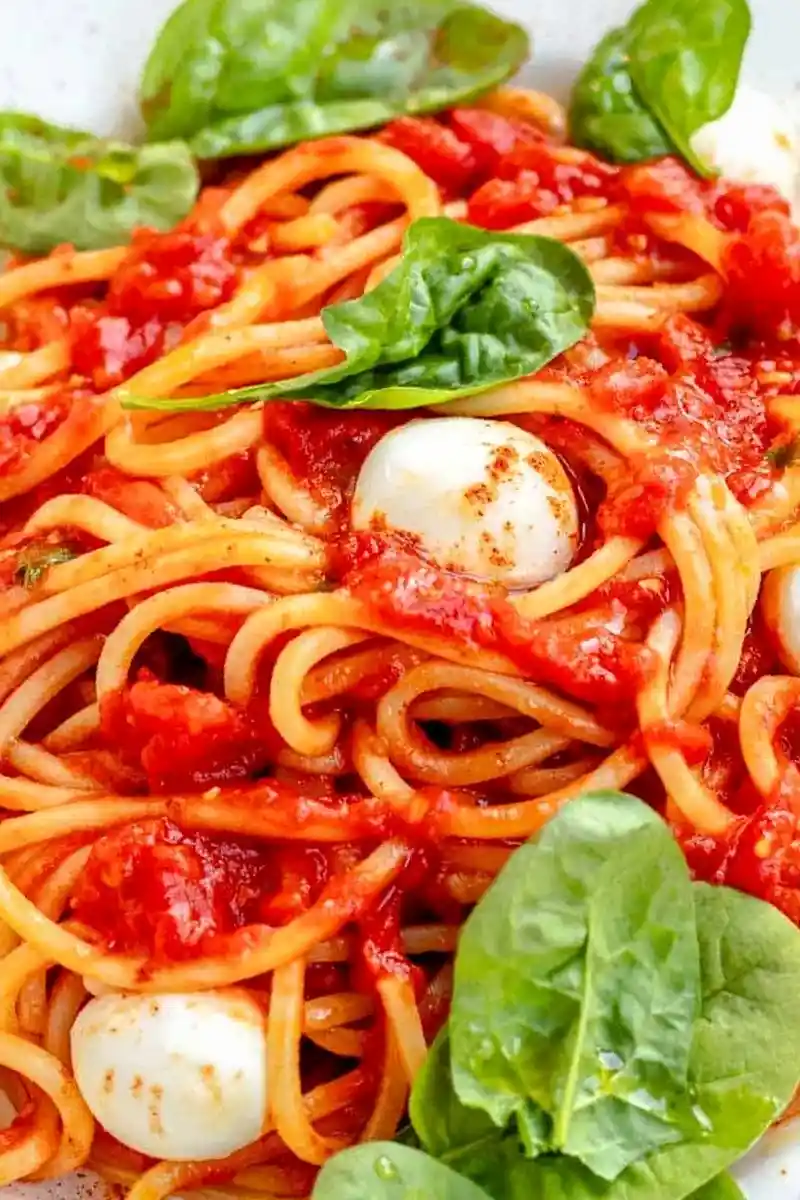
This authentic Italian tomato and basil pasta is a quick and nutritious meal perfect for any night of the week. It combines a rich, savory sauce with fresh greens and melted cheese for a satisfying dinner.
List of ingredients
- 12 ounces spaghetti – use bronze-cut durum wheat pasta for better sauce adherence.
- 3 tablespoons extra virgin olive oil – provides a rich, fruity base for the sauce.
- 2 cloves garlic (grated) – grated garlic blends smoothly into the oil.
- 1/4 teaspoon red pepper flakes – adjust quantity to control the heat level.
- 10 ounces cherry tomatoes (halved) – adds natural sweetness and texture.
- 1 large can (28 ounces) whole peeled tomatoes – San Marzano variety is highly recommended for flavor.
- 1 teaspoon salt – used for both the sauce and the pasta water.
- 1/8 teaspoon black pepper – freshly ground for the best aroma.
- 15 leaves basil – fresh leaves should be chopped just before adding.
- 1 cup fresh mozzarella balls – use the small ‘bocconcini’ size for even melting.
- 2 cups baby spinach – adds color and nutrients to the final dish.
step-by-step instructions
- Prepare the sauce base: Cut the 10 ounces of cherry tomatoes in half. Heat 3 tablespoons of extra virgin olive oil in a large skillet or Dutch oven over medium heat.
- Sauté aromatics: Add the 2 grated garlic cloves and 1/4 teaspoon red pepper flakes to the oil. Sauté for approximately 1 minute until fragrant but not browned.
- Cook fresh tomatoes: Stir in the halved cherry tomatoes, 1 teaspoon salt, and 1/8 teaspoon black pepper. Sauté on medium-high heat for 4 minutes until the tomatoes begin to soften.
- Simmer the sauce: Pour in the 28-ounce can of whole peeled tomatoes. Simmer for 15 minutes, stirring occasionally and using a wooden spoon to crush the whole tomatoes into smaller pieces.
- Boil the pasta: While the sauce simmers, cook the 12 ounces of spaghetti in a large pot of salted boiling water. Cook for 3 minutes less than the package instructions indicate.
- Combine pasta and sauce: Reserve one cup of the starchy pasta cooking water. Drain the spaghetti and transfer it directly into the skillet with the tomato sauce.
- Final cook: Stir in 15 chopped basil leaves. Cook the pasta in the sauce for 2 to 3 minutes, stirring frequently, until the pasta is al dente. If the sauce appears too thick, stir in small amounts of the reserved pasta water.
- Add finishing touches: Turn off the heat. Fold in 1 cup of fresh mozzarella balls and 2 cups of baby spinach.
- Serve: Plate the pasta and garnish with an extra drizzle of extra virgin olive oil and a few fresh basil or spinach leaves.
Optimizing Your Tomato Selection
Choosing San Marzano Tomatoes
San Marzano tomatoes are grown in the volcanic soil of the Sarno valley in Italy. They are prized for their low acidity, fewer seeds, and thick flesh, which creates a naturally denser sauce. When shopping, look for the DOP seal to ensure authenticity.
Utilizing Fresh Cherry Tomatoes
Using a mix of canned and fresh cherry tomatoes provides a layer of flavor complexity. The fresh tomatoes burst during the sautéing process, releasing a bright, acidic sweetness that balances the deeper, cooked flavor of the canned whole tomatoes.
Balancing Tomato Acidity
Depending on the brand of canned tomatoes, the sauce may taste too tart. To neutralize excess acidity, stir in one to two teaspoons of granulated sugar. This doesn’t make the sauce sweet but instead rounds out the sharp edges of the tomato flavor.
Pasta Selection and Texture Techniques
Selecting the Ideal Pasta Shape
While spaghetti is traditional, other long pastas like linguine or bucatini work equally well. For those who prefer shorter pasta, penne or rigatoni are excellent choices because their ridges and hollow centers trap the chunky pomodoro sauce effectively.
The Science of Al Dente Cooking
Cooking the pasta for 3 minutes less than the package instructions is critical. Finishing the pasta inside the sauce allows the noodles to absorb the tomato flavors directly into the grain rather than just coating the exterior.
Emulsifying with Pasta Water
The reserved pasta water contains released starches that act as a natural thickener. When added to the sauce at the end, it creates an emulsion between the olive oil and the tomato juices, resulting in a creamy, glossy coating that clings to the pasta.
Customization and Substitutions
Alternative Herb Combinations
Fresh basil is the gold standard for pomodoro, but dried oregano can be used as a substitute for a more earthy, Mediterranean profile. For a fresher twist, you can stir in chopped flat-leaf parsley at the very end of the cooking process.
Adjusting the Spice Level
The red pepper flakes provide a subtle warmth. For a more intense heat, replace the flakes with finely diced fresh bird’s eye chilies or a pinch of cayenne pepper. To keep the dish mild for children, omit the pepper flakes entirely.
Integrating Extra Vegetables
Beyond baby spinach, this recipe pairs well with other leafy greens like lacinato kale or arugula. For added bulk, you can sauté diced zucchini or carrots along with the garlic at the beginning of the process.
Dairy-Free Cheese Alternatives
To make this recipe vegan, omit the mozzarella and parmesan. Replace them with cashew-based mozzarella pearls or a sprinkle of nutritional yeast to mimic the salty, umami flavor of traditional Italian cheese.
Serving and Pairing Suggestions
Pairing with Crusty Bread
In Italy, the practice of ‘Scarpetta’ involves using a piece of bread to soak up the remaining sauce on the plate. Use a toasted baguette or a sourdough loaf rubbed with a raw garlic clove for the best experience.
Creating a Balanced Meal
Pair this pasta with a light, acidic side salad to cut through the richness of the mozzarella. A simple mixture of arugula, shaved fennel, and a lemon-olive oil vinaigrette provides a refreshing contrast to the warm tomato sauce.
Garnish for Visual Appeal
For a professional presentation, finish the dish with a swirl of high-quality extra virgin olive oil. Add a few small, whole basil leaves and a crack of fresh black pepper on top just before serving to enhance the aroma.
Storage and Reheating Guidelines
Refrigeration and Shelf Life
Store leftover pasta in an airtight container in the refrigerator for up to three days. Keep the pasta and sauce together to prevent the noodles from drying out, though the spinach may wilt further over time.
Best Reheating Methods
The best way to reheat this dish is in a skillet over medium heat with a tablespoon of olive oil or water. This restores the sauce’s consistency. Alternatively, use a microwave for 2 minutes, stirring halfway through to distribute the heat.
Freezing the Sauce
If you make a large batch of the pomodoro sauce without the pasta and cheese, it can be frozen for up to three months. Thaw it in the refrigerator overnight before reheating in a saucepan and tossing with freshly cooked pasta.
Troubleshooting Common Issues
Fixing a Watery Sauce
If your sauce is too thin, simmer it for an additional 5-10 minutes without a lid to allow the liquid to evaporate. Avoid adding flour or cornstarch, as this will change the authentic flavor and texture of the pomodoro.
Preventing Overcooked Pasta
If the pasta feels too soft, you likely simmered it in the sauce for too long. To prevent this, ensure the pasta is truly undercooked when it leaves the boiling water, and remember that it continues to cook even after the heat is turned off.
Handling Burnt Garlic
Burnt garlic becomes bitter and can ruin the entire sauce. If the garlic turns dark brown, it is best to discard the oil and start over. Always keep the heat at medium and stir constantly during the first minute of sautéing.
Frequently Asked Questions
Does Spaghetti Pomodoro have meat?
The modern version of this recipe is meat-free, relying on olive oil and garlic for flavor. While some historical variations used animal fats, this current version is entirely plant-based until the optional addition of mozzarella cheese.
What is the difference between pomodoro and marinara?
Pomodoro is typically a more refined sauce seasoned specifically with basil and used for pasta. Marinara is often more rustic, utilizing oregano and parsley, and is commonly used as a base for pizza or as a dipping sauce for bread.
Can I use tomato puree instead of whole tomatoes?
Yes, you can substitute tomato puree or passata for whole peeled tomatoes. However, you will lose the chunky texture provided by the whole tomatoes, and you may need to simmer the sauce for a shorter amount of time.
How do I store the fresh basil?
Store fresh basil in a glass of water at room temperature, similar to a bouquet of flowers. Do not put fresh basil in the refrigerator, as the cold temperature often turns the leaves black and ruins the flavor.
What is the best oil for this recipe?
Extra virgin olive oil is highly recommended because it is cold-pressed and retains a fruity flavor that complements the tomatoes. Refined olive oil can be used, but the final dish will lack the characteristic Italian aromatic quality.
Print
Classic Italian Pasta Pomodoro with Mozzarella and Spinach
- Total Time: 25 minutes
- Yield: 4 servings 1x
- Diet: Vegetarian
Description
Spaghetti pomodoro or pasta pomodoro is an Italian tomato and basil pasta recipe beloved worldwide for its taste and simplicity. In about 20 minutes, with simple ingredients, you can prepare an authentic Italian pasta dish that will leave everyone begging for more.
Ingredients
- 12 ounces spaghetti
- 3 tablespoons extra virgin olive oil
- 2 cloves garlic (grated)
- ¼ teaspoon red pepper flakes
- 10 ounces cherry tomatoes (halved)
- 1 large can (28 ounces) whole peeled tomatoes
- 1 teaspoon salt
- ⅛ teaspoon black pepper
- 15 leaves basil
- 1 cup fresh mozzarella balls
- 2 cups baby spinach
Instructions
- Step 1: Cut 10 ounces cherry tomatoes in half and set them aside.
- Step 2: Heat 3 tablespoons extra virgin olive oil in a large skillet or Dutch oven.
- Step 3: Add 2 cloves garlic (grated) and ¼ teaspoon red pepper flakes, and sauté for 1 minute.
- Step 4: Add the halved cherry tomatoes, 1 teaspoon salt, ⅛ teaspoon black pepper, and sauté on medium-high heat for 4 minutes.
- Step 5: Add 1 large can (28 ounces) whole peeled tomatoes and simmer for 15 minutes while you cook the pasta. Stir occasionally and crush the tomatoes with a wooden spoon.
- Step 6: Cook 12 ounces spaghetti in a large pot of salted boiling water as per package instructions, minus 3 minutes.
- Step 7: Reserve one cup of pasta cooking water, drain the pasta, and add it to the pot with the tomato sauce.
- Step 8: Add 15 leaves basil (chopped) and cook the pasta in the sauce for 2 to 3 minutes or until cooked with a bite (al dente). Stir often.
- Step 9: Add some of the reserved pasta water if the sauce is too thick.
- Step 10: Turn the heat off, and then, optionally, add 1 cup fresh mozzarella balls or grated parmesan cheese and 2 cups baby spinach (or more).
- Step 11: Serve spaghetti al pomodoro with a drizzle of extra virgin olive oil and some basil or spinach on top.
Notes
Storage: Keep leftovers in an airtight container in the fridge for 3 days. Reheat in the microwave for 2 minutes or sauté on a skillet with a tablespoon of olive oil. Substitutions: Any Italian pasta shape can be used; substitute tomato passata or puree for whole peeled tomatoes; substitute dried oregano for fresh basil.
- Prep Time: 5 minutes
- Cook Time: 20 minutes
- Category: Main
- Method: Stovetop
- Cuisine: Italian
Nutrition
- Serving Size: 1 portion
- Calories: 689 kcal
- Sugar: 10 g
- Sodium: 1420 mg
- Fat: 26 g
- Saturated Fat: 10 g
- Unsaturated Fat: 16 g
- Trans Fat: 0 g
- Carbohydrates: 81 g
- Fiber: 7 g
- Protein: 35 g
- Cholesterol: 54 mg