
This dish combines tender balsamic-marinated steak with a rich garlic parmesan cream sauce over fettuccine. It is a practical weeknight meal that provides a high-end dining experience in about 30 minutes of active cooking.
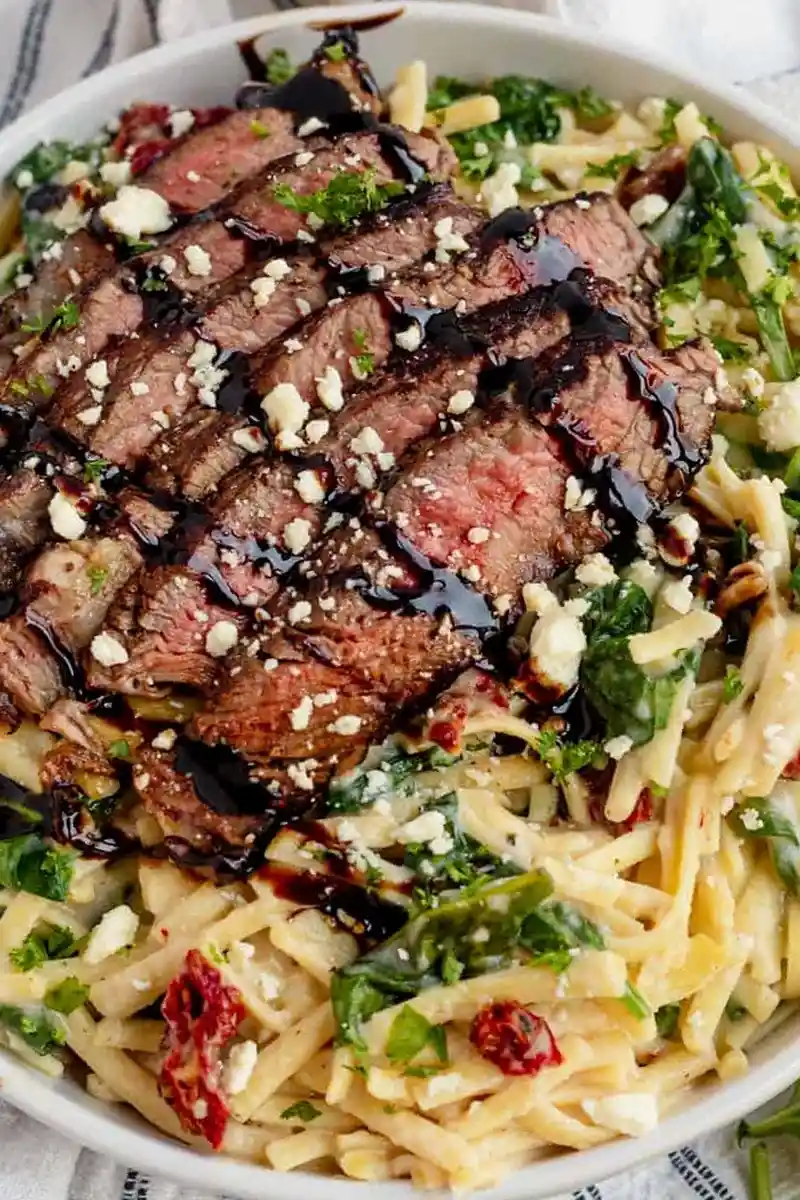
List of ingredients
- 1 1/2 lbs sirloin steak (or ribeye steak) – cut for searing.
- 1/3 cup balsamic vinegar – used for the acidic marinade.
- 2 Tablespoons olive oil – helps prevent sticking and aids searing.
- 12 oz fettuccine pasta – gluten-free alternatives work well.
- 3 Tablespoons unsalted butter – base for the roux.
- 3 cloves garlic – minced finely for flavor.
- 3 Tablespoons flour – gluten-free if needed, used as a thickener.
- 2 cups milk (or heavy cream) – for a creamy sauce consistency.
- 1 teaspoon kosher salt – for seasoning the sauce.
- 1/2 teaspoon black pepper – for seasoning the sauce.
- 1/2 cup parmesan cheese – freshly grated for better melting.
- Salt and pepper to taste – for seasoning the meat.
- Optional toppings: balsamic glaze, blue cheese, fresh chopped parsley – for final garnish.
step-by-step instructions
- Marinate the beef: Season both sides of the steak with salt and pepper. Place the meat in a ziplock or reusable storage bag with the balsamic vinegar and olive oil, then marinate in the refrigerator for 30 minutes or overnight.
- Cook the pasta: Bring a large pot of salted water to a boil and cook the fettuccine according to package directions until al dente. Reserve 1/2 cup of the cooking water before draining the pasta and setting it aside.
- Sear the steak: Heat a large skillet, such as cast iron, over medium-high heat. Remove steak from marinade, shaking off excess liquid, and sear for 4 minutes per side or until desired doneness. Remove at 135°F for medium-rare and let rest for 10 minutes.
- Prepare the roux: Melt butter in a deep skillet over medium-high heat. Add minced garlic and cook for 1-2 minutes until fragrant, then stir in the flour to create a paste. Cook the roux for 2-3 minutes to remove the raw flour taste.
- Simmer the sauce: Slowly whisk in the milk, salt, and pepper. Stir and simmer for about 5 minutes until the liquid thickens. Stir in the parmesan cheese until completely melted and combined.
- Combine pasta and sauce: Toss the cooked fettuccine into the alfredo sauce. If the sauce is too thick, stir in the reserved pasta water a few tablespoons at a time until the desired consistency is reached.
- Plate and serve: Slice the rested steak into thin pieces. Divide the pasta into bowls, top with steak slices, and drizzle with optional balsamic glaze, gorgonzola cheese, and fresh parsley.
Expert Steak Searing Techniques
Pat the Meat Dry
Before placing the steak in the pan, use paper towels to pat the surface completely dry. Excess moisture creates steam, which prevents the meat from developing a brown, caramelized crust. A dry surface ensures a better sear and deeper flavor.
Allow Proper Resting Time
Rest the steak for at least 10 minutes on a cutting board before slicing. This allows the juices to redistribute throughout the muscle fibers rather than leaking out onto the plate. Resting results in a more tender and juicy piece of meat.
Slice Against the Grain
Identify the direction of the muscle fibers and slice perpendicular to them. Cutting against the grain shortens the fibers, making each bite significantly easier to chew. This is especially important for cuts like sirloin to ensure tenderness.
Use a Meat Thermometer
Rely on an instant-read thermometer rather than timing alone to determine doneness. Remove the steak when it is 5 degrees below your target temperature to account for carryover cooking. For medium-rare, remove at 130-135°F to reach a final temperature of 145°F.
Optimizing the Cream Sauce
Mastering the Roux
Ensure the butter and flour are whisked into a smooth paste before adding the liquid. Cooking the roux for 2-3 minutes is essential to eliminate the raw taste of the flour. Keep the heat at medium-high to avoid burning the butter.
Choosing Between Milk and Cream
Heavy cream produces a thicker, richer sauce with a more velvety mouthfeel. Whole milk provides a lighter result but may require slightly more simmering time to reach the same thickness. You can also use a mixture of both to balance richness and lightness.
Preventing Cheese Clumping
Use freshly grated parmesan cheese instead of pre-shredded varieties. Pre-shredded cheese is coated in cornstarch or cellulose to prevent clumping in the bag, which can make the sauce grainy. Fresh cheese melts smoothly into the cream.
Utilizing Reserved Pasta Water
The starchy water from the pasta pot acts as an emulsifier for the sauce. Adding a few tablespoons of this water helps the sauce adhere to the noodles better. It also allows you to thin the sauce without adding more dairy.
Customizations and Variations
Adding Fresh Baby Spinach
Stir three cups of fresh baby spinach into the sauce just before adding the pasta. The residual heat will wilt the spinach quickly without overcooking it. This adds color and nutritional value to the meal.
Incorporating Sun-Dried Tomatoes
Add a third of a cup of chopped sun-dried tomatoes to the sauce for a sweet and tart contrast. The concentrated flavor of the tomatoes complements the richness of the parmesan and the acidity of the balsamic marinade. Stir them in during the final simmer.
Experimenting with Different Steaks
While sirloin is lean and efficient, ribeye offers more marbling for a richer taste. New York strip is another excellent alternative for those who prefer a firmer texture. Adjust searing times based on the thickness of the cut.
Alternative Pasta Shapes
Fettuccine is the traditional choice, but penne or rigatoni are great for trapping more sauce. Pappardelle provides a wide surface area that pairs well with the sliced steak. Always cook the pasta al dente to prevent it from becoming mushy when tossed in the sauce.
Serving and Pairing Ideas
Fresh Side Salads
Pair the rich pasta with a crisp, acidic salad to balance the creaminess. A simple arugula salad with lemon vinaigrette or a classic Caesar salad works well. The bitterness of the greens cuts through the fat of the alfredo sauce.
Bread Accompaniments
Serve with toasted sourdough or warm garlic bread to soak up any leftover sauce. Cottage cheese dinner rolls provide a soft contrast to the seared steak. Warm the bread in the oven just before serving.
Roasted Vegetable Sides
Roasted rainbow carrots or mini peppers add a bright, earthy element to the plate. Roast them with olive oil and salt at 400°F until tender. These vegetables provide a necessary nutritional balance to the heavy main course.
Storage and Reheating Instructions
Refrigerator Storage
Store leftover pasta and steak in separate airtight containers in the fridge for up to three days. Keeping them separate prevents the pasta from absorbing all the sauce and the steak from overcooking during reheating. Label the containers with the date of preparation.
Stovetop Reheating Method
Reheat the pasta in a pan over low heat. Add a splash of milk or cream to loosen the sauce and restore its original creaminess. Stir constantly to prevent the cheese from separating or burning.
Gentle Steak Reheating
Warm the sliced steak separately in a pan over medium heat for a minute or two. Avoid the microwave if possible, as it can make the steak rubbery and dry. If using a microwave, use a low power setting and short bursts of time.
Freezing Guidelines
This dish is not recommended for freezing due to the dairy-based sauce. The emulsion often breaks upon thawing, leading to a grainy texture. If you must freeze it, freeze the steak alone and make a fresh batch of sauce.
Cooking Troubleshooting
Fixing a Grainy Sauce
If the sauce separates or becomes grainy, it is usually due to overheating the cheese. Slowly whisk in a tablespoon of warm milk or pasta water over low heat to re-emulsify the sauce. Keep the temperature low to prevent further separation.
Correcting a Thin Sauce
If the sauce is too thin, simmer it for an additional 2-3 minutes without a lid. You can also stir in a small amount of additional parmesan cheese to thicken it. Ensure the heat is not too high to avoid scorching the bottom.
Handling Overcooked Steak
If the steak is overcooked, slice it even thinner to make it easier to chew. Ensure you use plenty of sauce and balsamic glaze to add moisture back into the meat. In the future, use a meat thermometer to pull the meat earlier.
Preventing Burnt Garlic
Garlic burns quickly and becomes bitter. Keep the heat at a medium level and stir constantly when adding it to the butter. If the garlic turns dark brown, it is best to start the roux over for a cleaner flavor.
Frequently Asked Questions
Can I use a different type of pasta?
Yes, you can use any pasta shape. Penne, linguine, or pappardelle are excellent alternatives to fettuccine. Just ensure you follow the package directions for al dente cooking.
How do I make this recipe gluten-free?
Substitute the fettuccine with a gluten-free pasta of your choice. Replace the all-purpose flour in the roux with a 1:1 gluten-free flour blend to maintain the sauce’s thickness.
Can I prepare the sauce in advance?
The alfredo sauce can be made ahead and stored in the refrigerator. When ready to serve, reheat it gently on the stove with a bit of milk before tossing in the freshly cooked pasta.
What can I use instead of balsamic vinegar?
Red wine vinegar or apple cider vinegar can be used as a substitute for a similar acidic profile. However, balsamic provides a unique sweetness that specifically complements steak.
Print
Creamy Balsamic Steak Pasta Alfredo
- Total Time: 45 minutes
- Yield: 6 servings 1x
- Diet: General
Description
This creamy steak pasta features balsamic-marinated sirloin (or ribeye), seared golden and sliced thin, then tossed with fettuccine in a garlic parmesan cream sauce.
Ingredients
- 1 1/2 lbs sirloin steak (or ribeye steak)
- 1/3 cup balsamic vinegar
- 2 Tablespoons olive oil
- 12 oz fettuccine pasta
- 3 Tablespoons unsalted butter
- 3 cloves garlic, minced
- 3 Tablespoons flour
- 2 cups milk (or heavy cream)
- 1 teaspoon kosher salt
- 1/2 teaspoon black pepper
- 1/2 cup parmesan cheese
- Salt and pepper to taste
- Optional: balsamic glaze, blue cheese, fresh chopped parsley
Instructions
- Marinate: Season both sides of the steak with salt and pepper and place in a ziplock or reusable storage bag with the balsamic vinegar and olive oil and marinate in the fridge for 30 minutes, or overnight
- Cook Pasta: While the steak is marinating, cook the pasta according to the package directions. Bring a large pot of salted water to a boil then add the pasta and cook until al dente. Reserve 1/2 cup of the pasta cooking water then drain the pasta from the rest of the water and set aside.
- Sear Steak: Heat a large skillet, like a cast iron skillet, over medium high heat. Remove the steak from the marinade, shaking off any excess. Sear the steak for 4 minutes on each side or until it reaches your desired doneness. Rest for 10 minutes.
- Make Roux: While the steak is resting, melt the butter in a deep skillet over medium-high heat. Add the garlic and cook for 1-2 minutes, until fragrant. Add the flour to the butter and stir well to create a paste (a roux). Cook the roux for 2-3 minutes to ensure the flour is fully cooked.
- Make Sauce: Slowly whisk in the milk then add the salt and pepper. Continue to stir and simmer for about 5 minutes, until thickened. Add the parmesan cheese and stir until melted and combined.
- Combine: Toss the cooked pasta with the alfredo sauce. If the sauce seems too thick, pour in the reserved pasta water a few tablespoons at a time to reach your desired consistency.
- Serve: Slice the steak into thin pieces. Divide the pasta into bowl and top with steak slices. Drizzle with balsamic glaze and garnish with gorgonzola cheese and fresh parsley if desired.
Notes
Top sirloin and ribeye are preferred cuts. For dairy-free, use vegan butter, almond milk and nutritional yeast. For gluten-free, use GF pasta and 1:1 GF flour. Store leftovers in an airtight container in the fridge for up to 3 days.
- Prep Time: 5 minutes
- Cook Time: 20 minutes
- Category: Dinner
- Method: Searing
- Cuisine: American
Nutrition
- Serving Size: 1 serving
- Calories: 487 kcal
- Sugar: 4.9 g
- Sodium: 468 mg
- Fat: 13.6 g
- Saturated Fat: 7 g
- Unsaturated Fat: 6.6 g
- Trans Fat: 0 g
- Carbohydrates: 51.3 g
- Fiber: 2.7 g
- Protein: 37.2 g
- Cholesterol: 97 mg