
This comforting meal combines tender seasoned chicken and al dente rotini in a rich basil cream sauce. It is an efficient weeknight dinner that balances fresh herbal notes with a velvety finish. This dish is highly adaptable and works well for meal prep.
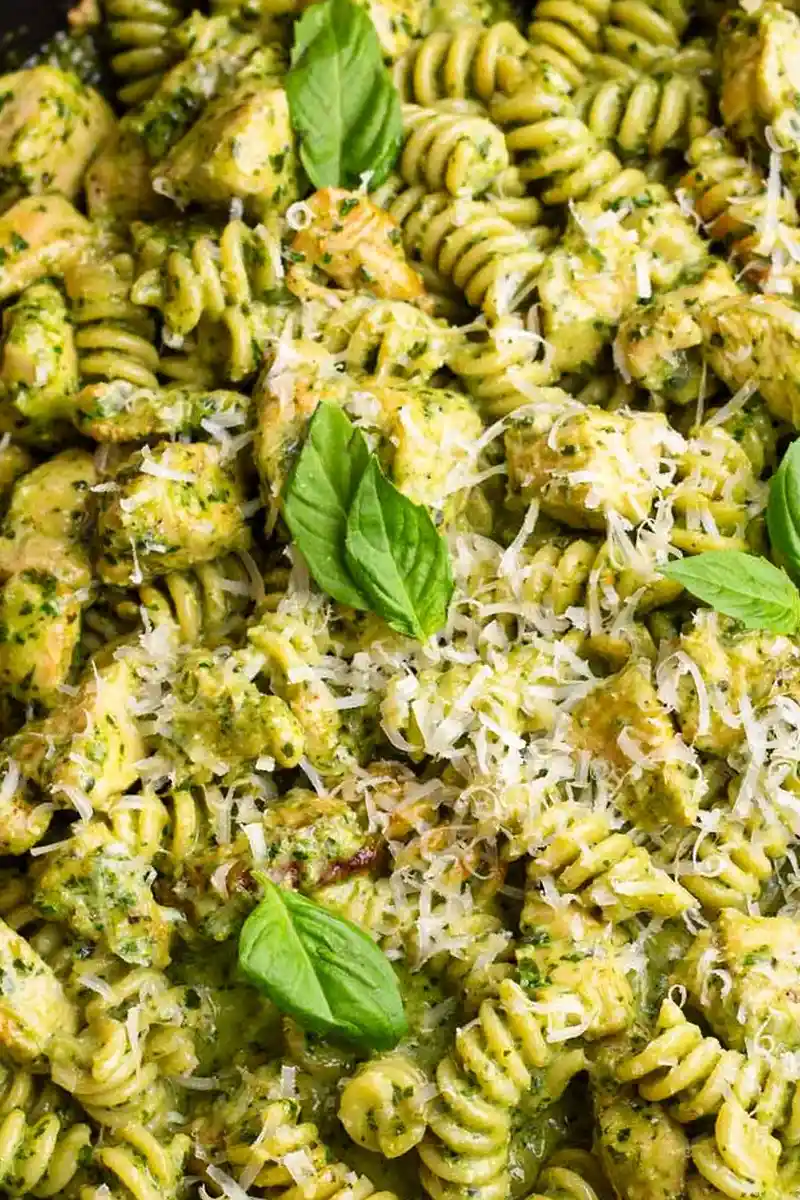
List of ingredients
- ½ pound rotini pasta – or other short pastas like penne or rigatoni.
- 2 medium chicken breasts – cut into 1-inch cubes for even cooking.
- Olive oil – used for seasoning the chicken pieces.
- ½ teaspoon garlic powder – adds a savory depth to the meat.
- ½ teaspoon Italian seasoning – provides a classic herb blend.
- Salt and pepper – used for basic seasoning.
- 2 tablespoons unsalted butter – for sautéing the chicken.
- ¾ cup heavy cream – creates the creamy base for the sauce.
- Parmesan cheese – used for garnishing the final dish.
- 3 cups basil leaves – packed tightly into the measuring cup.
- ⅓ cup pine nuts – can be substituted with walnuts for a nuttier flavor.
- ½ cup shredded parmesan cheese – integrated into the pesto.
- 3 cloves fresh garlic – roughly chopped for the pesto base.
- ⅓ cup extra virgin olive oil – for the pesto emulsion.
- 1 tablespoon fresh lemon juice – provides acidity and brightness to the sauce.
step-by-step instructions
- Prepare the pesto: Combine the basil leaves, pine nuts, shredded parmesan, chopped garlic, olive oil, and lemon juice in a food processor. Pulse for a few seconds until the mixture is evenly combined. Adjust the seasonings or lemon juice to match your taste preferences.
- Boil the pasta: Cook the rotini in a large pot of generously salted water according to the package directions until al dente. Drain the pasta thoroughly and set it aside.
- Season the chicken: Drizzle the cubed chicken with olive oil and toss with garlic powder, Italian seasoning, approximately 1 teaspoon of salt, and ground black pepper.
- Sauté the chicken: Melt the butter in a large skillet over medium heat. Add the chicken and cook until it is fully cooked through in the center, which typically takes about 6 to 8 minutes.
- Combine ingredients: Stir the cooked pasta and the prepared basil pesto into the skillet with the chicken. Mix well until the pasta and meat are evenly coated in the pesto.
- Finish the sauce: Stir in the heavy cream and simmer over low heat for about 1 minute until the sauce thickens and incorporates. Season with additional salt and pepper if needed. Avoid overcooking at this stage to keep the sauce a vibrant green.
- Garnish and serve: Plate the pasta and top with a generous amount of grated parmesan cheese and fresh basil leaves.
Pesto Preparation Secrets
Using Food Processors for Consistency
A food processor is the most efficient tool for achieving a smooth, unified pesto. Pulse the ingredients in short bursts rather than running the machine continuously to avoid overheating the basil leaves. This prevents the herbs from bruising and keeps the flavor bright and fresh.
Preserving the Vibrant Green Color
Heat and oxidation are the primary causes of pesto turning brown. To maintain the vivid green hue, avoid over-processing the ingredients and store any leftover pesto with a thin layer of olive oil on top. This oil barrier prevents air from reaching the basil, effectively sealing in the color.
Balancing the Pesto Acidity
Lemon juice provides a critical acidic contrast to the richness of the pine nuts and olive oil. If the pesto tastes too heavy, adding an extra teaspoon of lemon juice can brighten the overall profile. Always taste the pesto before adding it to the pasta to ensure the balance is correct.
Toasting Pine Nuts for Depth
Lightly toasting pine nuts in a dry skillet over medium heat before adding them to the processor enhances their buttery flavor. Be careful to shake the pan frequently, as pine nuts have a high oil content and can burn quickly. This step adds a professional, nutty dimension to the sauce.
Chicken Cooking Techniques
Achieving Uniform Cube Sizes
Cutting the chicken breasts into consistent 1-inch cubes ensures that every piece cooks at the same rate. If some pieces are significantly larger than others, the smaller ones may dry out before the center of the larger pieces is safe to eat. Use a sharp knife to make clean cuts for the best results.
Applying Dry Seasonings Properly
Tossing the chicken in a bowl with olive oil before adding the dry spices helps the seasonings adhere evenly. This prevents the garlic powder and Italian seasoning from clumping in one area. Proper coating ensures a consistent flavor profile in every bite of the final dish.
Monitoring Internal Temperature
To keep the chicken tender, avoid overcooking it in the skillet. The meat is done when it reaches an internal temperature of 165°F (74°C) and the juices run clear. Overcooking chicken breasts can lead to a rubbery texture that clashes with the creamy sauce.
Utilizing Butter for Searing
Using unsalted butter instead of just oil adds a rich, savory flavor to the exterior of the chicken. The milk solids in the butter brown slightly, creating a light crust that complements the herbal notes of the pesto. This technique adds a layer of complexity to the meat’s taste.
Pasta Selection and Preparation
Choosing Rotini for Sauce Adhesion
Rotini is an ideal choice for pesto because its spiral shape traps the thick sauce in its grooves. Other short pastas like penne or fusilli also work well for this reason. Long pastas like spaghetti are less effective as the sauce tends to slide off the noodles.
Timing the Al Dente Stage
Cooking the pasta until it is al dente means it still has a slight bite to it. This is crucial because the pasta will continue to cook for a minute when it is simmered with the cream and pesto in the skillet. Overcooking the pasta in the water will result in mushy noodles once the sauce is added.
Managing Starch in the Pot
Using a generous amount of salted water prevents the pasta from sticking together during the boiling process. Salt not only seasons the noodle from within but also helps maintain the integrity of the pasta structure. Always drain the pasta immediately after it reaches the desired texture.
Preventing Pasta Clumping
If you are not adding the pasta to the skillet immediately, you can toss the drained noodles with a tiny amount of olive oil. This creates a barrier that prevents the starches from bonding, ensuring the noodles remain separate. However, this is unnecessary if the pasta is moved directly into the sauce.
Sauce Refinement and Finishing
Tempering the Heavy Cream
Adding heavy cream at the final stage creates a luxurious, velvety texture that mellows the intensity of the garlic and basil. Stir the cream in slowly over low heat to ensure it emulsifies properly with the pesto. This prevents the sauce from separating or becoming greasy.
Controlling the Simmer Time
The simmer period should be very brief, usually only one minute. Long simmering times can cause the basil to oxidize and lose its bright green color, turning it a dull olive brown. A quick heat-through is all that is needed to thicken the cream and coat the pasta.
Adjusting Sauce Viscosity
If the sauce appears too thick after adding the cream, you can stir in a tablespoon of water or additional cream to loosen it. The goal is a sauce that clings to the pasta without looking like a thick paste. Adjust the consistency based on how much pesto was used in the initial mix.
Emulsifying the Pesto and Cream
Stirring the ingredients constantly while the sauce simmers helps create a stable emulsion. This ensures that the fats from the olive oil, butter, and cream are evenly distributed. A well-emulsified sauce provides a consistent mouthfeel and a balanced flavor across the entire dish.
Customization and Variations
Substituting Walnuts for Pine Nuts
Walnuts are a cost-effective and accessible alternative to pine nuts in pesto. They provide a bolder, slightly more bitter nuttiness that pairs well with the sharp parmesan cheese. For the best flavor, toast the walnuts briefly before blending them into the pesto.
Using Boneless Chicken Thighs
Chicken thighs are a great substitute for breasts if you prefer a juicier, more flavorful meat. Thighs are more forgiving and less likely to dry out during the sautéing process. Simply trim any excess fat and cut them into the same 1-inch cubes as the breasts.
Adding Fresh Vegetables
To increase the nutritional value, stir in baby spinach, halved cherry tomatoes, or sautéed mushrooms during the final mixing stage. Spinach wilts quickly in the heat of the pasta, while cherry tomatoes add a burst of acidity. These additions provide color and texture variety.
Replacing Heavy Cream with Half-and-Half
If you prefer a lighter sauce, half-and-half can be used instead of heavy cream. Because half-and-half has a lower fat content, the sauce may be thinner and less stable. To compensate, you can add a small amount of reserved pasta water to help the sauce thicken.
Storage and Meal Prep
Preventing Pesto Oxidation
Pesto is highly susceptible to browning when exposed to air. When storing homemade pesto in a container, flatten the surface and pour a thin layer of olive oil over the top. This seal keeps the oxygen out and preserves the fresh basil flavor for several days.
Refrigerating Cooked Pasta
Store the completed chicken pesto pasta in airtight containers in the refrigerator for up to three days. Keep the portions separate if you plan to reheat them individually. This prevents the pasta from overcooking during the reheating process.
Freezing Pesto in Portions
Pesto freezes exceptionally well for up to six months. Pour the pesto into ice cube trays and freeze until solid before transferring the cubes to a freezer bag. This allows you to defrost only the amount needed for a single meal.
Freezing the Complete Meal
The entire dish can be frozen for up to three months, although the texture of the pasta may change slightly. To freeze, allow the pasta to cool completely before sealing it in a freezer-safe container. Thaw the dish in the refrigerator overnight before reheating.
Reheating Instructions
Stovetop Warming Methods
Reheating on the stovetop is the best way to maintain the texture of the pasta. Place the leftovers in a skillet over medium-low heat and stir frequently. This allows the sauce to heat evenly without burning the bottom of the pan.
Microwave Heating Precautions
When using a microwave, heat the pasta in short 30-second intervals, stirring in between. High heat can cause the cream in the sauce to separate or the chicken to become tough. Using a microwave-safe lid helps trap steam and keep the noodles moist.
Using Cream to Restore Texture
Pasta often absorbs the sauce while sitting in the refrigerator, making it seem dry upon reheating. Add a splash of heavy cream or a tablespoon of water to the pan before warming. This restores the creamy consistency and loosens the noodles.
Troubleshooting Common Issues
Fixing a Separated Sauce
If the sauce breaks and looks oily, it is usually due to excessive heat. Lower the temperature and whisk in a tablespoon of warm water or a small knob of butter. This helps re-emulsify the fats and brings the sauce back together.
Correcting Over-Salted Pasta
If the dish is too salty, you can add a bit more heavy cream or a squeeze of fresh lemon juice. The fat in the cream and the acidity of the lemon help neutralize the perception of salt. Adding unsalted steamed vegetables can also dilute the salinity.
Solving Pesto Bitterness
Bitterness in pesto often comes from over-processing the basil or using old pine nuts. To fix this, stir in a pinch of sugar or a bit more parmesan cheese. The sweetness and saltiness can mask the bitter notes and balance the flavor.
Preventing Sauce Curdling
Curdling occurs when the cream is added to a pan that is too hot or if the sauce boils too vigorously. Always keep the heat on low when finishing the sauce. Stirring constantly ensures the cream is incorporated smoothly without splitting.
Serving Suggestions
Pairing with Garlic Bread
Cheesy garlic bread is a classic accompaniment that complements the herbal notes of the pesto. The crunch of the toasted bread provides a texture contrast to the soft pasta. It also serves as a tool to scoop up any leftover cream sauce on the plate.
Complementing with Arugula Salad
A light salad with arugula, lemon vinaigrette, and shaved parmesan balances the richness of the cream sauce. The peppery taste of arugula cuts through the fat of the heavy cream. This creates a more balanced and refreshing overall meal.
Using Fresh Basil Garnish
Adding fresh, whole basil leaves on top of the dish just before serving enhances the aroma. The heat from the pasta releases the essential oils in the fresh basil, providing an immediate scent of freshness. It also adds a professional visual touch.
Frequently Asked Questions
Can I use store-bought pesto?
Yes, you can use a high-quality store-bought pesto if you are short on time. Simply follow the same steps, substituting the homemade version with the commercial one. Note that store-bought versions may have different salt levels, so taste before adding more.
How do I keep the chicken moist?
The key to moist chicken is avoiding overcooking. Sauté the cubes quickly over medium heat and remove them as soon as they are cooked through. Adding the chicken back into the creamy sauce also helps protect it from drying out.
Which pasta shapes work best?
Any short, textured pasta like rotini, penne, or rigatoni is ideal. These shapes have ridges or holes that hold onto the thick pesto and cream sauce. Avoid thin pastas like angel hair, which cannot support the weight of the chicken and sauce.
Can I make the pesto ahead?
Absolutely, pesto can be made several days in advance and stored in the refrigerator. Just remember to cover the surface with olive oil to prevent oxidation. This actually allows the flavors of the garlic and basil to meld and deepen over time.
Print
Creamy Basil Pesto Chicken Pasta
- Total Time: 40 minutes
- Yield: 4 servings 1x
- Diet: General
Description
This creamy chicken pesto pasta is the perfect meal! Made with fresh basil pesto, tender chicken, and your favorite pasta. This recipe is make-ahead and freezer friendly.
Ingredients
- ½ pound rotini pasta
- 2 medium chicken breasts, cut into 1-inch cubes
- Olive oil
- ½ teaspoon garlic powder
- ½ teaspoon Italian seasoning
- Salt and pepper
- 2 tablespoons unsalted butter
- ¾ cup heavy cream
- Parmesan cheese for garnish
- 3 cups basil leaves, packed
- ⅓ cup pine nuts or walnuts
- ½ cup shredded parmesan cheese
- 3 cloves fresh garlic, roughly chopped
- ⅓ cup extra virgin olive oil
- 1 tablespoon fresh lemon juice
Instructions
- Step 1: In a food processor, combine all the pesto ingredients. Pulse for a few seconds until the pesto is evenly combined. Adjust seasoning and consistency to taste. You can also add more lemon juice.
- Step 2: Cook the pasta according to package directions in generously salted water until al dente. Drain and set aside.
- Step 3: Season the chicken with a few drizzles of olive oil, garlic powder, Italian seasoning, salt (about 1 teaspoon), and ground black pepper.
- Step 4: Then, in a large skillet, melt the butter over medium heat and cook the chicken until cooked through in the center, about 6 to 8 minutes.
- Step 5: To the same skillet, stir in the cooked pasta and the prepared pesto (amount to taste) and stir to combine with the chicken.
- Step 6: Finish with heavy cream, adding more to taste. Simmer over low heat for just 1 minutes until the sauce is thickened and fully incorporated. Season with more salt and pepper, if needed. Tip: Don’t overcook the sauce, otherwise it can start to lose its vibrant green color.
- Step 7: Serve with a generous amount of parmesan cheese on top and fresh basil as garnish.
Notes
Pine nuts can be toasted in a skillet for better flavor or replaced with walnuts. Store pesto in an airtight container in the refrigerator with a layer of olive oil on top to prevent browning, or freeze for up to 6 months. Refrigerate completed dish for up to 3 days and reheat with a splash of cream to restore consistency.
- Prep Time: 20 minutes
- Cook Time: 20 minutes
- Category: Main Course
- Method: Stovetop
- Cuisine: American, Italian
Nutrition
- Serving Size: 1 serving
- Calories: 805 kcal
- Sugar: 3 g
- Sodium: 303 mg
- Fat: 57 g
- Saturated Fat: 20 g
- Unsaturated Fat: 33 g
- Trans Fat: 0.2 g
- Carbohydrates: 48 g
- Fiber: 3 g
- Protein: 27 g
- Cholesterol: 113 mg