
This rich and creamy pasta dish brings together savory chicken, earthy mushrooms, and tangy sun-dried tomatoes for a restaurant-quality meal. It is a fast-paced recipe that delivers deep flavor in under 30 minutes.
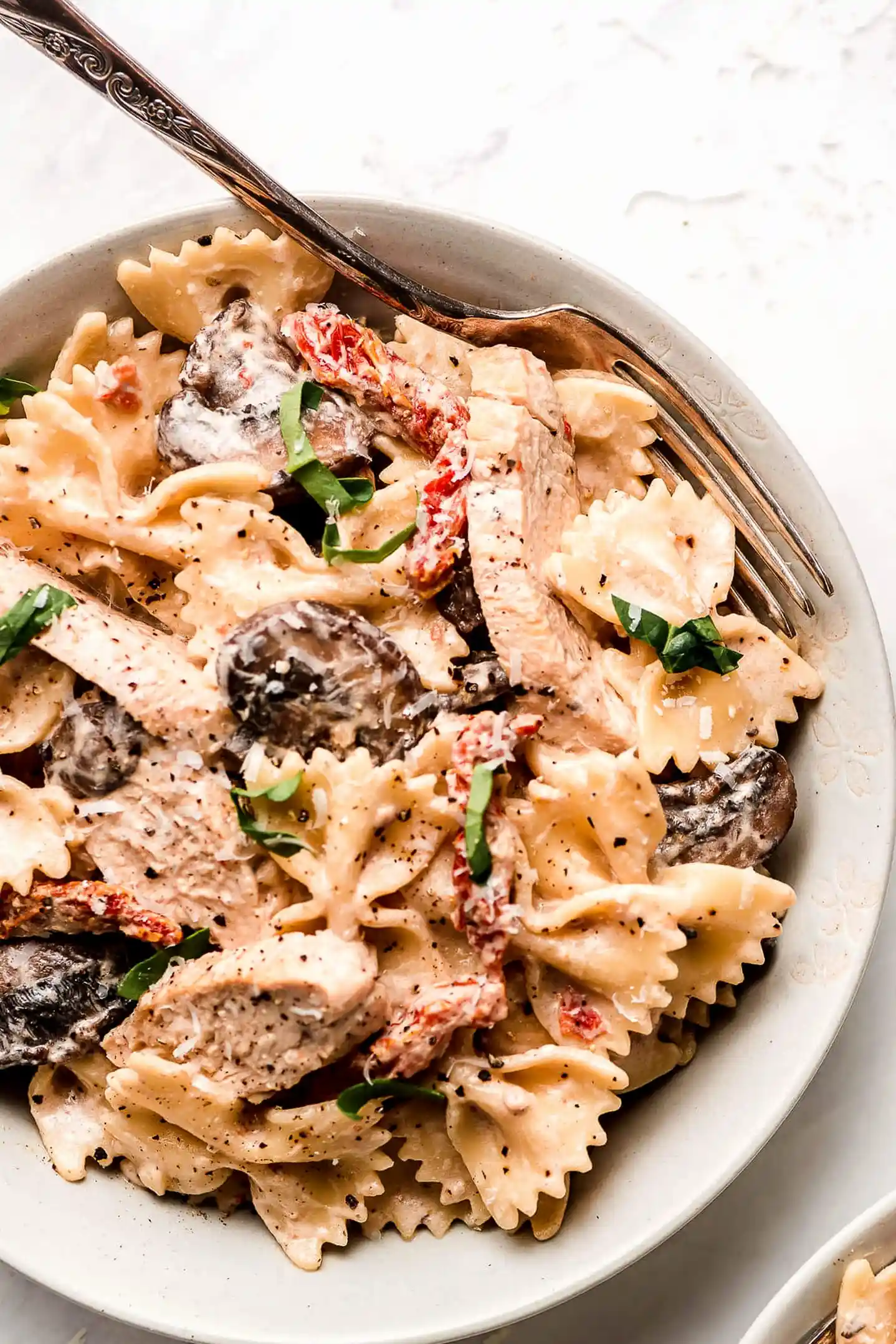
List of ingredients
- 8 ounces bow tie pasta – provides a great shape for holding sauce.
- 1/2 cup starchy pasta water – reserved from the boiling pot to thicken the sauce.
- 2 teaspoons olive oil – used for searing the chicken.
- 1 pound chicken breasts – pounded to 1/2 inch thick for even cooking.
- Salt and pepper to taste – for seasoning the protein.
- 1 tablespoon butter – used to sauté the mushrooms for richness.
- 6 ounces baby bella mushrooms – sliced for a meaty texture.
- 1/4 cup sun dried tomatoes in oil – drained and julienned for a tart contrast.
- 2 cloves garlic – crushed to release essential oils.
- 1 cup half-and-half cream – creates a smooth, light cream base.
- 1/4 cup Parmesan cheese – grated for saltiness and thickness.
- 3 tablespoons fresh basil – chopped for a bright, aromatic finish.
step-by-step instructions
- Cook the pasta: Boil the bow tie pasta al dente according to the package directions. Use a 4-quart pot with 3 quarts of water and 1 tablespoon of salt. Before draining, ladle out 1/2 cup of the starchy cooking water and set it aside. Drain the pasta but do not rinse it.
- Sear the chicken: Heat olive oil over medium-high heat in a skillet. Season the chicken breasts with salt and pepper, then cook until golden brown on both sides and fully cooked, about 4-5 minutes per side. Transfer the chicken to a cutting board to rest, then slice it just before adding it back to the sauce.
- Sauté the vegetables: In the same skillet, melt the butter over medium heat. Sauté the sliced mushrooms until they are golden brown, which takes about 6 minutes. Stir in the sun-dried tomatoes and crushed garlic, cooking for an additional 30 seconds.
- Prepare the cream sauce: Pour in the half-and-half, 1/4 cup of the reserved starchy pasta water, and the grated Parmesan cheese. Stir continuously and bring the mixture to a boil, then reduce the heat to low and simmer until the sauce thickens, about 5 minutes.
- Combine and serve: Fold the cooked pasta and sliced chicken into the thickened sauce. Add more starchy pasta water if the sauce is too thick. Remove from heat and garnish with fresh basil and extra Parmesan.
Pasta Cooking Essentials
Achieving the Perfect Al Dente Texture
Cooking pasta al dente means the noodle remains slightly firm to the bite. This is crucial because the pasta will continue to cook when it is tossed in the simmering cream sauce. Check the noodles one minute before the package suggests to ensure they do not become mushy.
Why You Must Avoid Rinsing Your Pasta
Rinsing pasta removes the surface starches that are essential for sauce adhesion. These starches act as a natural glue that helps the creamy garlic sauce cling to each bow tie piece. Without this coating, the sauce will likely slide off the pasta and pool at the bottom of the plate.
Using a Large Pot for Better Noodle Movement
Using at least a 4-quart pot prevents the pasta from crowding. When noodles have plenty of room to move, they are less likely to clump together or stick. This ensures that each piece of pasta is evenly cooked and coated in salt water.
Salting the Boiling Water for Internal Flavor
Adding salt to the boiling water is the only chance to season the interior of the pasta. Salt penetrates the dough as it hydrates, enhancing the overall flavor of the dish. Use about one tablespoon of salt for every 3 quarts of water for a balanced taste.
Stirring Frequently to Prevent Sticking
Give the pasta a stir immediately after adding it to the boiling water. Stirring a few more times during the cooking process prevents the noodles from sticking to the bottom of the pan or to each other. This is especially important for bow tie pasta, which has thicker center points.
Meat Preparation and Searing
Pounding Chicken for Uniform Cooking
Pounding chicken breasts to a consistent 1/2 inch thickness ensures that the meat cooks evenly. Without this step, the thicker parts of the breast may remain raw while the thinner edges overcook. Use a meat mallet or a heavy skillet to flatten the meat gently.
Achieving a Proper Golden Brown Sear
Use medium-high heat to trigger the Maillard reaction, which creates a golden-brown crust on the chicken. This crust adds a depth of savory flavor that complements the cream sauce. Avoid overcrowding the pan to ensure the chicken sears rather than steams in its own juices.
Resting the Chicken to Preserve Juices
Allowing the chicken to rest on a cutting board for a few minutes before slicing is essential. Resting allows the juices to redistribute throughout the meat, ensuring it remains moist. Slicing too early can cause the juices to run out, leaving the chicken dry.
Slicing Chicken Against the Grain
When slicing the rested breasts, cut across the muscle fibers. This shortens the fibers, making the chicken much more tender to chew. Slice the pieces into strips that are proportional to the size of the bow tie pasta.
Managing Sauce Texture and Flavor
Emulsifying the Sauce with Pasta Water
Starchy pasta water contains dissolved starches that act as an emulsifier between the fats and liquids. By adding this water to the half-and-half and butter, you create a stable bond that prevents the sauce from separating. This results in a silky, professional texture.
Controlling Sauce Thickness with Simmering
Simmering the sauce on low heat allows the water to evaporate and the proteins in the cream to concentrate. Stirring continuously prevents the bottom from scorching while the sauce reduces. Stop simmering once the sauce is thick enough to coat the back of a spoon.
Integrating Parmesan for Creaminess
Adding grated Parmesan directly into the simmering cream increases the viscosity of the sauce. The cheese melts into the liquid, adding a salty, nutty dimension to the garlic base. Use a fine grate for the cheese to ensure it melts quickly without forming clumps.
Balancing Garlic and Sun-Dried Tomato Tastes
The acidity of sun-dried tomatoes cuts through the richness of the half-and-half cream. Adding the garlic at the very end of the sauté process prevents it from burning and becoming bitter. This creates a balanced profile of sweetness, acidity, and pungency.
Working with Vegetables
Browning Baby Bella Mushrooms
Sauté mushrooms in butter until they release their moisture and turn golden brown. Do not add salt too early, as this can draw out water and prevent the mushrooms from browning. High heat is necessary to develop the earthy, savory flavor of the baby bellas.
Preparing Sun-Dried Tomatoes for Maximum Flavor
Using sun-dried tomatoes packed in oil provides a more supple texture and richer taste. Drain the excess oil and slice the tomatoes into thin strips, known as julienning. This ensures that every bite of pasta contains a small, concentrated burst of tangy flavor.
Preventing Garlic from Burning
Garlic burns quickly at high temperatures, which can ruin the flavor of the entire dish. Add the crushed garlic only after the mushrooms are browned and just before adding the liquid. Cooking it for 30 seconds is enough to fragrance the oil without scorching.
Using Fresh Basil as a Finishing Touch
Fresh basil should be added at the very end of the cooking process. High heat destroys the delicate aromatic oils of the basil, causing it to turn black and lose its sweetness. Stirring it in after the pan is removed from the heat preserves its bright color and flavor.
Customizations and Substitutions
Using Different Pasta Shapes
While bow tie pasta is traditional for this recipe, other short shapes like penne, fusilli, or rigatoni work well. These shapes have ridges or holes that trap the creamy sauce effectively. Adjust the cooking time based on the specific pasta shape you choose.
Swapping Half-and-Half for Heavy Cream
If you prefer a thicker, more decadent sauce, you can replace the half-and-half with heavy cream. Heavy cream has a higher fat content, which makes the sauce more stable and rich. You may need slightly less simmering time if using heavy cream.
Alternative Cheese Options
While Parmesan is the standard, Pecorino Romano can be used for a sharper, saltier taste. You can also mix in a small amount of mozzarella for a stretchier consistency. Ensure the cheese is finely grated to avoid lumps in the sauce.
Adapting the Recipe for Vegetarians
To make this dish vegetarian, simply omit the chicken and increase the amount of mushrooms. You can replace the chicken with sliced zucchini or cauliflower florets for added bulk. The cream sauce remains flavorful and satisfying without the meat.
Storage and Reheating Guide
Proper Refrigeration for Creamy Pasta
Store leftover pasta in an airtight container in the refrigerator for up to three days. Cool the pasta quickly before sealing the lid to prevent excessive condensation. This helps maintain the integrity of the cream sauce during storage.
Restoring Creaminess During Reheating
Cream sauces tend to thicken and absorb into the pasta while sitting in the fridge. When reheating, add a tablespoon of milk or water to the pan to loosen the sauce. This restores the original silky consistency without making it greasy.
Maximum Storage Time for Chicken Pasta
For the best quality, consume the chicken pasta within 72 hours. Beyond this point, the chicken may become dry and the cream sauce may begin to lose its flavor. Always ensure the pasta is reheated until steaming hot throughout.
Avoiding the Freezer for Cream Sauces
It is not recommended to freeze this dish because the cream sauce may separate during the thawing process. The emulsion of butter, cream, and cheese often breaks, resulting in a grainy texture. For the best experience, keep this recipe as a fresh or refrigerated meal.
Troubleshooting Common Issues
Fixing a Broken or Separated Sauce
If the sauce separates and looks oily, whisk in a small amount of warm milk or extra pasta water. Slowly stirring over low heat helps re-emulsify the fats and liquids. Avoid boiling the sauce vigorously once it has separated, as this can worsen the problem.
Adjusting a Sauce That Is Too Thick
If the sauce becomes too thick after adding the pasta, stir in additional reserved pasta water one tablespoon at a time. The starch in the water thins the sauce while maintaining its glossy appearance. Stop adding liquid once the pasta is coated but not swimming in sauce.
Preventing Overcooked, Dry Chicken
Dry chicken usually occurs if the heat is too high or if the meat is cooked beyond the necessary time. Use a meat thermometer to ensure the internal temperature reaches 165 degrees Fahrenheit. Resting the meat is also critical to prevent moisture loss during slicing.
Managing Excess Saltiness
If the sauce tastes too salty due to the Parmesan and pasta water, add a splash of cream or a squeeze of lemon juice. The fat in the cream or the acidity of the lemon helps neutralize the perception of salt. Always taste the sauce before adding extra salt at the end.
Frequently Asked Questions
Can I use rotisserie chicken?
Yes, you can use pre-cooked rotisserie chicken to save time. Simply shred or slice the chicken and stir it into the sauce at the very end to warm it through. This reduces the total cook time by about 10 minutes.
Which Parmesan cheese is best for this?
Parmigiano Reggiano is the highest quality option and provides a complex, nutty flavor. If unavailable, a high-quality grated Parmesan from a wedge is better than the pre-shredded tubs, which often contain anti-clumping agents.
Can I use a different type of cream?
You can use heavy cream for more richness or whole milk for a lighter version. If using milk, you may need to whisk in a small amount of cornstarch to ensure the sauce thickens properly during the simmering process.
How can I keep the basil fresh?
Store fresh basil stems in a glass of water at room temperature, similar to a bouquet of flowers. Avoid putting basil in the refrigerator, as the cold can cause the leaves to turn black and wilt rapidly.
Print
Creamy Chicken Pasta Milano
- Total Time: 45 minutes
- Yield: 4 servings 1x
- Diet: General
Description
A creamy garlic pasta dish featuring tender chicken, sautéed baby bella mushrooms, and sun-dried tomatoes, inspired by Macaroni Grill.
Ingredients
- 8 ounces bow tie pasta
- 1/2 cup starchy pasta water
- 2 teaspoons olive oil
- 1 pound chicken breasts, pounded to 1/2 inch thick
- Salt and pepper to taste
- 1 tablespoon butter
- 6 ounces baby bella mushrooms, sliced
- 1/4 cup sun dried tomatoes in oil, drained, julienned
- 2 cloves garlic, crushed
- 1 cup half-and-half cream
- 1/4 cup microbial-rennet Parmesan cheese, grated
- 3 tablespoons fresh basil
Instructions
- Cook Pasta: Cook pasta al dente according to directions, reserve 1/2 cup starchy cooking water, and drain without rinsing.
- Cook Chicken: Heat oil over medium-high heat, season chicken with salt and pepper, cook until golden and done, remove to rest, and slice.
- Sauté Vegetables: Melt butter in the same skillet, sauté mushrooms until golden brown, then add sun-dried tomatoes and garlic and cook for 30 seconds.
- Simmer Sauce: Add half-and-half, 1/4 cup starchy pasta water, and Parmesan cheese; bring to a boil and simmer on low until thickened.
- Combine: Mix the pasta and chicken into the sauce, adding additional starchy water if needed, and garnish with basil and Parmesan.
Notes
Reserving the starchy pasta water is essential as it helps emulsify the sauce and allows it to adhere better to the noodles.
- Prep Time: 10 minutes
- Cook Time: 20 minutes
- Category: Main Course
- Method: Stove Top
- Cuisine: Italian
Nutrition
- Serving Size: 1 serving
- Calories: 515 kcal
- Sugar: 5 g
- Sodium: 304 mg
- Fat: 18 g
- Saturated Fat: 8 g
- Unsaturated Fat: 10 g
- Trans Fat: 0 g
- Carbohydrates: 51 g
- Fiber: 3 g
- Protein: 38 g
- Cholesterol: 107 mg