
This quick garlic butter shrimp pasta comes together in just 30 minutes for a restaurant-quality dinner. It is an ideal meal for those seeking a rich, flavorful dish with minimal effort and preparation.
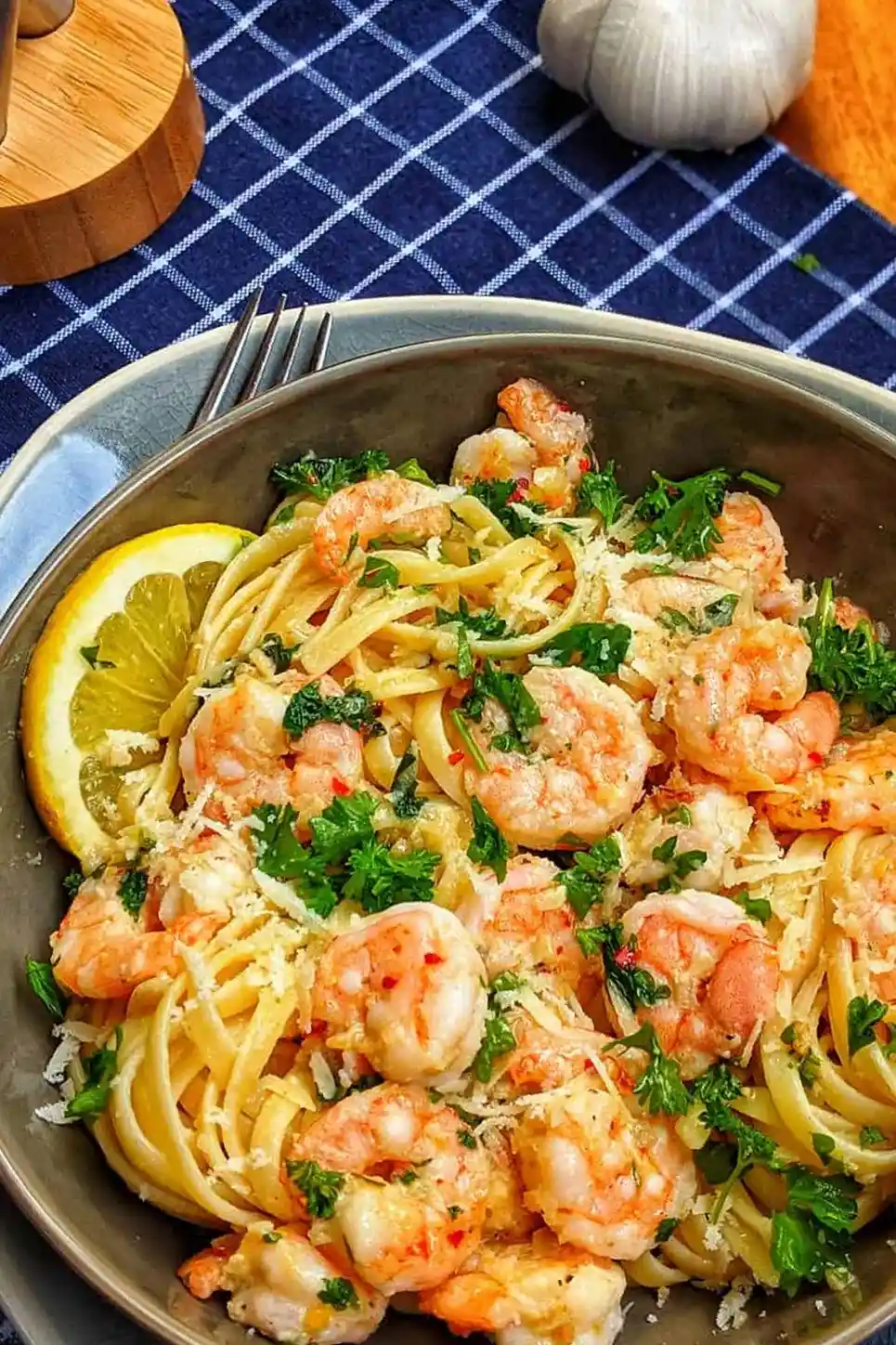
List of ingredients
- 250 g Linguine – spaghetti can be used as a suitable alternative.
- 250 g Shrimps – peeled and deveined scampi or prawns.
- 3 Garlic cloves – pressed to release aromatic oils.
- 3 EL Butter – provides the base for the creamy sauce.
- 2 EL Olive oil – helps prevent the butter from burning.
- 100 ml Vegetable broth – used as a clean, non-alcoholic substitute for white wine.
- 150 ml Chicken broth – adds depth and savory flavor.
- 50 ml Cream – creates a silky, rich consistency.
- 1 Lemon – cut into thin slices for the pan.
- Fresh lemon juice – added at the end for brightness.
- 1 pinch Chili flakes – adds a subtle heat to the sauce.
- 1 TL Sugar – balances the acidity of the lemon juice.
- 1 TL Salt – essential for seasoning the seafood and sauce.
- ½ TL Black pepper – provides a light, spicy undertone.
- Grated Parmesan – added to taste for saltiness and thickness.
- Fresh parsley – chopped finely for garnish and flavor.
step-by-step instructions
- Cook the pasta: Boil the linguine in salted water according to the package instructions until they are almost al dente. They should still have a slight firm bite since they will finish cooking in the sauce.
- Sauté the garlic: Heat the butter and olive oil in a large skillet over medium heat. Add the pressed garlic and sauté briefly, ensuring it does not brown or burn.
- Sear the shrimp: Add the shrimp to the pan and cook for approximately one minute per side. Place a few lemon slices among the shrimp to infuse the butter with citrus notes.
- Create the sauce: Deglaze the pan by pouring in the vegetable broth. Stir in the chicken broth and cream, then let the mixture simmer and reduce slightly to thicken.
- Season the mixture: Stir in the salt, black pepper, chili flakes, lemon juice, and sugar. Taste the sauce and adjust the seasonings to fit your personal preference.
- Combine with pasta: Mix in a portion of the grated Parmesan and half of the chopped parsley. Toss the cooked pasta into the skillet and heat everything together for a minute until the noodles are well coated.
- Serve and garnish: Divide the pasta onto plates. Garnish with the remaining parsley and extra Parmesan cheese and serve immediately while hot.
Optimizing the Pasta Texture
Choosing the Best Pasta Shape
Linguine is the traditional choice for shrimp dishes because its flat surface holds the butter sauce well. If you do not have linguine, spaghetti is a great substitute, though fettuccine can also work for a heartier feel. Avoid very thick pastas that might overpower the delicate flavor of the shrimp.
The Importance of Heavily Salted Water
Always salt your pasta water generously to ensure the noodles are seasoned from the inside out. A good rule of thumb is to use about 10 grams of salt per liter of water. This prevents the pasta from tasting bland even after it is coated in the garlic butter sauce.
Achieving the Perfect Al Dente State
Cooking the pasta until it is just before fully done is crucial for this recipe. Because the noodles are tossed in a simmering sauce at the end, they will continue to cook. Stopping them slightly early prevents the pasta from becoming mushy or overcooked during the final assembly.
Utilizing Starchy Pasta Water
Before draining your noodles, reserve a small cup of the starchy cooking water. If your final sauce appears too thick or dry, adding a tablespoon of this water helps emulsify the fats and liquids. This results in a smoother, glossier coating that clings perfectly to the pasta.
Mastering the Shrimp Preparation
Selecting Between Fresh and Frozen Shrimp
High-quality frozen shrimp are often a better choice than those labeled as fresh, as they are usually flash-frozen immediately after catch. Ensure you buy shrimp that have been peeled and deveined to save time during preparation. Always check that they are free from any ice crystals that might indicate thawing and refreezing.
Preventing Rubbery Shrimp Texture
The most common mistake is overcooking the shrimp, which turns them rubbery and tough. Cook them only until they turn opaque and form a “C” shape. Once they curl into a tight “O” shape, they are overcooked and will lose their tenderness.
Properly Thawing Seafood
If using frozen shrimp, thaw them slowly in the refrigerator overnight for the best texture. If you are in a rush, place them in a sealed bag and submerge them in a bowl of cold water. Never use hot water to thaw shrimp, as this can start the cooking process and ruin the texture.
Preparing Shrimp for Maximum Flavor
Pat the shrimp dry with paper towels before adding them to the hot pan. Removing excess moisture ensures that the shrimp sear properly and develop a golden-brown crust. Wet shrimp will steam instead of sear, which results in a less intense flavor profile.
Customizing the Sauce Profile
Adjusting the Heat Level
The pinch of chili flakes provides a mild warmth, but you can increase this by adding more flakes or a dash of cayenne pepper. For those who prefer no heat at all, simply omit the chili flakes entirely. The garlic and butter will still provide plenty of flavor.
Managing the Citrus Acidity
Lemon juice provides a necessary brightness that cuts through the richness of the butter and cream. If the sauce feels too tart, add an extra pinch of sugar to balance the acidity. Conversely, if the sauce tastes too heavy, a small extra squeeze of fresh lemon can refresh the dish.
Alternative Creamy Components
Heavy cream is used for a classic velvety texture, but you can use half-and-half for a slightly lighter version. For an even richer sauce, a tablespoon of mascarpone cheese can be stirred in at the end. This adds a subtle sweetness and a denser consistency to the sauce.
Enhancing the Garlic Intensity
Using a garlic press creates a fine paste that distributes flavor evenly throughout the sauce. If you prefer a more rustic taste, thinly slice the garlic into slivers instead. Sautéing sliced garlic takes slightly longer but provides distinct bursts of flavor in every bite.
Useful Ingredient Substitutions
Using Different Proteins
While shrimp is the star, this sauce works beautifully with other seafood like scallops or chunks of salmon. If you prefer a meat-based option, sliced chicken breast is a great alternative. Adjust the cooking time based on the protein to ensure it is cooked through without becoming dry.
Dairy-Free Sauce Alternatives
To make this dish dairy-free, replace the butter with a plant-based butter substitute and the cream with full-fat coconut milk or cashew cream. Use a nutritional yeast or a vegan parmesan alternative to maintain the cheesy flavor. These swaps keep the sauce creamy while remaining plant-based.
Substituting the Broths
If chicken broth is unavailable, vegetable broth can be used for the entire liquid base. For a more intense oceanic flavor, seafood stock is an excellent choice. Avoid using overly salty bouillon cubes, as the parmesan and pasta water already contribute significant salt.
Replacing the Parmesan Cheese
Pecorino Romano is a fantastic substitute for Parmesan, offering a saltier and more pungent flavor. If you want a milder taste, try a matured Provolone or a small amount of Gruyere. Always grate the cheese finely so it melts quickly into the sauce without clumping.
Serving and Presentation Suggestions
Ideal Side Dish Pairings
A crisp Caesar salad or a bowl of steamed asparagus pairs perfectly with the richness of the garlic butter sauce. Roasted broccolini with lemon zest also complements the flavors of the shrimp. For a more filling meal, serve the pasta with a side of toasted garlic baguette to soak up the remaining sauce.
Plating for Visual Appeal
Use a carving fork or tongs to twirl the pasta into a high mound in the center of the plate. Place the shrimp and lemon slices carefully on top of the pasta nest to highlight the main ingredients. This vertical presentation makes the dish look professional and appetizing.
Non-Alcoholic Beverage Pairings
A chilled sparkling water with a slice of lime mirrors the acidity of the lemon in the pasta. For a more complex flavor, try a non-alcoholic white grape spritzer or a light iced tea. These beverages cleanse the palate between bites of the creamy sauce.
Using Fresh Herbs for Contrast
While parsley is the standard, fresh basil or chives can add a different dimension to the dish. Chop the herbs just before serving to keep their color vibrant and their scent strong. Sprinkling the herbs at the very end prevents them from wilting in the heat of the pan.
Storage and Reheating Guide
Storing Leftovers Safely
Place any remaining pasta in an airtight container and refrigerate it immediately after cooling. This dish is best consumed within two to three days to maintain the quality of the shrimp. Keep the container tightly sealed to prevent the pasta from absorbing other refrigerator odors.
Best Reheating Methods
The best way to reheat this pasta is on the stovetop over low heat. Add a small splash of water, milk, or cream to the pan to loosen the sauce as it warms up. This prevents the pasta from drying out and restores the creaminess of the original dish.
Preventing Sauce Separation
When reheating in a microwave, use medium power and stir the pasta every minute. High heat can cause the butter and cream to separate, leaving an oily residue. Adding a teaspoon of water before microwaving helps keep the sauce emulsified.
Freezing Considerations
It is not recommended to freeze this dish because the cream can break and the shrimp often become rubbery upon thawing. If you must freeze it, freeze the cooked shrimp separately and only add them to a fresh batch of sauce. The pasta itself does not freeze well once cooked in a sauce.
Common Cooking Troubleshooting
Solving Sauce Thickness Issues
If the sauce is too thin, allow it to simmer for a few more minutes without the pasta to reduce the liquid further. You can also stir in an extra tablespoon of grated Parmesan to thicken it instantly. Ensure you do not boil the sauce too vigorously after adding the cream, as it may split.
Fixing Over-Salted Pasta
If the dish tastes too salty, stir in a small amount of unsalted cream or a squeeze of extra lemon juice. The acidity and fat help mask the excess saltiness. In extreme cases, adding a few more cooked noodles can help dilute the salt concentration.
Dealing with Burnt Garlic
If the garlic turns dark brown or black, it will taste bitter and ruin the sauce. The only way to fix this is to discard the burnt garlic and start the sauté process over. To prevent this, keep the heat at medium and add the shrimp quickly once the garlic becomes fragrant.
Adjusting Too Much Lemon
If the lemon flavor is overpowering, stir in a small pinch of sugar or a bit more cream. The sugar neutralizes the sharp acidity, while the cream mellows the flavor. Always add lemon juice gradually and taste as you go to avoid over-seasoning.
Frequently Asked Questions
Can I use frozen shrimp?
Yes, frozen shrimp work perfectly as long as they are fully thawed and patted dry before cooking. This ensures they sear properly and do not release too much water into the sauce.
Which pasta works best?
Linguine is the best choice because of its shape and ability to hold sauce. However, spaghetti or fettuccine are excellent alternatives that provide a similar experience.
How long does this keep in the fridge?
The pasta will stay fresh in an airtight container for up to three days. For the best quality, eat it within 48 hours to ensure the shrimp remain tender.
Can I make this without cream?
Yes, you can omit the cream and use a bit more butter and a splash of pasta water to create a lighter garlic butter sauce. The result will be less velvety but still very flavorful.
Print
Creamy Garlic Butter Shrimp Pasta
- Total Time: 30 minutes
- Yield: 4 servings 1x
- Diet: General
Description
A delicious and quick garlic butter shrimp pasta, ready in just 20 minutes for a stress-free and refined dinner.
Ingredients
- 250 g linguine (or spaghetti)
- 250 g shrimps (scampi or prawns)
- 3 garlic cloves
- 3 tbsp butter
- 2 tbsp olive oil
- 100 ml vegetable broth
- 150 ml chicken broth
- 50 ml cream
- 1 lemon, sliced
- a splash of lemon juice
- 1 pinch chili flakes
- 1 tsp sugar
- 1 tsp salt
- ½ tsp black pepper
- grated parmesan, to taste
- several sprigs of parsley
Instructions
- Step: Cook the pasta according to package instructions until almost al dente.
- Step: Heat butter and olive oil in a pan. Press the garlic and add it to the pan, sautéing only slightly.
- Step: Add the shrimp and cook for 1 minute per side. Add a few lemon slices to the shrimp. Deglaze with vegetable broth, then add chicken broth and cream, allowing the sauce to reduce slightly.
- Step: Season with salt, pepper, chili flakes, lemon juice, and sugar.
- Step: Stir in some parmesan and half of the parsley. Mix everything with the pasta and heat briefly.
- Step: Plate and serve, garnishing with the remaining parsley and parmesan.
Notes
Do not overcook the shrimp as they can become tough. Alternatively, you can poach the shrimp in heated chicken broth for 4 to 5 minutes before adding them to the pasta.
- Prep Time: 10 minutes
- Cook Time: 20 minutes
- Category: Main Course
- Method: Sautéing
- Cuisine: Italian, International
Nutrition
- Serving Size: 1 serving
- Calories: 560 kcal
- Sugar: 5 g
- Sodium: 800 mg
- Fat: 20 g
- Saturated Fat: 10 g
- Unsaturated Fat: 10 g
- Trans Fat: 0 g
- Carbohydrates: 60 g
- Fiber: 3 g
- Protein: 30 g
- Cholesterol: 120 mg