
This hearty soup is a rich and comforting meal that replicates a famous restaurant-style flavor using simple pantry staples. It is thick, satisfying, and ideal for meal prepping throughout the week.
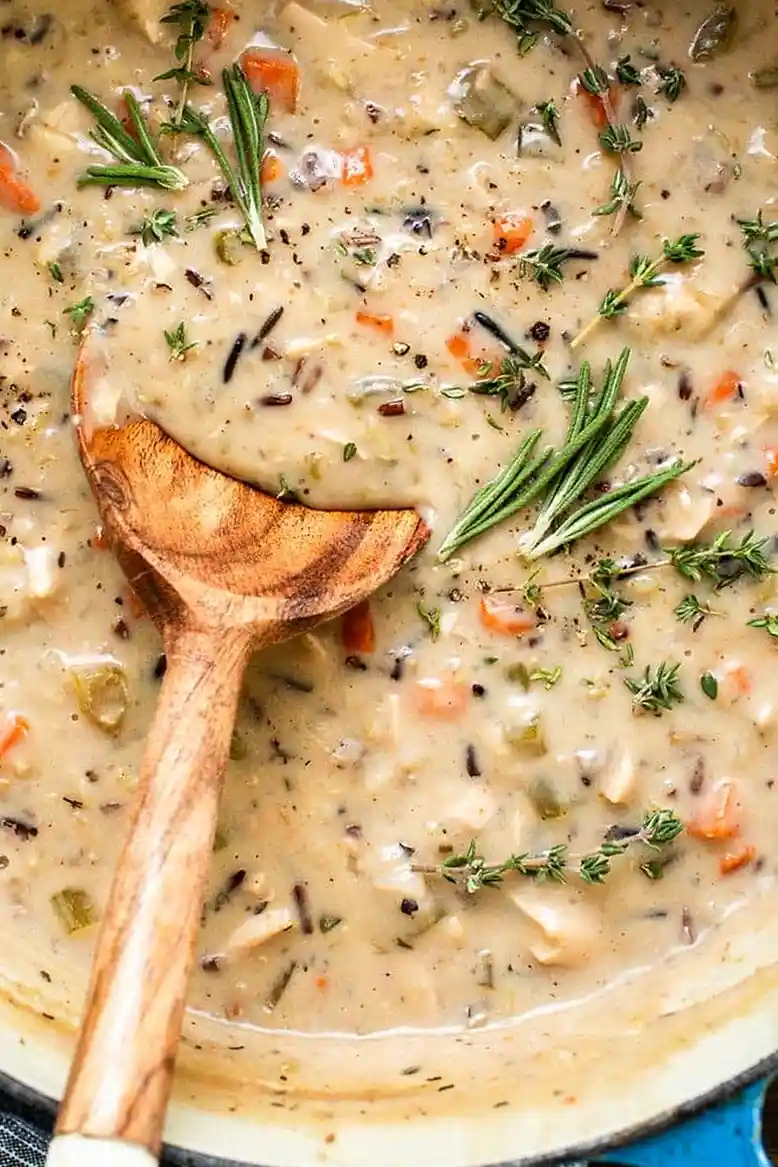
List of ingredients
- 1 Tablespoon extra virgin olive oil – used for sautéing the vegetable base.
- 2 medium carrots, finely chopped (~1 cup) – adds a natural sweetness and color.
- 2 ribs celery, finely chopped – provides a foundational aromatic flavor.
- 1 shallot or small yellow onion, chopped – adds savory depth to the broth.
- Salt and pepper – essential for basic seasoning and flavor balance.
- 3 cloves garlic, pressed or minced – provides a pungent, aromatic quality.
- 1 teaspoon poultry seasoning – a blend of herbs for a traditional flavor.
- 1/2 teaspoon dried thyme – adds a subtle earthy note.
- 6 cups chicken stock or broth – serves as the liquid base of the soup.
- 1 lb chicken breasts (sliced in half) – the primary protein source.
- 1 cup wild blend rice – ensures a chewy, nutty texture.
- 1/2 cup butter or vegan butter – used to create the thickening roux.
- 1/2 cup gluten free flour blend – a 1-to-1 baking blend for thickening.
- 2 cups milk (any kind) – creates the creamy consistency.
step-by-step instructions
- Sauté the Base: Heat the olive oil in a Dutch oven or large pot over medium heat. Add the chopped carrots, celery, and onions, season with salt and pepper, and sauté until the vegetables are tender, which usually takes 8-10 minutes. Tip: Place a lid on the pot with a small splash of stock to speed up the softening process.
- Add Aromatics: Stir in the minced garlic, poultry seasoning, and dried thyme. Sauté for 1-2 minutes until the spices become fragrant.
- Poach the Chicken: Pour in the chicken stock, cover with a lid, and bring to a boil over high heat. Once boiling, add the chicken breast halves, replace the lid, and reduce heat to low. Simmer for 10-12 minutes until the chicken is cooked through.
- Prepare the Meat: Move the cooked chicken breasts to a cutting board. Once they have cooled enough to touch, chop or shred the meat. Store the chicken in a bowl in the refrigerator until it is time to add it back to the pot.
- Simmer the Rice: Stir the wild blend rice into the remaining stock in the pot. Cover and simmer for 20-30 minutes, stirring occasionally, until the rice is al dente.
- Create the Thickening Sauce: While the rice is simmering, melt butter in a small saucepan over medium heat. Whisk in the gluten free flour and cook for 1 minute. Slowly drizzle in the milk while whisking constantly to create a smooth sauce, then stir for 1-2 minutes until thickened. Remove from heat and cover.
- Combine and Thicken: Once the rice is al dente, slowly stream the milk mixture into the soup while whisking constantly. Stir in the cooked chicken and simmer for another 5 minutes until the soup reaches the desired thickness.
- Rest and Serve: Taste the soup and add more salt or pepper if needed. Remove the pot from the heat and let it sit for 5-10 minutes to allow the consistency to set before serving in bowls.
Optimal Ingredient Selection
Choosing the Right Rice Blend
It is critical to use a wild and brown rice blend rather than pure wild rice. Pure wild rice can take much longer to cook and has a different texture. A blend provides the characteristic ‘puff’ and variety of textures found in restaurant-style soups.
Selecting the Best Gluten Free Flour
Use a high-quality 1-to-1 gluten free baking flour blend that includes a binder like xanthan gum. Avoid using single-ingredient flours like almond or coconut flour, as they do not provide the same thickening power and can alter the flavor profile of the roux.
Milk Options for Different Diets
Whole milk provides the richest flavor and most traditional creamy texture. However, unsweetened almond milk, soy milk, or oat milk work well as dairy-free alternatives. Ensure the milk is unsweetened to avoid adding unwanted sugar to the savory soup.
Chicken Stock Quality
Using a low-sodium chicken stock allows you to control the salt levels more effectively. If you have homemade stock, it will add an extra layer of depth and gelatin, which naturally helps thicken the body of the soup.
Cooking Process Tips
Mastering the Poaching Method
Poaching the chicken directly in the stock ensures the meat remains juicy and tender. By simmering on low heat rather than boiling aggressively, you prevent the chicken from becoming rubbery or dry.
Achieving a Lump-Free Roux
The secret to a smooth sauce is the slow addition of milk. Pour the milk in a thin stream while whisking vigorously to ensure the flour and butter are fully incorporated without forming clumps.
Managing Soup Viscosity
Allowing the soup to rest for 10 minutes after cooking is a vital step. During this time, the starches in the rice and the roux settle, which naturally thickens the liquid into a velvety consistency.
Controlling Vegetable Texture
Finely chopping the carrots and celery ensures they distribute evenly throughout the soup. This creates a consistent bite in every spoonful and allows them to soften more quickly during the sauté phase.
Protein Variations and Substitutions
Using Pre-Cooked Rotisserie Chicken
For a faster preparation, you can skip the poaching step and use store-bought rotisserie chicken. Use approximately 2.5 to 3 cups of chopped or shredded rotisserie meat, adding it during the final simmering stage.
Substituting Chicken Thighs
Chicken thighs can be used instead of breasts for a richer, more savory flavor. Thighs are more forgiving during the poaching process and remain moist even if simmered slightly longer than the recommended time.
Preparing the Chicken for Texture
Depending on your preference, you can either cube the chicken into small uniform pieces or shred it using two forks. Shredded chicken tends to hold onto the creamy broth better, while cubed chicken provides more substantial bites.
Storage and Preservation
Proper Refrigeration Techniques
Cool the soup to room temperature before transferring it to airtight containers. Store it in the refrigerator for up to 3 days to maintain the freshness of the dairy and the texture of the vegetables.
Why Freezing is Not Recommended
Freezing this specific soup is discouraged because of the wild rice content. When rice is frozen and then thawed, the cell structure breaks down, often resulting in a mushy texture that ruins the consistency of the dish.
Preventing Surface Skin
When storing the soup in a large pot, place a piece of parchment paper or plastic wrap directly on the surface of the liquid. This prevents a skin from forming on the creamy top during the cooling process.
Effective Reheating Methods
Stovetop Reheating Process
Reheating on the stove is the best way to maintain texture. Add a small splash of chicken stock or broth to the pot before heating over medium heat to compensate for any liquid absorbed by the rice during storage.
Microwave Reheating Tips
If reheating individual portions in the microwave, add a tablespoon of broth and stir halfway through the heating cycle. This ensures the soup is heated evenly and prevents the edges from overcooking.
Adjusting Thickness After Reheating
It is common for the soup to appear much thicker after sitting in the fridge. Stirring in a bit of warm milk or stock during the reheating process will return the soup to its original creamy consistency.
Serving and Pairing Ideas
Complementary Bread Pairings
Pair this soup with a crusty piece of garlic focaccia or a warm flatbread. The toasted texture of the bread provides a great contrast to the creamy nature of the soup and is perfect for dipping.
Fresh Garnish Suggestions
Add a sprinkle of fresh chopped parsley, chives, or green onions on top before serving. These fresh herbs provide a pop of color and a bright, clean flavor that cuts through the richness of the cream.
Balance with a Side Salad
Because this soup is very hearty, a light side salad with a lemon vinaigrette is an ideal pairing. The acidity of the dressing cleanses the palate between spoonfuls of the creamy soup.
Troubleshooting Common Issues
What to do if the soup is too thick?
If the soup becomes too thick, simply stir in additional chicken stock or milk one tablespoon at a time. Continue stirring over low heat until the desired consistency is achieved.
What if the rice is still too hard?
If the rice is not yet tender when the sauce is added, simmer the soup for an additional 5-10 minutes. Keep the pot covered to trap steam, which helps the grains soften more quickly.
How to fix a bland flavor profile?
If the soup tastes flat, add a pinch more salt or a small squeeze of fresh lemon juice. The acidity from the lemon can brighten the flavors and make the herbs and garlic more prominent.
Dealing with Flour Lumps
If you notice small lumps of flour in the final soup, you can use an immersion blender for a few seconds. Be careful not to over-blend, as you want to keep the chunks of chicken and rice intact.
Preventing the Milk from Curdling
To prevent the milk from separating, ensure it is at room temperature or slightly warmed before adding it to the roux. Avoid boiling the soup vigorously once the dairy has been incorporated.
Print
Creamy Homemade Chicken and Wild Rice Soup
- Total Time: 65 minutes
- Yield: 8 servings 1x
- Diet: Gluten-Free
Description
Creamy Chicken Wild Rice Soup is thick, hearty, comforting, and made from everyday ingredients. Plus it tastes just like Panera’s Chicken & Wild Rice Soup!
Ingredients
- 1 Tablespoon extra virgin olive oil
- 2 medium carrots, finely chopped
- 2 ribs celery, finely chopped
- 1 shallot or small yellow onion, chopped
- salt and pepper
- 3 cloves garlic, pressed or minced
- 1 teaspoon poultry seasoning
- 1/2 teaspoon dried thyme
- 6 cups chicken stock or broth
- 1 lb chicken breasts, sliced in half
- 1 cup wild blend rice
- 1/2 cup butter or vegan butter
- 1/2 cup gluten free flour blend
- 2 cups milk
Instructions
- Step 1: Heat the extra virgin olive oil in a Dutch oven or large soup pot over medium heat then add the carrots, celery, and shallots or onions. Season with salt and pepper then saute until the vegetables are tender, 8-10 minutes.
- Step 2: Add the garlic, poultry seasoning, and dried thyme then saute until very fragrant, 1-2 minutes.
- Step 3: Add the chicken stock or broth to the pot then turn the heat to high, place a lid on top, and bring to a boil. Once boiling, add the chicken breast halves then place the lid back on top. Turn the heat down to low then simmer until the chicken breasts are cooked through, 10-12 minutes.
- Step 4: Transfer the cooked chicken breasts to a cutting board then, once cool enough to handle, chop or shred. Place chicken inside a bowl or storage container then refrigerate until ready to add back into the soup.
- Step 5: Meanwhile add the rice to the pot then stir to combine. Place a lid on top then simmer until the rice is al dente, 20-30 minutes depending on the brand, stirring occasionally.
- Step 6: When the rice has 10 minutes or so left to simmer, melt the butter in a small saucepan over medium heat. Sprinkle in the gluten free flour then cook while whisking for 1 minute. Slowly drizzle in the milk while whisking to create a smooth sauce then switch to a spatula and cook while stirring until the mixture is thick and creamy, 1-2 minutes. Remove the pan from the heat then place a lid on top and set aside.
- Step 7: Once the rice is al dente, slowly stream in the butter/flour/milk mixture while whisking the soup constantly. Add the chicken then cook for 5 more minutes, stirring frequently, or until the soup has thickened and the rice is tender.
- Step 8: Taste then add more salt and pepper if necessary. Remove the pot from the heat then let it sit for 5-10 minutes to thicken slightly before scooping into bowls then serving.
Notes
Be sure to use a wild-brown rice blend. Use a gluten free flour blend designed for baking. Rotisserie or baked chicken can be substituted (approx 2.5 to 3 cups chopped).
- Prep Time: 20 minutes
- Cook Time: 45 minutes
- Category: Soup
- Method: Stovetop
- Cuisine: American
Nutrition
- Serving Size: 1 serving
- Calories: 364 kcal
- Sugar: 5 g
- Sodium: 516 mg
- Fat: 18 g
- Saturated Fat: 8 g
- Unsaturated Fat: 10 g
- Trans Fat: 0.5 g
- Carbohydrates: 30 g
- Fiber: 3 g
- Protein: 21 g
- Cholesterol: 72 mg