
This spicy and creamy Korean-inspired pasta is a quick meal ready in under 30 minutes. It utilizes gochujang for a rich umami flavor while remaining light by substituting heavy cream with a cornstarch-thickened milk base.
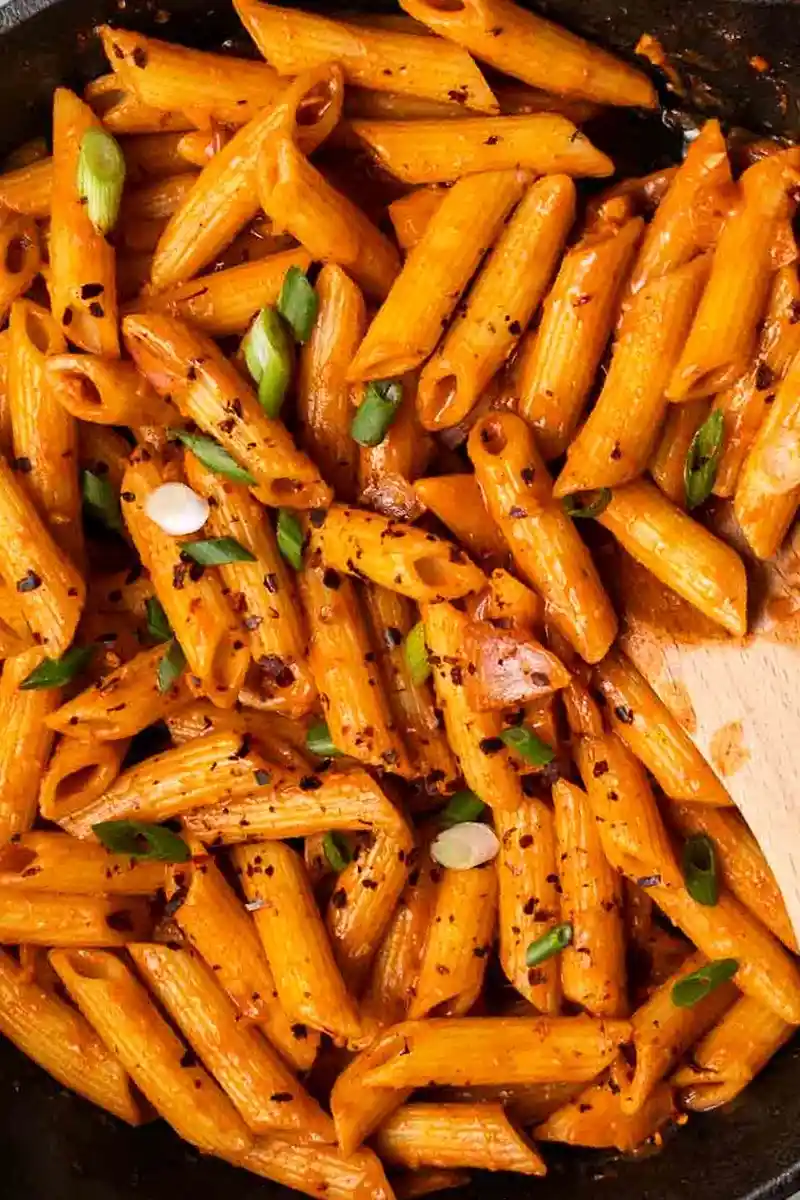
List of ingredients
- 8 oz dried pasta – use penne or a similar shape; gluten-free options like brown rice pasta work well.
- 1 medium shallot – finely diced for consistent sautéing.
- 3 cloves garlic – minced to release maximum oils.
- 1/2 cup almond milk – or any preferred plant-based or dairy milk.
- 2 tablespoons gochujang paste – ensure it is a gluten-free variety if necessary.
- 1 tablespoon maple syrup – or another liquid sweetener for balance.
- 1 tablespoon soy sauce – use tamari or shoyu for a gluten-free alternative.
- 1 tablespoon sesame oil – provides a distinct nutty aroma.
- 1 tablespoon rice vinegar – adds a necessary acidic brightness.
- 1 teaspoon cornstarch – essential for thickening the milk into a cream-like consistency.
step-by-step instructions
- Boil the pasta: Bring a pot of salted water to a boil. Add the pasta and cook until almost al dente, which is typically 1-2 minutes less than the package directions. Reserve 1/2 cup of the starchy pasta water before draining.
- Prepare the sauce base: In a small mixing bowl, whisk together the gochujang paste, maple syrup, soy sauce, sesame oil, rice vinegar, and cornstarch. Stir until the cornstarch is fully dissolved and the mixture is smooth.
- Sauté aromatics: Heat one tablespoon of oil in a large pan over medium-high heat. Add the diced shallots and sauté for 2-3 minutes until they become translucent.
- Add garlic: Stir in the minced garlic and fry for approximately one minute until fragrant, ensuring it does not brown or burn.
- Simmer the sauce: Pour the almond milk and the prepared gochujang mixture into the pan. Bring the liquid to a simmer and stir occasionally until the sauce begins to thicken.
- Combine and finish: Add the cooked pasta to the pan. Toss to coat thoroughly and cook for 1-2 minutes. If the sauce is too thick, stir in a splash of the reserved pasta water to reach your desired consistency. Serve immediately while hot.
Customizing the Heat Level
Selecting a Milder Gochujang
If you prefer a subtle heat, look for gochujang brands labeled as mild. Different manufacturers vary in spice intensity, so checking the heat rating on the label is the most effective way to control the baseline spice.
Increasing the Spiciness
To create a more fiery dish, increase the gochujang paste to 4 tablespoons. You can also stir in a pinch of gochugaru (Korean red chili flakes) at the end for an additional layer of sharp heat.
Balancing Sharpness with Sweetness
If the spice is too overwhelming, add an extra teaspoon of maple syrup or honey. The sugar helps neutralize the capsaicin, creating a more rounded flavor profile without masking the umami.
Protein Addition Strategies
Integrating Grilled Chicken
Sauté bite-sized chicken breast pieces in the pan before adding the shallots. Ensure the chicken is cooked through and slightly browned to add texture to the creamy sauce.
Using Crispy Tofu
Press extra-firm tofu to remove excess water, cube it, and pan-fry until golden. Fold the crispy tofu into the pasta during the final minute of cooking to maintain its texture.
Adding Sautéed Shrimp
Cook peeled and deveined shrimp with the garlic for 2 minutes per side. Remove them from the pan and set them aside, then return them to the dish just before serving to avoid overcooking.
Recommended Vegetable Mix-ins
Adding Sautéed Mushrooms
Slice shiitake or cremini mushrooms and sauté them with the shallots. Their earthy flavor complements the fermented notes of the gochujang paste.
Integrating Steamed Broccoli
Steam small broccoli florets separately and stir them in at the end. This adds a fresh crunch and increases the nutritional value of the meal.
Wilting Baby Spinach
Add a handful of fresh baby spinach to the pan just as you add the pasta. The residual heat will wilt the leaves in under a minute without overcooking them.
Mixing in Green Peas
Stir in frozen peas during the final simmer. They provide a pop of sweetness and color that contrasts well with the deep red sauce.
Selecting the Ideal Pasta
Using Tubular Pasta
Penne, rigatoni, or ziti are ideal because their hollow centers trap the thick gochujang sauce. This ensures every bite is evenly coated with the creamy mixture.
Choosing Spiral Pasta
Fusilli or rotini are excellent choices due to their twists. The sauce clings to the spirals, providing a high sauce-to-pasta ratio in every mouthful.
Gluten-Free Pasta Alternatives
Brown rice or lentil pasta are sturdy alternatives that hold up well in thick sauces. Ensure you cook these slightly less than al dente, as they can soften more quickly when tossed in the sauce.
Serving and Presentation Tips
Applying Fresh Garnishes
Top the finished pasta with thinly sliced green onions and toasted sesame seeds. These additions provide a fresh contrast to the rich, spicy sauce.
Using Cheese Toppings
Grate a small amount of parmesan or a vegan parmesan alternative over the dish. The saltiness of the cheese enhances the umami of the fermented chili paste.
Suggested Side Dishes
Pair this pasta with a crisp cucumber salad or a side of steamed bok choy. A light, acidic side dish helps cleanse the palate between bites of the rich sauce.
Storage and Preservation
Refrigeration Guidelines
Store leftover pasta in an airtight container in the refrigerator for up to 3 days. Keep the lid sealed tightly to prevent the pasta from drying out.
Freezing Instructions
Portion the pasta into individual freezer-safe bags or containers and freeze for up to 3 months. Press out as much air as possible to avoid freezer burn.
Effective Reheating Methods
Stovetop Reheating
Place the pasta in a pan over low heat. Add a tablespoon of milk or water and stir gently until the sauce emulsifies and the pasta is heated through.
Microwave Reheating
Heat the pasta in 30-second intervals, stirring between each session. Adding a splash of water before heating prevents the sauce from becoming too gummy.
Make-Ahead Advice
Preparing the Sauce Base
You can whisk the gochujang sauce ingredients together up to 24 hours in advance. Store the mixture in a sealed jar in the fridge and shake well before adding it to the pan.
Pre-Cooking the Noodles
Cook the pasta to a very firm al dente state if you plan to reheat the dish later. This prevents the noodles from becoming mushy during the second heating process.
Troubleshooting Common Issues
Correcting a Sauce That is Too Thick
If the sauce becomes a paste, stir in small amounts of the reserved pasta water. The starch in the water helps the sauce smooth out while maintaining its creaminess.
Reducing Excessive Spiciness
If the dish is too spicy for your preference, stir in an additional tablespoon of almond milk or a dollop of unsweetened coconut cream. The fats in the milk help bind and neutralize the spice.
Preventing Mushy Pasta
Avoid cooking the pasta fully in the pot of water. By pulling it out 2 minutes early, the pasta finishes cooking in the sauce, absorbing the flavors without losing its structure.
Frequently Asked Questions
Is this dish very spicy?
It is moderately spicy. You can adjust the heat by choosing a mild gochujang paste or adding more milk to mellow the flavor.
Can I substitute almond milk with other types?
Yes, any unsweetened plant-based milk like soy or oat milk works well. Dairy milk or cashew cream are also suitable alternatives.
What is the difference between gochujang paste and sauce?
Gochujang paste is a thick, concentrated fermented condiment. Gochujang sauce is a pre-diluted version with added liquids, which lacks the intensity needed for this specific recipe.
Is gochujang naturally gluten-free?
Not always. Some brands use barley malt in the fermentation process. Always check the label for a certified gluten-free version if you have sensitivities.
Print
Creamy Korean Gochujang Pasta
- Total Time: 30 minutes
- Yield: 4 servings 1x
- Diet: Vegan
Description
A rich and flavorsome pasta dish with spice, featuring a lightened-up creamy sauce made without heavy cream that comes together in just 30 minutes.
Ingredients
- 8 oz dried pasta
- 1 medium shallot, diced
- 3 cloves garlic, minced
- 1/2 cup almond milk
- 2 tablespoons gochujang paste
- 1 tablespoon maple syrup
- 1 tablespoon soy sauce
- 1 tablespoon sesame oil
- 1 tablespoon rice vinegar
- 1 teaspoon cornstarch
Instructions
- Step 1: Bring a pot of salted water to a boil, add pasta and cook until almost al dente; reserve 1/2 cup of pasta water before draining.
- Step 2: In a bowl, whisk together gochujang paste, maple syrup, soy sauce, sesame oil, rice vinegar, and cornstarch to create the sauce.
- Step 3: Heat a tablespoon of oil in a pan over medium-high heat and sauté the diced shallot for 2-3 minutes until translucent.
- Step 4: Add minced garlic and sauté for another minute until fragrant.
- Step 5: Pour in the almond milk and the prepared gochujang sauce, bringing the mixture to a simmer until it begins to thicken.
- Step 6: Add the cooked pasta to the pan and toss to coat for 1-2 minutes, adding a splash of reserved pasta water if the sauce is too thick, and serve while warm.
Notes
To adjust the spice level, use a milder gochujang or increase the paste to 4 tablespoons and add red chili flakes for more heat. Ensure pasta is slightly undercooked before adding to the sauce to avoid mushiness.
- Prep Time: 10 minutes
- Cook Time: 20 minutes
- Category: Main Course
- Method: Stovetop
- Cuisine: Korean-American
Nutrition
- Serving Size: 1 serving
- Calories: 290 kcal
- Sugar: 7 g
- Sodium: 273 mg
- Fat: 5 g
- Saturated Fat: 1 g
- Unsaturated Fat: 4 g
- Trans Fat: 0 g
- Carbohydrates: 52 g
- Fiber: 2 g
- Protein: 9 g
- Cholesterol: 0 mg