
This Mexican White Spaghetti is a comforting pasta dish featuring a rich and creamy sauce. It is a quick meal that comes together in under 20 minutes, making it ideal for busy weeknights.
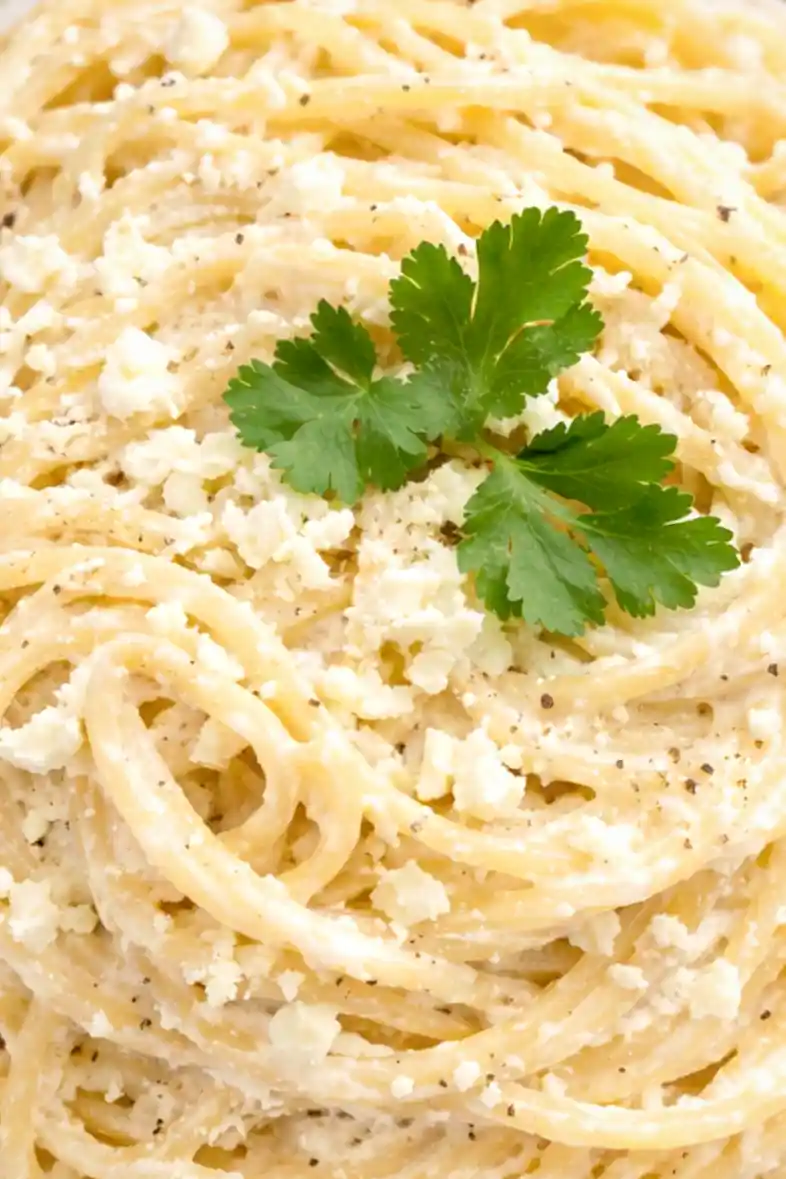
List of ingredients
- 16 oz spaghetti – use regular or whole grain according to preference.
- 4 tbsp butter – provides a silky texture and rich base.
- 1 tbsp garlic, minced – adds a savory aromatic depth.
- 1½ cups Mexican cream (crema) – key for the authentic tangy and creamy flavor.
- ½ cup milk – used to thin the sauce to the desired consistency.
- 1 tsp salt – enhances the overall flavors of the cream and cheese.
- 8 bay leaves – provides the distinct herbal aroma essential to this dish.
- ½ cup queso fresco, crumbled – adds a mild, salty finish.
step-by-step instructions
- Boil the Pasta: Fill a large pot with water, bring it to a boil, and add the spaghetti. Cook the noodles according to the package directions until al dente.
- Sauté Aromatics: While the pasta cooks, place a medium or large skillet over medium-low heat. Add the butter and minced garlic, stirring frequently for 2-3 minutes until the butter melts and the garlic becomes fragrant.
- Prepare the Cream Base: Stir in the Mexican cream, milk, and salt. Lower the heat to low and whisk gently until the mixture is smooth and well combined.
- Infuse the Sauce: Add the bay leaves to the skillet. Simmer on low for about 5 minutes, stirring often, until the sauce thickens slightly and the bay leaf flavor is prominent. Carefully remove and discard the bay leaves with a spoon.
- Combine Ingredients: Drain the cooked spaghetti well. Return the noodles to the large pot and pour the finished creamy sauce over them.
- Final Toss: Add the crumbled queso fresco to the pot. Gently mix everything together until the pasta is evenly coated and the cheese is distributed. Taste and add more salt or extra queso fresco if needed.
- Serve: Dish the pasta immediately while it is hot and creamy.
Ways to Enhance Your Pasta
Adding Shredded Chicken
Rotisserie chicken is an excellent addition for added protein. Fold in two cups of shredded chicken during the final mixing step to make the dish a more filling main course.
Mixing in Smoked Turkey
Diced smoked turkey provides a salty, savory contrast to the creamy sauce. Sauté the turkey cubes with the garlic at the beginning of the process to brown the edges slightly.
Including Sautéed Bell Peppers
Diced red and green bell peppers add color and a mild sweetness. Sauté them in the butter before adding the cream to ensure they are tender and fragrant.
Adding Broccoli Florets
Steam small broccoli florets separately or add them to the boiling pasta water during the last 3 minutes of cooking. This adds a healthy vegetable element and a fresh crunch.
Incorporating Zucchini and Squash
Thinly sliced zucchini or yellow squash can be sautéed with the garlic. These vegetables blend well with the creamy profile of the sauce without overpowering the taste.
Using Red Pepper Flakes for Heat
If you prefer a spicy kick, sprinkle red pepper flakes into the butter while sautéing the garlic. This creates a subtle warmth that cuts through the richness of the crema.
Alternative Ingredient Choices
Substituting Mexican Crema
If Mexican crema is unavailable, blend equal parts sour cream and heavy cream. While the flavor is slightly different, this mixture mimics the thickness and tanginess of the original.
Using Whole Wheat Pasta
Whole grain spaghetti is a suitable alternative for those seeking more fiber. The nuttier flavor of the wheat pasta pairs well with the savory garlic and bay leaf infusion.
Substituting Cotija Cheese
If you cannot find queso fresco, Cotija cheese is a great substitute. Note that Cotija is generally saltier, so you may want to reduce the added salt in the sauce.
Using Vegetable Broth for Thinning
Replace the milk with an equal amount of low-sodium vegetable broth for a slightly more savory undertone. This reduces the dairy content slightly while maintaining the creamy texture.
Mastering the Cooking Process
Monitoring Garlic Color
Keep the heat at medium-low when sautéing garlic to prevent it from browning too quickly. Burnt garlic becomes bitter and can ruin the delicate flavor of the white sauce.
Infusing Bay Leaf Flavor
Do not rush the simmering process once the bay leaves are added. The five-minute simmer is crucial for the oil-soluble flavors of the leaves to permeate the cream.
Draining Pasta Properly
Ensure the spaghetti is drained well before adding it back to the pot. Excess water can dilute the sauce, making it runny and less creamy than intended.
Managing Sauce Consistency
If the sauce becomes too thick during the simmer, whisk in an extra tablespoon of milk. This restores the silky consistency without altering the flavor profile.
Ideal Serving Pairings
Pairing with Fresh Greens
A crisp garden salad with a lime-vinaigrette dressing balances the richness of the cream. The acidity of the lime helps cleanse the palate between bites of pasta.
Serving with Salsa Verde Chicken
Pair the spaghetti with chicken breast simmered in salsa verde. The zesty, tangy green sauce provides a sharp contrast to the mild, creamy spaghetti.
Garnishing with Fresh Cilantro
Finely chopped fresh cilantro added just before serving provides a burst of brightness. The herbal notes complement the bay leaf flavor in the sauce.
Using Lemon Juice for Brightness
A small squeeze of fresh lemon juice over the final plated dish enhances the creaminess. The acidity brightens the overall flavor and makes the dish feel lighter.
Storing and Preserving
Using Airtight Containers
Store leftovers in a glass airtight container to keep the pasta from drying out. This prevents the spaghetti from absorbing too much air and losing its creamy coating.
Reheating with Extra Milk
When reheating in a pan, add a splash of milk to loosen the sauce. This restores the original creamy texture that is often lost during refrigeration.
Avoiding High Heat During Reheating
Reheat the pasta on low heat or at medium power in the microwave. High heat can cause the cream and butter to separate, resulting in an oily sauce.
Refrigeration Duration
This dish is best consumed within three days when stored in the refrigerator. Beyond this time, the pasta may become overly soft and the flavors may mute.
Common Troubleshooting Fixes
Correcting a Thin Sauce
If the sauce is too thin after mixing, simmer it for an additional two minutes before adding the pasta. You can also stir in a tablespoon of grated Parmesan to thicken it instantly.
Correcting Over-salting
If the sauce tastes too salty, add an extra tablespoon of Mexican cream or a splash of milk. The additional dairy helps neutralize the excess salt.
Preventing Cream Separation
Keep the heat on low once the cream and milk are added. Boiling the sauce can cause the dairy to break, leading to a grainy texture and separated fats.
Preventing Pasta Clumping
Toss the pasta immediately after draining and adding the sauce. Quick movement ensures that each strand is coated and prevents the noodles from sticking together.
Frequently Asked Questions
What is Mexican Crema?
Mexican crema is a thickened cream that is similar to sour cream but has a thinner, pourable consistency. It is slightly sweeter and less tangy than American sour cream.
Can I use a different pasta shape?
Yes, you can use fettuccine or penne for a different experience. The sauce clings well to most long or tubular pasta shapes, though spaghetti is traditional.
Is this dish suitable for meal prep?
Yes, it can be meal prepped, but it is best to undercook the pasta by one minute. This prevents the noodles from becoming mushy when reheated the next day.
Can I make this sauce dairy-free?
You can substitute the cream with cashew cream and the milk with unsweetened almond milk. Use a vegan butter substitute and a plant-based crumbly cheese for a dairy-free version.
Print
Creamy Mexican White Spaghetti (Espagueti Blanco)
- Total Time: 20 minutes
- Yield: 6 servings 1x
- Diet: General
Description
This White Spaghetti (Espagueti Blanco) is a simple Mexican dish with spaghetti noodles tossed in a delicious, creamy white sauce. Quick, easy and ready in less than 20 minutes!
Ingredients
- 16 oz spaghetti
- 4 tbsp butter
- 1 tbsp garlic (minced)
- 1½ cups Mexican cream (crema)
- ½ cup milk
- 1 tsp salt
- 8 bay leaves
- ½ cup queso fresco (crumbled)
Instructions
- Step: In a large pot, boil water and add the spaghetti. Cook according to package instructions.
- Step: While the pasta is cooking, use a medium or large sized skillet to make the sauce. Turn heat to medium-low and add the butter and garlic. Cook on medium-low, stirring often, for about 2-3 minutes, or until the butter is melted and garlic is fragrant.
- Step: Add the Mexican cream, milk and salt. Turn heat down to low. Gently stir or whisk until combined.
- Step: Add the bay leaves and simmer on low for about 5 minutes, stirring often. Then, carefully remove bay leaves with a spoon.
- Step: Once noodles are done, drain well. Add them back to the large pot they cooked in and pour the sauce on top. Add the crumbled queso fresco and gently mix to combine everything. Taste and add more salt or queso fresco, if desired.
- Step: Serve immediately and enjoy!
Notes
Substitute for Mexican Cream: you can use a mixture of sour cream and heavy cream. Garnish with chopped fresh cilantro or a squeeze of lemon juice for freshness. Reheat with a splash of milk to restore creaminess.
- Prep Time: 5 minutes
- Cook Time: 20 minutes
- Category: Dinner
- Method: Stovetop
- Cuisine: Mexican
Nutrition
- Serving Size: 1 serving
- Calories: 580 kcal
- Sugar: 6 g
- Sodium: 720 mg
- Fat: 22 g
- Saturated Fat: 13 g
- Unsaturated Fat: 9 g
- Trans Fat: 0 g
- Carbohydrates: 48 g
- Fiber: 3 g
- Protein: 16 g
- Cholesterol: 65 mg