
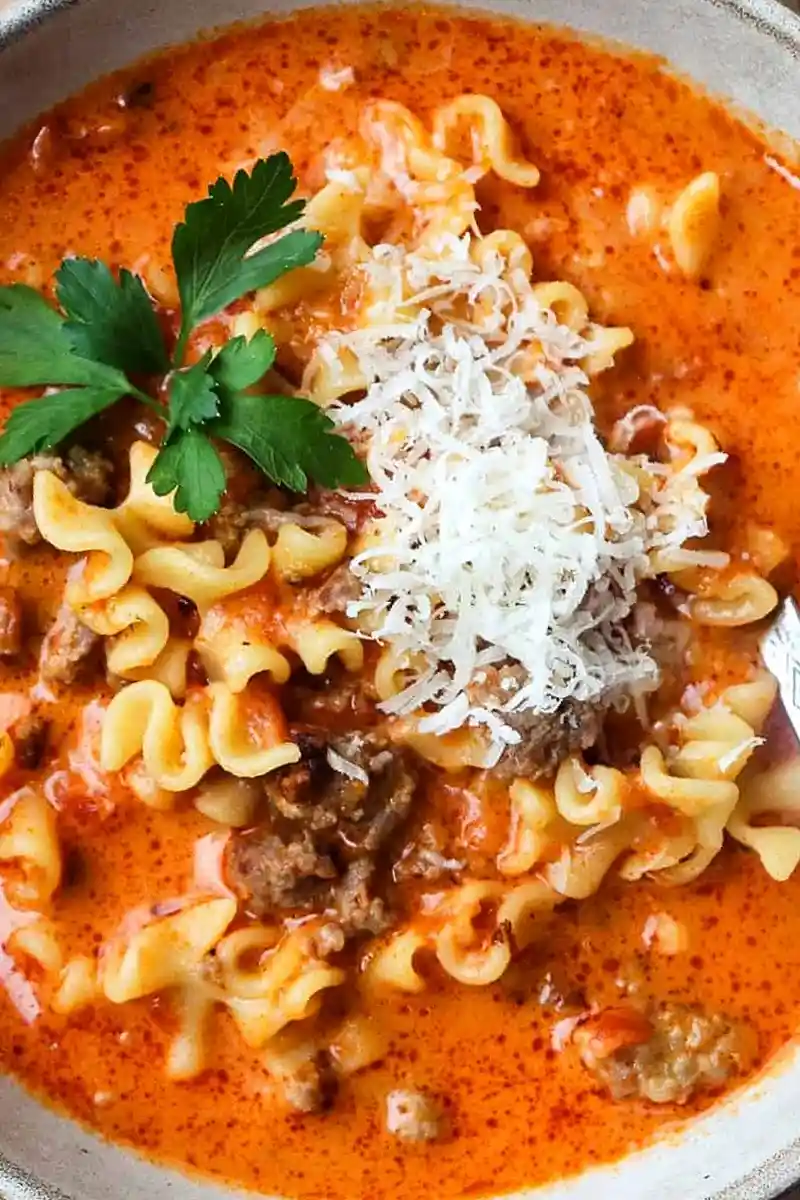
This hearty one-pot meal captures the classic flavors of traditional lasagna in a comforting soup format. It is an ideal choice for busy weeknights since it requires minimal preparation and very few ingredients.
List of ingredients
- 1 lb beef italian sausage (mild or hot) – provides the savory protein base.
- 6 cups chicken stock (or beef stock) – creates the rich liquid foundation.
- 1/2 lb dry pasta, such as mafalda – adds the signature lasagna texture.
- 1 28 oz jar marinara sauce (such as Rao’s) – delivers the primary Italian flavor.
- 1/2 cup heavy cream (or half and half) – adds a smooth, rich finish.
step-by-step instructions
- Brown the Meat: Heat a large dutch oven over medium heat. Add the beef italian sausage and brown the meat, breaking it up with a spoon as you go, until cooked through. Drain any extra fat if necessary.
- Boil the Base: Stir in the marinara sauce and chicken stock. Increase the heat slightly and bring the mixture to a boil.
- Cook the Pasta: Once the liquid is boiling, add the dry noodles. Simmer the soup until the noodles are cooked through to your preference.
- Finish with Cream: Once the pasta is done, stir in the heavy cream.
- Serve: Ladle the soup into bowls and top with fresh grated parmesan cheese.
Meat Selection and Preparation
Choosing the Right Beef Italian Sausage
Using beef italian sausage instead of other varieties ensures a robust flavor that complements the acidity of the tomato sauce. Opt for a mild version for a family-friendly taste or a hot version if you prefer a spicy kick. Ensure the sausage is high quality to avoid excess fillers.
Achieving the Perfect Brown
Browning the meat thoroughly is essential for developing deep, savory flavors through the Maillard reaction. Do not crowd the pot too much, and allow the meat to sear before stirring constantly. This creates a caramelized crust that enhances the overall broth.
Managing Excess Fat
Depending on the lean-to-fat ratio of your beef sausage, you may find a significant amount of rendered fat in the pot. Use a spoon to skim off the surface or carefully drain the excess into a container. This prevents the soup from having an oily film on top.
Pasta Selection and Texture Control
The Benefits of Mafalda Pasta
Mafalda pasta is ideal for this recipe because its ruffled edges mimic the look of traditional lasagna sheets. These ridges are functional, as they trap the thick marinara broth and cream, delivering more flavor in every bite. It holds its shape well during the simmering process.
Substituting with Broken Lasagna Sheets
If mafalda is unavailable, you can use standard lasagna noodles broken into bite-sized pieces. This provides the most authentic lasagna experience in soup form. Ensure the pieces are uniform in size so they cook evenly throughout the pot.
Preventing Overcooked Noodles
Pasta continues to absorb liquid and cook even after the heat is turned off. To avoid mushy noodles, stop the simmering process just before the pasta reaches full doneness. The residual heat will finish the cooking process as you stir in the cream.
Gluten-Free Pasta Alternatives
For those avoiding gluten, corn or brown rice-based pastas are suitable substitutes. Be aware that gluten-free noodles often release more starch, which may thicken the soup more than traditional wheat pasta. You may need to add a splash more stock to maintain the desired consistency.
Optimizing the Broth and Sauce
Selecting a High-Quality Marinara
Since the marinara sauce is a primary flavoring agent, choose one with a clean ingredient list and rich tomato taste. Look for sauces that use olive oil and garlic to build a depth of flavor. A premium sauce reduces the need for additional seasonings.
Comparing Chicken vs Beef Stock
Chicken stock provides a lighter, more neutral base that allows the sausage and tomato flavors to shine. Beef stock offers a deeper, heartier profile that makes the soup feel more like a heavy stew. Both are excellent choices depending on your flavor preference.
Adjusting the Soup Thickness
If you prefer a thicker, more stew-like consistency, you can reduce the amount of stock by one cup. Conversely, if the soup becomes too thick as the pasta absorbs liquid, stir in a small amount of water or additional broth. This ensures the texture remains balanced.
Creamy Elements and Dairy Substitutes
Using Half and Half for Lighter Texture
While heavy cream provides the most richness, half and half is a great alternative for a slightly lighter feel. It still delivers the necessary creaminess to balance the acidity of the tomatoes. The flavor difference is minimal, making it a practical swap.
Substituting with Ricotta Cheese
For a more authentic lasagna taste, you can stir in a few dollops of ricotta cheese at the end. Ricotta does not melt completely, creating small creamy pockets throughout the soup. This adds a traditional texture that mimics a layered lasagna casserole.
Dairy-Free Cream Alternatives
To make this recipe dairy-free, replace the heavy cream with full-fat coconut milk or a cashew-based cream. Ensure your chosen marinara sauce is also dairy-free to maintain the dietary restriction. Coconut milk adds a subtle sweetness that pairs surprisingly well with tomato.
Nutritional Boosts and Flavor Twists
Incorporating Fresh Spinach or Kale
Adding five ounces of chopped baby spinach or kale increases the nutrient density of the meal. Stir the greens in during the final two minutes of cooking so they wilt without losing their bright color. This adds a fresh, earthy element to the rich broth.
Adding Extra Lean Ground Beef
If you want to increase the protein content without adding too much fat, add a half-pound of lean ground beef along with the sausage. Brown the beef and sausage together to ensure both are fully cooked. This makes the soup heartier and more filling.
Boosting Flavor with Garlic and Herbs
While the sausage and sauce provide plenty of flavor, adding two cloves of minced garlic during the browning stage adds aromatic depth. A tablespoon of dried Italian seasoning can also enhance the herbal notes. Stir these in just before adding the stock.
Using Tortellini for More Cheese
Replacing the lasagna noodles with cheese-filled tortellini transforms the dish into an even more indulgent meal. Because tortellini cook quickly, add them toward the end of the simmering process. This prevents the pasta from bursting and keeps the cheese inside.
Serving and Presentation Ideas
Best Cheeses for Topping
Freshly grated parmesan cheese is the traditional choice, providing a salty contrast to the creamy broth. For a more indulgent version, top each bowl with shredded mozzarella and melt it under a broiler for a minute. This creates a bubbly cheese crust similar to baked lasagna.
Adding a Hint of Spice
To add a layer of warmth, sprinkle red pepper flakes over the top of the served soup. The heat cuts through the richness of the heavy cream and beef. This is an easy way to customize the spice level for each individual guest.
Fresh Herb Pairings
Garnishing with freshly torn basil leaves or chopped parsley adds a pop of color and a fresh scent. Basil, in particular, complements the tomato and garlic flavors perfectly. Use herbs just before serving to keep them from wilting in the hot soup.
Storage and Preservation
Refrigeration Guidelines
Store leftover lasagna soup in airtight containers in the refrigerator for up to four days. Keep in mind that the pasta will continue to absorb the broth while sitting, which will make the soup thicker over time. Ensure the containers are completely sealed to prevent odors from entering.
Freezing Pasta Soups
Freezing soups containing pasta can lead to mushy noodles upon thawing. To avoid this, freeze the meat and tomato base separately from the cooked pasta. If you freeze the whole pot, undercook the noodles slightly before storing them.
Maintaining Pasta Texture After Storage
When storing the soup, you can remove the noodles and store them in a separate container. This prevents them from over-absorbing the liquid. Combine the noodles and the broth only when you are ready to reheat and serve.
Reheating Instructions
Stovetop Reheating Method
The best way to reheat this soup is in a saucepan over medium-low heat. Stir gently to avoid breaking the pasta. Adding a small amount of water or broth helps restore the original consistency as the soup warms up.
Microwave Reheating Tips
If using a microwave, heat the soup in short intervals, stirring in between. This ensures the heat is distributed evenly and prevents hot spots. Covering the bowl with a damp paper towel helps keep the moisture in.
Adding Extra Liquid When Reheating
Since the pasta absorbs liquid during storage, the soup will likely be thicker when reheated. Stir in a tablespoon or two of chicken stock or water to loosen the broth. This returns the soup to its original creamy, pourable state.
Make-Ahead Strategies
Pre-cooking the Meat Base
You can brown the beef italian sausage and simmer it with the marinara and stock a day in advance. Store this base in the fridge and simply bring it to a boil when you are ready for dinner. Then, add the pasta and cream fresh for the best texture.
Cooking Pasta Separately for Meal Prep
If you are prepping this for work lunches, boil the pasta separately and store it in its own container. Place a portion of noodles in your lunch container and pour the hot soup over them. This prevents the pasta from becoming overly soft during the week.
Troubleshooting Common Issues
Dealing with a Too-Thick Consistency
If the soup becomes too thick, it is usually because the pasta has absorbed too much liquid. Simply stir in a small amount of beef or chicken broth until the desired thickness is achieved. Do this slowly to avoid thinning the flavor too much.
Fixing a Bland Broth
If the broth tastes flat, it may need a boost of acidity or salt. Add a teaspoon of lemon juice or a small splash of balsamic vinegar to brighten the tomato flavors. Alternatively, a pinch of salt or a grating of parmesan can enhance the savory notes.
Solving Mushy Noodles
Mushy noodles are usually the result of overcooking or reheating too many times. To fix this in the future, always pull the pasta off the heat while it still has a slight bite (al dente). Avoid boiling the soup aggressively once the noodles are added.
Frequently Asked Questions
Can I use a slow cooker?
Yes, you can brown the meat first and then simmer the stock and sauce on low for 6-8 hours. Add the pasta and cream during the last 30 minutes of cooking to prevent the noodles from disintegrating.
Which pot is best for this recipe?
A large dutch oven is ideal because it distributes heat evenly and has high walls to prevent splashing. A heavy-bottomed stockpot also works well for simmering the broth and pasta together.
How do I store leftovers safely?
Allow the soup to cool slightly before transferring it to airtight containers. Place them in the refrigerator immediately to ensure food safety. Always reheat the soup to an internal temperature of 165 degrees Fahrenheit.
Print
Creamy One Pot Lasagna Soup
- Total Time: 25 minutes
- Yield: 6 servings 1x
- Diet: General
Description
A simple to make one pot lasagna soup takes the italian classic casserole and turns it into an easy to make soup with all of the same flavors using on 5 ingredients!
Ingredients
- 1 lb. turkey or beef italian sausage (mild or hot)
- 6 cups chicken stock (or beef stock)
- 1/2 lb. dry pasta (such as mafalda)
- 1 28 oz. jar marinara sauce
- 1/2 cup heavy cream (or half and half)
Instructions
- Step 1: Heat a large dutch oven over medium heat.
- Step 2: Add italian sausage and brown meat, breaking it up as you go. Continue to brown until cooked through. Drain extra fat, if needed.
- Step 3: Add marinara sauce and chicken stock and bring to a boil.
- Step 4: Once boiling, add dry noodles.
- Step 5: Simmer until noodles are cooked through.
- Step 6: Once lasagna noodles are done to your liking, stir in heavy cream.
- Step 7: Ladle into bowls and top with fresh grated parmesan cheese. Serve and enjoy!
Notes
There is no need to add an oil before browning the italian sausage, as there is already enough fat in it. Make sure to brown the italian sausage really well, as it adds a lot of flavor.
- Prep Time: 5 minutes
- Cook Time: 20 minutes
- Category: Soups and stews
- Method: Stovetop
- Cuisine: Italian
Nutrition
- Serving Size: 1 serving
- Calories: 556 kcal
- Sugar: 5 g
- Sodium: 904 mg
- Fat: 34 g
- Saturated Fat: 14 g
- Unsaturated Fat: 18 g
- Trans Fat: 0 g
- Carbohydrates: 38 g
- Fiber: 1 g
- Protein: 22 g
- Cholesterol: 87 mg