
This protein-rich pasta dish combines creamy cottage cheese with zesty basil pesto for a quick weeknight meal. It comes together in about 20 minutes using just a few simple ingredients for a satisfying result.
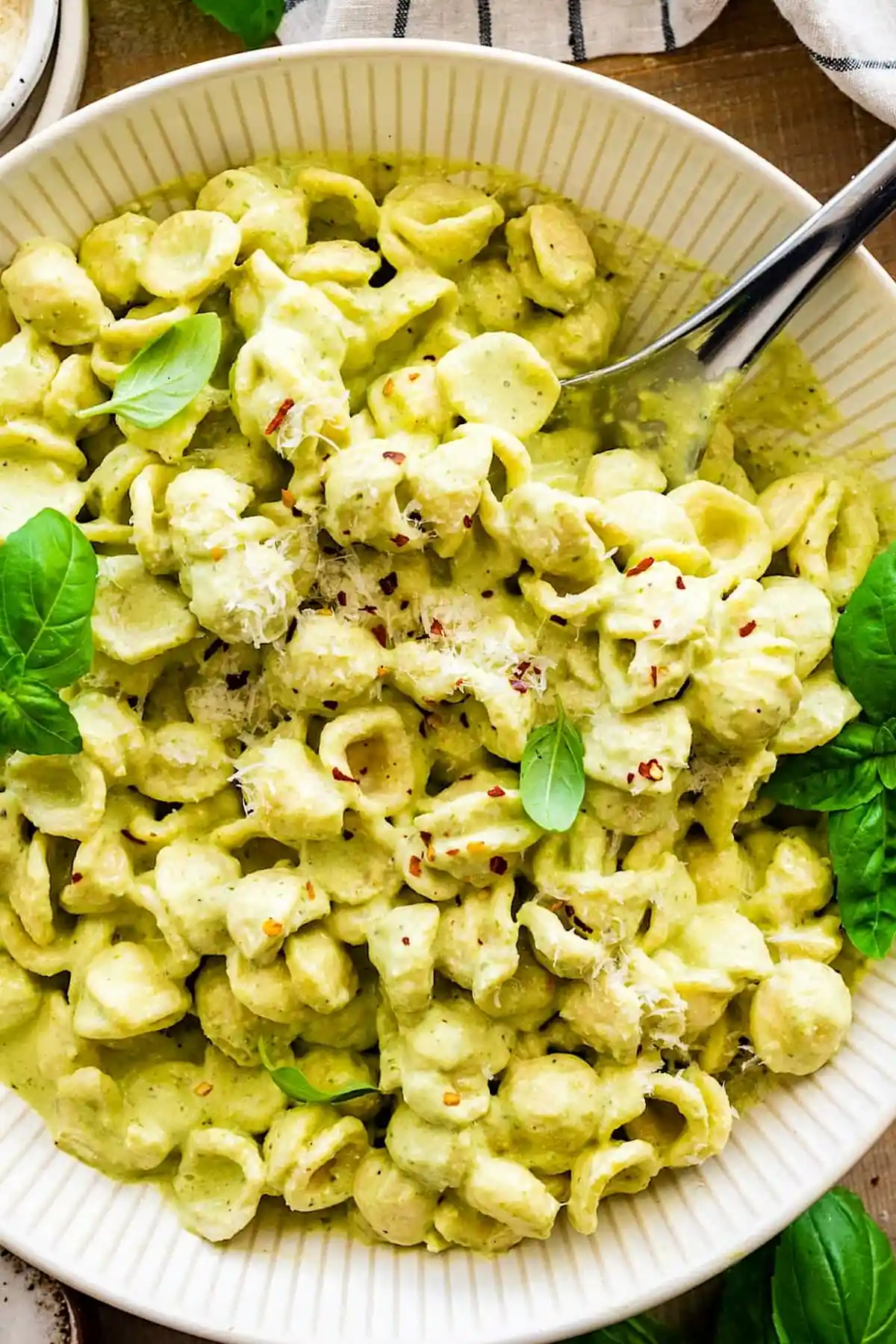
List of ingredients
- 1 lb orecchiette pasta (or any pasta shape of your choice)
- 1 cup basil pesto (homemade or store-bought)
- 1 cup cottage cheese (2% or 4% milkfat recommended for texture)
- 1/2 cup reserved pasta water (used to thin and emulsify the sauce)
- Kosher salt and black pepper (to taste)
- Crushed red pepper flakes (for garnish)
- Fresh basil leaves (for garnish)
- Microbial-rennet Parmesan cheese (for garnish)
step-by-step instructions
- Cook the pasta: Bring a large pot of salted water to a boil. Cook the pasta until it reaches an al dente texture according to the package instructions. Reserve 1 cup of the starchy pasta water before draining the noodles through a colander. Return the pasta to the pot or transfer it to a large serving bowl.
- Blend the sauce: Place the basil pesto, cottage cheese, and 1/2 cup of the reserved pasta water into a blender or food processor. Process the mixture until it is completely smooth and creamy. Season the sauce with salt and black pepper according to your preference.
- Combine and serve: Pour the creamy pesto sauce over the cooked pasta. Stir gently until the pasta is thoroughly coated in the sauce. Garnish with crushed red pepper flakes, fresh basil, and Parmesan cheese. Serve the dish warm.
Advanced Sauce Customizations
Incorporating Sautéed Cherry Tomatoes
Sauté halved cherry tomatoes in a pan with a small amount of olive oil until they burst. Stir them into the pasta after the sauce has been added to provide a bright, acidic contrast to the creamy base.
Adding Grilled Chicken Breasts
Slice grilled chicken breasts into bite-sized pieces and fold them into the final mixture. This increases the protein content and makes the meal more substantial for dinner.
Mixing in Sautéed Mushrooms
Brown sliced cremini or button mushrooms in a pan until golden. Mix these into the pesto pasta to add an earthy, savory depth to the overall flavor profile.
Using Steamed Broccoli Florets
Steam small broccoli florets until tender-crisp. Fold them into the pasta at the final step to add texture and a boost of micronutrients.
Adding Sun-Dried Tomatoes
Chop sun-dried tomatoes stored in oil and stir them into the sauce. These provide a concentrated, tangy sweetness that complements the basil in the pesto.
Integrating Sautéed Shrimp
Pan-sear shrimp with garlic and lemon juice before adding them to the dish. The seafood pairs naturally with basil and the creaminess of the cottage cheese.
Professional Texture Tips
Achieving Maximum Smoothness
Use a high-speed blender or food processor to ensure the cottage cheese curds are completely broken down. This transforms the textured cheese into a silky, heavy-cream-like consistency that coats the pasta evenly.
Managing Sauce Viscosity
The reserved pasta water is essential for adjusting the thickness of the sauce. If the sauce feels too heavy, blend in an additional tablespoon of pasta water until the desired flow is achieved.
Preventing Sauce Graininess
Ensure the cottage cheese is at room temperature or slightly warmed before blending. This helps the fats emulsify more effectively with the pesto and water, preventing a grainy texture.
Optimizing Pasta Water Usage
The starch in the boiling water acts as a natural binder. Using this water instead of plain water helps the sauce cling to the noodles rather than sliding off the bottom of the bowl.
Ingredient Substitution Options
Alternative Creamy Bases
If cottage cheese is unavailable, plain Greek yogurt can be used for a tangier flavor. Ricotta cheese is another option, though it may require more blending to reach the same smoothness.
Pesto Flavor Variations
While basil is traditional, you can use kale or spinach pesto for a different nutritional profile. Walnut or almond-based pestos also work well if you want a different nutty undertone.
Gluten-Free Pasta Alternatives
Brown rice pasta or chickpea pasta are excellent substitutes for traditional wheat pasta. Be mindful that gluten-free pastas often release different amounts of starch into the water, which may affect sauce thickness.
Dairy-Free Creamy Adjustments
For a dairy-free version, replace cottage cheese with blended soaked cashews or a thick coconut cream. Ensure the pesto used is also free of Parmesan cheese to maintain the dietary restriction.
Whole Grain Pasta Selection
Using whole wheat or spelt pasta adds more fiber and a nuttier taste. These pastas typically require slightly more cooking time and may absorb more sauce than refined white pasta.
Serving and Pairing Recommendations
Pairing with Fresh Arugula Salad
Serve this dish alongside a simple arugula salad dressed with lemon juice and olive oil. The peppery greens and acidity of the lemon cut through the richness of the creamy pesto.
Adding Garlic Bread Accompaniments
Toast slices of baguette with garlic butter and herbs. The crunchy texture of the bread provides a contrast to the soft, creamy pasta and helps soak up extra sauce.
Serving with Roasted Broccoli
Oven-roasted broccoli with a pinch of salt and pepper makes a healthy side dish. The charred edges of the broccoli complement the fresh basil notes in the sauce.
Pairing with Caprese Salad
A side of sliced fresh mozzarella, tomatoes, and balsamic glaze echoes the flavors of the pesto. This creates a cohesive Italian-themed meal.
Adding Toasted Pine Nuts
Sprinkle toasted pine nuts over the finished pasta for extra crunch. This reinforces the traditional ingredients found in classic pesto sauce.
Storage and Preservation Guide
Refrigerator Storage Methods
Store leftover pasta in an airtight container in the refrigerator for up to four days. Keep the container sealed tightly to prevent the pasta from absorbing odors from other foods.
Avoiding Freezer Storage
It is not recommended to freeze this dish due to the cottage cheese. The freezing and thawing process can cause the dairy to separate, resulting in a grainy or watery texture.
Maintaining Sauce Integrity
If storing the sauce separately from the pasta, keep it in a glass jar. This prevents the sauce from oxidizing and keeps the basil color vibrant for longer.
Reheating Instructions
Microwave Reheating Process
Place a portion of pasta in a microwave-safe bowl and add a splash of water or milk. Heat in short intervals, stirring in between, to ensure the sauce becomes creamy again without separating.
Stovetop Reheating Method
Place the pasta in a skillet over low heat. Add a small amount of water or extra pesto and stir gently until warmed through to avoid scorching the dairy.
Preventing Dryness During Reheating
Pasta tends to absorb moisture as it sits in the fridge. Adding a tablespoon of liquid before reheating restores the original sauce consistency and prevents the dish from becoming clumpy.
Troubleshooting Common Issues
Fixing a Sauce That Is Too Thick
If the sauce is too thick after mixing, stir in additional reserved pasta water one tablespoon at a time. This will thin the sauce while maintaining the flavor profile.
Correcting a Thin or Watery Sauce
If the sauce is too thin, simmer it briefly in a pan before adding it to the pasta. Alternatively, stir in an extra tablespoon of Parmesan cheese to thicken the mixture.
Improving a Weak Pesto Flavor
If the basil taste is too subtle, stir in a tablespoon of concentrated pesto or a squeeze of fresh lemon juice. The acidity of the lemon enhances the perception of the basil flavor.
Resolving Texture Graininess
If the sauce remains grainy after blending, pass it through a fine-mesh sieve. This removes any remaining cottage cheese curds for a professional, velvety finish.
Frequently Asked Questions
Can I use fat-free cottage cheese?
Yes, fat-free cottage cheese can be used, but the resulting sauce will be less creamy and have a thinner mouthfeel compared to 2% or 4% versions.
Do I have to blend the sauce?
Blending is highly recommended to remove the curds of the cottage cheese. Without blending, the sauce will have a chunky texture that does not coat the pasta as smoothly.
Can I make this ahead of time?
You can prepare the sauce in advance and store it in the refrigerator. However, for the best texture, toss the sauce with freshly cooked pasta just before serving.
What is the best pasta shape for this recipe?
Orecchiette, fusilli, or penne are ideal because their shapes and ridges capture the thick creamy sauce more effectively than long, smooth noodles.
Can I omit the pasta water?
While you can use milk or cream, reserved pasta water is superior because the starch helps the sauce emulsify and stick to the pasta.
Print
Creamy Pesto Pasta with Cottage Cheese
- Total Time: 20 minutes
- Yield: 6 servings 1x
- Diet: Vegetarian
Description
You only need 3-ingredients and 20 minutes to make this protein-packed creamy pesto pasta. It is the perfect weeknight meal, kids and adults love it!
Ingredients
- 1 lb orecchiette pasta
- 1 cup basil pesto
- 1 cup cottage cheese (2% or 4%)
- 1/2 cup reserved pasta water
- Kosher salt and black pepper, to taste
- Crushed red pepper flakes, for garnish
- Fresh basil, for garnish
- Parmesan cheese, for garnish
Instructions
- Step 1: Bring a large pot of salted water to a boil and cook the pasta until al dente, according to package instructions. Reserve 1 cup of the pasta water. Use a colander to drain the pasta. Return to pot or place in a large serving bowl.
- Step 2: In a blender or food processor, combine the pesto, cottage cheese, and 1/2 cup of reserved pasta water. Blend until smooth. Season with salt and pepper, to taste.
- Step 3: Add the creamy pesto sauce to the pasta and stir until pasta is well coated. Garnish with crushed red pepper flakes, fresh basil, and Parmesan cheese, if desired. Serve warm.
Notes
I use 1/2 cup reserved pasta water, but if the sauce is too thick for your liking, you can add a little extra pasta water and blend again.
- Prep Time: 8 minutes
- Cook Time: 12 minutes
- Category: Pasta
- Method: Stovetop
- Cuisine: Italian
Nutrition
- Serving Size: 1 serving
- Calories: 435 kcal
- Sugar: 4 g
- Sodium: 501 mg
- Fat: 16 g
- Saturated Fat: 3 g
- Unsaturated Fat: 13 g
- Trans Fat: 0 g
- Carbohydrates: 54 g
- Fiber: 3 g
- Protein: 16 g
- Cholesterol: 9 mg