
This vibrant pasta dish blends the bold heat of Jamaican jerk seasoning with a smooth parmesan cream sauce. It is a high-protein, comforting meal that can be prepared in just 30 minutes.
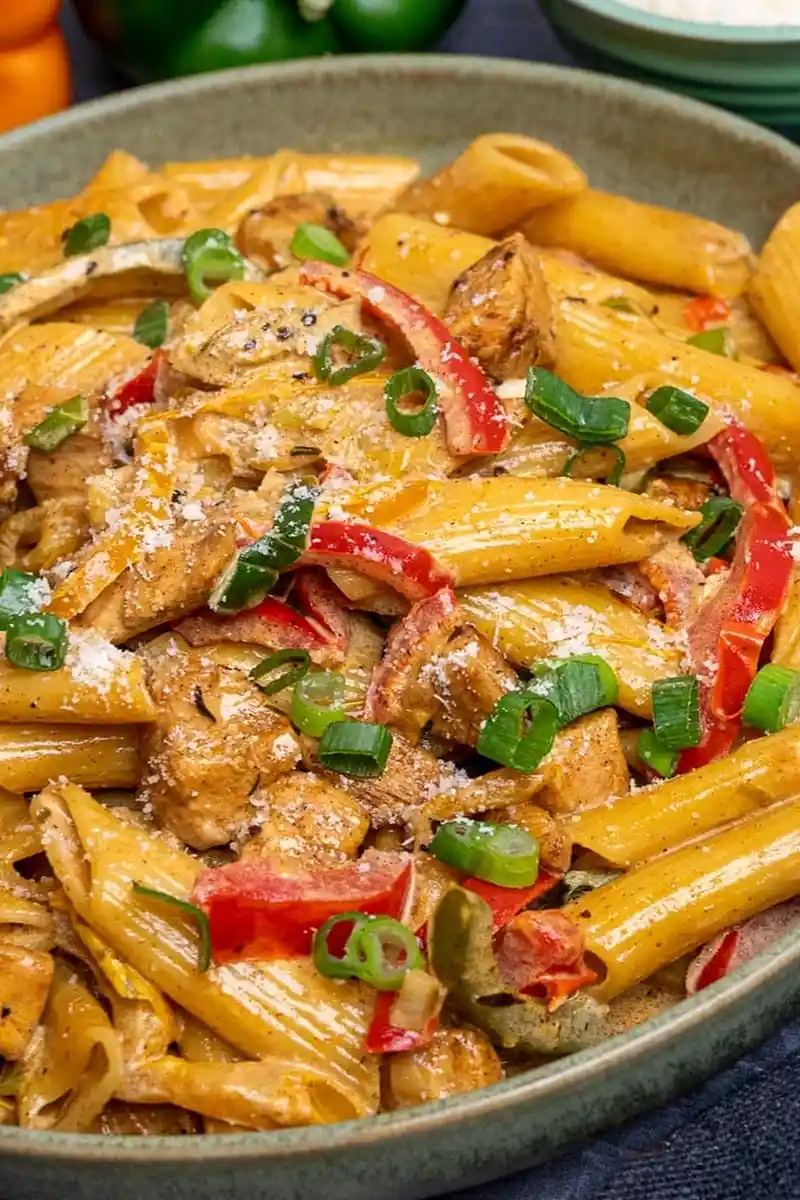
List of ingredients
- 1 lb pasta – use a shape that holds sauce well, like penne.
- 1 lb chicken breast, diced – cut into uniform cubes for even cooking.
- 3 tablespoons jerk seasoning, divided – use a quality blend based on your heat preference.
- 2 tablespoons olive oil, divided – used for searing and sautéing.
- 1 tablespoon unsalted butter – adds richness to the base.
- 1 red bell pepper – diced for color and sweetness.
- 1 green bell pepper – diced for a classic pepper flavor.
- 1 yellow bell pepper – diced to complete the tricolor look.
- 3 garlic cloves, minced – provides a pungent aromatic base.
- 4 spring onions, chopped – used for both flavor and garnish.
- 1 cup chicken stock – helps build the sauce consistency.
- 1 cup heavy cream – creates the creamy texture.
- 1 cup parmesan, grated – adds saltiness and thickness.
- Fresh parsley – optional garnish for a pop of freshness.
step-by-step instructions
- Season the chicken: Place the diced chicken pieces in a large bowl and toss them thoroughly with two tablespoons of the jerk seasoning.
- Boil the pasta: Bring a large pot of water to a boil, salt it generously, and cook the pasta until al dente according to the package directions. Reserve 1-2 cups of the pasta water before draining the noodles.
- Sear the chicken: Heat 1 tablespoon of olive oil in a deep pan or shallow cast-iron casserole and melt the butter. Add the chicken cubes and cook for 5-6 minutes until cooked through, then remove them from the pan and set aside.
- Sauté the vegetables: Add the remaining olive oil to the same pan and sauté the red, green, and yellow peppers for 2-3 minutes until they reach your desired softness.
- Aromatics and spice: Stir in the minced garlic and chopped spring onions, cooking for one minute until fragrant. Stir in the final tablespoon of jerk seasoning and cook for 30 seconds to toast the spices.
- Build the sauce: Pour in the chicken stock and heavy cream. Simmer the mixture and cook until the sauce begins to thicken.
- Combine ingredients: Return the cooked chicken to the pan and add the cooked pasta. Toss everything together until well coated, adding a splash of reserved pasta water if the sauce is too thick.
- Final touch: Remove the pan from the heat and stir in the grated parmesan cheese. Serve immediately, garnished with fresh parsley and additional sliced spring onions.
Ingredient Selection and Alternatives
Choosing the Right Jerk Seasoning
The quality of your jerk seasoning determines the depth of flavor in this dish. Look for blends that contain allspice, thyme, and scotch bonnet pepper for an authentic Caribbean taste. If you prefer a milder flavor, choose a ‘mild’ variety to ensure the dish is family-friendly.
Selecting Pasta with the Best Texture
Penne, rigatoni, or fusilli are the best choices for this recipe because their ridges and holes trap the creamy sauce. Avoid thin pastas like spaghetti, as the heavy sauce and large chunks of chicken and peppers may overwhelm the noodles. Always cook the pasta slightly under the package time to avoid mushiness when tossed in the sauce.
Using Chicken Thighs for Juicier Meat
While chicken breast is leaner and provides more protein, boneless skinless chicken thighs are a great alternative. Thighs are more forgiving during the searing process and stay juicy even if slightly overcooked. Use the same dicing size to ensure they cook in the same timeframe as the breast.
Preparing Bell Peppers for Even Cooking
Dice your red, yellow, and green peppers into uniform squares of about half an inch. This ensures that they all soften at the same rate during the sautéing process. Maintaining consistent sizes prevents some pieces from becoming mushy while others remain raw.
Selecting the Best Heavy Cream
Use full-fat heavy cream to ensure the sauce thickens properly and maintains a velvety consistency. Avoid using half-and-half or milk, as these lack the fat content necessary to emulsify with the parmesan and stock. If you are in the UK, double cream is the correct substitute for heavy cream.
Freshly Grated vs. Pre-Shredded Parmesan
Freshly grating your own parmesan from a block is highly recommended for this recipe. Pre-shredded cheeses often contain anti-caking agents like cellulose, which can prevent the cheese from melting smoothly. Fresh parmesan integrates more seamlessly into the sauce for a professional finish.
Advanced Cooking Techniques
The Science of Blooming Spices
Adding the last tablespoon of jerk seasoning to the hot oil before adding the liquid is called ‘blooming’. This process releases the fat-soluble flavors and aromas from the dried spices, intensifying the taste. Toasting the spices for 30 seconds transforms the flavor profile from a simple seasoning to a deep, integrated sauce.
Timing the Pasta for Al Dente Results
Cooking your pasta al dente is critical because it will continue to cook slightly when tossed in the simmering sauce. Drain the pasta 1-2 minutes before the package suggests it is done. This prevents the noodles from becoming overcooked and breaking apart during the final mixing stage.
Maintaining the Right Pan Temperature
Use medium-high heat when searing the chicken to create a golden-brown crust. If the pan is too cool, the chicken will steam in its own juices rather than brown, resulting in a rubbery texture. Once the vegetables are added, you can lower the heat slightly to prevent the garlic from burning.
Emulsifying the Sauce with Pasta Water
The reserved pasta water is rich in starch, which acts as a natural binder. Adding a splash of this water at the end helps the cream and cheese adhere to the pasta more effectively. It creates a glossy finish and allows you to adjust the thickness of the sauce without adding more cream.
Preventing Cheese from Clumping
Always stir the parmesan cheese into the pasta after you have removed the pan from the heat. If the sauce continues to boil after the cheese is added, the proteins in the cheese can tighten and separate. This leads to a grainy or clumpy texture rather than a smooth, melted sauce.
Managing Heat Levels During Searing
When using a cast-iron skillet, remember that the pan retains heat longer than stainless steel. Be mindful of the temperature when adding the garlic and spring onions, as they can burn quickly. If the pan seems too hot, push the vegetables to the side and add a tiny drop of oil to the center.
Dietary Substitutions and Variations
Substituting Coconut Milk for Cream
For a dairy-free version that is closer to traditional Jamaican styles, replace the heavy cream with full-fat canned coconut milk. Ensure you use the thick cream from the top of the can for the best consistency. This adds a subtle sweetness that complements the spicy jerk seasoning perfectly.
Using Prawns or Shrimp Instead of Chicken
Jerk seasoning works exceptionally well with seafood like large prawns or shrimp. Instead of searing them at the start, cook them separately in a pan for 2 minutes per side until pink. Stir them into the pasta at the very end to prevent them from becoming overcooked and tough.
Adapting for Gluten-Free Diets
Any high-quality gluten-free pasta will work well with this sauce. Because gluten-free pasta can break down more easily, cook it for a minute less than the package directions. This ensures it maintains its structure when tossed with the heavy cream and vegetables.
Vegetarian Protein Alternatives
To make this recipe vegetarian, replace the chicken with thick slices of portobello mushrooms or a plant-based chicken substitute. Use vegetable broth instead of chicken stock to keep the dish entirely meat-free. The jerk seasoning and creamy sauce provide enough flavor that the mushrooms remain satisfying.
Reducing Sodium in Store-Bought Seasoning
Many commercial jerk seasonings are high in salt, which can make the final dish too salty once the parmesan is added. To manage this, use unsalted butter and reduce the amount of salt added to the pasta water. You can also rinse the seasoning through a fine mesh if it contains very large salt crystals.
Adding Fresh Herbs for Complexity
While parsley is a great garnish, adding a sprig of fresh thyme to the sauce while it simmers adds an authentic Caribbean layer. Thyme is a primary ingredient in traditional jerk rubs and enhances the earthy notes of the allspice. Remove the sprig before serving.
Serving and Pairing Suggestions
Pairing with Acidic Green Salads
Because the rasta pasta is rich and creamy, it pairs best with a side that provides acidity. A crisp garden salad with a lemon-vinaigrette or a lime-based dressing cuts through the fat of the cream and cheese. This balances the palate and makes the meal feel lighter.
Serving with Garlic Toast
Toasted garlic bread is a classic accompaniment that helps soak up the remaining sauce on the plate. Use a French baguette sliced lengthwise, spread with garlic butter, and toasted until golden. The crunch of the bread provides a nice contrast to the soft pasta.
Incorporating Sweet Plantains
For a full Caribbean experience, serve this pasta with a side of fried sweet plantains. The natural sweetness of the ripe plantains offsets the heat of the jerk seasoning. Sauté sliced plantains in a bit of oil until caramelized and brown on both sides.
Adding Toasted Breadcrumbs for Crunch
To add a gourmet touch, sprinkle a handful of toasted pangrattato or seasoned breadcrumbs on top. Sauté panko crumbs with a little olive oil and garlic until golden brown. This adds a textural element that prevents the dish from feeling too uniform in softness.
Pairing with Steamed Broccoli
If you want to add more greens to the meal, steamed broccoli or sautéed spinach works well. The bitterness of the broccoli complements the creamy sauce and adds necessary nutrients. Toss the broccoli directly into the pasta at the end for convenience.
Storage and Reheating Guide
Air-Tight Storage Methods
Store leftover rasta pasta in a shallow, airtight container to keep the flavors fresh. This dish keeps well in the refrigerator for up to 3 days. Ensure the pasta is completely cooled before sealing the lid to prevent excess condensation from making the noodles soggy.
Preventing Sauce Separation During Storage
Cream-based sauces naturally thicken and may separate as they cool in the fridge. This is normal and can be easily fixed during the reheating process. Do not attempt to stir the cold pasta vigorously, as this may break the noodles.
Low-Heat Reheating Techniques
The best way to reheat this pasta is in a pan over low to medium heat. Add a splash of chicken stock, milk, or water to the pan to loosen the sauce. Stir gently and slowly until the pasta is warmed through and the sauce returns to a creamy consistency.
Avoiding the Freezer for Cream Sauces
It is not recommended to freeze this recipe because the heavy cream and parmesan can separate during the thawing process. This often results in a grainy texture that cannot be fully restored. If you must freeze it, use it within 2 months and thaw it slowly in the refrigerator overnight.
Common Troubleshooting
Adjusting Sauce Thickness
If the sauce becomes too thick after adding the parmesan, stir in more of the reserved pasta water one tablespoon at a time. If you have run out of pasta water, a small splash of heavy cream or whole milk will also work. Stop adding liquid once the sauce coats the pasta smoothly without pooling.
Fixing a Broken Cream Sauce
If the sauce ‘breaks’ or separates into oil and solids, it is usually due to excessive heat. To fix this, remove the pan from the heat and whisk in a tablespoon of cold water or a small knob of cold butter. This helps re-emulsify the fats and liquids into a smooth sauce.
Managing Overcooked Pasta
If your pasta is overcooked, avoid stirring it too aggressively in the pan, as it may mush. Gently fold the sauce around the noodles using a silicone spatula. In the future, remember to drain the pasta while the center is still slightly firm to the bite.
Balancing Too Much Spice
If the jerk seasoning is too hot for your preference, you can balance the heat by adding a squeeze of fresh lime juice. The acidity of the lime neutralizes the capsaicin in the peppers. Alternatively, adding an extra tablespoon of heavy cream or a dollop of sour cream can mellow the spice.
Frequently Asked Questions
What is rasta pasta?
Rasta pasta is a Jamaican-fusion dish that combines Italian-style pasta with Caribbean jerk seasoning. It typically features a protein like chicken, tri-color bell peppers, and a creamy parmesan sauce.
Why is it called rasta pasta?
The name comes from the use of red, yellow, and green bell peppers, which represent the colors of the Rastafarian flag. The dish was created by Chef Lorraine Washington in Jamaica in 1986.
Is rasta pasta spicy?
The spice level depends entirely on the jerk seasoning you use. Mild blends provide a gentle warmth, while hot blends or the addition of fresh scotch bonnet peppers make the dish quite spicy.
Can I make rasta pasta without cream?
Yes, you can substitute heavy cream with full-fat canned coconut milk. This creates a similar creamy texture while making the dish dairy-free and giving it a more traditional tropical flavor profile.
Print
Creamy Rasta Pasta with Jamaican Jerk Chicken
- Total Time: 30 minutes
- Yield: 4 servings 1x
- Diet: General
Description
A bold and comforting Jamaican-inspired pasta featuring jerk-seasoned chicken and tricolor bell peppers in a rich, creamy parmesan sauce, ready in just 30 minutes.
Ingredients
- 1 lb pasta
- 1 lb chicken breast, diced
- 3 tablespoons jerk seasoning, divided
- 2 tablespoons olive oil, divided
- 1 tablespoon unsalted butter
- 1 red bell pepper
- 1 green bell pepper
- 1 yellow bell pepper
- 3 garlic cloves, minced
- 4 spring onions, chopped
- 1 cup chicken stock
- 1 cup heavy cream
- 1 cup parmesan, grated
- Fresh parsley, optional
Instructions
- Season: Place the chicken pieces in a large bowl and toss them in two tablespoons of jerk seasoning.
- Boil Pasta: Bring a large pot of water to a boil, salt it generously and cook the pasta al dente according to the package instructions. Reserve 1-2 cups of pasta water before draining.
- Sear Chicken: Heat 1 tablespoon olive oil in a deep pan or shallow cast-iron casserole and melt the butter. Add the chicken cubes and cook for 5-6 minutes until cooked through, then remove and set aside.
- Sauté Peppers: Add the remaining olive oil to the pan and saute the peppers for 2-3 minutes or until they soften.
- Bloom Seasoning: Add the garlic and sliced spring onions and cook for another minute until fragrant. Stir in the remaining jerk seasoning and cook for 30 seconds.
- Simmer Sauce: Stir in the chicken stock and heavy cream and cook until the sauce starts to thicken.
- Combine: Add the chicken back to the pan and then the cooked pasta. Toss well until coated, adding a dash of reserved pasta water if the sauce is too thick.
- Finish: Stir in the parmesan off the heat and serve immediately, garnished with fresh parsley and sliced spring onions.
Notes
Bloom the last spoonful of jerk seasoning in the oil for 30 seconds to deepen the flavor. Stir the parmesan in off the heat to prevent the sauce from becoming grainy.
- Prep Time: 10 minutes
- Cook Time: 20 minutes
- Category: Pasta
- Method: Stovetop
- Cuisine: Jamaican
Nutrition
- Serving Size: 1 serving
- Calories: 608 kcal
- Sugar: 6 g
- Sodium: 650 mg
- Fat: 23 g
- Saturated Fat: 8 g
- Unsaturated Fat: 15 g
- Trans Fat: 0 g
- Carbohydrates: 50 g
- Fiber: 4 g
- Protein: 50 g
- Cholesterol: 124 mg