
This creamy pasta dish utilizes roasted red peppers to create a rich, vibrant sauce in just 25 minutes. It serves as a satisfying alternative to traditional red sauces and is ideal for quick weeknight dinners.
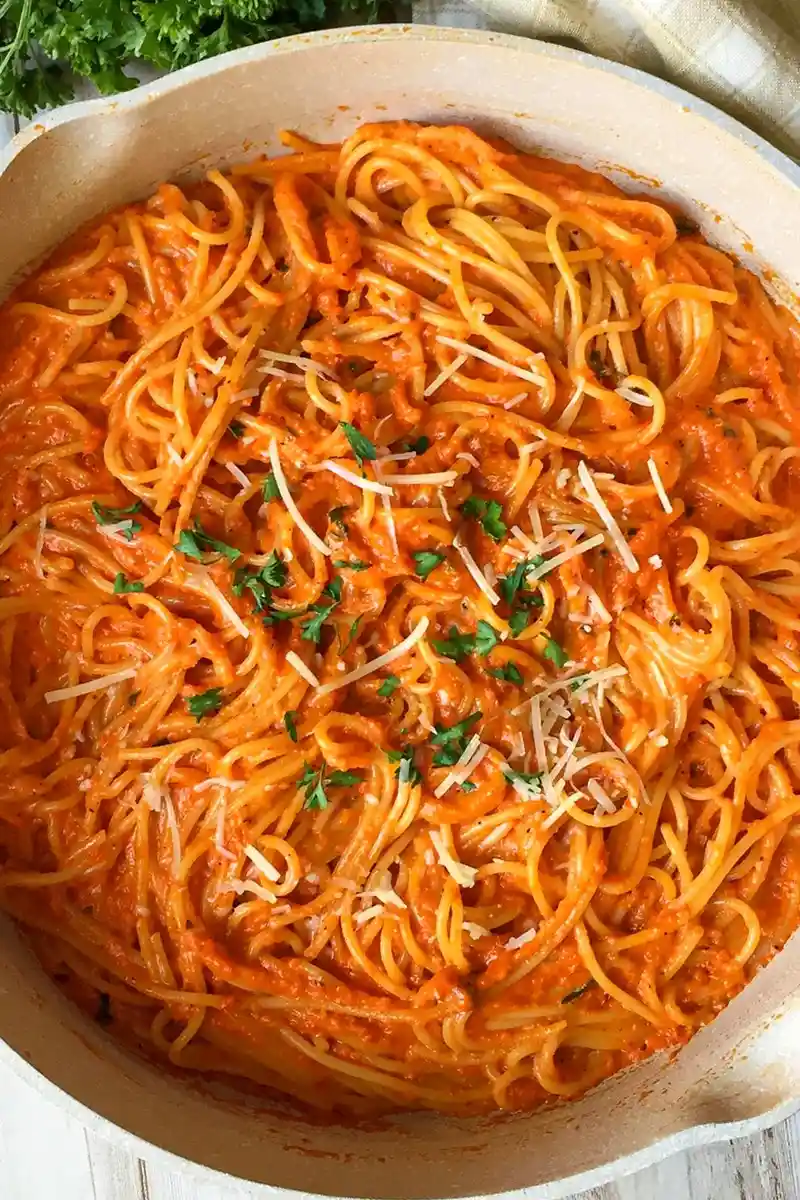
List of ingredients
- 1 medium yellow onion, chopped – provides a sweet aromatic base.
- 1 Tbsp. butter – used for sautéing the vegetables.
- 2 tsp. garlic, minced – adds a pungent, savory depth.
- 16 oz. jar roasted red peppers, drained – the primary flavor component.
- 1 1/4 cup heavy cream – creates a smooth, velvety texture.
- 3/4 cup grated parmesan cheese (microbial rennet) – adds salty richness.
- 2 Tbsp. fresh parsley, chopped – used for a fresh finish.
- 1/2 tsp. paprika – contributes a mild, smoky undertone.
- 1/2 tsp. pepper – basic seasoning for balance.
- 1/2 tsp. salt – enhances all the other flavors.
- 1/2 tsp. red pepper flakes – adds a subtle touch of heat.
- 1 1/2 Tbsp. sugar – balances the acidity of the peppers.
- 3 tsp. lemon juice – provides brightness to the cream.
- 12 oz. spaghetti noodles – the pasta foundation.
step-by-step instructions
- Boil Pasta: Bring a large pot of water to a boil and cook the spaghetti noodles until they are al dente.
- Sauté Aromatics: While the pasta cooks, add butter, chopped onion, and minced garlic to a large skillet and cook over medium-high heat until the onions are soft.
- Blend Sauce: Transfer the cooked onions and drained roasted red peppers into a food processor or blender and pulse until the mixture is completely smooth.
- Simmer and Cream: Pour the blended mixture back into the skillet and keep it at a simmer. Stir in the heavy cream until well combined.
- Season the Sauce: Stir in the parmesan cheese, paprika, salt, pepper, red pepper flakes, sugar, and lemon juice, continuing to simmer while stirring occasionally.
- Combine and Serve: Drain the pasta noodles and add them to the pasta sauce. Toss until all noodles are evenly coated, then serve immediately garnished with fresh parsley and parmesan cheese.
Customizing Your Pasta Dish
Add Sautéed Shrimp for Seafood Flavor
To add seafood, sauté shrimp in a separate pan with butter and garlic until pink. Fold the cooked shrimp into the pasta and sauce just before serving. This adds a lean protein that complements the sweetness of the peppers.
Incorporate Grilled Chicken for Protein
Slice grilled chicken breast into strips and toss them with the finished pasta. You can season the chicken with salt and pepper to keep the flavors neutral. This transforms the dish into a more filling main course.
Use Sliced Mushrooms for an Earthy Tone
Sauté sliced cremini or button mushrooms in butter before adding the onions. The earthiness of the mushrooms balances the brightness of the lemon and red peppers. Ensure the mushrooms are browned for the best flavor.
Stir in Baby Spinach for Color and Nutrients
Add two handfuls of fresh baby spinach to the skillet during the last minute of simmering. The residual heat will wilt the spinach without overcooking it. This adds a vibrant green color and extra vitamins to the meal.
Replace Spaghetti with Penne for Better Sauce Grip
Penne or rigatoni are excellent alternatives because their hollow centers trap more of the creamy sauce. These shapes provide a heartier bite than spaghetti. Cook them according to the package directions until al dente.
Try Fettuccine for a Richer Mouthfeel
Fettuccine noodles provide a wider surface area for the red pepper cream to cling to. This results in a more luxurious eating experience. Ensure you toss the noodles thoroughly to avoid any uncoated areas.
Experiment with Whole Wheat Pasta for Fiber
Whole wheat spaghetti increases the fiber content and adds a nuttier flavor. This version is slightly heartier and pairs well with the richness of the heavy cream. Reduce the boiling time slightly to prevent the noodles from becoming too soft.
Preparing Your Own Roasted Peppers
Oven Roasting for High Volume
Preheat your oven to 450 degrees and place the rack in the top position. Cut peppers in half, remove seeds, and roast them cut-side down on a foil-lined sheet for 15-20 minutes. This method is efficient for preparing multiple batches of sauce.
Gas Burner Roasting for Intense Char
Place a whole pepper directly on a medium gas flame, turning every few minutes with tongs. Roast for 20-25 minutes until the skin is charred and the pepper is soft. This creates a deeper, smoky flavor that jarred peppers lack.
Outdoor Grilling for Smoky Depth
Place peppers on a medium grill flame and turn frequently for 15-20 minutes. The open fire imparts a distinct wood-smoke quality to the vegetables. Remove them once they have collapsed and the skins are blackened.
Steam-Peeling Peppers for Easy Skin Removal
Place freshly roasted peppers in a bowl and cover tightly with plastic wrap for 10 minutes. The trapped steam loosens the charred skin from the flesh. Simply peel the skin away and discard it before blending.
Proper Storage of Homemade Roasted Peppers
Store homemade peppers in an airtight container submerged in olive oil. Keep them refrigerated for up to one week. This preserves the moisture and prevents the peppers from oxidizing.
Professional Sauce Texture Tips
Use a High-Powered Blender for Maximum Smoothness
A high-speed blender can pulverize the onion and pepper fibers more effectively than a food processor. This results in a professional, silky consistency. Process the mixture for at least 60 seconds for the best results.
Pass Sauce Through a Sieve for Fine Texture
For an ultra-refined sauce, pour the blended mixture through a fine-mesh strainer before adding the cream. This removes any remaining small chunks of skin or seeds. This step is optional but recommended for formal dinners.
Control Heat to Prevent Cream Separation
Always keep the sauce at a gentle simmer rather than a rolling boil. High heat can cause the heavy cream to separate or curdle. Stir frequently to maintain a consistent emulsion.
Use Reserved Pasta Water to Emulsify
Save half a cup of the starchy pasta water before draining the noodles. If the sauce becomes too thick, stir in small amounts of this water. The starch helps the sauce bond to the pasta more effectively.
Incorporate Butter at the End for Gloss
Stirring in a small knob of cold butter just before tossing the pasta creates a glossy finish. This technique, known as monter au beurre, enhances the richness of the sauce. It also helps the sauce coat the noodles evenly.
Ingredient Substitutions and Swaps
Use Coconut Cream for a Dairy-Free Option
Substitute heavy cream with full-fat canned coconut cream for a non-dairy version. The flavor is slightly different but maintains the desired creaminess. Adjust the amount of salt to compensate for the lack of parmesan.
Swap Parmesan for Nutritional Yeast for Vegan Style
Use nutritional yeast instead of parmesan cheese to get a similar cheesy, nutty flavor. Combine it with a pinch of salt to mimic the savoriness of the original cheese. This works best when paired with the coconut cream substitution.
Use Apple Cider Vinegar if Lemon Juice is Unavailable
A small amount of apple cider vinegar can replace lemon juice to provide the necessary acidity. Use slightly less than the called-for amount of lemon juice as vinegar is more pungent. Taste as you go to ensure balance.
Substitute Honey for Sugar as a Natural Sweetener
Honey can replace granulated sugar to balance the acidity of the red peppers. Honey adds a floral note that complements the paprika. Use one tablespoon of honey for every 1.5 tablespoons of sugar.
Try Roasted Yellow Peppers for a Milder Taste
Yellow roasted peppers are generally sweeter and less acidic than red ones. You can use a mix of red and yellow for a visually interesting sauce. The overall creaminess and texture will remain the same.
Storage and Preservation Methods
Refrigerating Sauce and Pasta Separately
Store the leftover sauce and the cooked pasta in separate airtight containers. Mixing them before storage can lead to the pasta absorbing all the sauce and becoming mushy. This keeps the components fresh for longer.
Best Containers for Long-Term Freshness
Use glass containers with locking lids to prevent the sauce from absorbing odors from the fridge. Glass is non-reactive and does not stain from the red pepper pigments. Ensure the lids are tight to keep air out.
Avoiding Freezer Burn in Cream Sauces
Avoid freezing this sauce as the heavy cream and cheese may separate upon thawing. If you must freeze it, freeze the blended pepper base without the cream. Add the cream and cheese fresh when reheating.
Proper Thawing Techniques for Frozen Sauce
If you froze the pepper base, thaw it slowly in the refrigerator overnight. Avoid thawing in the microwave to prevent uneven heating. Once thawed, proceed with the simmering and creaming steps of the recipe.
Reheating Instructions for Fresh Taste
Use a Low-Heat Stovetop Method
Reheat the sauce in a skillet over low to medium heat. Avoid high temperatures to prevent the dairy from breaking. Stir constantly until the sauce is warmed through.
Adding Milk to Restore Creaminess
Add a splash of milk or heavy cream when reheating the pasta. This restores the moisture lost during refrigeration. It helps the sauce regain its original velvety consistency.
Microwave Settings for Even Heating
Use a microwave-safe bowl and heat in 30-second intervals. Stir the pasta between each interval to ensure there are no cold spots. Covering the bowl with a damp paper towel helps retain moisture.
Troubleshooting Your Red Pepper Sauce
Fix an Overly Acidic Sauce
If the sauce tastes too tart, add a pinch more sugar or a small amount of butter. The fat in the butter helps neutralize the acidity of the peppers and lemon juice. Taste after each small addition.
Thin Out a Sauce That Is Too Thick
If the sauce is too thick, whisk in a tablespoon of milk or reserved pasta water. Do this slowly while the sauce is simmering. This will loosen the consistency without diluting the flavor.
Remedy a Sauce That Has Separated
If the sauce separates, whisk it vigorously over low heat. Adding a teaspoon of cornstarch mixed with water can help stabilize the emulsion. Ensure the heat remains low to prevent further separation.
Adjust Salt Levels for Jarred Pepper Variations
Different brands of jarred peppers have varying salt levels. Taste the sauce before adding the salt called for in the recipe. Add salt in increments to avoid over-seasoning the final dish.
Frequently Asked Questions
Can I use fresh red peppers instead of jarred?
Yes, you can use fresh peppers, but they must be roasted, peeled, and seeded first. Fresh raw peppers will not provide the sweet, smoky flavor characteristic of this sauce. Follow the roasting guide provided in this article.
How do I prevent the sauce from curdling?
Prevent curdling by adding the cream to a simmering sauce rather than boiling it. Also, ensure the lemon juice is stirred in at the end. Avoid using extremely high heat once the dairy is added.
Which type of parmesan cheese is best?
Freshly grated parmesan cheese melts more smoothly into the sauce than pre-shredded options. Pre-shredded cheeses often contain anti-caking agents that can make the sauce grainy. Use a microbial-rennet cheese for a clean ingredient list.
Can I make this sauce without a blender?
You can use a food processor or a hand immersion blender directly in the skillet. If you have neither, you can finely dice the peppers and onions, though the sauce will be chunky rather than smooth.
How long does the cooked pasta last in the fridge?
Cooked pasta and sauce will last for 3 to 4 days when stored in airtight containers. Always ensure the food has cooled slightly before sealing it to prevent excess condensation. Keep it stored at 40 degrees Fahrenheit or below.
Print
Creamy Roasted Red Pepper Pasta
- Total Time: 25 minutes
- Yield: 4 servings 1x
- Diet: General
Description
Roasted Red Pepper Pasta is a quick and easy Italian pasta dinner that comes together in only 25 minutes. This creamy, rich, and comforting sauce is a nice change from the classic marinara spaghetti sauce.
Ingredients
- 1 medium yellow onion, chopped
- 1 Tbsp. butter
- 2 tsp. garlic, minced
- 16 oz. jar roasted red peppers, drained
- 1 1/4 cup heavy cream
- 3/4 cup grated parmesan cheese
- 2 Tbsp. fresh parsley, chopped
- 1/2 tsp. paprika
- 1/2 tsp. pepper
- 1/2 tsp. salt
- 1/2 tsp. red pepper flakes
- 1 1/2 Tbsp. sugar
- 3 tsp. lemon juice
- 12 oz. spaghetti noodles
Instructions
- Step 1: Bring a large pot of water to a boil and cook spaghetti noodles until they are al dente.
- Step 2: Meanwhile, add butter, chopped onion, and minced garlic to a large skillet and cook over medium-high heat until onions are soft.
- Step 3: Add cooked onions and drained roasted red peppers to a food processor or blender and pulse until smooth.
- Step 4: Pour back into your skillet and keep it at a simmer. Add in heavy cream and stir to combine.
- Step 5: Stir in parmesan cheese, paprika, salt, pepper, red pepper flakes, sugar, and lemon juice and continue to simmer, stirring occasionally.
- Step 6: Drain pasta noodles and add them to your pasta sauce. Toss until all noodles are coated. Serve immediately with fresh parsley and parmesan cheese for garnish.
Notes
This recipe is customizable using any type of pasta and adding in a protein of your choice.
- Prep Time: 10 minutes
- Cook Time: 15 minutes
- Category: Main Course
- Method: Stovetop
- Cuisine: Italian
Nutrition
- Serving Size: 1 serving
- Calories: 476 kcal
- Sugar: 6.6 g
- Sodium: 883 mg
- Fat: 38.6 g
- Saturated Fat: 22.2 g
- Unsaturated Fat: 2.6 g
- Trans Fat: 0.2 g
- Carbohydrates: 30.4 g
- Fiber: 2 g
- Protein: 9.2 g
- Cholesterol: 123.7 mg