
This flavorful pasta dish combines tender chicken breasts with a rich blend of pesto and sun-dried tomatoes. It is an efficient meal that delivers a high-end Italian taste in under 30 minutes.
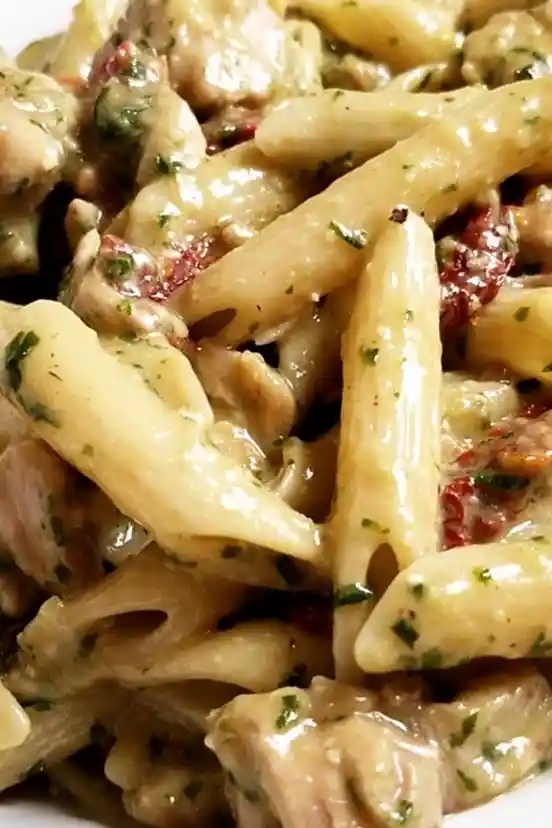
List of ingredients
- 1/2 lb. Penne Pasta – use rigate for better sauce adherence.
- 1 lb. Chicken Breasts – cut into 1 inch chunks for even cooking.
- 1 tbsp Olive Oil – used for searing the chicken.
- 1 tbsp Butter – adds richness to the pan sauce.
- 1/4 tsp Salt – for seasoning the chicken.
- 1/4 tsp Black Pepper – provides a mild spice.
- 1 tbsp Lemon Juice – tenderizes chicken and adds acidity.
- 1 cup Heavy Cream – creates the creamy base of the sauce.
- 1/4 cup Sun-Dried Tomatoes – drained from oil and chopped.
- 1/4 cup Parmesan Cheese – freshly grated for optimal melting.
- 1/3 cup Pesto – store-bought or homemade basil pesto.
step-by-step instructions
- Season the chicken: Toss the chicken chunks in lemon juice, salt, and black pepper to ensure flavor penetration.
- Prepare the pasta: Cook the penne pasta according to the package instructions until al dente. Drain the pasta and set it aside for later.
- Sear the protein: Add butter and olive oil to a large skillet over medium heat. Add the chicken chunks and cook for a few minutes until golden brown on the bottom, then flip and cook until fully cooked through.
- Develop the sauce: Stir in the heavy cream, pesto, parmesan cheese, and sun-dried tomatoes. Simmer the mixture over low heat for a few minutes until the sauce lightly thickens.
- Combine and serve: Add the cooked penne pasta to the skillet and toss thoroughly to combine with the sauce. Serve immediately.
Technical Cooking Tips
Precise Chicken Searing
Ensure the skillet is fully heated before adding the chicken to achieve a golden-brown crust. Do not crowd the pan, as too much meat can release moisture and cause the chicken to steam rather than sear. Cooking in batches if necessary maintains the high temperature required for a proper Maillard reaction.
Managing Sauce Temperature
Keep the heat on low when simmering the cream and cheese to prevent the sauce from breaking. High temperatures can cause the fats in the heavy cream to separate, resulting in an oily texture. A gentle simmer allows the parmesan to melt smoothly into the pesto base.
Pasta Water Integration
Reserve a small amount of the starchy pasta water before draining the penne. If the final sauce appears too thick after adding the pasta, stir in a tablespoon of this water. The starch helps emulsify the sauce and improves its ability to cling to the noodles.
Tenderizing with Lemon Juice
The citric acid in the lemon juice helps break down the fibers in the chicken breast. This ensures the meat remains juicy even after searing. Avoid letting the chicken marinate in the juice for too long, as the acid can eventually make the texture mushy.
Choosing the Right Skillet
A wide, shallow stainless steel or cast iron skillet is ideal for this recipe. These materials distribute heat evenly and provide enough surface area to brown the chicken efficiently. Non-stick pans work but do not develop the same depth of flavor from browned bits left in the pan.
Ingredient Substitutions
Replacing Heavy Cream
If heavy cream is unavailable, you can use half-and-half for a lighter version. To maintain the thickness, you may need to simmer the sauce for an extra two to three minutes. For a non-dairy option, full-fat coconut milk provides a similar consistency, though it alters the flavor profile.
Using Chicken Thighs
Boneless, skinless chicken thighs can be used instead of breasts for more flavor and moisture. Thighs are less likely to dry out during the searing process. Adjust the cooking time slightly as thighs may take a minute longer to reach the safe internal temperature.
Alternative Pasta Shapes
While penne is recommended, fusilli or farfalle also work well because of their ridges and folds. These shapes trap the creamy pesto sauce more effectively than smooth pastas. Avoid using long pastas like spaghetti, as they are more difficult to toss with large chicken chunks.
Low-Sodium Adjustments
To reduce the sodium content, use a low-sodium chicken broth to thin the sauce instead of extra salt. Choose a pesto brand with no added salt or make your own from fresh basil and pine nuts. Use an unsalted butter variety to further control the salt levels.
Cheese Alternatives
If you do not have parmesan, Pecorino Romano is a sharp and salty alternative. Grana Padano offers a milder taste that complements the pesto without overpowering it. Ensure the cheese is finely grated to ensure it incorporates quickly into the hot cream.
Creative Flavor Variations
Adding Fresh Baby Spinach
Stir in two cups of fresh baby spinach during the final simmering stage. The heat from the sauce will wilt the leaves in about one minute. This adds a nutritional boost and a vibrant green color to the finished dish.
Incorporating Sautéed Garlic
Add two cloves of minced garlic to the skillet just before adding the cream. Sauté the garlic for about 30 seconds until fragrant but not brown. This adds a layer of aromatic depth that enhances the pesto’s flavor.
Spicing with Red Pepper Flakes
For a subtle heat, stir in a pinch of crushed red pepper flakes while searing the chicken. This provides a spicy contrast to the richness of the heavy cream. Adjust the quantity based on your preference for heat levels.
Adding Sliced Mushrooms
Sauté sliced cremini or button mushrooms in the skillet before adding the chicken. Mushrooms add an earthy, umami quality that pairs well with the sun-dried tomatoes. Ensure they are browned well to remove excess moisture.
Adding Sweet Peas
Fold in a half-cup of frozen peas right before tossing in the pasta. The pops of sweetness from the peas balance the salty parmesan and acidic tomatoes. This variation is particularly popular for family-style dinners.
Serving and Presentation
Pairing with Caesar Salad
Serve this pasta alongside a crisp Caesar salad featuring romaine lettuce and crunchy croutons. The fresh, cool greens cut through the richness of the creamy pesto sauce. A squeeze of fresh lemon on the salad mirrors the acidity in the chicken seasoning.
Accompanying Garlic Bread
Warm, toasted garlic bread is the perfect accompaniment for scooping up extra sauce. Use a baguette or Italian loaf brushed with garlic butter and parsley. Toast in the oven until the edges are golden and crisp.
Garnishing with Fresh Basil
Tear a few fresh basil leaves over the plated pasta just before serving. This adds a burst of fresh herbal aroma that complements the cooked pesto. The bright green leaves also provide a professional visual contrast to the orange-red tomatoes.
Adding Toasted Pine Nuts
Sprinkle a tablespoon of toasted pine nuts on top of each serving. The crunch of the nuts adds a necessary textural contrast to the soft pasta and tender chicken. Toast them in a dry pan over medium heat for two minutes until golden.
Storage and Reheating Guide
Cooling Before Storage
Allow the pasta to cool to room temperature before transferring it to a container. Placing hot pasta directly into the fridge can create condensation, which makes the sauce watery. This step helps maintain the creamy emulsion of the pesto and cream.
Airtight Container Selection
Store leftovers in a glass, airtight container to prevent the pasta from absorbing odors from the fridge. Glass is preferable to plastic as it does not stain from the pesto’s oils. Ensure the lid is sealed tightly to keep the dish fresh for up to three days.
Reheating with Extra Liquid
Pasta absorbs sauce as it sits in the refrigerator, often leaving the dish dry. When reheating, add a splash of milk, cream, or pasta water to the pan. This restores the creamy consistency and prevents the sauce from clumping.
Stovetop Reheating Method
Reheating on the stovetop over low heat is superior to using a microwave. Gently stir the pasta as it warms to avoid breaking the noodles. This method allows you to monitor the sauce thickness and add liquid as needed.
Avoid High Microwave Power
If using a microwave, use a medium power setting and heat in 30-second intervals. High heat can cause the cream sauce to split and the chicken to become rubbery. Stirring between intervals ensures an even distribution of heat.
Common Troubleshooting
Fixing Sauce Separation
If the sauce separates into oil and solids, whisk in a small amount of warm milk or pasta water. Keep the heat very low while stirring vigorously to bring the emulsion back together. Avoid adding more cheese at this stage, as it may exacerbate the problem.
Preventing Rubberie Chicken
Overcooking chicken breast leads to a tough, rubbery texture. Use a meat thermometer to ensure the chicken reaches an internal temperature of 165 degrees Fahrenheit. Remove the pan from the heat immediately once this temperature is reached.
Managing Pasta Absorption
If the pasta absorbs all the sauce too quickly, you may have overcooked the penne. To fix this, stir in an additional tablespoon of pesto and a splash of heavy cream. This refreshes the coating and restores the desired creaminess.
Balancing Overpowering Pesto
If the pesto flavor is too intense, add a bit more heavy cream or a squeeze of lemon juice. The fat in the cream mellows the strong basil and garlic notes. The acidity of the lemon brightens the flavor and cuts through the heaviness.
Frequently Asked Questions
Can I use store-bought pesto?
Yes, store-bought pesto is a convenient and effective alternative to homemade. Look for brands that are refrigerated rather than shelf-stable for a fresher taste. Ensure the pesto is well-stirred before measuring it into the recipe.
Is this dish freezer friendly?
This dish is not ideal for freezing due to the heavy cream and parmesan. Cream-based sauces often separate and become grainy after being frozen and thawed. It is best enjoyed fresh or stored in the refrigerator for short-term use.
How do I choose the best sun-dried tomatoes?
Choose sun-dried tomatoes packed in oil rather than dry-packed versions. Oil-packed tomatoes are more tender and have a richer flavor profile. Always drain them well to prevent too much extra oil from entering your sauce.
Can I use a different type of cheese?
While parmesan is traditional, you can use Pecorino or a mild Provolone for a different taste. Ensure the cheese has a low moisture content and melts well. Avoid using pre-shredded cheeses, as they often contain cornstarch that prevents smooth melting.
How can I make the sauce thicker?
To thicken the sauce, simmer it for a few extra minutes on low heat to reduce the liquid. Alternatively, stir in an extra tablespoon of grated parmesan cheese. The cheese acts as a natural thickener as it melts into the cream.
Print
Creamy Sun-Dried Tomato and Pesto Chicken Pasta
- Total Time: 25 minutes
- Yield: 4 servings 1x
- Diet: General
Description
Chicken and penne pasta tossed in a flavor packed creamy sun-dried tomato and pesto sauce.
Ingredients
- 1/2 lb. Penne Pasta
- 1 lb. Chicken Breasts (cut into 1" chunks)
- 1 tbsp Olive Oil
- 1 tbsp Butter
- 1/4 tsp Salt
- 1/4 tsp Black Pepper
- 1 tbsp Lemon Juice
- 1 cup Heavy Cream
- 1/4 cup Sun-Dried Tomatoes (separated from oil)
- 1/4 cup Parmesan Cheese (grated)
- 1/3 cup Pesto
Instructions
- Step: Toss chicken in lemon juice, salt and pepper.
- Step: Cook penne pasta according to package instructions. Drain and set aside.
- Step: Add butter and oil to a large skillet over medium heat. Add chicken and cook for a few minutes until golden on bottom, flip over and cook another few minutes until cooked through.
- Step: Stir in heavy cream, pesto, parmesan cheese, and sun dried tomato. Simmer over low heat for a few minutes until sauce lightly thickens. Add penne pasta and toss to combine.
- Step: Enjoy!
Notes
Half and half can be used as a substitute for heavy cream.
- Prep Time: 5 minutes
- Cook Time: 20 minutes
- Category: Main Course
- Method: Stove-top
- Cuisine: Italian
Nutrition
- Serving Size: 1 serving
- Calories: 721 kcal
- Sugar: 7 g
- Sodium: 620 mg
- Fat: 41 g
- Saturated Fat: 19 g
- Unsaturated Fat: 12 g
- Trans Fat: 0.1 g
- Carbohydrates: 50 g
- Fiber: 3 g
- Protein: 37 g
- Cholesterol: 153 mg