
This vibrant dish marries the earthy, herbal notes of basil pesto with the intense, tangy sweetness of sun-dried tomatoes. By incorporating heavy cream, the sauce transforms into a velvety coating that clings perfectly to every ridge of the penne pasta. It is a reliable, restaurant-quality meal that comes together rapidly for busy weeknights without compromising on depth of flavor or satisfying textures.
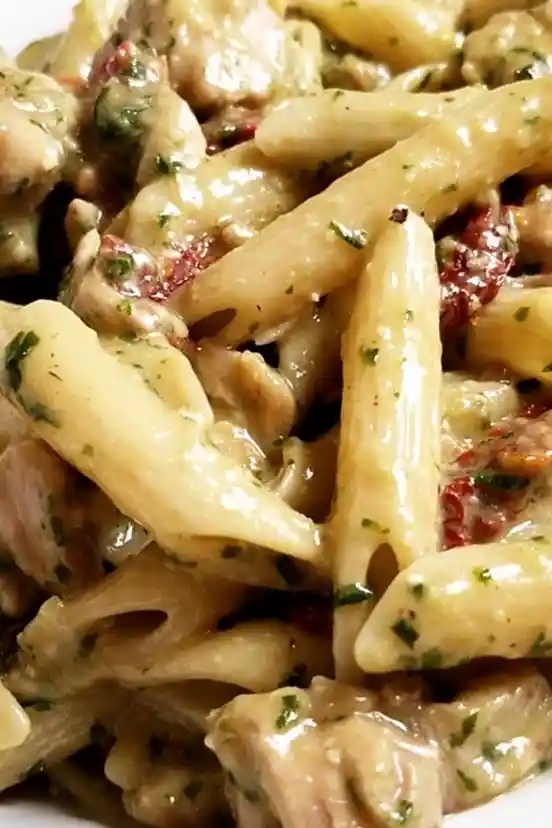
List of ingredients
- 1/2 lb. Penne Pasta
- 1 lb. Chicken Breasts (cut into 1″ chunks)
- 1 tbsp Olive Oil
- 1 tbsp Butter
- 1/4 tsp Salt
- 1/4 tsp Black Pepper
- 1 tbsp Lemon Juice
- 1 cup Heavy Cream
- 1/4 cup Sun-Dried Tomatoes (separated from oil)
- 1/4 cup Parmesan Cheese (grated)
- 1/3 cup Pesto
step-by-step instructions
- Step: Toss chicken in lemon juice, salt and pepper.
- Step: Cook penne pasta according to package instructions. Drain and set aside.
- Step: Add butter and oil to a large skillet over medium heat. Add chicken and cook for a few minutes until golden on bottom, flip over and cook another few minutes until cooked through.
- Step: Stir in heavy cream, pesto, parmesan cheese, and sun dried tomato. Simmer over low heat for a few minutes until sauce lightly thickens.
- Step: Add penne pasta and toss to combine.
- Step: Enjoy!
Refining your technique
Achieving the perfect chicken sear
To get a professional golden-brown crust on your chicken, ensure the pieces are not overcrowded in the pan. If the skillet is too full, the chicken will steam in its own moisture rather than browning. Working in two batches if necessary is a small step that yields a much deeper flavor profile for the entire dish.
The importance of pasta water
While the recipe specifies draining the pasta, saving a quarter cup of the starchy cooking water is a secret weapon. If your sauce appears slightly too thick or tight once the pasta is added, splash in a tablespoon of the reserved water. This emulsifies the sauce further, giving it a glossy, professional finish that clings beautifully to every piece of penne.
Controlling the sauce consistency
Heavy cream thickens quickly when exposed to high heat. Always maintain a low, gentle simmer after adding the dairy to prevent the sauce from breaking or becoming oily. If you accidentally boil the sauce, take the pan off the heat immediately and stir in a splash of room-temperature heavy cream to help restore the smooth texture.
Substitutions and adjustments
Alternative proteins
If you prefer a different texture, boneless chicken thighs are an excellent alternative to breasts. Thighs have a slightly higher fat content, which keeps them incredibly tender even if they are slightly overcooked during the searing process. Simply dice them to the same one-inch size to maintain consistent cooking times.
Adjusting the creaminess
For those looking for a lighter variation, half-and-half can replace the heavy cream. Note that because half-and-half has a lower fat content, the sauce will be thinner and may require an extra minute of simmering to reach the desired coating consistency. Avoid using low-fat milk, as it lacks the necessary fat to create a stable, creamy emulsion with the parmesan and pesto.
Boosting the herbal notes
If you find that the pesto flavor is too muted, add a handful of fresh chopped basil leaves right before serving. The heat of the pasta will wilt the leaves slightly, releasing their essential oils and providing an intense aromatic boost that dried herbs simply cannot replicate. You can also add a pinch of red pepper flakes during the sauce construction if you enjoy a subtle lingering heat.
Storage and reheating strategy
Managing leftovers correctly
Store any remaining pasta in an airtight glass container in the refrigerator. Glass is preferred over plastic as it prevents the pesto from staining and maintains the integrity of the sauce. Consume the leftovers within three days for the best quality, as the garlic and basil in the pesto can lose their bright, fresh flavor over time.
Reheating for optimal texture
The best way to reheat this dish is in a small skillet over low heat rather than using a microwave. Add a splash of water or a tiny bit of heavy cream to the pan to help re-liquefy the sauce as it warms. If you must use a microwave, use 50% power and stir the pasta every thirty seconds to ensure even heating without drying out the chicken.
Creative pairing ideas
Choosing the right bread
A crusty baguette or sourdough loaf is the ideal companion for this dish. The bread serves as a perfect vehicle for mopping up the excess creamy pesto sauce that inevitably remains on the plate. Warming the bread in the oven with a little garlic butter elevates the meal further, creating a restaurant-style experience at home.
Selecting fresh side salads
Because this pasta is rich and hearty, balance it with a light, crisp salad. A simple bed of arugula tossed with balsamic glaze and shaved parmesan provides a peppery bite that cuts through the creaminess of the main course. Avoid heavy, mayonnaise-based salads, as they will clash with the distinct flavors of the pesto and sun-dried tomatoes.
Frequently Asked Questions
Can I use a different type of pasta?
Absolutely, any sturdy short-cut pasta will perform well in this dish. Fusilli, rotini, or farfalle are excellent alternatives because their shapes are specifically designed to trap creamy sauces within their twists and folds. Avoid using delicate long noodles like angel hair, as they tend to become overwhelmed and mushy when tossed with heavier, chunky sauces.
Should I rinse the pasta after boiling?
Never rinse your pasta after draining it. Rinsing removes the natural starches on the surface of the noodles that allow the sauce to adhere properly. Draining and immediately incorporating the pasta into your sauce base ensures a cohesive, flavorful bite in every mouthful.
How do I prevent the sun-dried tomatoes from being too chewy?
If your sun-dried tomatoes are exceptionally tough, soak them in a small bowl of warm water for ten minutes before chopping. This rehydrates them slightly, making them tender and easier to integrate into the sauce. Pat them dry thoroughly after soaking so you do not introduce excess water into your pan.
Is it possible to make this dish dairy-free?
Adapting this to be dairy-free requires significant changes to the base. You would need to use a high-quality plant-based heavy cream substitute and a vegan pesto that uses nutritional yeast instead of parmesan. Ensure your pesto does not contain hidden dairy ingredients, which are common in many store-bought varieties.
Why does my sauce look oily?
An oily sauce usually indicates that the heat was too high or the cheese was added too quickly. When the parmesan is added to boiling cream, the proteins can separate from the fat. To fix this, always turn the stove to its lowest setting and stir slowly until the cheese is fully melted and incorporated into the cream base.
Print
Creamy Sun-Dried Tomato Chicken Pesto Pasta
- Total Time: PT25M
- Yield: 4 servings 1x
- Diet: Poultry
Description
Chicken and penne pasta tossed in a flavor packed creamy sun-dried tomato and pesto sauce.
Ingredients
- 1/2 lb. Penne Pasta
- 1 lb. Chicken Breasts (cut into 1″ chunks)
- 1 tbsp Olive Oil
- 1 tbsp Butter
- 1/4 tsp Salt
- 1/4 tsp Black Pepper
- 1 tbsp Lemon Juice
- 1 cup Heavy Cream
- 1/4 cup Sun-Dried Tomatoes (separated from oil)
- 1/4 cup Parmesan Cheese (grated)
- 1/3 cup Pesto
Instructions
- Step: Toss chicken in lemon juice, salt and pepper.
- Step: Cook penne pasta according to package instructions. Drain and set aside.
- Step: Add butter and oil to a large skillet over medium heat. Add chicken and cook for a few minutes until golden on bottom, flip over and cook another few minutes until cooked through.
- Step: Stir in heavy cream, pesto, parmesan cheese, and sun dried tomato. Simmer over low heat for a few minutes until sauce lightly thickens.
- Step: Add penne pasta and toss to combine.
- Step: Enjoy!
Notes
Store-bought or homemade pesto works well for this recipe. Ensure sun-dried tomatoes are thoroughly drained from their oil before adding to the sauce.
- Prep Time: PT5M
- Cook Time: PT20M
- Category: Main Course
- Method: Stovetop
- Cuisine: Italian
Nutrition
- Serving Size: 1 serving
- Calories: 721 kcal
- Sugar: 7 g
- Sodium: 620 mg
- Fat: 41 g
- Saturated Fat: 19 g
- Unsaturated Fat: 21 g
- Trans Fat: 0.1 g
- Carbohydrates: 50 g
- Fiber: 3 g
- Protein: 37 g
- Cholesterol: 153 mg