
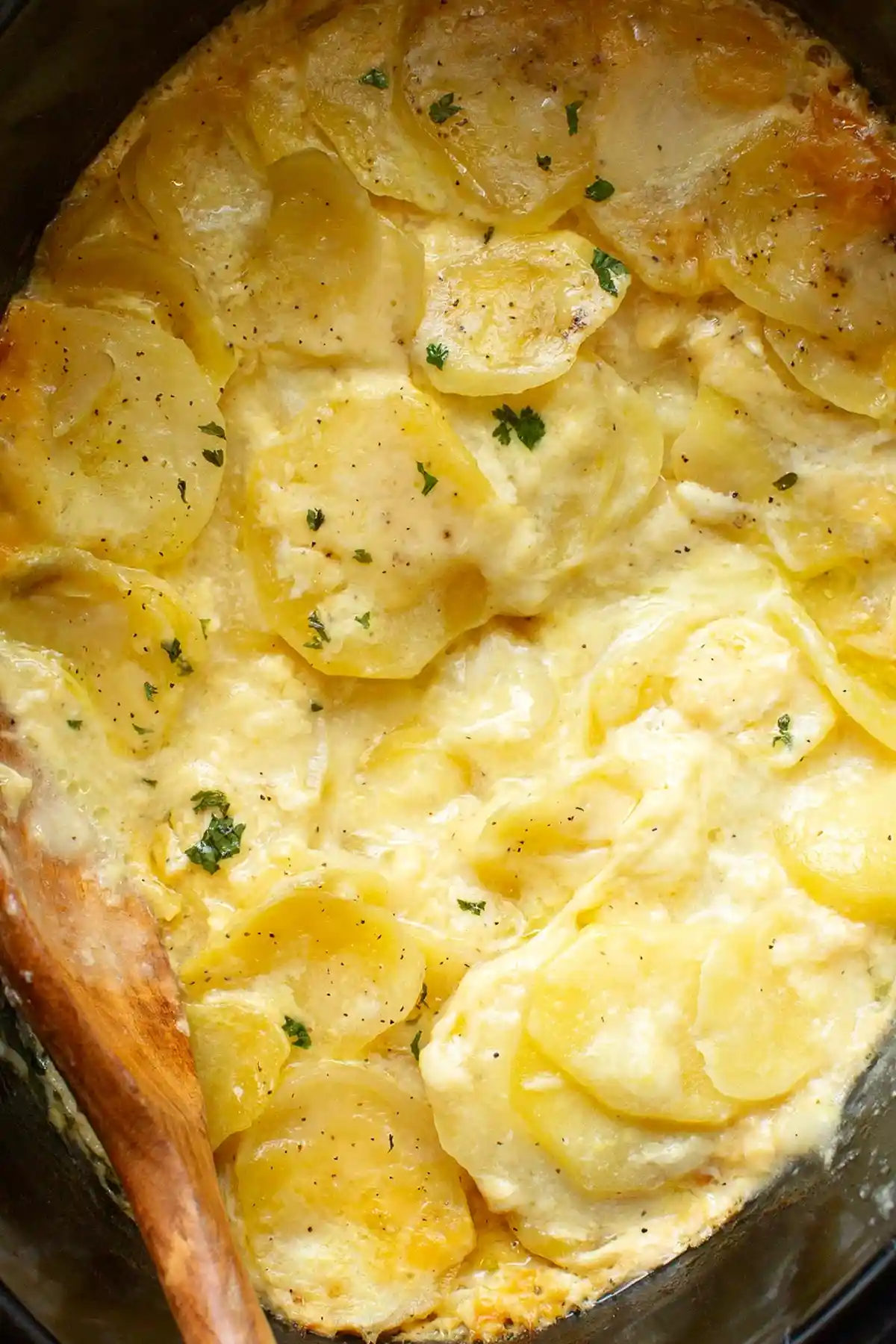
Preparing creamy scalloped potatoes in a slow cooker is a convenient way to achieve tender, buttery results without needing to stand over a hot stove or use the oven. By layering thinly sliced Yukon gold potatoes with a flavorful milk sauce and plenty of sharp cheese, you create a rich, bubbly side dish that develops complex flavors as it cooks slowly. This method eliminates the need for processed canned soups or complicated roux, resulting in a cleaner, more authentic flavor profile that pairs beautifully with any main course.
List of ingredients
- 3 lbs Yukon gold potatoes (sliced 1/8 inch thick)
- 1 onion (thinly sliced)
- 3 cups whole milk
- 3 tbsp cornstarch
- 2 tbsp prepared yellow mustard
- 2 1/2 tsp salt
- 3/4 tsp black pepper
- 8 oz white cheddar cheese (grated)
step-by-step instructions
- Step: Grease the inside of your crock pot with oil or cooking spray.
- Step: Layer 1/3 of the onions, potatoes, and cheese into the slow cooker.
- Step: Repeat the layering process two more times, ending with a final layer of potatoes and cheese.
- Step: In a large measuring cup, whisk together the whole milk, cornstarch, yellow mustard, salt, and black pepper until smooth.
- Step: Pour the milk mixture evenly over the layers in the slow cooker.
- Step: Cook on high for 3-4 hours until the potatoes are tender and the sauce is golden and bubbly.
- Step: Turn off the heat and allow the potatoes to rest for 20 minutes before serving to let the sauce thicken.
Refining Your Preparation Technique
Maintaining Uniform Potato Thickness
Using a mandoline slicer is the most efficient way to achieve consistent 1/8-inch slices. When potatoes are sliced with high precision, they cook at a synchronized rate, which prevents some pieces from becoming mushy while others remain hard. If you prefer using a chef’s knife, take your time to ensure each slice is as similar to the next as possible for the best structural integrity.
Preventing Potato Oxidation
If you need to slice your potatoes well in advance, keep the raw slices submerged in a bowl of cold water in the refrigerator for up to 12 hours. This simple step prevents the potatoes from turning dark due to exposure to air. Just remember to drain them well and pat them dry before beginning the layering process to avoid introducing too much excess water into the slow cooker.
Customizing Your Flavor Profiles
Selecting Alternative Cheese Varieties
While white cheddar offers a classic sharp bite, you can experiment with other cheeses to change the profile of your side dish. Gruyere provides a sophisticated, nutty flavor that pairs exceptionally well with potatoes, while Havarti offers a buttery, ultra-creamy melting characteristic. You can also mix two types of cheese for a more complex flavor that elevates the overall dish for special gatherings.
Incorporating Additional Aromatic Herbs
Although the basic recipe relies on mustard and pepper for flavor, you can enhance the dish by adding dried herbs between each layer. Dried thyme, rosemary, or parsley work beautifully with the creamy milk sauce. For those who enjoy a hint of earthiness, consider adding a teaspoon of garlic powder to the milk mixture before pouring it over the layers.
Serving and Hosting Strategy
Pairing Suggestions for Main Courses
These scalloped potatoes serve as an ideal accompaniment to roasted proteins such as turkey, brisket, or pan-seared steaks. The creaminess of the potatoes balances the saltiness of savory meat dishes, making them a popular choice for holiday tables or weekend family dinners. They also pair well with lighter sides like roasted green beans or a crisp garden salad to provide textural contrast.
Scaling for Larger Gatherings
If you are planning to serve a larger group, you can easily double this recipe provided you have a larger slow cooker, such as an 8-quart model. Ensure that you do not overfill the cooker to the point where the lid does not seal properly, as a tight seal is necessary to maintain the heat required to thicken the milk-based sauce. If you find the potatoes are cooking too fast, simply switch the setting to low once the liquid begins to simmer.
Management of Leftovers and Reheating
Extending the Life of Your Dish
Leftover scalloped potatoes store well in an airtight container in the refrigerator for up to four days. As the sauce continues to absorb into the potatoes while cooling, the texture may thicken further. This is perfectly normal and does not indicate the dish has gone bad; it simply requires proper hydration during the reheating phase.
Reviving the Texture During Reheating
To reheat, add a small splash of milk or water to the container to help restore the creamy consistency of the sauce without drying out the potatoes. Reheating in the microwave is possible, but doing so in a small baking dish in a 350°F oven for about 30 minutes, covered with foil, yields the best results. Adding that extra liquid ensures the sauce returns to its original, velvety state rather than becoming pasty.
Frequently Asked Questions
Why did my sauce curdle?
Curdling usually happens if the milk is heated too quickly or if the acidity from the mustard interacts unfavorably with the temperature. To prevent this, ensure your cornstarch is fully whisked into the cold milk before pouring, and avoid removing the lid frequently during the cooking process, as this lets out essential steam and heat.
Can I add protein to this dish?
Yes, you can easily transform this into a heartier meal by incorporating diced vegetables or pre-cooked proteins. Simply layer these ingredients alongside the potatoes. Ensure any added ingredients are already cooked or cut into very small pieces so they finish at the same time as the potatoes.
Is this recipe gluten-free?
This recipe uses cornstarch as a thickener, which is naturally gluten-free, making this a safe side dish for those sensitive to wheat products. Always verify that your specific brand of cornstarch or pre-shredded cheese—if you choose to use it—does not have hidden additives that contain gluten.
Can I bake this in the oven instead?
Yes, you can adapt this for the oven by placing the ingredients in a greased 9×13-inch baking dish. Cover the dish tightly with foil to create a steaming environment and bake at 300°F for 2 to 3 hours. The lower temperature is key to preventing the sauce from drying out before the potatoes become perfectly tender.
Print
Crock Pot Scalloped Potatoes
- Total Time: PT195M
- Yield: 8 servings 1x
- Diet: Vegetarian
Description
Crockpot scalloped potatoes are cooked tender in the slow cooker in an easy milk sauce, thinly sliced onions, and cheese. Layer these ingredients and it cooks into a creamy, golden, and bubbly potato casserole! This is the perfect way to make cheesy scalloped potatoes from scratch without any canned soups.
Ingredients
- 3 lbs Yukon gold potatoes (sliced 1/8 inch thick)
- 1 onion (thinly sliced)
- 3 cups whole milk
- 3 tbsp cornstarch
- 2 tbsp prepared yellow mustard
- 2 1/2 tsp salt
- 3/4 tsp black pepper
- 8 oz white cheddar cheese (grated)
Instructions
- Step: Grease the inside of your crock pot with oil or cooking spray.
- Step: Layer 1/3 of the onions, potatoes, and cheese into the slow cooker.
- Step: Repeat the layering process two more times, ending with a final layer of potatoes and cheese.
- Step: In a large measuring cup, whisk together the whole milk, cornstarch, yellow mustard, salt, and black pepper until smooth.
- Step: Pour the milk mixture evenly over the layers in the slow cooker.
- Step: Cook on high for 3-4 hours until the potatoes are tender and the sauce is golden and bubbly.
- Step: Turn off the heat and allow the potatoes to rest for 20 minutes before serving to let the sauce thicken.
Notes
Use a mandoline slicer for consistent 1/8-inch thickness to ensure even cooking. The potatoes can be prepped ahead and stored in cold water in the refrigerator for up to 12 hours. If the potatoes are tender before the 4-hour mark, you may switch to a warm setting.
- Prep Time: PT15M
- Cook Time: PT180M
- Category: Side Dish
- Method: Slow Cooking
- Cuisine: American
Nutrition
- Serving Size: 1 serving
- Calories: 285 kcal
- Sugar: 6 g
- Sodium: 989 mg
- Fat: 14 g
- Saturated Fat: 8 g
- Unsaturated Fat: 5 g
- Trans Fat: 0 g
- Carbohydrates: 32 g
- Fiber: 3 g
- Protein: 11 g
- Cholesterol: 40 mg