
This quick, savory skillet meal brings together the bold, aromatic flavors of traditional Mongolian spices with the crisp, wholesome texture of fresh green cabbage. Designed for busy weeknights, this low-carb dish provides a satisfying, nutrient-dense dinner that is both incredibly simple to prepare and wonderful as leftovers for lunches throughout the week.
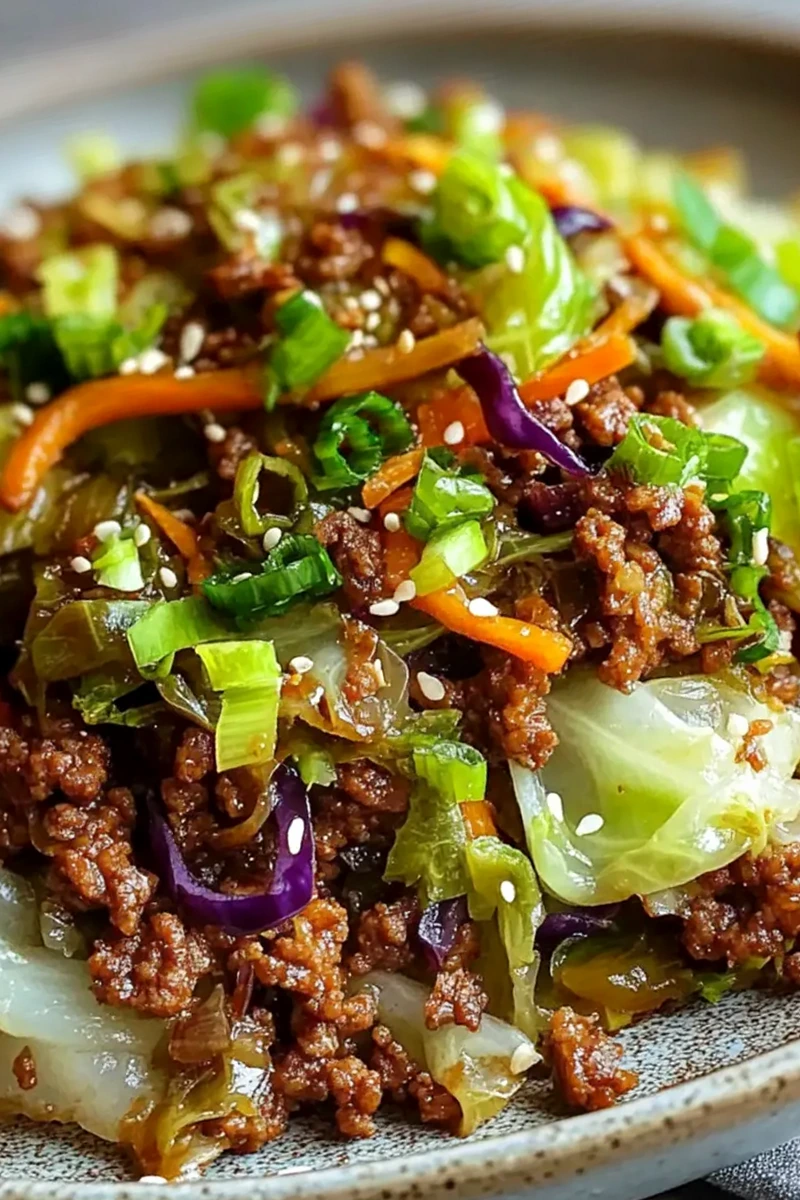
List of ingredients
- 1.5 pounds ground beef (80–90% lean)
- 0.5 cups beef broth (low-sodium)
- 1 head green cabbage
- 1 tablespoon avocado oil
- 1 tablespoon toasted sesame oil
- 3 cloves garlic, minced
- 1 tablespoon fresh ginger, grated
- 2 stalks green onions
- 0.25 cups soy sauce or tamari
- 2.5 tablespoons sugar-free sweetener
- 1 tablespoon rice vinegar
- 1 tablespoon chili garlic sauce or sriracha (optional)
- Red pepper flakes to taste
- Ground black pepper to taste
- Onion powder to taste
- Garlic powder to taste
- Xanthan gum or glucomannan (optional thickening agent)
- Sesame seeds (lightly toasted)
- Fresh cilantro or extra green onion greens for garnish
step-by-step instructions
- Step: Remove damaged outer leaves from the cabbage, cut into quarters, remove the core, and thinly shred. Rinse and dry thoroughly.
- Step: In a medium bowl, whisk together the beef broth, soy sauce or tamari, sugar-free sweetener, rice vinegar, chili garlic sauce (if using), red pepper flakes, black pepper, onion powder, and garlic powder. Add xanthan gum if thickening is desired.
- Step: Heat avocado oil in a large skillet or wok over medium-high heat. Add ground beef and cook for 6–8 minutes until browned. Drain excess fat.
- Step: Push beef to one side. Add garlic, ginger, and the white parts of the green onions to the pan. Sauté for 30–60 seconds until fragrant.
- Step: Add shredded cabbage in batches, tossing with the beef. Drizzle with toasted sesame oil and cook for 5–8 minutes until tender-crisp.
- Step: Pour the prepared sauce over the beef and cabbage mixture. Toss well and simmer for 3–5 minutes until the sauce thickens and coats the ingredients.
- Step: Remove from heat and stir in the green parts of the green onions. Garnish with toasted sesame seeds and fresh cilantro before serving.
Refining Your Cabbage Prep
Achieving the Perfect Shred
For the best texture in this stir-fry, aim for uniform cabbage strips about a quarter-inch wide. Using a mandoline or a sharp chef’s knife makes this consistent size easier to achieve, which ensures that all the cabbage wilts at the same rate during the high-heat cooking process.
The Importance of Dry Ingredients
Cabbage has a high water content, so drying your shredded leaves thoroughly is critical for avoiding a soggy dish. If you notice excess moisture gathering in the pan, increase your heat slightly to help evaporate the liquid before adding your sauce, as this keeps the flavors concentrated rather than diluted.
Mastering the Mongolian Sauce
Balancing Umami and Sweetness
The success of this dish relies on the harmony between the saltiness of the soy and the subtle sweetness provided by your sugar-free sweetener. If the sauce tastes too intense, add a tiny bit more beef broth; if you find it lacking depth, a small extra dash of rice vinegar can brighten the entire flavor profile before the sauce thickens.
Thickening Without Starch
Using xanthan gum allows you to achieve a restaurant-style glossy coating on the beef and cabbage without the need for traditional cornstarch. Always add the powder in very small, incremental amounts while whisking the liquid vigorously to ensure the sauce thickens evenly without any unpleasant gelatinous texture.
Smart Ingredient Substitutions
Swapping Your Protein Source
If you prefer lighter options, ground turkey or ground chicken are excellent replacements for beef. Since these meats are leaner, ensure you keep the avocado oil in the pan to prevent them from drying out, and increase the aromatics slightly to compensate for their milder natural taste.
Flavor Variations with Herbs
You can experiment with adding fresh basil or mint at the very end of the cooking process for a different herbal dimension. These fresh additions provide a bright, clean finish that cuts through the richness of the sesame oil and soy sauce, making the dish feel light and vibrant.
Effective Meal Prep Strategies
Preparing Ahead for Busy Nights
You can save significant time by shredding your cabbage and preparing the sauce up to 24 hours in advance. Store the cabbage in a sealed container with a paper towel inside to absorb any moisture, and keep the sauce in a separate jar, which will allow you to assemble the full meal in under 15 minutes when you arrive home.
Storage and Quality Maintenance
Leftovers remain fresh and tasty for up to three days when stored in an airtight container in the refrigerator. To maintain the integrity of the cabbage, try not to overcook it initially, as it will soften further upon reheating, which helps keep the final texture enjoyable even after several days.
Reheating for Best Results
Restoring Texture After Storage
When you are ready to eat your stored meal, add a splash of beef broth or water to your skillet before reheating. This small amount of liquid will turn into steam, helping to refresh the cabbage and revitalize the sauce so it clings perfectly to the meat, rather than leaving a dry, sticky residue on your plate.
Microwave Versus Stovetop
While the microwave is convenient, the stovetop is superior for this dish. Warming the mixture over medium heat allows you to control the evaporation of the sauce and ensures the beef stays moist and flavorful, preventing the slightly rubbery texture that can occur when high-heat microwave settings are used.
Frequently Asked Questions
What are the best cabbage varieties to use?
Green cabbage is the standard choice because it holds its shape well under high heat. However, savoy cabbage offers a slightly softer, more delicate leaf that can also work beautifully if you prefer a less crunchy texture, provided you reduce the cook time by a minute or two.
How do I make this dish more spicy?
If you enjoy a significant amount of heat, you can increase the amount of chili garlic sauce or add a fresh, finely diced jalapeño alongside the ginger and garlic. For a dry heat that permeates the dish, increase the amount of red pepper flakes during the sauce preparation step.
Can I serve this over something other than cauliflower rice?
Yes, there are several delicious ways to serve this meal. Steamed shirataki noodles are a fantastic, virtually calorie-free option that pairs well with the sauce, or you can serve it atop thinly sliced sautéed zucchini ribbons for a fresh, garden-inspired flavor that complements the stir-fry perfectly.
How can I ensure the garlic does not burn?
The secret is to push your meat to the side of the skillet, creating an open space that you can lightly grease with a little extra oil. Adding the aromatics only after the pan is at a stable medium temperature ensures they bloom and release flavor without darkening, as burned garlic will turn the entire dish bitter.
Is this recipe suitable for those with dietary restrictions?
This recipe is highly adaptable. By replacing soy sauce with tamari or coconut aminos, you can easily make this gluten-free without sacrificing any of the umami intensity. Always check your ingredient labels if you are strictly avoiding wheat-derived additives, as these common sauces can sometimes contain hidden fillers.
Print
Delicious Low-Carb Mongolian Ground Beef and Cabbage Delight
- Total Time: 35 minutes
- Yield: 4 servings 1x
- Diet: Low-carb
Description
A savory, healthy, and satisfying low-carb twist to your dinners with Mongolian Ground Beef and Cabbage.
Ingredients
- 1.5 pounds ground beef (80–90% lean)
- 0.5 cups beef broth (low-sodium)
- 1 head green cabbage
- 1 tablespoon avocado oil
- 1 tablespoon toasted sesame oil
- 3 cloves garlic, minced
- 1 tablespoon fresh ginger, grated
- 2 stalks green onions
- 0.25 cups soy sauce or tamari
- 2.5 tablespoons sugar-free sweetener
- 1 tablespoon rice vinegar
- 1 tablespoon chili garlic sauce or sriracha (optional)
- Red pepper flakes to taste
- Ground black pepper to taste
- Onion powder to taste
- Garlic powder to taste
- Xanthan gum or glucomannan (optional thickening agent)
- Sesame seeds (lightly toasted)
- Fresh cilantro or extra green onion greens for garnish
Instructions
- Step: Remove damaged outer leaves from the cabbage, cut into quarters, remove the core, and thinly shred. Rinse and dry thoroughly.
- Step: In a medium bowl, whisk together the beef broth, soy sauce or tamari, sugar-free sweetener, rice vinegar, chili garlic sauce (if using), red pepper flakes, black pepper, onion powder, and garlic powder. Add xanthan gum if thickening is desired.
- Step: Heat avocado oil in a large skillet or wok over medium-high heat. Add ground beef and cook for 6–8 minutes until browned. Drain excess fat.
- Step: Push beef to one side. Add garlic, ginger, and the white parts of the green onions to the pan. Sauté for 30–60 seconds until fragrant.
- Step: Add shredded cabbage in batches, tossing with the beef. Drizzle with toasted sesame oil and cook for 5–8 minutes until tender-crisp.
- Step: Pour the prepared sauce over the beef and cabbage mixture. Toss well and simmer for 3–5 minutes until the sauce thickens and coats the ingredients.
- Step: Remove from heat and stir in the green parts of the green onions. Garnish with toasted sesame seeds and fresh cilantro before serving.
Notes
Store leftovers in an airtight container in the refrigerator for up to 3 days. This dish can be frozen for up to 3 months; thaw in the refrigerator before reheating gently with a splash of beef broth.
- Prep Time: 15 minutes
- Cook Time: 20 minutes
- Category: Main Dishes
- Method: Stir-fry
- Cuisine: Mongolian
Nutrition
- Serving Size: 1 serving
- Calories: 300 kcal
- Sugar: 1 g
- Sodium: 600 mg
- Fat: 20 g
- Saturated Fat: 7 g
- Unsaturated Fat: 12 g
- Trans Fat: 0 g
- Carbohydrates: 10 g
- Fiber: 3 g
- Protein: 25 g
- Cholesterol: 80 mg