
These savory cheeseburger pockets are a quick, handheld meal perfect for busy weeknights. They combine seasoned ground beef and melted cheese inside a golden, flaky crust for a satisfying dinner.
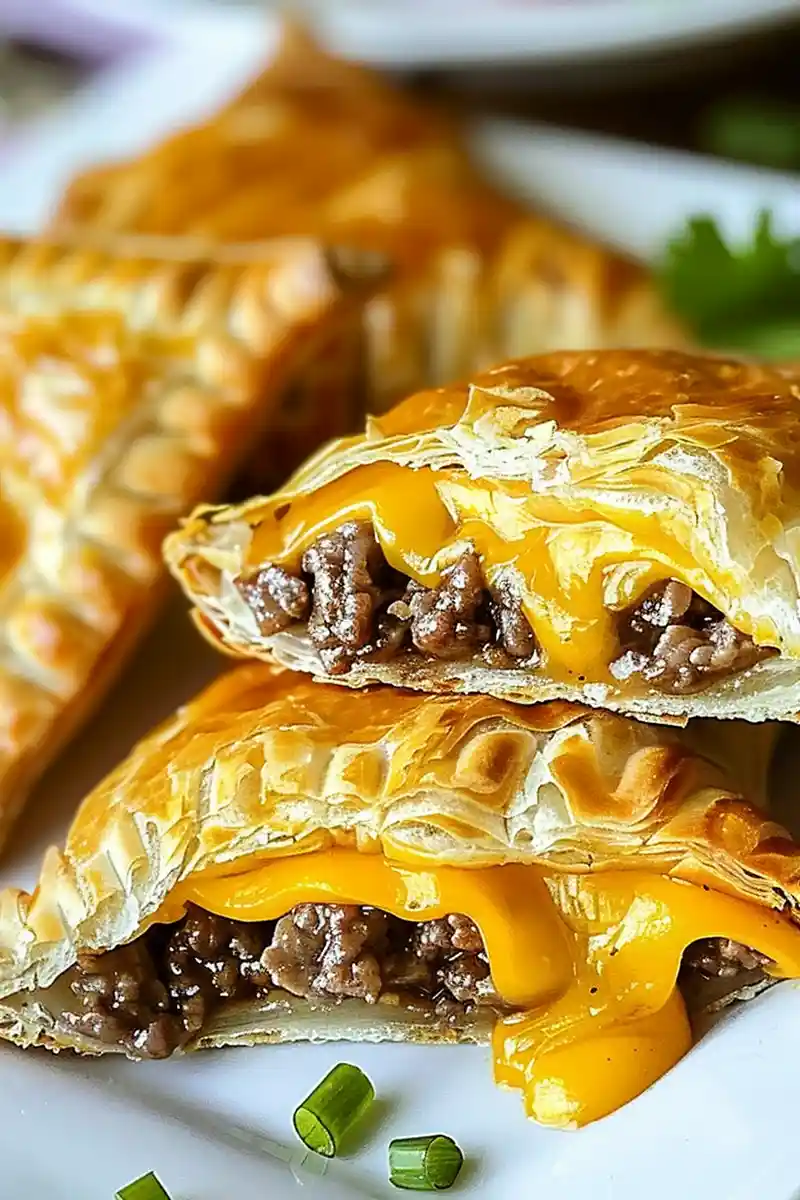
List of ingredients
- 1 lb ground beef (80/20 preferred) – provides a juicy base.
- ½ cup chopped onion – adds aromatic sweetness.
- 1 tsp garlic powder – enhances the savory profile.
- Salt and pepper, to taste – basic seasoning for depth.
- 2 tbsp ketchup – adds a classic burger tang.
- 1 tbsp mustard (yellow or Dijon) – provides a sharp contrast.
- 1 to 1½ cups shredded cheddar cheese – for a melty interior.
- 1 can crescent roll dough (or pizza/biscuit dough) – creates the pastry shell.
- 1 egg, beaten (for egg wash) – ensures a golden-brown finish.
step-by-step instructions
- Prepare the Oven: Preheat oven to 375°F (190°C). Line a baking sheet with parchment paper to prevent sticking.
- Cook the Filling: In a skillet, brown ground beef over medium heat. Add onions, garlic powder, salt, and pepper. Cook until beef is no longer pink and onions are soft. Drain excess grease.
- Mix in Sauces and Cheese: Stir in ketchup and mustard. Remove from heat and mix in shredded cheese until combined.
- Prepare the Dough: Roll out dough and cut into 8 rectangles or rounds.
- Fill and Seal: Spoon 2 tablespoons of filling onto each piece. Fold and seal edges with a fork.
- Apply Egg Wash: Place on baking sheet, brush with beaten egg.
- Bake: Bake 15–18 minutes or until golden brown. Cool slightly before serving.
Maximizing Flavor and Texture
Drain Beef Fat Thoroughly
After browning the meat, it is crucial to pour off the excess grease from the skillet. If too much fat remains, it will seep into the dough during the baking process, resulting in a greasy, soggy base. Use a colander or spoon the fat out carefully before adding the ketchup and mustard.
Use Cold Dough for Easier Folding
Keep your refrigerated dough chilled until the moment you are ready to assemble the pockets. Cold dough is firmer and easier to fold without tearing or stretching too thin. This ensures a tight seal around the filling, preventing leaks in the oven.
Apply Egg Wash Evenly
Use a pastry brush to apply a thin, consistent layer of beaten egg across the entire top of each pocket. This protein-rich coating promotes the Maillard reaction, creating a deep golden color and a professional sheen. Avoid letting the egg wash drip down the sides, as it can cause the edges to brown too quickly.
Avoid Overfilling the Pockets
Stick to the recommended two tablespoons of filling per piece of dough. Overstuffing the pockets makes it difficult to seal the edges properly, which often leads to cheese leaking out onto the baking sheet. A moderate amount of filling ensures the pastry cooks through completely while remaining fluffy.
Ingredient Alternatives and Customizations
Swap Cheddar for Pepper Jack
For those who prefer a bit of heat, replace the mild cheddar with shredded Pepper Jack cheese. This substitution adds a zesty kick that complements the richness of the beef. Ensure the cheese is finely shredded to help it melt quickly and evenly inside the pastry.
Use Ground Turkey for a Leaner Option
Ground turkey can be used as a substitute for beef to reduce the overall fat content of the dish. Since turkey is leaner, you may need to add a tablespoon of olive oil to the skillet to prevent the meat from sticking. Season it slightly more aggressively with salt to mimic the savory depth of beef.
Substitute Crescent Rolls with Puff Pastry
Using frozen puff pastry instead of crescent rolls creates a much lighter, airier, and more buttery shell. Roll the pastry out thinly and cut it into squares before filling. Note that puff pastry may require an additional 2-3 minutes of baking time to achieve the desired crispness.
Replace Ketchup with BBQ Sauce
Switching the ketchup for a smoky barbecue sauce transforms these into BBQ burger pockets. This change provides a deeper, sweeter flavor profile that pairs exceptionally well with red onions. Combine the BBQ sauce with a touch of smoked paprika for added complexity.
Creative Flavor Variations
Add Diced Pickles for Crunch
Finely dice some dill pickles and stir them into the beef mixture after it has cooled slightly. This adds a bright, acidic crunch that balances the richness of the melted cheese. Adding them at the end prevents the pickles from releasing too much moisture during the initial cooking phase.
Incorporate Sautéed Mushrooms for Umami
Sauté sliced mushrooms in the skillet before adding the ground beef to the pan. Mushrooms provide a meaty texture and a deep umami flavor that enhances the cheeseburger experience. Make sure the mushrooms are fully browned and their moisture has evaporated before adding the meat.
Mix in Jalapeños for Spicy Heat
Fold in diced fresh or pickled jalapeños to the beef filling for a spicy twist. For an even more intense heat, you can place a whole jalapeño slice directly on top of the cheese before folding the dough. This ensures a burst of spice in every single bite.
Use Smoked Turkey Bacon for Saltiness
Add crumbled, pre-cooked smoked turkey bacon to the filling for a salty, smoky flavor. Turkey bacon provides the classic bacon taste without the pork content, keeping the recipe aligned with clean dietary needs. Stir the crumbles in just before adding the cheese to keep them crisp.
Serving Suggestions and Side Pairings
Pair with Crisp French Fries
The most traditional pairing for cheeseburger pockets is a side of hot, salted French fries. Whether you choose oven-baked wedges or air-fried shoestring fries, the salty crunch complements the soft pastry. Serve them on a large platter with the pockets for a pub-style meal at home.
Serve with a Fresh Garden Salad
To balance the richness of the beef and cheese, serve the pockets with a crisp garden salad. Use a mix of romaine lettuce, cherry tomatoes, and cucumbers with a light vinaigrette. The acidity of the dressing helps cleanse the palate between bites of the savory pastry.
Create a Dipping Sauce Station
Offer a variety of dipping sauces in small ramekins to let everyone customize their meal. Great options include sriracha mayo, honey mustard, creamy ranch, or a homemade burger sauce made from mayo and relish. Dipping the pockets adds moisture and extra layers of flavor.
Plate with Roasted Vegetable Wedges
For a more nutrient-dense side, roast carrots, parsnips, or zucchini wedges in the oven alongside the pockets. Toss the vegetables in olive oil, salt, and dried oregano before roasting. This adds color to the plate and provides a healthy contrast to the handheld meal.
Storage and Meal Prep Guidelines
Refrigerate in Airtight Containers
Store leftover baked pockets in a glass or BPA-free plastic container with a tight lid. To prevent them from sticking together, place a piece of parchment paper between layers of pockets. They will remain fresh in the refrigerator for up to four days.
Freeze Unbaked Pockets for Later
You can assemble the pockets and freeze them before baking for an easy future meal. Place the raw pockets on a baking sheet and freeze until solid before transferring them to a freezer-safe zip-top bag. This method preserves the texture of the dough better than freezing already baked pockets.
Store Baked Pockets Correctly
If you have already baked the pockets, wrap them individually in aluminum foil before placing them in a freezer bag. This prevents freezer burn and keeps the pastry from drying out. Baked pockets can be stored in the freezer for up to three months.
Label Freezer Bags with Dates
Always use a permanent marker to label your freezer bags with the date of preparation and the reheating instructions. This ensures you use the food within its prime quality window. Clear labeling also helps you distinguish between different variations, such as spicy or mushroom versions.
Reheating and Baking from Frozen
Bake Frozen Pockets Directly
When cooking unbaked pockets straight from the freezer, do not thaw them first. Place them on a lined baking sheet and bake at 375°F for approximately 22 to 25 minutes. The extra time is necessary to ensure the center of the beef filling is piping hot while the outside becomes golden.
Reheat Baked Pockets in the Oven
To restore the crispiness of previously baked pockets, use a conventional oven at 350°F. Heat them for 10 to 15 minutes until the cheese is bubbly and the crust is firm. This method is far superior to other methods for maintaining the flaky texture of the dough.
Use a Toaster Oven for Small Batches
A toaster oven is an excellent tool for reheating one or two pockets quickly. Set the oven to a medium heat and watch carefully to prevent the tops from burning. This provides a focused heat source that crisps the exterior without drying out the interior filling.
Avoid Microwaves to Prevent Sogginess
Avoid reheating these pockets in the microwave, as the steam trapped in the dough will make the crust soft and rubbery. Microwaving often leads to a soggy bottom and a loss of the original flaky texture. If you must use a microwave, heat on low power and finish them in a pan for a minute.
Troubleshooting Common Issues
Fix Leaking Fillings
If you notice cheese leaking out of your pockets, it is likely due to a poor seal or overfilling. Use a fork to press the edges firmly, creating a tight crimp that locks the filling inside. You can also lightly dampen the edge of the dough with water to create a stronger bond before sealing.
Prevent Soggy Dough Bottoms
Soggy bottoms occur when the beef is too moist or the oven temperature is too low. Always drain the beef fat and cook the onions until their moisture has evaporated. Additionally, using parchment paper allows hot air to circulate more effectively under the pockets, helping the bottom crust crisp up.
Solve Uneven Browning
Uneven browning is often caused by overcrowding the baking sheet. Leave at least two inches of space between each pocket to allow the heat to flow freely around the dough. If some pockets are browning faster than others, rotate the baking sheet halfway through the cooking time.
Handle Sticky Dough
If the dough becomes too sticky to handle, lightly dust your hands and the work surface with flour. Avoid adding too much flour to the dough itself, as this can make the pastry tough. Working quickly and keeping the dough cool are the best ways to manage stickiness.
Common Questions
Can I use different types of dough?
Yes, while crescent rolls are standard, you can use refrigerated pizza dough or biscuit dough. Pizza dough results in a chewier, bread-like crust, while biscuit dough provides a thicker, more buttery shell. Adjust the baking time slightly based on the thickness of the dough you choose.
How do I stop the cheese from leaking?
To prevent leaks, ensure the shredded cheese is mixed thoroughly into the meat and not placed in one large clump. When sealing, make sure no cheese is touching the edges of the dough. If cheese gets caught in the seal, it will melt and create a hole during baking.
What is the best way to seal the edges?
The most effective way to seal the pockets is by using a fork to press the edges together. Press down firmly in a repeating pattern to create a crimped edge. This not only looks professional but creates a mechanical bond that holds the filling securely.
Can I make these without an egg wash?
You can omit the egg wash if you prefer, but the pockets will be pale instead of golden brown. As an alternative, you can brush the tops with melted butter or a small amount of milk. These options still provide some color, although they are not as effective as a beaten egg.
Print
Easy Homemade Cheeseburger Pockets
- Total Time: 28 minutes
- Yield: 8 servings 1x
- Diet: General
Description
Easy, cheesy, and ready in just 30 minutes, these homemade Cheeseburger Pockets are filled with juicy ground beef, melted cheese, and wrapped in golden flaky dough. Perfect for busy weeknights or freezer-friendly meal prep!
Ingredients
- 1 lb ground beef (80/20 preferred)
- ½ cup chopped onion
- 1 tsp garlic powder
- Salt and pepper, to taste
- 2 tbsp ketchup
- 1 tbsp mustard (yellow or Dijon)
- 1 to 1½ cups shredded cheddar cheese
- 1 can crescent roll dough (or pizza/biscuit dough)
- 1 egg, beaten
Instructions
- Step: Preheat oven to 375°F (190°C). Line a baking sheet with parchment paper.
- Step: In a skillet, brown ground beef over medium heat. Add onions, garlic powder, salt, and pepper. Cook until beef is no longer pink and onions are soft. Drain excess grease.
- Step: Stir in ketchup and mustard. Remove from heat and mix in shredded cheese.
- Step: Roll out dough and cut into 8 rectangles or rounds.
- Step: Spoon 2 tablespoons of filling onto each piece. Fold and seal edges with a fork.
- Step: Place on baking sheet, brush with beaten egg.
- Step: Bake 15–18 minutes or until golden brown. Cool slightly before serving.
Notes
Swap cheddar for Pepper Jack or Swiss for a flavor twist. Add-ins like turkey bacon, jalapeños, or mushrooms make great variations. To freeze: Freeze unbaked pockets on a tray, then store in freezer bags for up to 2 months. To reheat baked pockets: Use oven at 350°F for 10–12 minutes. Avoid microwaving to maintain texture.
- Prep Time: 10 minutes
- Cook Time: 18 minutes
- Category: Dinner
- Method: Baked
- Cuisine: American
Nutrition
- Serving Size: 1 pocket
- Calories: 330 kcal
- Sugar: 4 g
- Sodium: 680 mg
- Fat: 22 g
- Saturated Fat: 9 g
- Unsaturated Fat: 11 g
- Trans Fat: 0 g
- Carbohydrates: 21 g
- Fiber: 1 g
- Protein: 14 g
- Cholesterol: 75 mg