
This efficient meal provides a balanced dinner in just 15 minutes. It is an ideal solution for weeknights when time is limited but a hearty, protein-rich meal is needed.
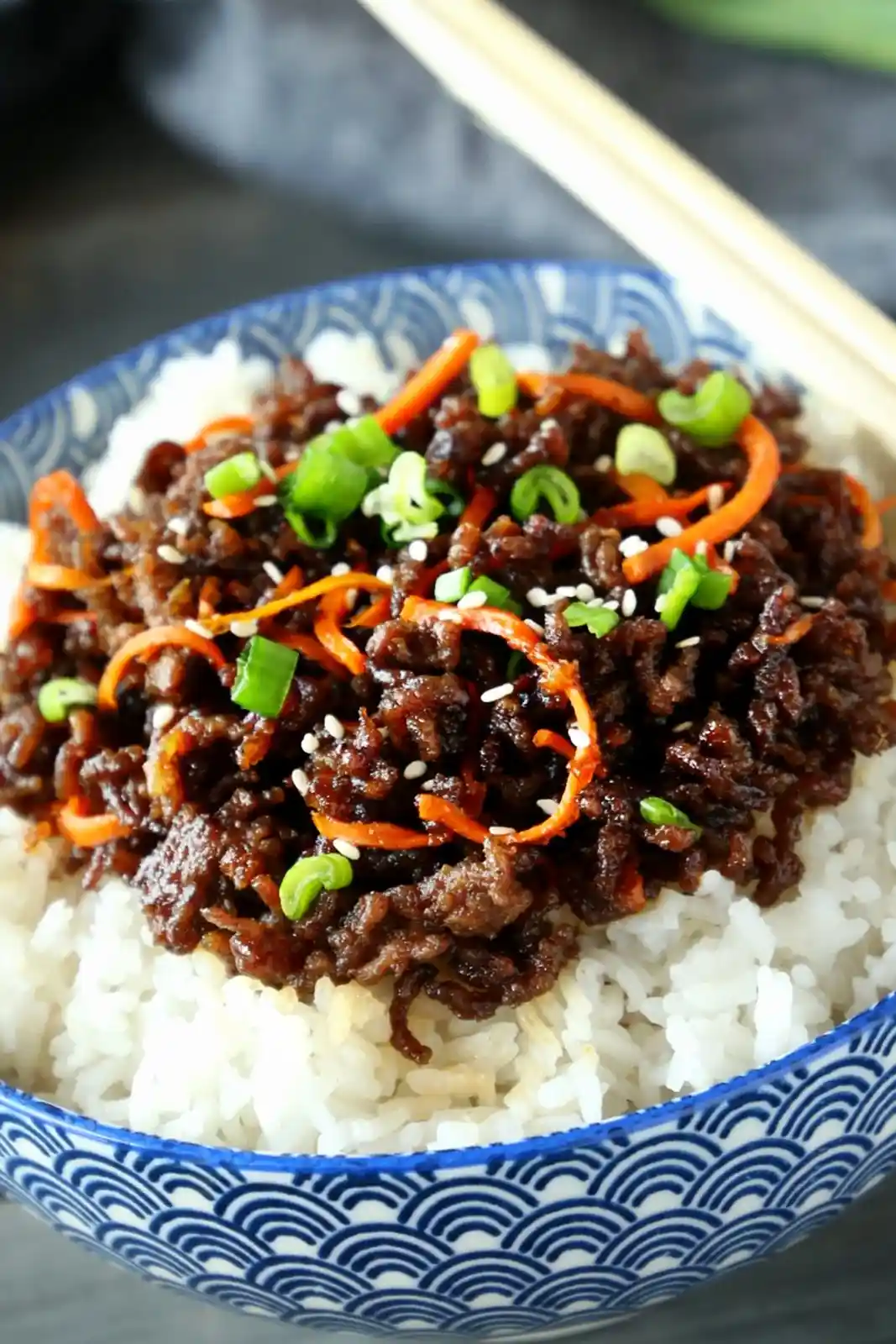
List of ingredients
- 4 cups cooked rice (approximately 1 1/3 cups uncooked, or use minute/instant rice) – serves as the hearty base.
- 1 teaspoon sesame oil – adds a nutty aroma and prevents sticking.
- 1 pound lean ground beef – the primary protein source.
- 3 cloves garlic (finely minced or pressed) – provides a pungent, savory depth.
- 4 tablespoons low sodium soy sauce – delivers the salty, umami flavor.
- 1 tablespoon minced ginger – adds a fresh, spicy zing.
- 3 tablespoons brown sugar – balances the salt with a hint of sweetness.
- Sriracha (optional) – adds adjustable heat to the sauce.
- 1 cup carrots (cut julienne style) – provides crunch and color.
- Chopped green onions, toasted sesame seeds, and red pepper flakes (optional) – used for final garnish.
step-by-step instructions
- Prepare the rice: Cook the rice according to the package directions. If using a pot or rice cooker, combine 1 1/3 cups of rice with 2 1/2 cups of water.
- Heat the pan: Set a large non-stick skillet over medium-high heat and pour in the sesame oil.
- Brown the beef: Add the ground beef to the skillet. Cook and stir until the meat is browned and almost cooked through, which typically takes 6-10 minutes.
- Create the sauce: Stir in the minced garlic, soy sauce, minced ginger, brown sugar, and optional sriracha. Mix well until a light sauce forms and coats the meat.
- Cook the carrots: Add the julienned carrots to the skillet. Stir-fry for about 2 more minutes until the carrots have softened slightly but maintain their structure.
- Assemble and serve: Scoop the beef and carrot mixture over the prepared rice. Garnish with green onions, toasted sesame seeds, and red pepper flakes if desired.
Customizing Your Protein Choices
Using Ground Turkey for a Leaner Option
Ground turkey is a suitable substitute for beef if you prefer a leaner meat. To prevent the turkey from drying out, avoid overcooking it and ensure you use a medium-high heat for a quick sear.
Ground Chicken Substitutions
Ground chicken works well in this recipe due to its mild flavor profile. Since chicken is less flavorful than beef, you may choose to increase the amount of ginger or garlic slightly to maintain the sauce’s impact.
Utilizing Lean Beef Tips
If you prefer steak over ground meat, finely dice lean beef tips into small cubes. Sear them quickly over high heat to maintain tenderness before adding the sauce ingredients.
Vegetable Additions and Swaps
Adding Bell Peppers for Color
Thinly sliced red or green bell peppers add a bright color and a mild sweetness. Add them to the pan at the same time as the carrots to ensure they soften without losing their snap.
Including Mushrooms for Texture
Sliced shiitake or cremini mushrooms provide an earthy flavor and a meaty texture. Sauté the mushrooms for 3-4 minutes before adding the ground beef to allow them to release their moisture.
Using Broccoli Florets
Cut broccoli into very small, bite-sized florets to ensure they cook quickly. Add a tablespoon of water to the skillet when adding broccoli to create steam, which helps them tenderize faster.
Incorporating Snap Peas
Fresh snap peas add a crisp texture and a bright green hue to the bowl. Toss them in during the final 2 minutes of cooking so they remain vibrant and crunchy.
Substituting with Frozen Mixed Vegetables
Frozen peas, carrots, and corn mixes are a convenient time-saver. Thaw and drain the vegetables thoroughly before adding them to the pan to prevent the sauce from becoming watery.
Adding Fresh Spinach
Baby spinach can be stirred in at the very end of the cooking process. The residual heat from the beef will wilt the spinach in about 30 seconds without overcooking it.
Choosing the Right Rice Base
Basmati and Jasmine Rice
These long-grain varieties provide a fluffy, aromatic base that complements the savory sauce. Rinse the rice under cold water before cooking to remove excess starch for distinct grains.
Brown Rice for Added Fiber
Brown rice is a nutrient-dense alternative that offers a chewier texture. Since it takes longer to cook, prepare it in a rice cooker or batch-cook it in advance for the week.
Cauliflower Rice for Lower Carbs
For a low-carbohydrate version, use riced cauliflower. Sauté the cauliflower rice in a separate pan with a touch of oil until tender before topping it with the beef mixture.
Quick-Cooking Instant Rice
Instant or minute rice is the fastest option for busy nights. Follow the package instructions exactly to ensure the rice is fully hydrated and not mushy.
Quinoa as a Protein-Rich Grain
Quinoa can replace rice for added protein and a nuttier taste. Cook the quinoa in vegetable broth instead of water to enhance the overall flavor of the bowl.
Essential Cooking Techniques for Best Results
Achieving the Perfect Beef Brown
To get the best flavor, let the beef sear without stirring constantly for the first few minutes. This creates a brown crust known as the Maillard reaction, which adds deep savoriness to the dish.
Mincing Fresh Ginger Efficiently
Use a microplane grater or the edge of a spoon to peel the ginger skin away. Finely mince the root to ensure the flavor is distributed evenly throughout the sauce without large, spicy chunks.
Preventing Garlic from Burning
Add the minced garlic after the beef has browned but before the liquid ingredients. Garlic burns quickly over high heat, which can create a bitter taste in the final dish.
Managing the Sauce Thickness
If the sauce appears too thin, allow the mixture to simmer for an additional minute without a lid. The brown sugar and soy sauce will naturally reduce and thicken as they heat.
Optimizing Pan Temperature
Maintain medium-high heat throughout the browning process. If the pan is too cold, the beef will steam in its own juices rather than searing, resulting in a grey color and less flavor.
Storage and Preservation Guidelines
Storing in the Refrigerator
Place the cooked beef mixture and the rice in separate airtight containers. This prevents the rice from absorbing all the sauce and becoming soggy during storage.
Maximum Fridge Life
This dish remains fresh and safe to eat for up to 3 days when refrigerated at 40 degrees Fahrenheit or below. Ensure containers are sealed tightly to prevent odors from other foods.
Freezing Instructions
The beef and carrot mixture freezes well for up to 3 months. Avoid freezing the cooked rice, as it often loses its texture and becomes grainy upon thawing.
Thawing Frozen Beef
Thaw the frozen beef mixture in the refrigerator overnight for the best results. Alternatively, use the defrost setting on a microwave before reheating on the stove.
Reheating Techniques
Reheating in the Microwave
Place the rice and beef in a microwave-safe bowl and add a splash of water to the rice. Cover with a damp paper towel and heat in 1-minute intervals, stirring in between.
Stovetop Reheating Method
Place the beef mixture in a skillet over medium heat. Add a teaspoon of water or beef broth to loosen the sauce and stir until heated through.
Using a Steamer for Rice
To restore the texture of refrigerated rice, steam it for a few minutes. This rehydrates the grains and makes them feel freshly cooked.
Oven Reheating Option
Place the components in an oven-safe dish and cover with foil to trap moisture. Heat at 350 degrees Fahrenheit for about 10-15 minutes until warmed through.
Flavor Enhancements and Garnishes
Fresh Green Onion Toppings
Slice green onions thinly on a bias for a professional look. Add them just before serving to provide a fresh, sharp contrast to the sweet and salty beef.
Toasting Sesame Seeds
Toast raw sesame seeds in a dry skillet over medium heat for 2 minutes. This releases the essential oils and significantly enhances the nutty aroma of the dish.
Adding Red Pepper Flakes for Heat
Sprinkle red pepper flakes on top for a subtle, lingering heat. This allows each person to customize the spice level of their own bowl.
Incorporating Fresh Herbs
Fresh cilantro or parsley can be added as a garnish for a burst of freshness. These herbs cut through the richness of the beef and sesame oil.
Using Lime Juice for Acidity
Squeeze a fresh lime wedge over the bowl right before eating. The acidity brightens the heavy flavors of the soy sauce and brown sugar.
Troubleshooting and Fixes
Reducing Excess Saltiness
If the sauce tastes too salty, add a teaspoon of water or an extra pinch of brown sugar. You can also serve the beef over unseasoned rice to balance the salt levels.
Balancing Too Much Sweetness
If the dish is overly sweet, stir in a teaspoon of rice vinegar or a squeeze of lime. The acid neutralizes the sugar and creates a more balanced flavor profile.
Fixing a Watery Sauce
Simmer the mixture for a few more minutes over medium-high heat to evaporate excess liquid. Ensure you are using lean beef to minimize the amount of rendered fat in the pan.
Correcting Overcooked Carrots
To avoid mushy carrots, add them only during the final two minutes of cooking. If they are already overcooked, add a few fresh, raw julienned carrots for added texture.
Frequently Asked Questions
Is this recipe gluten-free?
The recipe is not gluten-free due to the soy sauce. To make it gluten-free, replace the soy sauce with tamari or coconut aminos.
Can this be made in advance?
Yes, the beef and carrot mixture can be prepared ahead of time and stored in the fridge. Reheat it and serve over freshly cooked rice for the best experience.
What is the best skillet to use?
A large non-stick skillet is recommended to prevent the sugar in the sauce from sticking to the pan. A cast-iron skillet is also a great choice for achieving a deeper sear on the beef.
Can I use a different sugar?
Honey or maple syrup can be used as a replacement for brown sugar. Note that these are liquid sweeteners, so you may need to slightly reduce other liquids in the recipe.
Print
Fast Korean-Style Ground Beef Bowls
- Total Time: 15 minutes
- Yield: 4 servings 1x
- Diet: Dairy-free
Description
These Easy Korean Beef Rice Bowls make the perfect healthy weeknight meal that’s ready in about 15 minutes!
Ingredients
- 4 cups cooked rice
- 1 teaspoon sesame oil
- 1 pound lean ground beef
- 3 cloves garlic, finely minced or pressed
- 4 tablespoons low sodium soy sauce
- 1 tablespoon minced ginger
- 3 tablespoons brown sugar
- sriracha (optional)
- 1 cup carrots, cut julienne style
- chopped green onions, toasted sesame seeds, red pepper flakes (optional)
Instructions
- Step 1: Prepare the rice according to package directions (if using instant or minute rice), or cook the rice in a pot or rice cooker (using 1 1/3 cups rice and 2 1/2 cups water).
- Step 2: Heat a large non-stick skillet over medium-high heat and add the sesame oil.
- Step 3: Add the ground beef to the hot skillet and brown until almost cooked through (about 6-10 minutes).
- Step 4: Add the garlic, soy sauce, ginger, brown sugar, and sriracha to the skillet and stir well until a small amount of sauce forms.
- Step 5: Add the carrots and cook for about 2 more minutes until the carrots soften slightly.
- Step 6: Serve the beef mixture over rice and garnish with chopped green onions, toasted sesame seeds, and a small sprinkling of red pepper flakes (garnishes optional).
Notes
To make this recipe ahead of time, simply prepare the recipe as directed and store in an airtight container in the fridge for up to 3 days until ready to serve. Reheat in the microwave before serving.
- Prep Time: 5 minutes
- Cook Time: 10 minutes
- Category: Dinner
- Method: Stir-fry
- Cuisine: Korean
Nutrition
- Serving Size: 1 serving
- Calories: 430 kcal
- Sugar: 11 g
- Sodium: 635 mg
- Fat: 7 g
- Saturated Fat: 3 g
- Unsaturated Fat: 4 g
- Trans Fat: 0 g
- Carbohydrates: 59 g
- Fiber: 2 g
- Protein: 30 g
- Cholesterol: 70 mg