
This quick and nutritious meal combines tender chicken, fresh asparagus, and a bold ginger sauce for a satisfying dinner. It is designed for busy weeknights when you need a healthy, flavor-packed dish in under an hour.
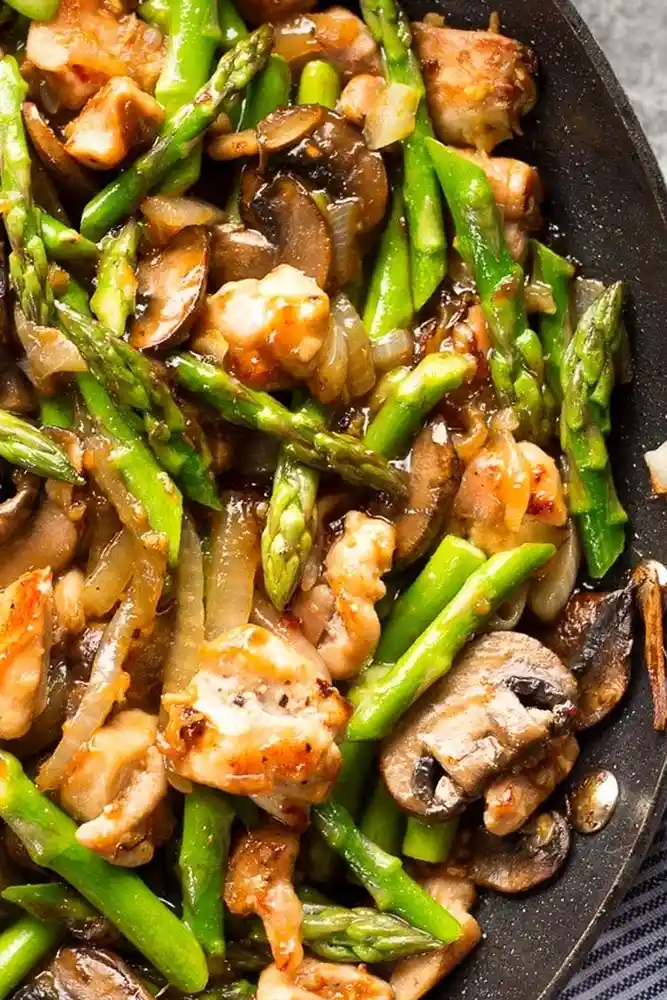
List of ingredients
- 1 pound skinless boneless chicken thighs, cut into bite sized pieces – thighs remain juicy during high-heat cooking.
- 1 pound asparagus, ends trimmed and cut into 1 inch pieces – use fresh, firm stalks.
- 8 ounces crimini mushrooms, sliced – these provide a rich, earthy base.
- 1 onion, thinly sliced – yellow or white onions work best here.
- 2 tablespoons canola oil – or any oil with a high smoke point.
- salt – for seasoning the chicken.
- pepper – for seasoning the chicken.
- 1/4 cup low sodium soy sauce – provides the primary salty depth.
- 1/4 cup brown sugar – balances the salt and creates a glaze.
- 2 tablespoons rice vinegar – adds a necessary acidic brightness.
- 1 tablespoon cornstarch – used to thicken the sauce.
- 1 tablespoon fresh grated ginger root – provides a zesty, warm flavor.
- 4 garlic cloves, minced – adds pungent aromatic depth.
- 1 teaspoon chili garlic sauce – introduces a subtle, spicy kick.
step-by-step instructions
- Prepare the Sauce: Whisk together the soy sauce, brown sugar, rice vinegar, cornstarch, grated ginger, minced garlic, and chili garlic sauce in a small bowl and set aside.
- Sauté Mushrooms: Heat a large non-stick skillet over medium-high heat. Add the mushrooms and sauté until they have released their water and the pan is dry, which usually takes 5-10 minutes, then remove them from the pan.
- Cook Chicken: Return the pan to heat and add one tablespoon of oil. Add the chicken pieces, season with salt and pepper, and cook while stirring often until the meat is cooked through, then remove the chicken from the pan.
- Sauté Onion: Wipe out the pan if needed and return it to the heat with the remaining tablespoon of oil. Add the sliced onion and sauté for about 5 minutes until the onion is softened and turning golden.
- Combine Proteins: Add the previously cooked mushrooms and chicken back into the pan with the onions. Cook for approximately 3 minutes until the ingredients start to brown.
- Add Asparagus: Stir in the asparagus pieces and cook for 1-2 minutes, just until the stalks turn a bright green color.
- Thicken Sauce: Pour the whisked sauce over the mixture and stir constantly until everything is well coated and the sauce has thickened, which takes about 1 minute.
- Final Touch: Serve the stir fry immediately over rice if desired.
Mastering Stir Fry Techniques
Using High-Smoke Point Oils
Canola oil is ideal because it can handle the high temperatures required for stir frying without burning. Avoid using extra virgin olive oil or butter, as these have lower smoke points and can develop a bitter taste when overheated.
Achieving the Perfect Sear
To get a good brown crust on the chicken, ensure the pan is hot before adding the meat. Do not overcrowd the pan, as this lowers the temperature and causes the meat to steam in its own juices rather than sear.
Managing Pan Temperature
Maintain medium-high heat throughout the process to ensure vegetables stay crisp and meat stays tender. If the pan begins to smoke excessively, lower the heat slightly or add a tiny bit more oil to regulate the surface temperature.
The Role of Constant Stirring
Stir frying is named for the constant motion of the food in the pan. This prevents the ginger and garlic in the sauce from burning and ensures every piece of chicken and vegetable is cooked evenly.
Preparing Vegetables Uniformly
Cut your asparagus and chicken into similar sizes to ensure they cook at the same rate. Uniform pieces prevent some bits from being overcooked while others remain raw.
Controlling Sauce Thickness
The cornstarch in the sauce acts as a thickener once it hits the heat. Stir constantly after adding the sauce to prevent clumps from forming and to ensure a smooth, glossy glaze.
Ingredient Substitutions
Using Coconut Aminos for Soy Sauce
For those avoiding soy, coconut aminos offer a similar salty and sweet profile. They are naturally lower in sodium and provide a slightly sweeter taste that pairs well with ginger.
Replacing Brown Sugar with Honey
Honey can be used as a 1:1 replacement for brown sugar to create a different kind of sweetness. This substitution often results in a stickier, glossier sauce that clings well to the chicken.
Substituting Rice Vinegar with Apple Cider Vinegar
If rice vinegar is unavailable, apple cider vinegar is a suitable alternative. It provides a similar tang, although it has a slightly more fruity undertone than the clean acidity of rice vinegar.
Using Fresh vs Powdered Ginger
Freshly grated ginger is highly recommended for its zingy, potent flavor. If you must use ground ginger, use only a quarter of the amount specified to avoid an overpowering, bitter taste.
Garlic Powder Alternatives
Fresh minced garlic is best, but garlic powder can be used in a pinch. Use about 1/4 teaspoon of powder for every clove of fresh garlic requested in the recipe.
Reducing Sodium in the Sauce
To lower the salt content further, use a reduced-sodium soy sauce or increase the ratio of rice vinegar and water. This allows you to maintain the volume of the sauce without adding excessive salt.
Vegetable Pairing Variations
Adding Bell Peppers for Color
Red, yellow, or orange bell peppers add a vibrant color and a sweet crunch. Sauté them along with the onions to ensure they are softened but still retain their structure.
Incorporating Snap Peas or Snow Peas
Snap peas are a great alternative to asparagus or a wonderful addition alongside them. Add them at the same time as the asparagus to keep them crisp and bright green.
Using Broccoli instead of Asparagus
Broccoli florets work exceptionally well with ginger and garlic. Because broccoli takes slightly longer to cook, consider steaming it for two minutes before adding it to the pan.
Adding Water Chestnuts for Crunch
Canned water chestnuts provide a distinct, crisp texture that contrasts with the tender chicken. Stir them in during the final minute of cooking to maintain their crunch.
Including Carrots for Sweetness
Thinly sliced carrots add a natural sweetness and a pop of color. Sauté them with the onions, as they require more time to soften than the asparagus.
Adding Baby Corn for Texture
Baby corn adds a unique shape and a mild flavor to the stir fry. Add these along with the asparagus for a classic Asian-inspired vegetable mix.
Professional Cooking Tips
Proper Asparagus Trimming
To find where to trim asparagus, snap a stalk near the bottom; it will naturally break where the woody end meets the tender part. Trim all other stalks to that same length using a knife.
Peeling Fresh Ginger Efficiently
Use the edge of a metal spoon to scrape the skin off fresh ginger root. This method removes the skin without wasting any of the nutrient-dense flesh inside.
Slicing Onions for Even Cooking
Slice onions into thin half-moons rather than thick chunks. This ensures they soften quickly and caramelize evenly during the five-minute sauté process.
Maintaining Mushroom Texture
Dry sautéing mushrooms first is crucial because it removes excess moisture. This prevents the mushrooms from becoming rubbery and allows them to brown properly in the later steps.
Avoiding Overcooking the Chicken
Remove the chicken from the pan as soon as it is cooked through. Returning it to the pan at the end only for a few minutes ensures it stays juicy and doesn’t become tough.
Keeping Asparagus Vibrant Green
Avoid cooking asparagus for more than two minutes. Overcooking causes the chlorophyll to break down, turning the vibrant green into a dull, olive-brown color.
Serving and Presentation
Pairing with Brown Jasmine Rice
Brown jasmine rice offers a nutty flavor and a chewy texture that complements the savory sauce. The grains soak up the ginger glaze, making every bite flavorful.
Using Quinoa for Extra Protein
For a higher protein option, serve the stir fry over cooked quinoa. The small seeds catch the sauce in their crevices, ensuring you get plenty of flavor in each spoonful.
Serving over Cauliflower Rice
To reduce carbohydrates, use sautéed cauliflower rice as a base. This keeps the meal light while allowing the bold flavors of the ginger and garlic to shine.
Garnishing with Toasted Sesame Seeds
A sprinkle of toasted sesame seeds adds a professional look and a subtle nuttiness. Toast them in a dry pan for one minute until golden before sprinkling them on top.
Adding Sliced Green Onions
Finely sliced green onions provide a fresh, sharp contrast to the sweet and salty sauce. Add them at the very end as a raw garnish for maximum brightness.
Storage and Food Safety
Proper Air-Tight Container Selection
Store leftovers in glass air-tight containers to keep the flavors fresh and prevent odors from leaking. Glass is preferred over plastic to avoid staining from the soy-based sauce.
Maximum Refrigeration Time
This stir fry stays fresh in the refrigerator for up to three to four days. Ensure it is cooled slightly before sealing the lid to prevent excessive condensation.
Avoiding Freezer Burn
While this dish can be frozen, the asparagus may lose its snap upon thawing. If freezing, use a vacuum-seal bag to remove as much air as possible.
Thawing Stir Fry Safely
Thaw frozen stir fry in the refrigerator overnight rather than on the counter. This ensures the chicken stays at a safe temperature and reduces the risk of bacterial growth.
Preventing Soggy Vegetables During Storage
If you plan to eat the meal over several days, store the rice and the stir fry in separate containers. This prevents the rice from absorbing all the sauce and becoming mushy.
Make-Ahead Preparation
Preparing the Sauce in Advance
The ginger sauce can be whisked together up to two days in advance. Keep it in a sealed jar in the refrigerator and give it a quick shake before adding it to the pan.
Pre-cutting the Protein
Cut the chicken thighs into bite-sized pieces the night before and store them in a container. This significantly reduces the active prep time on the day of cooking.
Blanching Asparagus Slightly
If you are cooking for a large crowd, blanch the asparagus in boiling water for 30 seconds and then shock in ice water. This ensures they cook instantly when added to the stir fry.
Organizing the Mise en Place
Arrange all chopped vegetables and proteins in separate bowls before turning on the stove. This professional organization prevents burning ingredients while you prep the next item.
Storing Chopped Vegetables
Sliced onions and mushrooms can be prepped a few hours ahead and kept in the fridge. Keep them in breathable containers to maintain their texture.
Troubleshooting Your Stir Fry
Fixing a Too-Salty Sauce
If the sauce tastes too salty, add a teaspoon of brown sugar or a splash of water. The sweetness or dilution will balance the sodium from the soy sauce.
Correcting a Grainy Sauce Texture
A grainy sauce usually means the cornstarch wasn’t fully dissolved. Whisk the sauce vigorously before adding it to the pan, or strain it through a fine mesh sieve.
Handling Burnt Garlic
If the garlic burns, it becomes bitter and can ruin the dish. If this happens, it is best to wipe the pan clean and start the aromatic step over again.
Preventing Chicken from Sticking
If the chicken sticks to the pan, wait a few seconds before trying to flip it. The meat will naturally release from the surface once a proper sear has formed.
Managing Excess Water in the Pan
If the pan becomes too watery, increase the heat to high to evaporate the liquid. This is why sautéing the mushrooms first is so important for moisture control.
Reviving Overcooked Vegetables
If the asparagus becomes too soft, avoid adding more heat. Serve it immediately and add a squeeze of fresh lime juice to bring back some brightness and zest.
Frequently Asked Questions
Can I use a different oil?
Yes, you can use avocado oil or peanut oil as they also have high smoke points. Avoid butter or extra virgin olive oil for the searing process.
How do I know when chicken is done?
Chicken thighs are cooked through when they are no longer pink in the center and reach an internal temperature of 165 degrees Fahrenheit.
Can I use frozen asparagus?
Frozen asparagus can be used, but it is prone to becoming mushy. Thaw it completely and pat it dry with paper towels before adding it to the pan.
How do I remove the skin of ginger?
The easiest way is to use the edge of a spoon to scrape the skin off. This removes the thin skin without cutting into the ginger root itself.
Is cornstarch necessary for the sauce?
Cornstarch is necessary to create the thick, glossy glaze that sticks to the ingredients. Without it, the sauce will remain a thin liquid at the bottom of the pan.
Can I make this dish spicier?
To increase the heat, add more chili garlic sauce or a pinch of red pepper flakes. You can also add sliced fresh jalapeños during the onion sauté step.
Print
Ginger Chicken and Asparagus Stir Fry
- Total Time: 45 minutes
- Yield: 4 servings 1x
- Diet: General
Description
This Ginger Chicken Asparagus Stir Fry is a quick and healthy dinner using fresh spring produce! This ginger chicken stir fry recipe will be a hit with your family.
Ingredients
- 1 pound skinless boneless chicken thighs, cut into bite sized pieces
- 1 pound asparagus, ends trimmed and cut into 1 inch pieces
- 8 ounces crimini mushrooms, sliced
- 1 onion, thinly sliced
- 2 tablespoons canola oil
- salt
- pepper
- 1/4 cup low sodium soy sauce
- 1/4 cup brown sugar
- 2 tablespoons rice vinegar
- 1 tablespoon cornstarch
- 1 tablespoon fresh grated ginger root
- 4 garlic cloves, minced
- 1 teaspoon chili garlic sauce
Instructions
- Step: Whisk together all ingredients for sauce, set aside.
- Step: Heat a large non-stick skillet over medium-high heat. Add the mushrooms and sauté until they have released their water and the pan is dry, 5-10 minutes. Remove mushrooms from pan.
- Step: Return pan to heat and add one tablespoon of oil. Add the chicken and season with salt and pepper. Cook, stirring often, until chicken is cooked through. Remove chicken from pan.
- Step: Wipe out pan if needed. Return pan to heat and add the other tablespoon of oil. Add the onion and sauté for about 5 minutes, until softened and starting to turn golden.
- Step: Add the mushrooms and the chicken back to the pan, cook for about 3 minutes, until starting to brown.
- Step: Add the asparagus and cook for 1-2 minutes, until turning bright green.
- Step: Add the sauce and stir until everything is coated and sauce has thickened, about 1 minute.
- Step: Serve over rice if desired.
Notes
Dry sautéing the mushrooms first prevents them from steaming and allows them to brown better. This dish pairs excellently with brown jasmine rice.
- Prep Time: 10 minutes
- Cook Time: 35 minutes
- Category: Dinner
- Method: Stir-fry
- Cuisine: Asian
Nutrition
- Serving Size: 1 serving
- Calories: 316 kcal
- Sugar: 15 g
- Sodium: 1100 mg
- Fat: 14.4 g
- Saturated Fat: 4 g
- Unsaturated Fat: 10.4 g
- Trans Fat: 0 g
- Carbohydrates: 27.7 g
- Fiber: 5 g
- Protein: 23.3 g
- Cholesterol: 95 mg