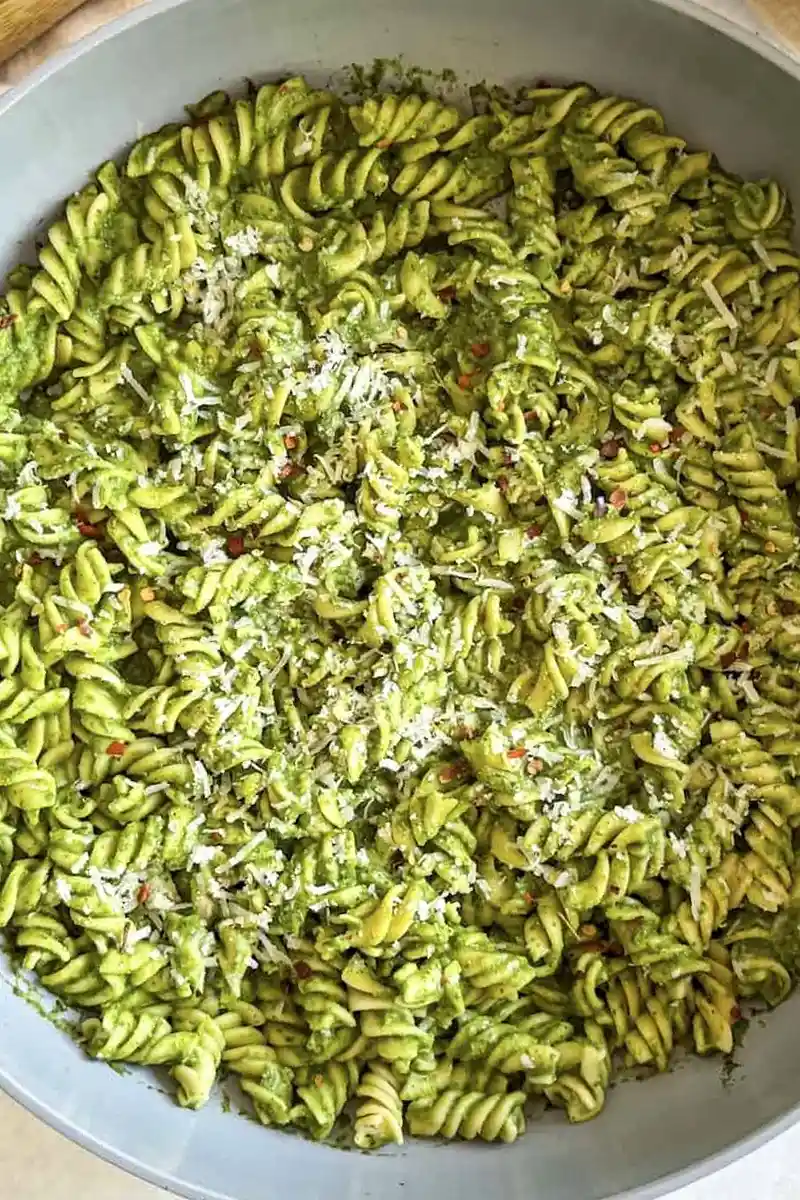
This vibrant green sauce turns standard pasta into a nutrient-dense meal using fresh spinach, protein-rich peas, and aromatic basil. It is a fantastic way to incorporate more vegetables into your weekly dinner routine without spending hours in the kitchen. The creamy texture, achieved by blending wholesome ingredients, makes it a hit with both adults and children alike.
List of ingredients
- 3 cups spinach (90g)
- 1 cup green peas, fresh or frozen (170g)
- 2 cloves garlic, sliced
- 10 leaves fresh basil (or 1 tsp dried basil)
- 1/2 cup shredded parmesan cheese (40g)
- 2 Tbsp olive oil (30 ml)
- 2 Tbsp fresh lemon juice (30 ml)
- 1/4 cup unsweetened plant-milk (60 ml)
- 1/2 tsp smoked paprika (1g)
- 1/2 tsp crushed red pepper flakes (0.5g)
- 1/2 tsp salt
- 1/8 tsp black pepper
- 8 oz dry pasta of choice (196g)
- 2-4 Tbsp pasta water
step-by-step instructions
- Step: Bring a large pot of water to a boil over high heat. Salt the boiling water and then add the dry pasta to the salted water. Cook pasta according to the instructions on the package. When pasta is done cooking, drain and set aside, saving the pasta water.
- Step: Heat a large pan or skillet over medium heat and add oil. Once oil is heated, add frozen peas. Once frozen peas are defrosted, add the garlic until fragrant, 30 seconds-1 minute. Add the spinach and saute until the spinach is wilted.
- Step: Add the cooked spinach and peas and the rest of the ingredients including the parmesan, basil, lemon juice, milk, paprika, red pepper flakes, salt, and pepper to a blender or food processor and puree for about 1-2 minutes or until creamy. Add in a Tbsp of pasta water at a time until it reaches your desired consistency.
- Step: Add the cooked pasta to the skillet that you used for your spinach and peas. Stir in the green sauce and toss until evenly coated. Heat on medium heat until it’s warmed to your liking, adding a bit more pasta water if needed.
Culinary Fundamentals for Success
Selecting the Right Pasta Shape
To maximize the experience of this sauce, choose a pasta shape that features ridges, spirals, or deep crevices. Shapes like rotini, fusilli, or penne are excellent because they are designed to trap and hold onto thick, blended sauces. Using smooth noodles like spaghetti or linguine can result in the sauce sliding off, leaving you with less flavor in each bite.
The Role of Starchy Water
Never discard all your pasta water before ensuring you have set some aside. The starchy, salty liquid is a secret weapon for emulsification. When mixed with the olive oil and parmesan in the blender, it helps bind the sauce, creating a silky texture that clings perfectly to your pasta rather than pooling at the bottom of your bowl.
Customization and Flavor Adjustments
Adapting for Plant-Based Diets
You can easily convert this recipe to suit a vegan lifestyle by omitting the parmesan cheese or substituting it with a high-quality nutritional yeast. If using nutritional yeast, start by using half the amount indicated for parmesan and adjust based on your personal preference for that distinct, savory flavor. The peas and spinach already provide a strong nutritional base, so the sauce remains filling without the dairy.
Enhancing Creaminess Levels
If you prefer a denser, more decadent consistency similar to a restaurant-style Alfredo, you can incorporate a small amount of ricotta or cottage cheese into the blender. These additions increase the protein content and add a thicker, velvety mouthfeel. Simply blend these in with your greens and milk until you achieve the desired level of thickness.
Practical Serving Strategies
Pairing with Proteins
This sauce works exceptionally well as a canvas for various proteins if you want a more substantial meal. Grilled chicken breasts, sautéed shrimp, or roasted chickpeas add excellent texture and extra protein. Simply place your chosen protein on top of the finished pasta bowl to maintain the structural integrity of the noodles.
Vegetable-Forward Additions
For those looking to increase their daily fiber intake, consider adding extra roasted vegetables to the serving bowl. Roasted broccoli florets, diced zucchini, or caramelized onions blend seamlessly with the flavor profile of the green sauce. You can also serve the sauce over a bed of roasted cauliflower or spaghetti squash for a low-carb alternative to traditional pasta.
Smart Storage and Reheating
Proper Refrigeration Techniques
Leftover sauce should be stored in an airtight container immediately after it has cooled to room temperature. It will remain fresh in the refrigerator for up to four days. When storing, try to keep the sauce separate from the pasta if possible, as the noodles will continue to absorb the moisture and soften over time, which can change the texture.
Freezing for Future Meals
This green sauce is an excellent candidate for freezing. To make meal prep efficient, pour the blended sauce into silicone ice cube trays and freeze until solid. Once frozen, transfer the cubes into a freezer-safe bag. This allows you to grab only the portion you need for a quick individual lunch or dinner, minimizing waste and ensuring you always have a healthy option on hand.
Frequently Asked Questions
Can I prepare this recipe using frozen spinach instead of fresh?
Yes, frozen spinach is a perfectly fine substitute. Simply ensure that you thaw it thoroughly and squeeze out any excess water before adding it to the skillet. If you skip the step of removing the water, your sauce may end up too thin.
What is the best way to reheat the sauce after it has been stored?
Reheat the sauce on the stovetop over low heat, stirring occasionally to maintain a smooth consistency. If you use a microwave, use a medium power setting and stir every 30 seconds to avoid overheating the cheese. You may need to add a splash of water or milk to loosen the sauce as it can thicken slightly when chilled.
Is it possible to use dried herbs if I do not have fresh basil?
Dried basil can work in a pinch, but you should adjust the quantity significantly. Use about one-third of the amount of dried basil compared to fresh basil to ensure the flavor does not become overly concentrated or bitter. Always crush the dried leaves between your palms before adding to release the essential oils.
Print
Healthy Green Pasta Sauce Recipe (Quick & Easy)
- Total Time: PT12M
- Yield: 4 1x
- Diet: Vegetarian
Description
This creamy Green Pasta Sauce is comfort in a bowl and so quick & easy to make! The best part is that it’s made with nutrient-rich ingredients like green spinach, fresh basil, parmesan cheese, and green peas which are rich in plant protein – a delicious way to get in your greens!
Ingredients
- 3 cups spinach (90g)
- 1 cup green peas, fresh or frozen (170g)
- 2 cloves garlic, sliced
- 10 leaves fresh basil (or 1 tsp dried basil)
- 1/2 cup shredded parmesan cheese (40g)
- 2 Tbsp olive oil (30 ml)
- 2 Tbsp fresh lemon juice (30 ml)
- 1/4 cup unsweetened plant-milk (60 ml)
- 1/2 tsp smoked paprika (1g)
- 1/2 tsp crushed red pepper flakes (0.5g)
- 1/2 tsp salt
- 1/8 tsp black pepper
- 8 oz dry pasta of choice (196g)
- 2–4 Tbsp pasta water
Instructions
- Step: Bring a large pot of water to a boil over high heat. Salt the boiling water and then add the dry pasta to the salted water. Cook pasta according to the instructions on the package. When pasta is done cooking, drain and set aside, saving the pasta water.
- Step: Heat a large pan or skillet over medium heat and add oil. Once oil is heated, add frozen peas. Once frozen peas are defrosted, add the garlic until fragrant, 30 seconds-1 minute. Add the spinach and saute until the spinach is wilted.
- Step: Add the cooked spinach and peas and the rest of the ingredients including the parmesan, basil, lemon juice, milk, paprika, red pepper flakes, salt, and pepper to a blender or food processor and puree for about 1-2 minutes or until creamy. Add in a Tbsp of pasta water at a time until it reaches your desired consistency.
- Step: Add the cooked pasta to the skillet that you used for your spinach and peas. Stir in the green sauce and toss until evenly coated. Heat on medium heat until it’s warmed to your liking, adding a bit more pasta water if needed.
Notes
Nutrition calculated using chickpea pasta and will vary depending on the type of pasta used. Be sure to save your pasta water to thin the sauce to the right consistency and emulsify the oil and cheese.
- Prep Time: PT2M
- Cook Time: PT10M
- Category: Dinner
- Method: Stovetop
- Cuisine: Italian
Nutrition
- Serving Size: 1.5 cups
- Calories: 340 kcal
- Sugar: 4 g
- Sodium: 370 mg
- Fat: 13 g
- Saturated Fat: 3 g
- Unsaturated Fat: 9 g
- Trans Fat: 0 g
- Carbohydrates: 44 g
- Fiber: 8 g
- Protein: 18 g
- Cholesterol: 7 mg