
This one-pot skillet lasagna provides the flavors of a traditional baked pasta dish in a fraction of the time. It is a nutritious, 30-minute meal that minimizes cleanup by using a single pan for all cooking stages.
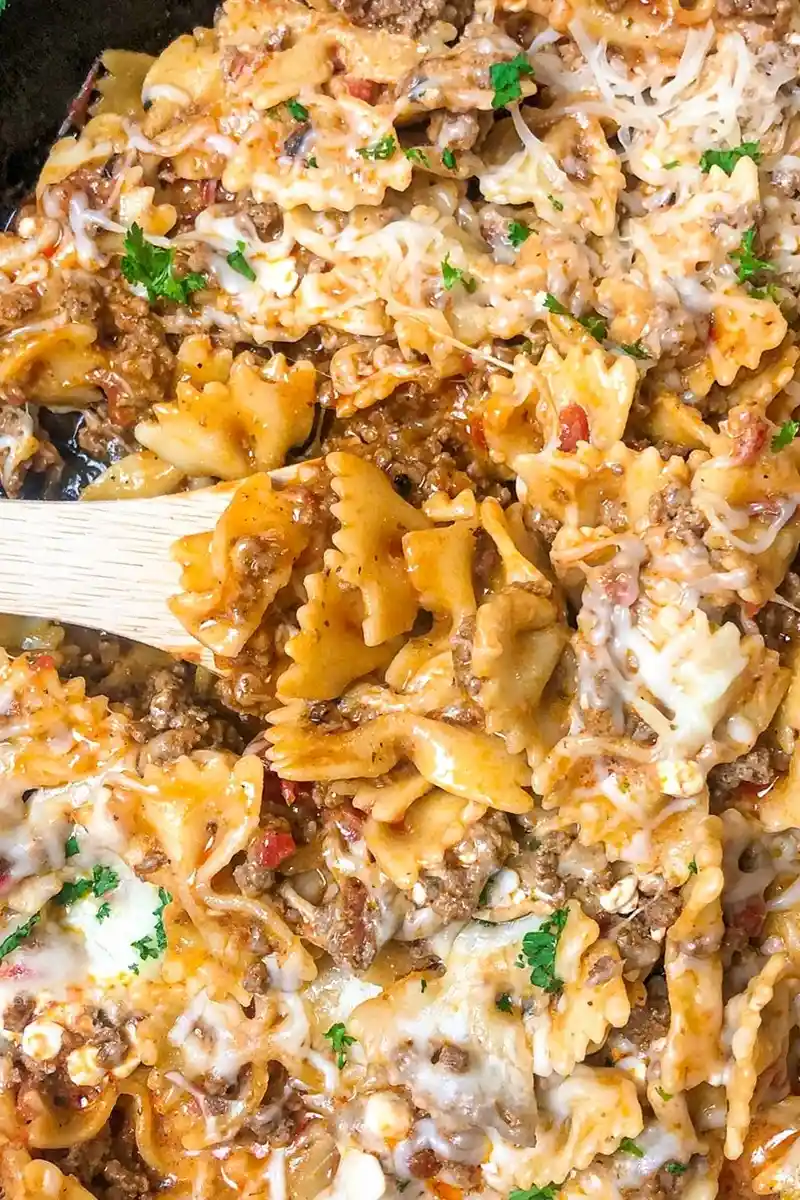
List of ingredients
- 1 lb lean ground beef – can substitute with ground turkey or chicken.
- 3 tsp minced garlic – provides a pungent aromatic base.
- 8 oz dry farfalle pasta (bowtie) – white, gluten-free, or whole wheat options work.
- 1 14.5oz can diced tomatoes – fire-roasted tomatoes add a deeper flavor.
- 8 oz can tomato sauce – use low-sodium versions to control salt intake.
- 2 cups low sodium chicken broth or water – the primary liquid for boiling the pasta.
- 1 1/2 tsp dried oregano – essential for the Italian herb profile.
- 1 Tbsp dried onion flakes – a convenient alternative to fresh chopped onion.
- 1/4 tsp salt – adjust based on the sodium content of the broth.
- 1/4 tsp pepper – adds a mild heat and depth.
- 2/3 cup fat free cottage cheese – a lean, high-protein replacement for ricotta.
- 1 cup part-skim mozzarella cheese – provides the characteristic melty topping.
- Sprinkle of parmesan cheese – optional for an extra salty finish.
step-by-step instructions
- Sauté Garlic: Add extra virgin olive oil to a large skillet over medium-high heat. Sauté the minced garlic for one minute until fragrant.
- Brown the Meat: Add the lean ground beef, salt, pepper, dried oregano, and dried onion flakes to the pan. Cook until the meat is thoroughly browned and cooked through.
- Combine Liquids and Pasta: Pour in the tomato sauce, diced tomatoes, chicken broth (or water), and the dry pasta noodles. Stir until all ingredients are well combined.
- Simmer: Cover the skillet with a lid and bring the mixture to a boil. Once boiling, reduce the heat and simmer for 14-15 minutes, or until the noodles are tender.
- Add Creamy Elements: Remove the skillet from the heat. Stir in the fat free cottage cheese and sprinkle the part-skim mozzarella cheese evenly over the top.
- Melt the Cheese: Cover the pan for 1-2 minutes to allow the shredded mozzarella to melt completely.
- Final Touch: Sprinkle with fresh chopped basil if desired and serve immediately.
Customizing the Protein and Pasta
Lean Ground Turkey or Chicken
Replacing ground beef with ground turkey or chicken further reduces the saturated fat content. Ensure you use lean versions to avoid excess grease in the sauce.
Whole Grain or Gluten-Free Noodles
Whole wheat farfalle increases the fiber content of the dish. Gluten-free alternatives work well, but you may need to monitor the simmer time as some gluten-free pastas soften faster than wheat-based ones.
Using Broken Lasagna Sheets
If bowtie pasta is unavailable, you can use traditional lasagna noodles. Break the dry sheets into smaller, bite-sized pieces before adding them to the skillet.
Alternative Pasta Shapes
Penne or rotini are suitable substitutes for farfalle. These shapes capture the meat sauce effectively in their ridges and hollow centers.
Vegetable Additions for Nutrition
Incorporating Sliced Mushrooms
Add sliced mushrooms when browning the ground beef. Sauté them until the moisture has evaporated to intensify their savory flavor before adding the liquids.
Adding Fresh Baby Spinach
Stir in two cups of chopped fresh spinach during the final minute of simmering. The residual heat will wilt the leaves without overcooking them.
Using Diced Zucchini
Sauté small zucchini cubes along with the garlic and beef. This adds volume and nutrients to the meal without significantly altering the taste.
Adding Diced Bell Peppers
Finely diced red or green bell peppers can be added during the meat-browning stage. This provides a slight sweetness and added vitamin C.
Professional Cooking Tips
Select a Deep-Sided Skillet
Use a skillet with high walls to prevent the sauce and pasta from bubbling over during the boiling process. A deep sauté pan is ideal for this one-pot method.
Preventing Pasta Sticking
Stir the pasta occasionally during the first few minutes of simmering. This ensures the noodles do not clump together or stick to the bottom of the pan.
Monitoring Noodle Texture
Begin checking the pasta for doneness at the 13-minute mark. Stop the cooking process as soon as the pasta is al dente to avoid mushy results.
Properly Browning the Meat
Allow the beef to sear without stirring too frequently at first. This creates a better crust and deeper flavor through the Maillard reaction.
Controlling Sauce Consistency
If the sauce is too thick before the pasta is cooked, add an extra quarter-cup of broth. If it is too thin, simmer for two additional minutes with the lid slightly ajar.
Serving and Presentation Ideas
Pairing with Garlic Bread
Serve the skillet lasagna with toasted garlic bread to add a crunchy texture. This helps soak up any remaining tomato sauce on the plate.
Adding a Fresh Side Salad
A simple arugula or romaine salad with a lemon vinaigrette balances the richness of the cheese. The acidity of the dressing cuts through the creaminess of the cottage cheese.
Using Fresh Herb Garnishes
Fresh basil or parsley leaves added at the end provide a burst of color and freshness. Chop the herbs finely to distribute the flavor evenly across the dish.
Adding a Final Cheese Dusting
For a more traditional taste, sprinkle a small amount of freshly grated parmesan over the melted mozzarella. This adds a sharp, salty contrast to the mild mozzarella.
Storage and Reheating Guidelines
Refrigeration Method
Store leftovers in an airtight container in the refrigerator for 3-4 days. Ensure the lasagna is cooled slightly before sealing to prevent excess condensation.
Microwave Reheating Instructions
Heat individual portions in the microwave for 45-60 seconds. Stir halfway through to ensure the heat is distributed evenly throughout the pasta.
Stovetop Reheating Method
Place leftovers in a small pan over medium-low heat. Add a tablespoon of water or broth to loosen the sauce and restore the original consistency.
Restoring Creaminess
Add a small dollop of fresh cottage cheese on top of the lasagna after reheating. This replenishes the creamy texture that can be lost during cooling.
Troubleshooting Common Issues
Correcting a Watery Sauce
If the sauce is too liquid after the pasta is cooked, simmer the mixture uncovered for 3-5 minutes. This allows excess moisture to evaporate while thickening the sauce.
Fixing Undercooked Pasta
If the noodles remain hard after the initial simmer time, add another 1/4 cup of broth. Cover and simmer for an additional 3-5 minutes.
Managing Excess Meat Grease
If the ground beef releases too much fat during browning, carefully drain the excess grease with a spoon. This prevents an oily film from forming on top of the sauce.
Adjusting Bland Flavors
If the dish lacks depth, add a pinch more salt or a teaspoon of Italian seasoning. A small splash of balsamic vinegar can also enhance the acidity of the tomatoes.
Frequently Asked Questions
Can I freeze this skillet lasagna?
Yes, this dish can be frozen for up to three months. Store it in a freezer-safe container and thaw it in the refrigerator overnight before reheating on the stove.
Do I need to drain the cottage cheese?
No, there is no need to drain the cottage cheese. Its natural moisture blends into the sauce to create a creamy consistency similar to ricotta.
Which canned tomatoes are best for this recipe?
Fire-roasted diced tomatoes are recommended for a smokier flavor. However, standard diced tomatoes or crushed tomatoes also work well.
Can I use water instead of chicken broth?
Yes, water is a perfectly acceptable substitute for chicken broth. You may want to add an extra pinch of salt to compensate for the lack of seasoning in the water.
Is this recipe suitable for a slow cooker?
This specific recipe is designed for a skillet to ensure the pasta cooks correctly. In a slow cooker, pasta often becomes overcooked or mushy if left for several hours.
How do I make this vegetarian?
Replace the lean ground beef with a plant-based meat crumble or a mixture of lentils and finely chopped mushrooms. Use vegetable broth instead of chicken broth.
Print
Healthy One Pot Skillet Lasagna
- Total Time: 35 minutes
- Yield: 5 servings 1x
- Diet: General
Description
This Healthy One Pot Skillet Lasagna is made with lean ground beef, tomato sauce, seasonings, fat free cottage cheese, and part-skim mozzarella cheese. This one pot lasagna recipe is a perfect 30 minute meal for busy weeknights.
Ingredients
- 1 lb. lean ground beef
- 3 tsp. minced garlic
- 8 oz. dry farfalle pasta (bowtie)
- 1 14.5oz. can diced tomatoes
- 8 oz. can tomato sauce
- 2 cups low sodium chicken broth
- 1 1/2 tsp. dried oregano
- 1 Tbsp. dried onion flakes
- 1/4 tsp. salt
- 1/4 tsp. pepper
- 2/3 cup fat free cottage cheese
- 1 cup part-skim mozzarella cheese
- sprinkle of parmesan cheese
Instructions
- Step 1: In a large skillet add extra virgin olive oil over medium-high heat. Add minced garlic and sauté for one minute.
- Step 2: Add lean ground beef, salt, pepper, dried oregano, and dried onion flakes. Cook until meat has browned and is cooked through.
- Step 3: Pour tomato sauce, diced tomatoes, chicken broth or water, and pasta noodles, and stir until well combined.
- Step 4: Cover with a lid and bring to a boil. Once it has been brought to a boil, reduce heat and simmer 14-15 minutes or until noodles are tender and cooked through.
- Step 5: Remove from heat and stir in fat free cottage cheese, and sprinkle part skim mozzarella cheese over top.
- Step 6: Cover for 1-2 minutes or until shredded cheese is melted.
- Step 7: Sprinkle with fresh chopped basil if desired. Enjoy!
Notes
Ground turkey or ground chicken can be substituted for lean ground beef. Use fire roasted tomatoes for added flavor. For a vegetable boost, consider adding chopped mushrooms, zucchini, or spinach.
- Prep Time: 10 minutes
- Cook Time: 25 minutes
- Category: Dinner
- Method: Skillet
- Cuisine: Italian
Nutrition
- Serving Size: 1 serving
- Calories: 258 kcal
- Sugar: 5.8 g
- Sodium: 756 mg
- Fat: 8.2 g
- Saturated Fat: 4 g
- Unsaturated Fat: 4.2 g
- Trans Fat: 0 g
- Carbohydrates: 17.2 g
- Fiber: 2.2 g
- Protein: 28.4 g
- Cholesterol: 62.7 mg