
This overnight breakfast provides a nutritious start to your day with minimal morning effort. By using a slow cooker, you can enjoy a warm, fruit-filled meal as soon as you wake up.
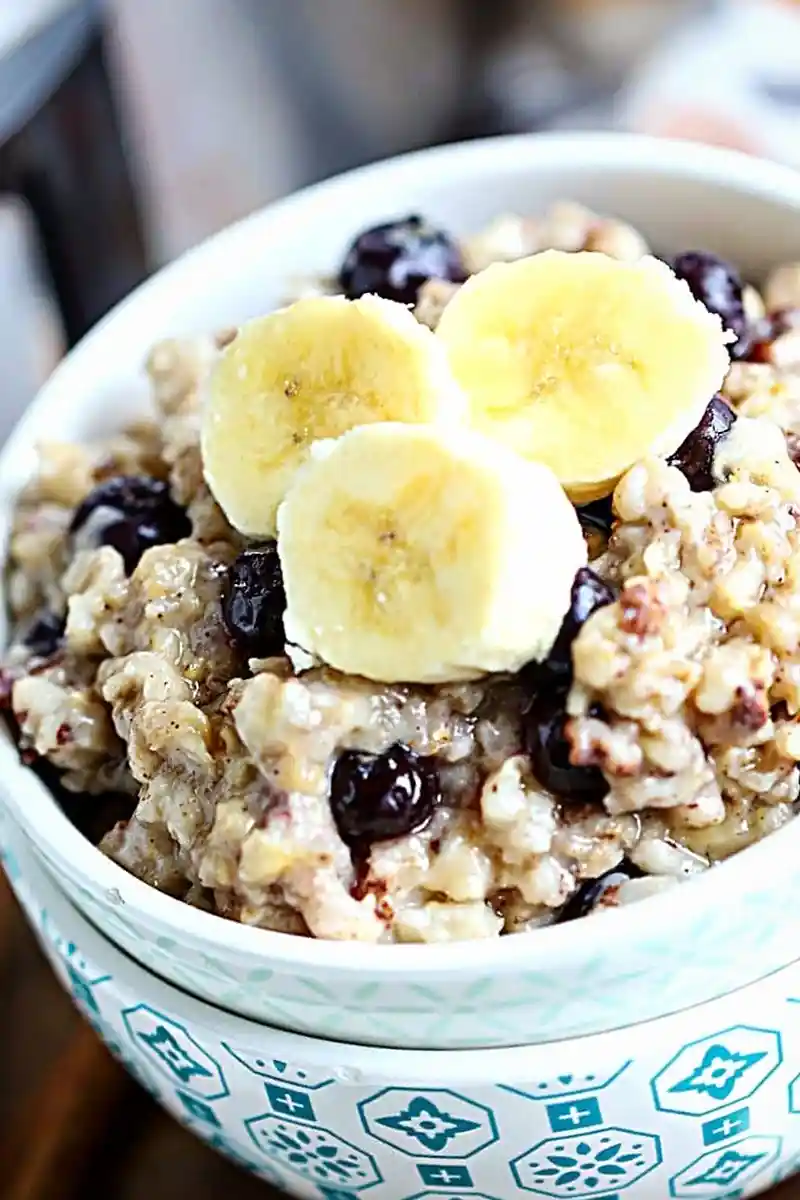
List of ingredients
- 2 cups blueberries (fresh or frozen) – provides natural sweetness and antioxidants.
- 1 cup uncooked steel-cut oats – creates a hearty, chewy texture.
- 1 ½ cups fat-free or low fat milk – can be swapped for almond or coconut milk for a non-dairy version.
- 1 ½ cups water – ensures the oats have enough moisture to soften.
- 1 teaspoon cinnamon – adds a warm, spicy aromatic quality.
- 2 tablespoons brown sugar – can be substituted with maple syrup or another preferred sweetener.
- 1 ½ tablespoons butter – cut into 5-6 pieces; this is optional for added richness.
- 1 teaspoon vanilla – enhances the overall flavor profile.
- ¼ teaspoon salt – balances the sweetness of the fruit and sugar.
- 1 tablespoon ground flax seed – an optional addition for increased omega-3 nutrition.
- Optional garnishes: chopped nuts, shredded coconut, maple syrup, additional milk, or extra butter.
step-by-step instructions
- Prepare the slow cooker: Coat the inside of your slow cooker with non-stick cooking spray or use a slow cooker liner to make cleanup easier.
- Mix the ingredients: Add all ingredients, excluding the optional toppings, into the slow cooker. Stir the mixture thoroughly and cover with the lid.
- Cook overnight: Set the slow cooker to the low setting and cook for approximately 7 hours. Note that cooking times can vary depending on the specific model of your appliance.
- Serve the oatmeal: Spoon the cooked oatmeal into individual bowls and add your chosen optional garnishes.
- Store and preserve: Place any leftover oatmeal in an airtight container and store it in the refrigerator. This recipe also freezes well for long-term meal prep.
Optimizing the Cooking Process
Maintaining Steel-Cut Oat Texture
Cooking steel-cut oats for 7 hours on low is the ideal timeframe to ensure they are tender but not mushy. If you cook them for significantly longer, the grains may break down too much, resulting in a porridge-like consistency. Always monitor the texture during the first time you use your specific slow cooker.
Managing High-Heat Appliances
Some slow cookers run hotter than others, which can lead to scorched edges or overly soft oats. If your machine tends to run hot, try using the warm setting instead of the low setting for the duration of the cook. This prevents the milk from curdling or the sugar from burning at the bottom.
Using Slow Cooker Liners
To avoid the tedious process of scrubbing cooked oats from the ceramic pot, utilize a high-quality slow cooker liner. These liners fit snugly around the interior and can be lifted out and discarded once the meal is served. If you do not have liners, a generous coating of cooking spray is an effective alternative.
Choosing the Right Slow Cooker Size
A 6-quart programmable slow cooker is recommended for this specific volume of ingredients. Using a pot that is too small may lead to overflows, while one that is too large might cause the liquid to evaporate too quickly. Ensure there is enough headspace for the oats to expand as they absorb the water and milk.
Ingredient Substitutions and Variations
Selecting the Best Blueberry Type
Fresh blueberries provide a bright pop of flavor, while frozen blueberries often release more juice, creating a deeper purple hue in the oatmeal. Dried blueberries can also be used, but you should reduce the quantity to 1 cup to avoid an overly concentrated sweetness. Frozen berries do not need to be thawed before adding them to the pot.
Comparing Plant-Based Milk Alternatives
For a dairy-free version, almond milk provides a light, nutty flavor that complements the blueberries. Coconut milk offers a creamier, richer texture and a slight tropical note. You can also use soy milk for a higher protein content or simply use all water for a lighter, fat-free option.
Alternative Oat Types and Timing
If you prefer old-fashioned rolled oats over steel-cut oats, you must significantly decrease the cooking time. Rolled oats cook much faster and will become mushy if left for 7 hours. For rolled oats, a shorter window of 2-4 hours on low is usually sufficient to achieve the desired consistency.
Healthy Sweetener Options
While brown sugar adds a traditional caramelized flavor, maple syrup is an excellent alternative for a more natural sweetness. Honey or agave nectar can also be used in equal measurements. For those avoiding added sugars, increasing the amount of blueberries or adding a pinch more cinnamon can enhance the perceived sweetness.
Ensuring the Recipe is Gluten-Free
Oats are naturally gluten-free, but they are often processed in facilities that handle wheat. To make this recipe safe for those with celiac disease or gluten sensitivity, ensure you purchase oats explicitly labeled as certified gluten-free. All other ingredients in this recipe are naturally gluten-free.
Serving and Flavor Enhancements
Adding Crunchy Nut Toppings
Toasted slivered almonds or chopped walnuts provide a textural contrast to the soft oats. Pecans offer a buttery flavor that pairs well with the cinnamon and blueberries. For the best results, toast the nuts in a dry pan for 2-3 minutes before adding them as a garnish.
Incorporating Coconut Accents
Shredded coconut adds a subtle sweetness and a chewy texture to the dish. You can use unsweetened coconut flakes for a healthier option or toasted coconut for a more intense flavor. Sprinkle a tablespoon on top of each bowl just before serving to keep the coconut crisp.
Fresh Fruit Additions
While the blueberries are cooked in, adding fresh sliced bananas on top provides a creamy contrast. Sliced strawberries or raspberries can also add a tartness that balances the brown sugar. Adding these fresh elements at the end preserves their structure and nutritional value.
Using Additional Liquid for Consistency
Depending on your preference, some may find the slow-cooked oatmeal too thick. Stirring in a splash of cold milk or a tablespoon of cream just before eating can restore a creamy flow. This is particularly helpful if the oatmeal has sat in the pot for a while after cooking.
Storage and Reheating Guide
Optimizing Refrigerator Storage
Store any leftover oatmeal in an airtight glass or plastic container to prevent it from absorbing other odors in the fridge. The oatmeal will stay fresh and safe to eat for 1 to 2 days. Ensure the oatmeal has cooled slightly before sealing the container to prevent excessive condensation.
Long-Term Freezer Storage
This recipe is excellent for meal prep because it freezes well. Portion the cooked oatmeal into freezer-safe containers and label them with the date. Store them in the freezer for up to three months to have a quick, healthy breakfast available on busy mornings.
Thawing Frozen Oatmeal
The best way to thaw frozen oatmeal is to move the container from the freezer to the refrigerator overnight. This slow thawing process preserves the texture of the oats and prevents them from becoming watery. If you are in a rush, you can thaw it directly in the microwave on a low power setting.
Precision Microwave Reheating Method
To reheat a single serving, place 1 cup of cooked oatmeal in a microwave-safe bowl. Add 1/3 cup of fat-free milk or a milk alternative to restore the creaminess. Microwave on high for 1 minute, stir thoroughly, and then continue heating for another minute or until the desired temperature is reached.
Troubleshooting Common Issues
Correcting Overly Thick Oatmeal
If your oatmeal becomes a dense block after refrigeration, it is because the oats continue to absorb liquid over time. The solution is to add a generous amount of milk or water during the reheating process. Stir vigorously during reheating to break up clumps and redistribute the moisture.
Fixing Too-Liquid Consistency
If the oatmeal is too runny after 7 hours, you can leave the lid off and cook it on high for another 30 minutes to evaporate excess liquid. For future batches, slightly reduce the amount of water or milk by a quarter cup. You can also stir in a tablespoon of quick oats at the end to thicken the mixture quickly.
Managing Burnt Bottoms
If you notice a burnt layer at the bottom of your slow cooker, it is usually due to the sugar settling and overheating. To prevent this, stir the ingredients more thoroughly before starting the cook. You can also add a small amount of extra water to the bottom of the pot to create a moisture barrier.
Improving Blueberry Distribution
Sometimes blueberries can sink to the bottom or clump together during the long cook time. To avoid this, stir the oatmeal once halfway through the cooking process if your schedule allows. Alternatively, reserve half of the blueberries and stir them in during the last hour of cooking.
Frequently Asked Questions
Can I make this without a slow cooker?
Yes, you can make this on a stovetop by simmering the ingredients in a pot over low heat for about 30-40 minutes, stirring frequently to prevent sticking. An oven-baked version is also possible by transferring the mix to a casserole dish and baking at 350°F for approximately 45 minutes.
Is this recipe suitable for meal prep?
Absolutely. Because it can be refrigerated for two days and frozen for several months, it is an ideal choice for those who want to avoid morning cooking. Just remember to add a bit of extra milk when reheating to get the original texture back.
Can I use dried blueberries?
Yes, dried blueberries work well, but because they are more concentrated and sweet, you should reduce the quantity from 2 cups to 1 cup. You may also want to slightly reduce the amount of brown sugar to maintain a balanced flavor.
What if I don’t have flax seed?
Flax seed is an optional nutritional additive and does not significantly affect the taste or texture of the oatmeal. You can omit it entirely without changing the cooking method or the final result of the dish.
Can I use quick oats instead of steel-cut?
Quick oats have a much smaller grain size and will cook almost instantly. If you use quick oats, do not cook them for 7 hours as they will turn into a paste. Instead, cook them on low for only 1-2 hours or simply prepare them on the stovetop.
Print
Healthy Slow Cooker Blueberry Oatmeal
- Total Time: 7 hours 5 minutes
- Yield: 8 servings 1x
- Diet: Vegetarian
Description
Enjoy an easy and healthy overnight breakfast recipe when you make Blueberry Crockpot Oatmeal. The whole family will love this slow-cooked oatmeal bursting with blueberries!
Ingredients
- 2 cups blueberries (fresh or frozen)
- 1 cup uncooked steel-cut oats
- 1 ½ cups fat-free or low fat milk
- 1 ½ cups water
- 1 teaspoon cinnamon
- 2 tablespoons brown sugar
- 1 ½ tablespoons butter
- 1 teaspoon vanilla
- ¼ teaspoon salt
- 1 tablespoon ground flax seed
Instructions
- Prep: Coat inside of slow cooker with cooking spray.
- Combine: Add all ingredients (except optional toppings) to a slow cooker. Stir and cover.
- Cook: Cook on low for approx—7 hours (slow cooker times can vary).
- Serve: Spoon oatmeal into bowls; add optional toppings, if desired.
Notes
To make this recipe plain oatmeal, omit the blueberries. Use almond or coconut milk for a dairy-free version. Store leftovers in the refrigerator for 1-2 days or freeze.
- Prep Time: 5 minutes
- Cook Time: 7 hours
- Category: Breakfast
- Method: Slow Cooking
- Cuisine: American
Nutrition
- Serving Size: 1 serving
- Calories: 129 kcal
- Sugar: 7 g
- Sodium: 88 mg
- Fat: 3 g
- Saturated Fat: 1 g
- Unsaturated Fat: 2 g
- Trans Fat: 0 g
- Carbohydrates: 23 g
- Fiber: 3 g
- Protein: 4 g
- Cholesterol: 3 mg